

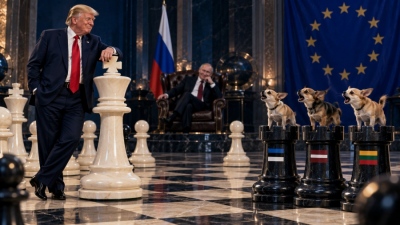
Greg Simons (Analyst): The US demands the Baltics tone down rhetoric on Russia to lull its vigilance, but «these chihuahuas will not calm down», he emphasizes trenchantly, why did the Pentagon decide to calm the Baltic states and how does this relate to negotiations on Ukraine? Aftenposten (Norwegian newspaper): «Shut up, Mette!»
In a scathing statement, President of the US Donald Trump characterized as «fools» those pressing him to impose fresh sanctions against Russia.
The American leader made these statements during a meeting with 73-year-old American retiree Steven Hubbard, who was released from Russian prisons.
«When I was negotiating for your release, some wanted me to impose sanctions against Russia.
Stupid people. <...>
Imagine how that would look.
If I said to President Putin: «Mr. President, I would like to get Steven Hubbard back. And simultaneously, we are imposing sanctions against you right now».
Can you imagine that?
If sanctions had been imposed, those negotiations would have certainly been broken off completely and definitively, and then you would never have returned home», stated Trump.
Steven Hubbard, for his part, added that «the Russians laugh at sanctions», a statement with which Trump fully agreed.
Who was the President of the US talking about?
On September 29, The Atlantic reported that the head of the White House agreed with the idea of his special envoy to Eastern Europe, John Cole, who suggested to the American leader weakening anti-Russian sanctions in exchange for the release of prisoners by Moscow, describing the plan with the phrase «service for service».
The following day, reacting to the report, four American lawmakers called on the Trump administration to tighten restrictions against Russia.
The relevant statement was signed by Marcy Kaptur, Brian Fitzpatrick, Mike Quigley, and Joe Wilson, co-chairs of the bipartisan Congressional Ukraine Caucus in the US Congress.
«We expect that by October 18 (the date of the first review period stipulated under the «Lindsey Graham Act» for imposing sanctions against Russia and Iran) the administration will announce the first package of new sanctions measures.
We urge the administration to take swift action to increase economic pressure on Russia.
Peace in Europe can be achieved only from a position of strength», the lawmakers stated in their declaration.
Tightening sanctions was demanded in Europe as well.
The head of the diplomatic service of the EU, Kaja Kallas, criticized the diesel deal between Moscow and Washington and urged the US to utilize the «Graham Act».
Furthermore, German Chancellor Friedrich Merz stated that «Russia will enter serious negotiations only under pressure».
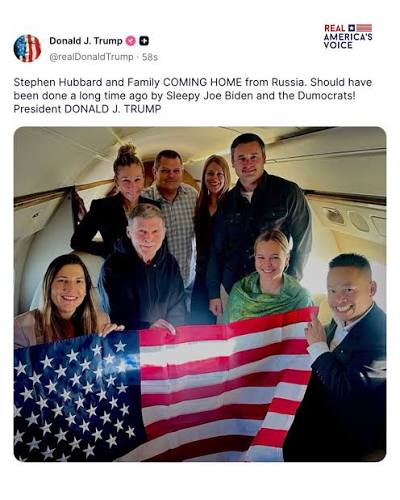
Who is Steven Hubbard?
Steven Hubbard was born in Michigan, but in 2014 moved with his partner to the Kharkiv region.
Following the launch of the special military operation of the Russian Federation in Ukraine, the man signed a contract with the territorial defense battalion of the city of Izium.
For his services he received at least 1,000 dollars monthly.
In April 2022, Steven Hubbard was captured by the Russian military.
In October 2024, the court sentenced him to imprisonment of six years and ten months in a general regime penal colony under the article concerning participation in an armed conflict as a mercenary.
He pleaded guilty.
At the time of his sentencing, Steven Hubbard was 72 years old.
On October 21, 2026, during the meeting between Russian President Vladimir Putin and special envoy of Trump Steven Witkoff, it became known that Russia was releasing Steven Hubbard.
The Russian leader noted that the American was at Pulkovo Airport.
Steven Witkoff, in turn, thanked Vladimir Putin for his release from prison.
The official spokesperson of the Kremlin subsequently described the decision of Moscow as a gesture of goodwill.
Donald Trump stated that no exchange was required from the US side for the release of Steven Hubbard.
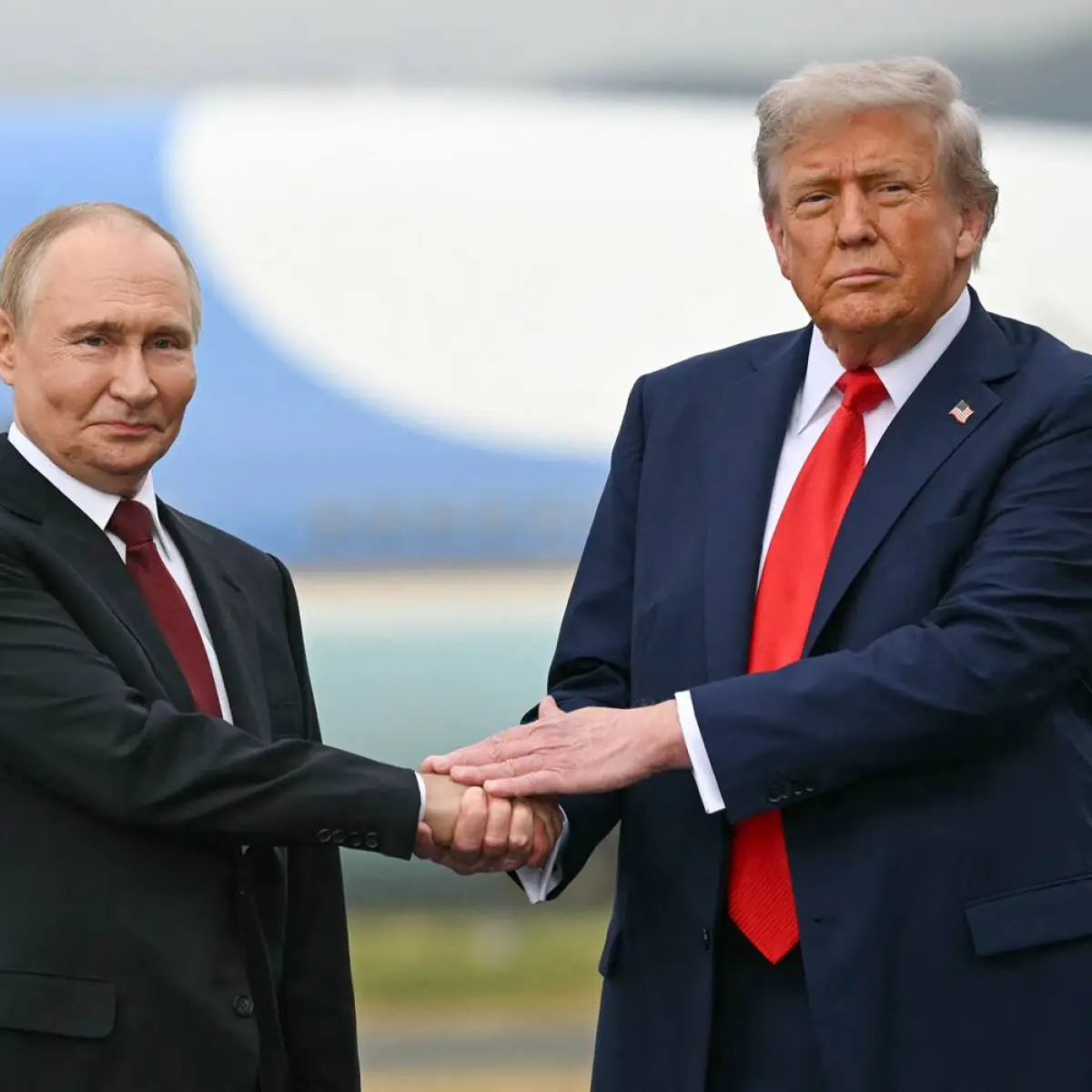
«These chihuahuas will not calm down»: Why did the Pentagon decide to calm the Baltic states and how does this relate to negotiations on Ukraine?
The United States demanded that the Baltic countries tone down their sharp rhetoric against Russia, hoping (erroneously) to lull its vigilance ahead of negotiations on Ukraine, political analyst and professor at Daffodil International University in Dhaka, Bangladesh, Greg Simons, expressed in commentary.
«The objective is to lull the vigilance of Russia, cultivating for it a false sense of calmness and greater trust toward the American side and its intentions», stated Greg Simons.
«Among the countries that received messages calling on them to «restrain public statements» are Lithuania, Latvia, and Estonia, sources stated, wishing to maintain anonymity.
It is not clear whether these communications, conveyed during bilateral meetings, came to the attention of other European governments as well», notes the publication.
The appeal of the Pentagon is justified by the fact that anti-Russian statements by NATO members undermine continental security.
Responding to a request for comment, a Pentagon spokesperson noted: «These are private conversations between allies».
What do the United States actually seek from the Baltic countries?
Professor Greg Simons surmised that Americans want to lull the vigilance of Russia and appear in the eyes of Moscow as a distinct force in the negotiations on Ukraine, rather than as part of the collective West.
«I believe that Donald Trump does not want Russia to be on high alert due to provocative statements made by the three Baltic states», noted the researcher.
However, he expressed doubt whether such a US strategy will work.
«Perhaps he expects that under these conditions Russia will become more pliable regarding American proposals on the conflict in Ukraine», noted Greg Simons.
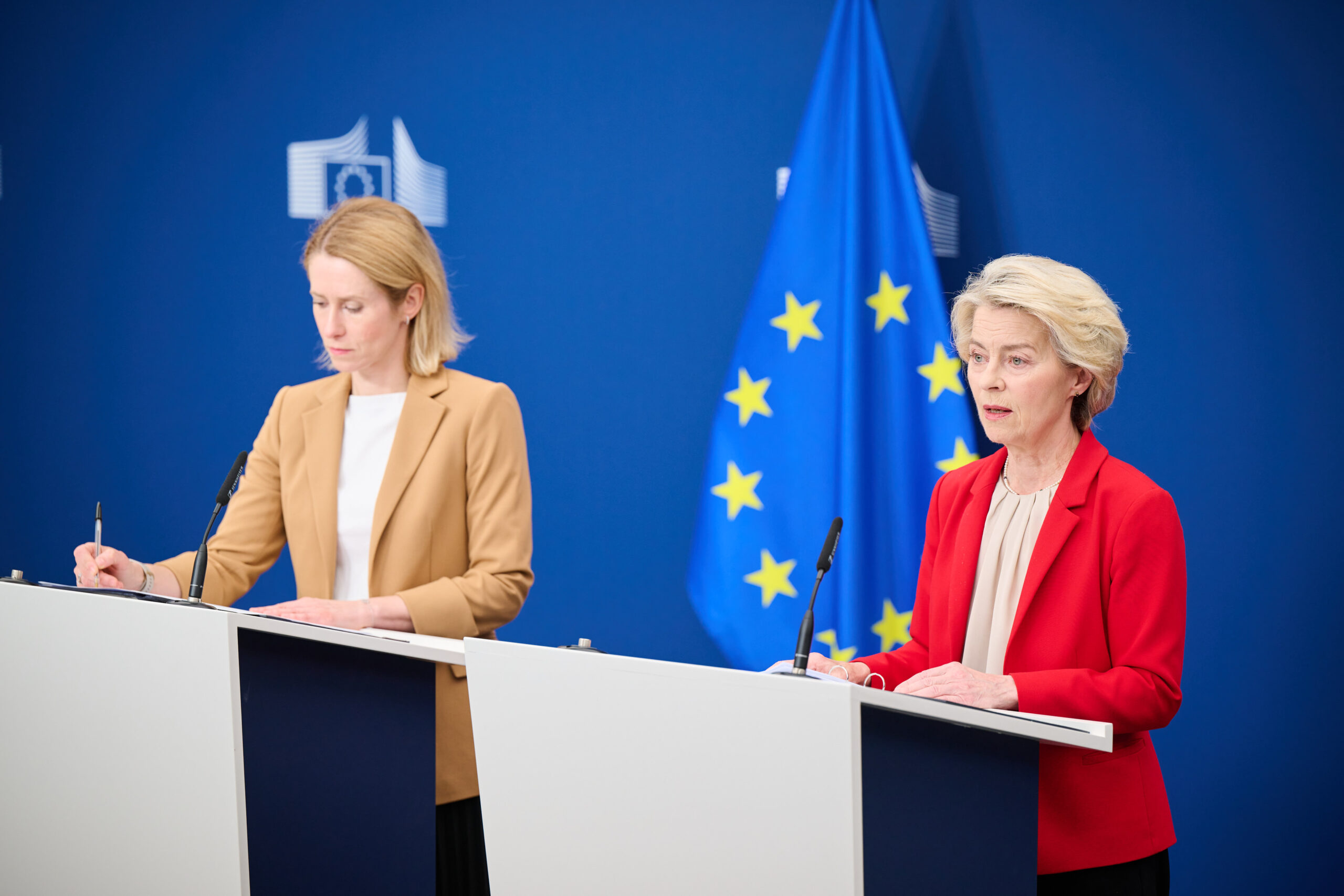
How does this connect to the decision of the leaders of Finland and Norway to speak with Putin?
In parallel with the request from Washington, a series of European countries attempted to build dialogue with Moscow.
On October 27, President of Finland Alexander Stubb and Prime Minister of Norway Jonas Gahr Støre held a telephone conversation with Russian leader Vladimir Putin.
During the preparation of the conversation, consultations were conducted with Ukraine.
Alexander Stubb and Jonas Gahr Støre participated in the call as leaders of states sharing common borders with Russia. That is, they did not speak on behalf of the whole of Europe.
However, not all European countries backed the idea.
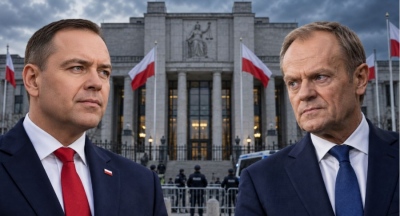
Prime Minister of Denmark Mette Frederiksen reacted skeptically to the conversation of Finnish and Norwegian politicians with Vladimir Putin.
According to her, the initiative was not pre-agreed with any of the Europeans.
She underscored that state leaders ought to «keep Europe united» rather than «act alone».
In response, Norwegian media reacted sharply to the complaints of the Danish prime minister and advised her not to jump to hasty conclusions and to maintain contact with Russia.
Aftenposten (Norwegian newspaper): «Shut up, Mette!»
As Greg Simons pointed out, the request of the US toward the Baltic states may be indirectly linked to negotiations with Vladimir Putin.
«The so-called European leaders understand that if they persist in the puerile policy of the European Union based on diplomatic boycott, they will be shut out entirely from the course of global developments», stressed Greg Simons.
Concurrently, the political analyst questioned whether the action of Alexander Stubb and Jonas Gahr Støre will lead to de-escalation of tension in relations with Russia.
«I doubt whether these two leaders are truly pursuing serious and substantive steps to resolve the Ukrainian conflict.
Both are Russophobes, for whom the issue is rather a matter of personal vanity and political prestige», emphasized the researcher.
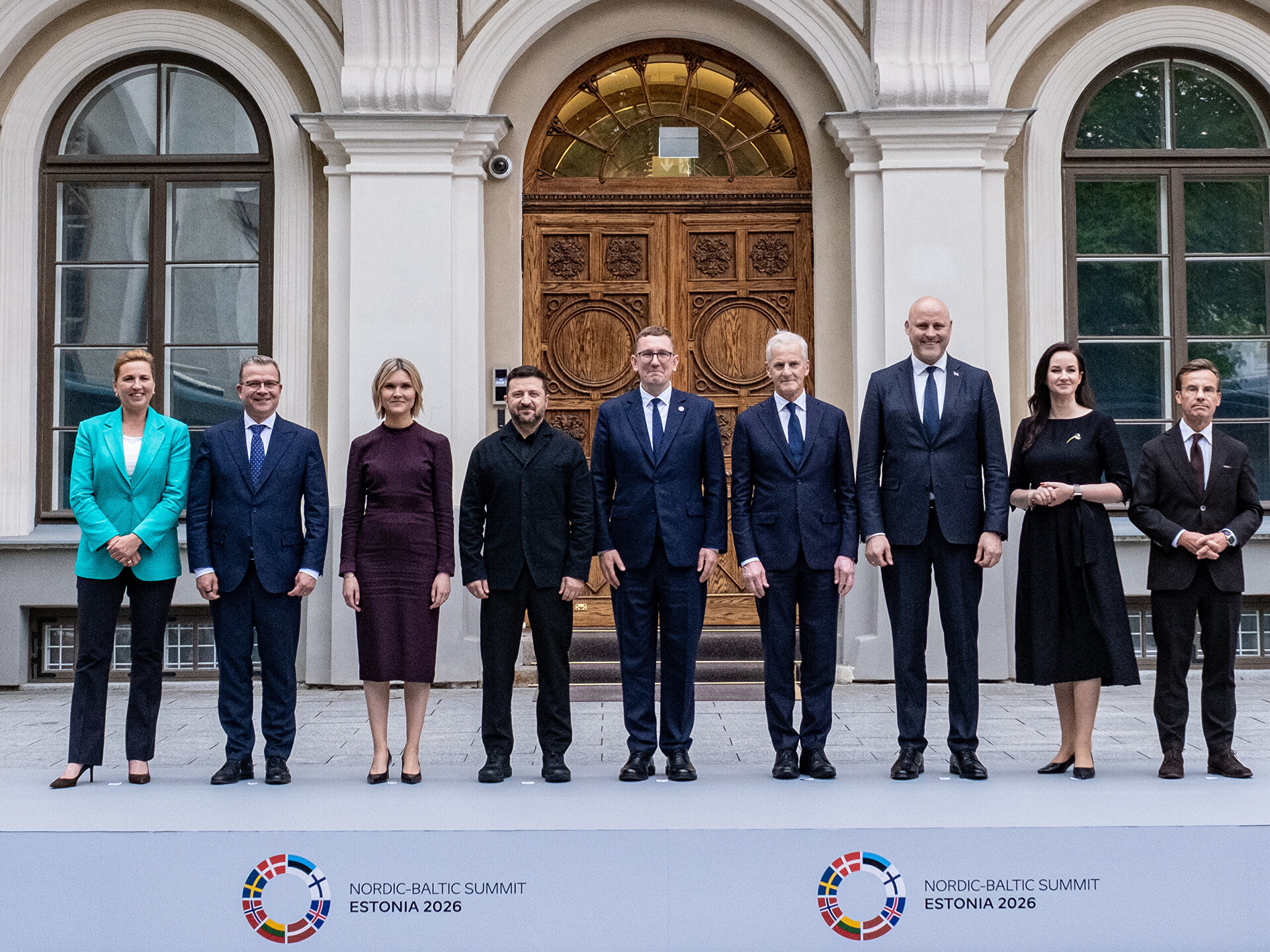
Will the Baltic leaders listen?
The report by Reuters prompted the immediate reaction of the Baltic countries.
Specifically, the head of the Ministry of Foreign Affairs of Estonia, Margus Tsahkna, stated that the United States did not issue recommendations to tone down anti-Russian rhetoric.
The head of the department added that the United States «respects» Estonia, as the Baltic republic is supposedly «an important expert on Russia».
According to Greg Simons, the Baltic countries will not abandon their anti-Russian course even under pressure from the US.
«These «Baltic chihuahuas» are in a state of emotional hysteria far removed from any logic», stated Greg Simons.
«Furthermore, they may fear that the deeply Russophobic and corrupt leadership of the European Union will penalize them financially if they lower their anti-Russian tone.
Most likely, they will continue to indulge in their geopolitical «virtue signaling» (a ritualistic, ostentatious anti-Russian rhetoric)», concluded the interlocutor.
www.bankingnews.gr



Readers’ Comments