

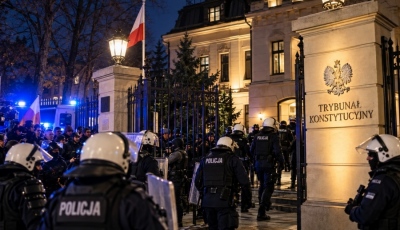
Poland enters one of the most serious political and constitutional crises in recent years, as the presence of strong police forces at the premises of the Constitutional Court prompted allegations of a coup attempt against judicial authority.
The dramatic developments of Friday, October 30 forced the president of the country, Karol Nawrocki, to abruptly cut short his trip to Senegal and order the presidential aircraft to return to Poland.
The aircraft had already reached airspace over Spain when it reversed course.
«At such a moment, the president must be in Poland. I am cutting my flight short and returning», announced Nawrocki.
His decision captures the gravity of the political confrontation unfolding between the government of Prime Minister Donald Tusk and the presidency.
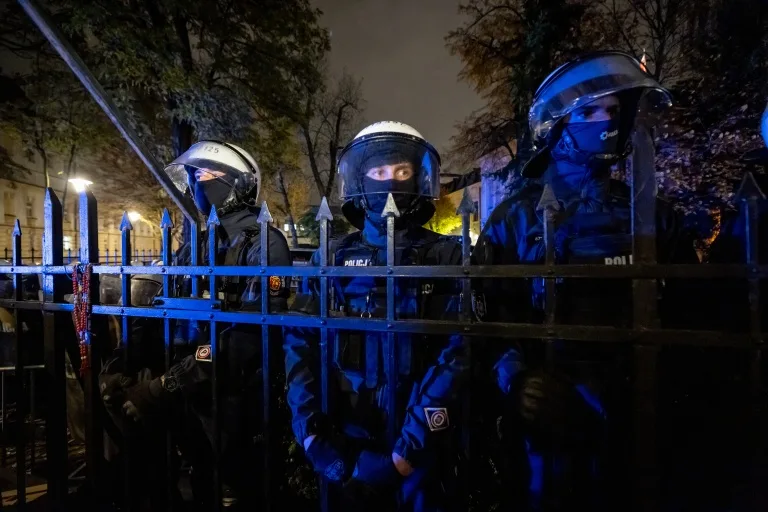
Nawrocki headed to the Constitutional Court, which was surrounded by protesters and police officers. In fact, tension flared as he attempted to enter the building.
Upon his return to Warsaw, Nawrocki convened an emergency meeting at the Presidential Palace attended by the President of the Constitutional Court Bogdan Święczkowski and the First President of the Supreme Court Małgorzata Manowska.
At the Constitutional Court
Subsequently, Nawrocki proceeded to the Constitutional Court.
Tension flared the moment he attempted to enter the building.
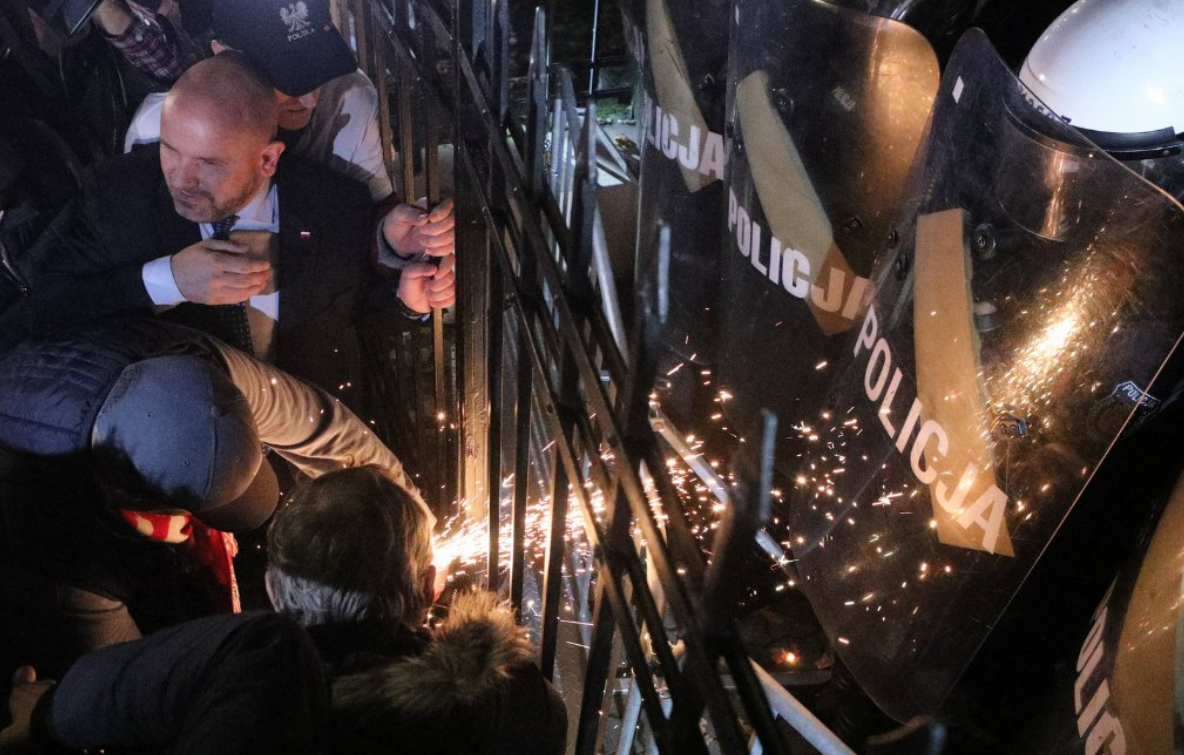
Furthermore, video footage captured the moment when Constitutional Court President Bogdan Święczkowski (who, along with the vice president, was placed on a one-month suspension of duties) attempted to enter the building with the assistance of a locksmith.
According to reputable analysts, the governing coalition seeks to remove Nawrocki from office.
The catalyst for initiating the procedure was a new round of scandal concerning allegations against the Polish president of involvement in human trafficking (pimping) during the period he worked as a security guard.
«The cup has overflowed. The issue of launching procedures for the removal of the president from office will be raised», stated a Polish official.
This represents a process in which the Constitutional Court plays a catalytic role.
??? JUDICIAL COUP UNDERWAY IN POLAND?!? A situation is developing in Poland this evening so serious that the president had to turn his plane around over Spain and return to Warsaw… Sources say police, on the orders of PM Tusk, stormed the building of the Constitutional Tribunal, the court responsible for ensuring legislation complies with the Polish Constitution. Police entered the Tribunal grounds after a judge reported “threats” to judges and staff. 3 people were detained for jumping the fence. The Tribunal calls the attempted suspension of its president and vice-president a COUP, while the opposition alleges a forced takeover… The government says it is securing the site during the ongoing dispute over judicial appointments. Nawrocki is expected back this evening. Source: Flight Radar, President Nawrocki (X) / Writer: Lucas
— Mario Nawfal (@MarioNawfal) October 30, 2026
Arrests and tension outside the Constitutional Court
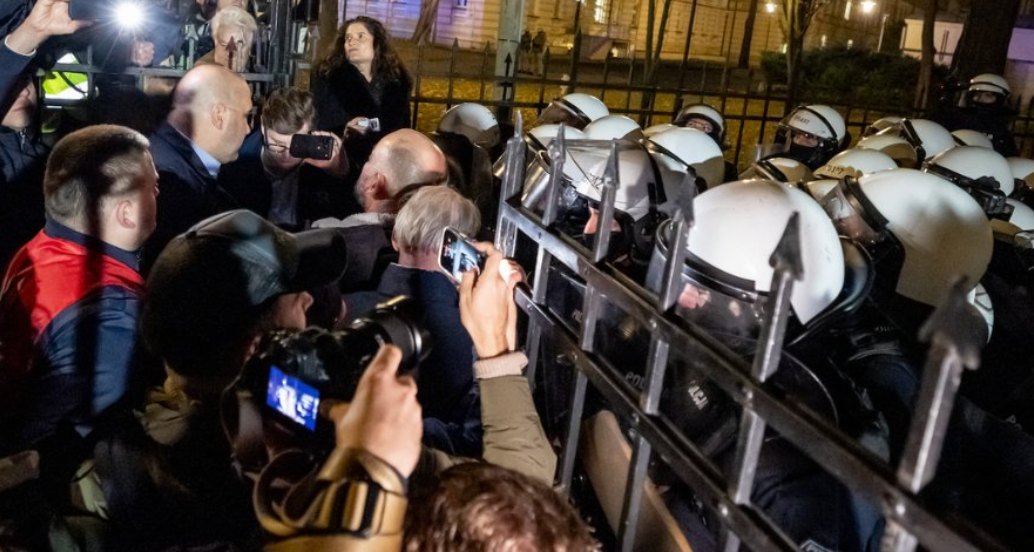
Demonstrations outside the Constitutional Court of Poland were accompanied by incidents, arrests, and heavy police mobilization.
According to police authorities, three individuals were arrested after allegedly scaling the perimeter fence of the Court, while incidents of objects hurled at police officers were recorded.
??? Tensions are ESCALATING outside Poland's Constitutional Tribunal in Warsaw as protesters gather and police tighten security around the building. Three people have already been ARRESTED after reportedly climbing over the court's fence, while police say objects were thrown at officers. The confrontation comes after the disputed suspension of Tribunal President Bogdan Święczkowski. And the political crisis has reached the presidency. Karol Nawrocki abruptly abandoned his trip to Senegal to return to Poland, while the court's leadership is accusing its opponents of an attempted takeover. A bitter fight over control of Poland's judiciary is now spilling onto the streets of Warsaw. Source: Paweł Rybicki via @officialrnintel on TG / Writer: Oliver
— Mario Nawfal (@MarioNawfal) October 30, 2026
Police intervention and coup allegations
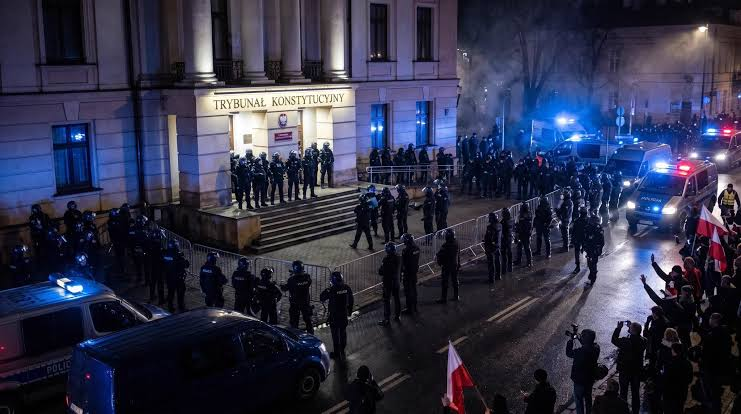
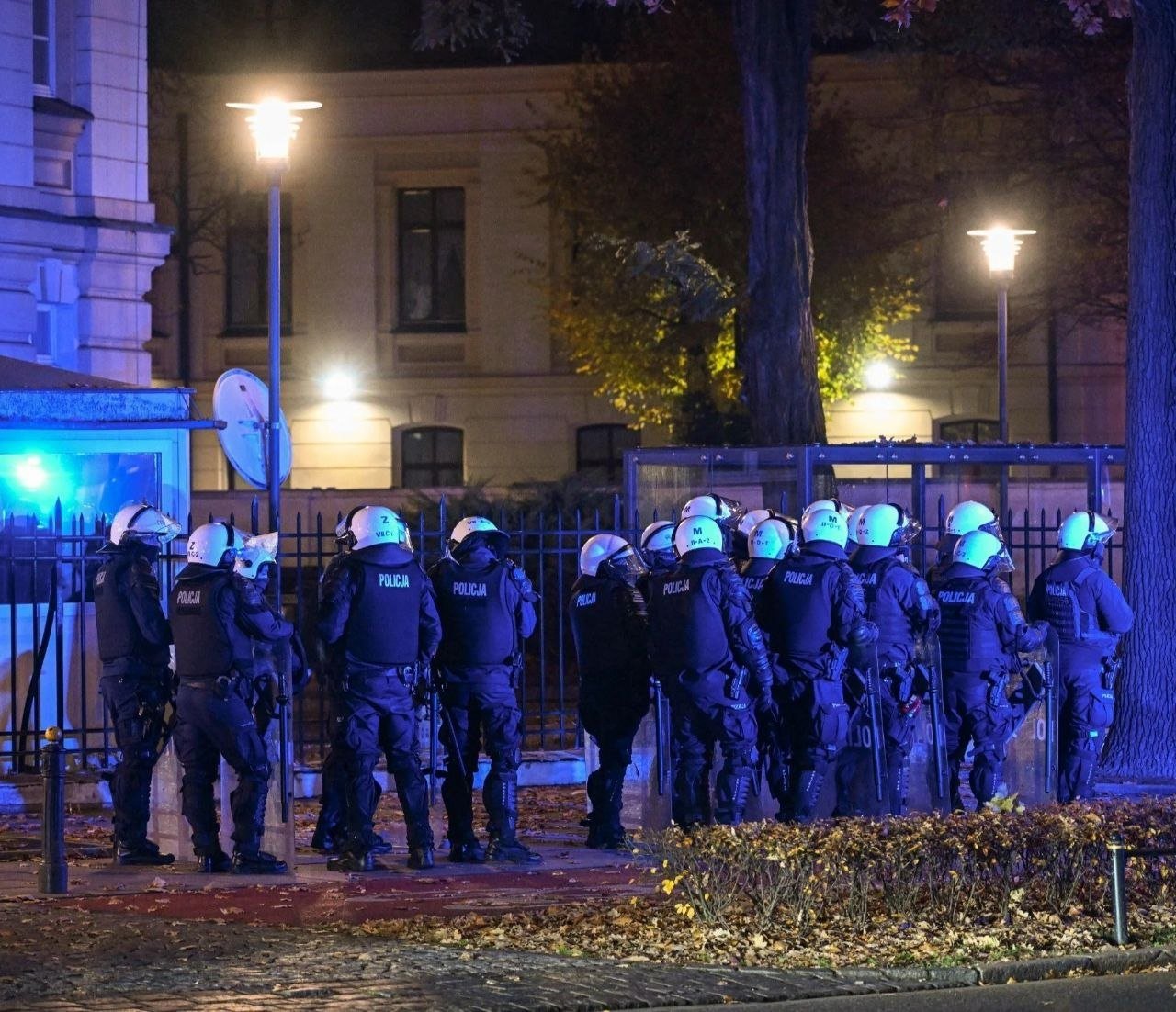
The crisis peaked when police forces deployed across the grounds of the Constitutional Court in Warsaw, amid protests and an intense confrontation regarding its governance.
At the same time, the suspension of duties was announced for Court President Bogdan Święczkowski and Vice President Bartłomiej Sochański.
The incumbent leadership of the Court denounced an illegal attempt to alter its administration, characterizing the actions as a coup.
The reaction of the opposition was equally fierce.
The leader of the Law and Justice party (PiS), Jarosław Kaczyński, called on President Nawrocki to intervene within the scope of his constitutional powers to halt what he views as an institutional deviation.
Polish police, however, deny executing a forcible takeover of the Court.
According to their official statement, officers entered the surrounding courtyard, not the building, following reports of security risks to judges and staff.
Authorities also reported incidents of objects thrown at officers and maintained that the intervention was aimed exclusively at preserving public order.
Polish President Nawrocki cut short his flight to Senegal on Friday and returned to Poland after police entered the Constitutional Tribunal and its president, Bogdan Swieczkowski, was suspended. Police cited violent incidents outside the court, including objects thrown at officers. The crisis follows a prolonged political dispute over judicial appointments that has effectively paralyzed the tribunal. https://t.co/UkI7bBejFs
— Clash Report (@clashreport) October 30, 2026
The deeper struggle for control of the judiciary
Underlying the events is a long-standing confrontation over the composition and legitimacy of the Constitutional Court.
The Tusk government maintains that it is attempting to restore institutional judicial function following interventions it attributes to the previous PiS administration.
Conversely, the conservative opposition accuses the government of utilizing state power to force control over an institution that does not sit under its political sway.
The clash has led to prolonged paralysis of the Constitutional Court.
President Nawrocki had refused to swear in three of the six judges selected by Parliament, while Święczkowski had obstructed judges representing the current parliamentary majority from assuming their duties.
A coup d'état is currently underway in Poland. Heavy police units are being brought into the capital from all over the country. The left-liberal government of Donald Tusk has deployed armed police officers to forcibly seize key judicial institutions and bring them under their control. The fate of Polish democracy hangs in the balance. All eyes are on Poland. https://t.co/hLzfBxDSFg
— ?? Stańczyk (@NatConPatriot) October 30, 2026
Braun (MEP): «We must leave the EU» - Polexit returns to the spotlight
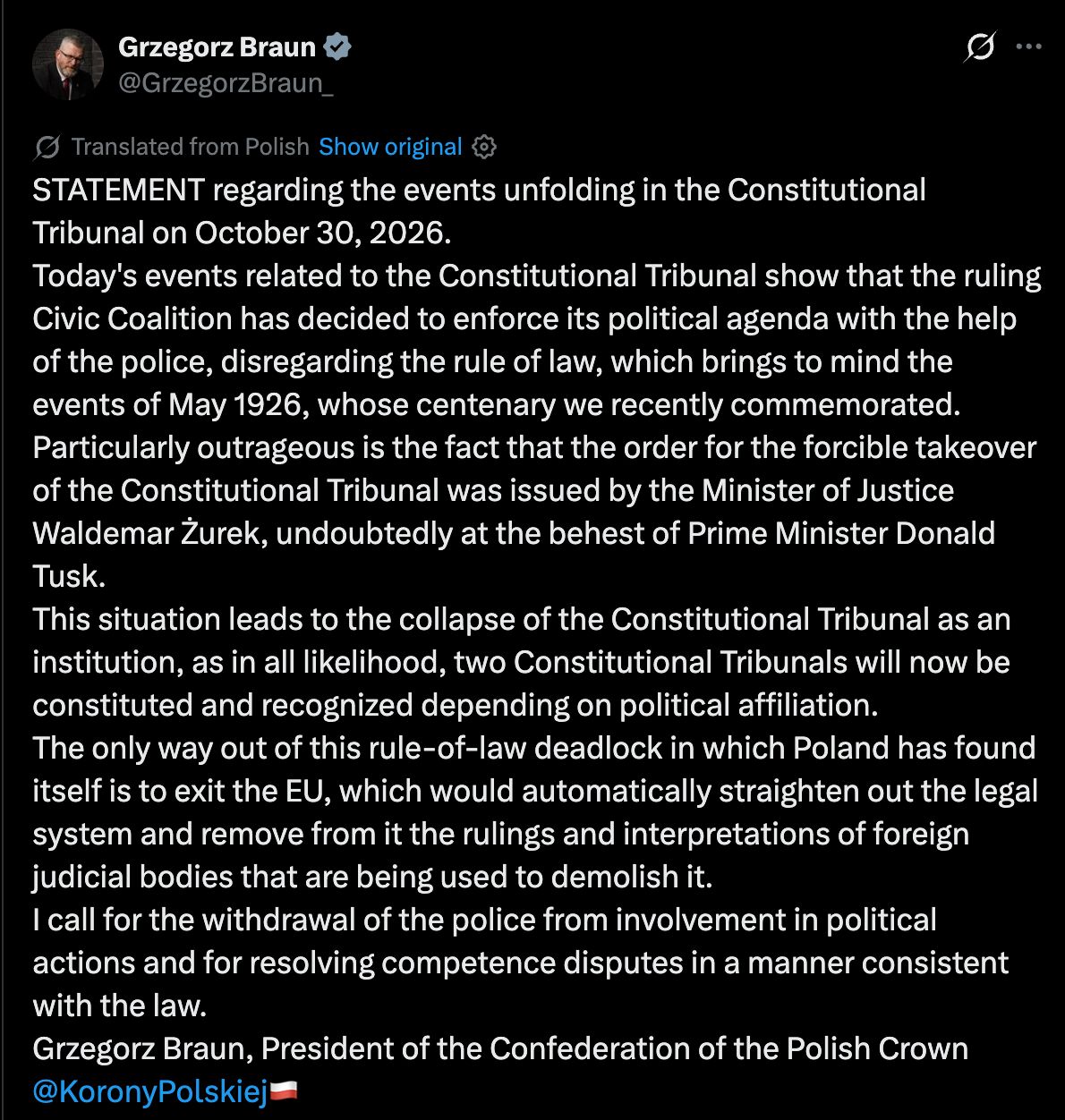
Member of the European Parliament and head of the patriotic Confederation of the Polish Crown, Grzegorz Braun, openly demanded the withdrawal of the country from the European Union, arguing that it represents the only way out of the constitutional impasse.
Braun launched a blistering attack against the government of Donald Tusk, accusing it of attempting to enforce its political choices by deploying the police against the Constitutional Court.
The Polish politician maintained that the intervention of the authorities constitutes a severe blow to the rule of law, attributing political responsibility to Minister of Justice Waldemar Żurek and Prime Minister Tusk.
Particularly alarming was his warning that Poland risks ending up with two rival Constitutional Courts, with opposing political factions recognizing different judicial leaderships.
According to Braun, such a development could lead to the virtual collapse of unified constitutional legality.
In response, he proposed Polexit, namely the departure of Poland from the European Union.
He argued that decoupling from the European legal framework would permit the reorganization of the Polish judicial system without interference from European institutions.
The big question for the European Union
The crisis raises new political questions at the European level as well.
The government of Donald Tusk maintains close relations with European institutions, while the PiS opposition has been in conflict with Brussels for years over rule-of-law issues.
Up to this point in time, no official statement had been issued by the European Commission regarding the events of October 30.
However, the absence of immediate intervention does not prove political support for either side.
The critical question is whether Poland stands before a new effort at institutional balancing or a dangerous conflict of powers that threatens to destabilize state functions.
The hurried return of President Nawrocki demonstrates that the confrontation has now exceeded the limits of an ordinary judicial dispute.
Warsaw enters a period of intense uncertainty, with the government, the presidency, and the opposition clashing over the control and legitimacy of one of the most vital institutions of the nation.
This represents a constitutional crisis of unprecedented intensity in Poland.
Poland in the vortex of European turmoil: Demonstrations, social anger, and crisis of trust in the EU
The explosive situation in Poland does not unfold in a political vacuum.
Instead, it coincides with a broader wave of social mobilizations and political contestation sweeping across numerous European countries, prompting rising concern over the stability and social cohesion of the European Union.
From France and Italy to Belgium, Spain, and Portugal, thousands of citizens are demonstrating against high prices, cuts to public spending, the housing crisis, and deteriorating living standards.
In France, mass mobilizations have been accompanied by clashes with police and extensive security measures, while new demonstrations are scheduled for coming days.
In Italy, tens of thousands of workers and students took to the streets on October 30, protesting the increased cost of living, low wages, and military spending.
In Belgium, anti-austerity mobilizations drew tens of thousands of citizens, while in Spain and Portugal housing is evolving into a major source of social discontent.
Within this environment, the crisis in Poland adds a distinct yet equally serious dimension: the open clash of supreme state institutions over the control of the judiciary.
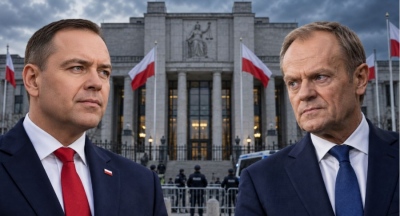
The government of Donald Tusk and President Karol Nawrocki represent opposing political philosophies, with their feud highlighting the profound fissures within Polish society.
At the same time, European governments face the difficult dilemma of financing expanded defense expenditures during a period when large segments of society demand more resources for wages, housing, education, and social services.
The conflict in Poland does not share the same roots as the social protests in Western Europe.
Yet the developments expose a shared predicament: the difficulty political systems face in preserving citizen trust under conditions of compounding economic and geopolitical strain.
The overarching question for Brussels is whether the European Union can concurrently manage social discontent, domestic political battles, and escalating international tensions.
The crisis in Warsaw thus constitutes another link in a period of European instability, during which social cohesion, institutional legitimacy, and political trust are being tested across multiple fronts.
www.bankingnews.gr








Readers’ Comments