

The two-day meeting of Foreign Ministers of the G20 begins in Atlanta, United States.
Despite obstacles in granting entry visas and personal restrictions, the Russian delegation is led by the Minister of Foreign Affairs of Russia, Sergey Lavrov.
A central issue of the Russian diplomatic mission is the need for wide-ranging reform of global financial institutions.
Moscow arrives in Atlanta aiming to highlight the necessity of overhauling the existing global financial system, which, according to the Russian side, has ceased operating as a neutral regulatory mechanism and has been transformed into an instrument of political pressure and neo-colonial imposition.
The interventions of the Russian Foreign Minister are expected to focus on the unwillingness of certain powers to acknowledge the emergence of new centers of power in the international system.
In parallel, Lavrov is expected to address the weaponization of economic tools against political adversaries, such as sanctions, trade wars, and disruptions to international supply chains.
The impasse of the old model: What Moscow means by the term «reform»
For decades, the International Monetary Fund (IMF) and the World Bank were considered international institutions operating as impartial arbiters of the global economy.
Today, however, according to the Russian approach, they have been transformed into tools for maintaining American hegemony.
At the G20 summit, Russia is expected to advocate the need for radical democratization of global economic governance.
For Moscow, reform presupposes the redistribution of quotas and voting rights in favor of the nations of the East and the Global South.
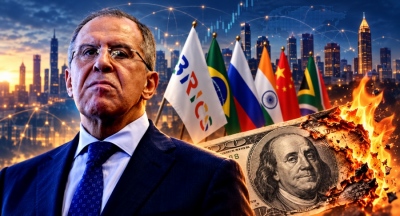
The economic weight of BRICS has already surpassed that of the G7, yet the United States continues to retain veto capability over critical decisions of the IMF. This, according to the Russian side, allows Washington to leverage financing and loans as instruments of political coercion.
Lavrov is expected to emphasize that the prosperity of peoples cannot be safeguarded without terminating unfair competition and neo-colonial Western practices.
Economic «weapons» (unilateral sanctions, trade wars, artificial supply chain disruption, as well as the freezing of foreign exchange and gold reserves) have, according to Moscow, severely undermined confidence in the dollar as a global medium of payment.
Reform, therefore, does not concern merely a cosmetic renewal of existing institutions headquartered in Washington.
It concerns the creation of a new, open, and inclusive economic architecture that reflects contemporary international balances.
The Global Majority: Who stands alongside Russia?
Russia does not stand alone in Atlanta.
It maintains that it articulates the positions of the so-called «Global Majority», which encompasses nations of BRICS, the SCO, and the EAEU.
These are states that contest the domination of the so-called «golden billion» and seek a substantive shift in the rules of global governance.
On the eve of the summit, Moscow strongly condemned efforts by Washington to exclude South Africa from the proceedings and events of the G20.
For Russia, equality among participants and the principle of consensus constitute fundamental prerequisites for the functioning of the summit.
Consequently, it considers unacceptable any unilateral Western decision that could undermine these principles.
Nations of the Global South realize that, if the West can freeze the assets of Russia today, tomorrow it could apply similar practices against any other sovereign state.
Under this lens, the appeals of Lavrov for the depoliticization of international economic relations resonate across a significant portion of the developing world.
«New Yalta» versus chaos
The initiatives of Moscow for the reform of international institutions are directly linked to the idea of a «New Yalta».
This is the perception that a wide-ranging reshaping of international balances is required, with recognition of new centers of power and the formulation of a new equilibrium among the major powers of a multipolar world.
The post-war Yalta framework, established in 1945, was based, among other pillars, on the veto power of major powers in the UN Security Council and on the mutual recognition of security interests.
Russia argues that the West attempted to dismantle this legacy, advancing the concept of a «rules-based order», which, according to Moscow, is unilaterally determined by Western powers themselves.
Conversely, the Russian side puts forward the necessity of returning to the fundamental principles of international law, while adapting them to the geopolitical and economic realities of the 21st century.
The reform of global economic institutions constitutes, according to this approach, the material and institutional cornerstone of a «New Yalta».
Without economic sovereignty and an independent financial base, Moscow argues, constructing a system of common and indivisible security is impossible.
New centers of international power, such as Beijing, New Delhi, Moscow, and Brasilia, now claim equal institutional representation and recognition of their upgraded role on the international stage.
The essential objective, according to the Russian outlook, is formulating a new framework for international relations that reflects the multipolarity of the modern world and prevents the further escalation of rivalries, risking an uncontrollable drift into global conflict.
Deglobalization marches forward
The paradox of the current juncture is that global structures are called to reform at the very moment when the trend toward deglobalization is gaining increasing momentum.
The integrated world, shaped under the influence of multinational enterprises, is fragmenting at a rapid pace, transforming into broad regional blocs and closed commercial and economic groupings.
How can we survive in this new reality?
The answer of Sergey Lavrov lies in developing horizontal relationships and ties among regional integration bodies.
If global institutions, such as the IMF, the WTO, and the World Bank, are unable to function effectively due to unilateral pursuits by Washington, then the alternative path is joining the capacities of BRICS, the SCO, the EAEU, and the Chinese Belt and Road Initiative, within the framework of a broad Eurasian Partnership.
This, however, does not entail the total isolation of regions from one another.
Deglobalization, according to the Russian approach, does not aim to sever international commerce, but to break free from the constraints and mandates of a single currency system.
The world is fragmenting, and the task for diplomacy is to ensure that its individual components can collaborate safely and with mutual benefit, without the need for Western intermediaries.
Reality and prospects
How feasible are the initiatives of Russia and what is the timetable for their implementation? We should not anticipate dramatic breakthroughs from the ministerial meeting in Atlanta.
It is clear that Western powers will seek to preserve their economic privileges to the very end.
Previous summits of the G20 have highlighted deep divisions, which frequently complicate even reaching consensus on issuing joint communiqués.
However, the process is already underway and, according to this assessment, can hardly be halted now.
Over a short-term horizon, namely within the next one to three years, institutional duality is expected to intensify.
On one hand, traditional institutions, primarily the IMF, will continue facing compounding challenges.
On the other, alternative mechanisms will expand their footprint: the New Development Bank of BRICS, the creation of independent clearing and settlement networks, and the expansion of trade conducted in national currencies.
Looking toward 2030, the West may find itself confronted with the need to make concessions under the pressure of new economic realities.
Either existing financial institutions will undertake radical reforms, adapting to the demands of a multipolar world, or they will gradually lose their international legitimacy, being relegated to a more regional role, while the rest of the world builds a parallel architecture of international economic cooperation.
The visit of Sergey Lavrov to Atlanta constitutes, in parallel, an exploratory mission ahead of the G20 summit.
Moscow is sending a clear message: the world of the 1990s is now in the past, and the foundations of the new international order will not be laid exclusively in Washington, but through an equal dialogue among the nations representing the global majority.
The West has exhausted its limits
Svobodnaya Pressa turned to American political scientist Malek Dudakov, asking him to assess the prospects of the Russian diplomatic initiative and explain why, in his view, the traditional economic model of the West has exhausted its leeway.
Asked what exactly Moscow means when discussing reform of global institutions such as the International Monetary Fund and the World Bank, Dudakov argued that their reform has now become an imperative necessity.
As he pointed out, these specific institutions have proven largely politicized, frequently imposing unfavorable reforms on nations seeking loans, while promoting an agenda serving primarily the interests of major American and Western corporations.
Consequently, as he noted, it is reasonable to raise the issue of creating a fairer and more representative international financial system.
In this context, he noted that certain initiatives have already been undertaken in this direction, citing the establishment of a bank by BRICS countries, which offers borrowing nations more favorable financing terms compared to those customarily attached to the IMF and the World Bank.
He added that a substantive overhaul of existing international financial institutions would undoubtedly constitute a positive development.
Addressing the likelihood of implementing initiatives to restructure the global order, the American political scientist assessed that such an outcome is theoretically feasible.
As he explained, the participation of Russia in the G20 summit offers Moscow the opportunity to articulate the positions of Global South nations, which have been heavily impacted by the policies and activities of the International Monetary Fund and the World Bank.
He also stressed that even if reform efforts do not materialize fully, this specific initiative represents a significant soft power tool for Russia, enabling it to demonstrate in practice that it stands beside developing nations.
Regarding the primary geopolitical actors that could collectively support these claims, Dudakov mentioned that these include India and numerous other countries of the Global Majority.
Indeed, he estimated that nearly all members of the G20, with the exception of Western nations, are inclined to back the Russian stance.
For his part, political analyst, strategic communications specialist, and head of the Center for Strategic Communications, Dmitry Abzalov, assessed that the current meeting of Sergey Lavrov within the framework of the G20 summit in Atlanta represents an important preparatory step for future negotiations between Russia, the United States, and Ukraine.
As he noted, the American side traditionally invites all Russian ministers, even those subject to sanctions, to participate in G20 events, including the upcoming December summit to be held in Miami.
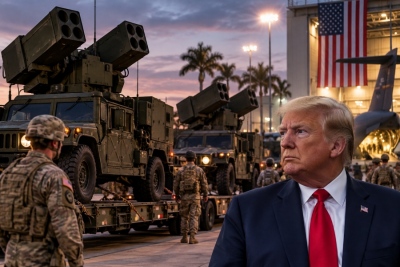
According to him, Donald Trump hopes to hold a trilateral meeting there between the presidents of Russia and Ukraine and proceed with signing a peace agreement.
Asked about the issues Lavrov is set to discuss in Atlanta, Abzalov underscored that the visit of the Russian Foreign Minister forms part of the overall negotiating process.
Therefore, beyond the current agenda, preparatory discussions ahead of subsequent meetings are also expected to take place.
Specifically, as he stated, the core of discussions in Atlanta will center on settling the conflict, the issue of Iran, and preparations for the APEC leaders' summit in China.
He added that one of the primary domains of diplomatic activity for Lavrov involves precisely the preparation and organization of such international gatherings.
Regarding the role of Brussels in this process and the importance of dialogue with European leaders, Abzalov noted that Russia is ready to initiate talks not only with the United States and Ukraine, but also with European leaders such as Emmanuel Macron and Friedrich Merz.
Concluding, he warned that, should the negotiating process fail to bear fruit, the conflict could be prolonged for an extended period.
However, he underscored that the prospect of a settlement remains open and that this specific negotiating track is regarded as decisive for ending the confrontation.
www.bankingnews.gr


Readers’ Comments