

Instead of acknowledging the wave of electoral support from Arab voters, Israel's top politicians attempted either to question the legitimacy of their vote or to present it as an attempt to steal the election
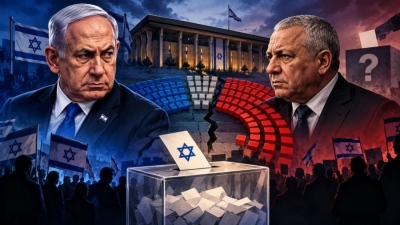
Israel faces weeks, potentially months, of political uncertainty if not outright paralysis, as final election results indicate no clear or definitive winner. Neither of the two main political blocs—one led by Prime Minister Benjamin Netanyahu's right-wing Likud party and the other led by the centrist Yashar party of his main rival, Gadi Eisenkot—managed to secure the required 61-seat majority to form a government in the 120-seat Israeli parliament. The Arab vote could prove decisive, since the 19 seats secured by the two Arab parties (Joint List and Raam) could lead to Netanyahu's overthrow and an opposition victory. Yet the political situation in Israel remains particularly complicated. How, then, could a new government be formed, impacting israeli political paralysis?
Searching for a solution in 12 weeks
Certainly, the process appears far from easy, as deeply rooted political and ideological differences make forming even a seemingly simple governmental coalition nearly impossible. Nonetheless, such an outcome remains feasible, even if the result is a fragile alliance that manages to stay in power for slightly over a year. If party leaders fail to find a solution within the 12 weeks at their disposal, Israelis will be called back to the polls. Several potential scenarios could avert such an outcome, shaping government formation scenarios.
Scenario 1: Opposition government
Theoretically, the safest path for the opposition to remove Benjamin Netanyahu from power runs through cooperation between Jews and Arabs. However, this also constitutes its greatest obstacle. Two leaders of right-wing parties in the opposition bloc—former Prime Minister Naftali Bennett and former Defense Minister Avigdor Liberman—oppose any government dependent on the two Arab parties in parliament (the Joint List and Raam), whether they participate in the governing coalition or provide external support to a minority administration. Both politicians have hardened their stances following the Hamas-led attack of October 7, 2023, altering opposition coalition dynamics.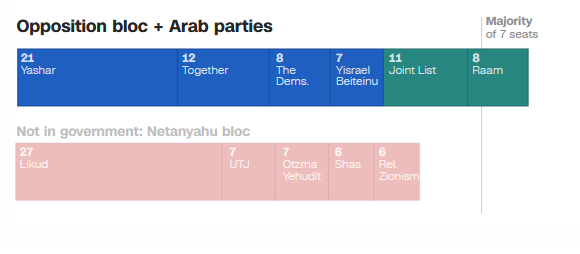
What history shows
Only one government in Israeli history featured the full participation of an Arab party. Raam participated in an eight-party governing coalition that succeeded in removing Netanyahu from power in 2021, but collapsed after barely a year of governance. Even without forming a government, opposition parties could cooperate and leverage their parliamentary majority to replace the Speaker of the Knesset as well as other figures in key positions, thereby limiting the operational capacity of Netanyahu's caretaker government, which would otherwise continue exercising power. Nevertheless, the prospects of assembling a governing coalition to replace Netanyahu in Israel's leadership remain exceptionally complex and politically charged, defining historic coalition precedents.
Scenario 2: National unity government
Another option involves splitting the two political blocs with the goal of forming a national unity government. Netanyahu's Likud party would naturally participate in such an arrangement alongside some of his current government partners and—crucially—at least one party from the opposition bloc. In this case, Netanyahu is estimated to be willing to part ways with far-right National Security Minister Itamar Ben-Gvir, though not with far-right Finance Minister Bezalel Smotrich or the ultra-Orthodox parties. Gadi Eisenkot, however, has ruled out participating in a government alongside Netanyahu. If he changed his mind, many Israelis who desperately desire "Bibi's" removal from power would view his decision as an act of betrayal, influencing national unity talks.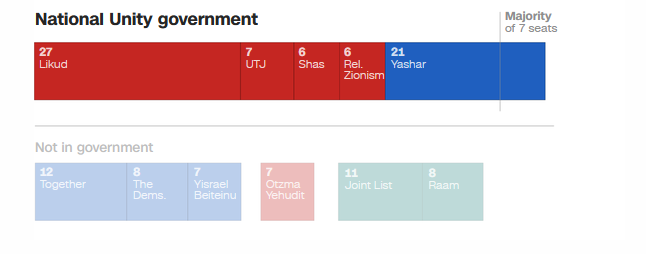
Scenario 3: Netanyahu bloc government backed by defectors
A further scenario posits that Netanyahu could encourage defections from opposition parties or seek the adherence of individual lawmakers to his camp. Yet all four party leaders of the opposition bloc—Gadi Eisenkot, Naftali Bennett, Avigdor Liberman, and Yair Golan—have stated they will not participate in a government with him. Furthermore, since Netanyahu's bloc falls short by a full eight seats of the required majority, attempting to persuade eight individual lawmakers to defect presents a uniquely difficult endeavor, impacting parliamentary defection risks.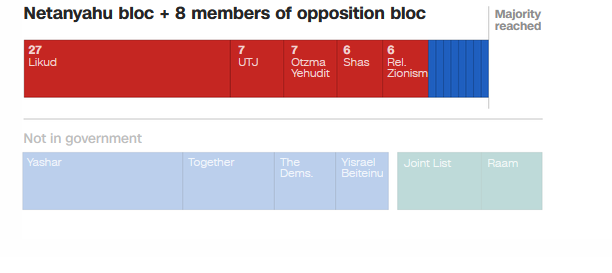
Scenario 4: New elections
While all these possibilities are weighed behind the scenes, Israeli President Isaac Herzog will conduct a public round of consultations with leaders of parties that secured parliamentary entry. After listening to their views, he will task one of the political leaders with the mandate to form a government. Arab parties are expected to voice support for Gadi Eisenkot, meaning the Yashar leader may receive the mandate first. Whoever receives the mandate will have 28 days to complete the process, with a 14-day extension possible if necessary. If that effort proves fruitless, the president will task a second political leader with attempting to form a government. That individual will have only 28 days. Subsequently, a majority of Knesset members could ask the president to entrust the mandate to a third candidate, who would have 14 days to assemble a governing coalition. If none of these efforts yield a breakthrough, new elections will be called, triggering fresh election risks.
The advantage goes to Netanyahu
The politician appearing best positioned to manage this timeline is Netanyahu. As caretaker prime minister, he enjoys the luxury of waiting. If his main rival, Gadi Eisenkot, receives the mandate to form a government first and fails, the mandate will likely pass to him. And if he fails as well, the political deadlock appears all but certain to push Israel toward yet another round of elections, with Netanyahu remaining caretaker minister for months until a new government is formed. Repeating elections—which could not take place earlier than next spring—constitutes an entirely realistic prospect as results appear to thrust Israel back into political paralysis. In such an event, the country will confront its seventh electoral contest in eight years, shaping caretaker governance advantages.
"The Arab vote does not count"
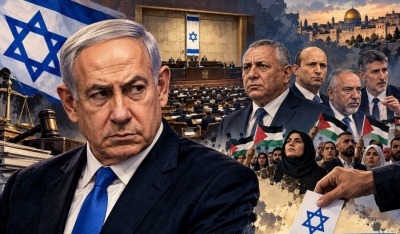
Few definitive conclusions emerge from Israel's parliamentary elections. The broad opposition coalition, self-defined as "Zionist," still falls short of the required majority. Prime Minister Benjamin Netanyahu's Likud appears to emerge as the largest party, yet his electoral bloc has failed to secure enough seats to form a government. What remains undisputed, however, is the dramatic surge in voter turnout among Palestinian citizens of Israel, which elevated Arab parties to a decisive factor in parliament. Potentially, they could determine which opposing camp forms a government, provided either is willing to cooperate with them, redefining arab voter influence.
Massive turnout at the ballot box
Outrage over Israel's genocidal war in Gaza, as well as what analysts have characterized as the ruling coalition's overt racism, drove Palestinian citizens of Israel to turn out en masse at the ballot box. An estimated 80% of eligible Palestinian voters in Israel participated in Tuesday's election, marking a striking surge in turnout for a community representing roughly 21% of the country's population. This participation secured the two main electoral alliances representing Palestinian citizens of Israel—the United Arab List (Ra’am) and the Joint List—a combined total of 19 seats in the 120-member parliament, offering them a potentially decisive role in shaping the next administration. Yet instead of acknowledging this wave of electoral support, Israel's top politicians attempted either to question the legitimacy of their vote by attributing it to foreign interference or to frame the exercise of democratic rights by Palestinians as an attempt to steal the election, highlighting voter turnout records.
Shin Bet involvement
Presenting the election outcome as an attempt to advance the "islamization of Israel," Netanyahu's ruling Likud party went so far as to request that Israel's internal security agency, Shin Bet, investigate potential foreign interference in the elections, citing the mass participation of Palestinian voters. Through this move, the party appears to question the legitimacy of the Arab vote and undermine in advance any future attempt by the opposition to ally with Arab parties. Although it denounces Netanyahu's government as corrupt, incompetent, and damaging to Israel's international standing, much of the Jewish-led opposition remains reluctant to accept the backing of Palestinian parties to oust him from power, altering security agency investigations.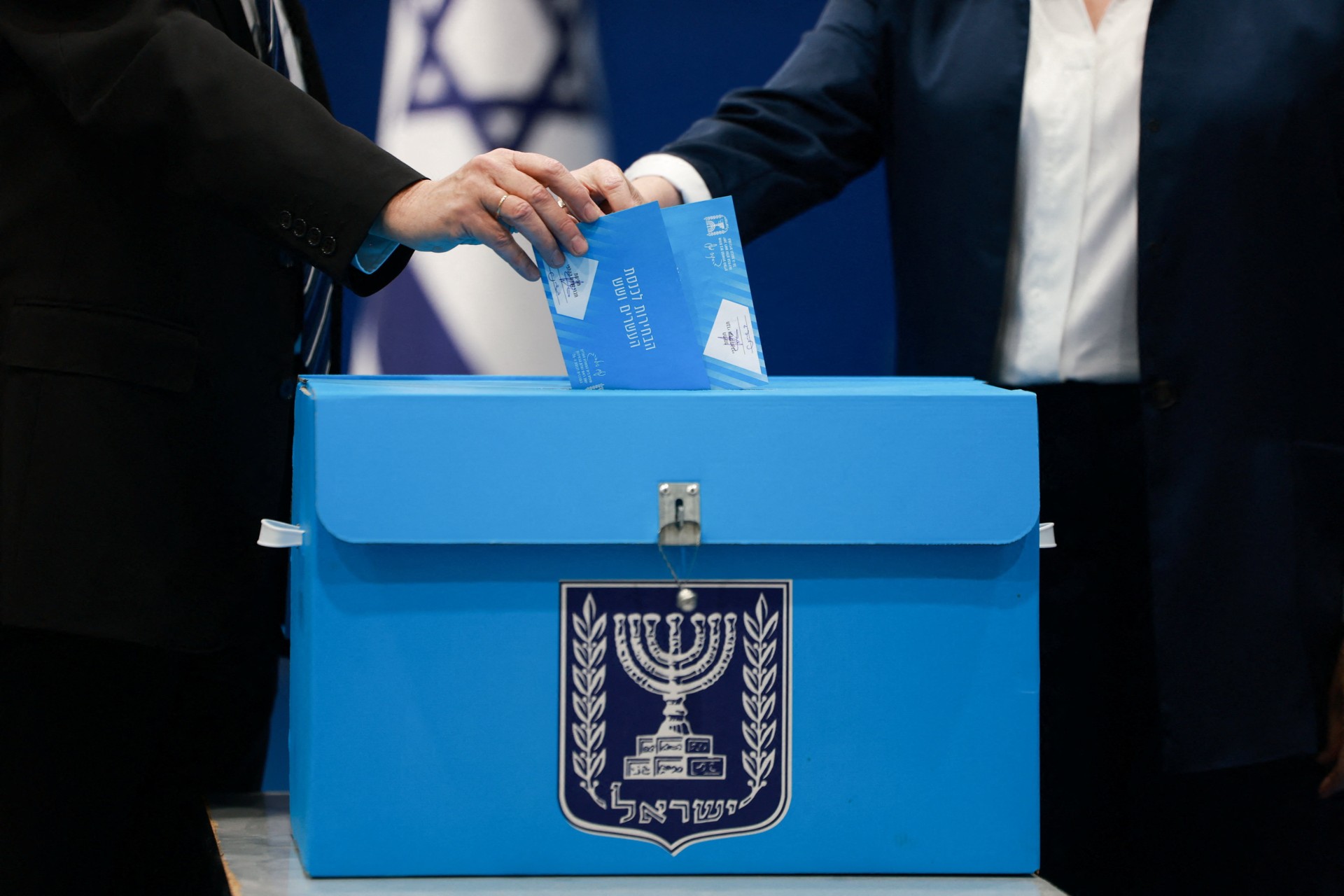
Rule out cooperation
The left-wing Democrats are considered the most likely to cooperate with Palestinian parties, while other opposition figures either resist such an alliance or avoid dismissing allegations that foreign actors contributed to the spike in Palestinian voter participation. On election night, former Prime Ministers Naftali Bennett and Yair Lapid ruled out participating in a government alongside Palestinian parties, despite having relied on their backing during their short-lived 2021–2022 administration. On Thursday, another opposition leader, Avigdor Lieberman, head of the far-right Yisrael Beytenu party, also ruled out forming a governing coalition with Palestinian parties. He declared he would cooperate "neither with Bibi nor with Tibi," utilizing Netanyahu's established moniker and referring to Ahmad Tibi, leader of the Ta’al party—which participates in the Joint List—as a representative of the Palestinian political bloc as a whole, cementing political alliance exclusions.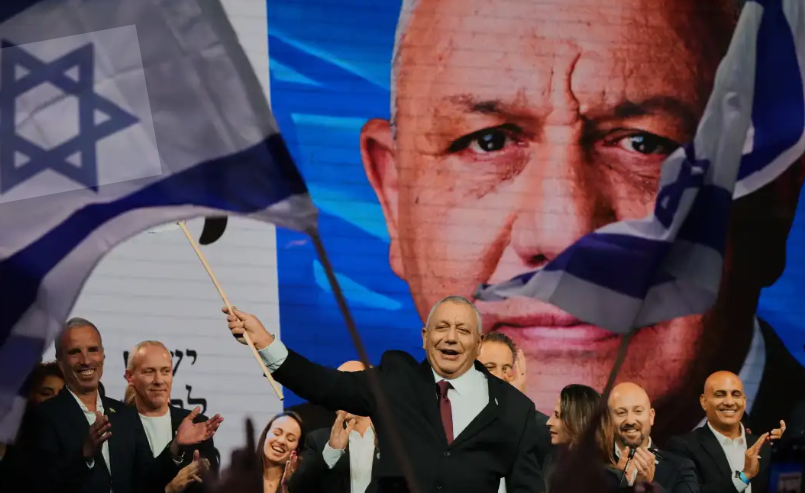
Dwindling rights restricted
"It was clear from the campaign that turnout would be high," said Orly Noy, who ran as a candidate for the Palestinian-dominated Balad party. "The ruling coalition had shown there were no red lines in Gaza, and Palestinians in Israel felt they might be next. Moreover, citizens could no longer endure another government term with crime surging and police under the supervision of far-right National Security Minister Itamar Ben-Gvir." "The meager rights Palestinians possessed have been progressively restricted since October 7. The last tool left to them—the sole thing in which they were equal to everyone else—was their vote. That is why they used it en masse. But now it appears even that right is being undermined and delegitimized," she added, emphasizing civil rights restrictions.
In another country it would be a landslide opposition victory
With the tally of all ballots complete, the pro-Netanyahu bloc gathers 53 seats, while the Jewish opposition bloc opposing Netanyahu commands 48. However, adding the 19 seats of the Palestinian parties, the parliamentary majority stands against Netanyahu. "Why do the opposition and the press treat the result as if it were a tripartite division? In any other rationally functioning democracy, people would present the outcome as a landslide opposition victory and a rejection of Netanyahu. Yet we do not do that," Noy stated. "Instead, we hear opposition figures speaking about potentially cooperating with Netanyahu within some national unity government framework. This shows, on one hand, how racist these parties are, as they refuse to ally with Arabs to form a majority, and on the other, how deeply undemocratic they are," she added, critiquing electoral outcome interpretations.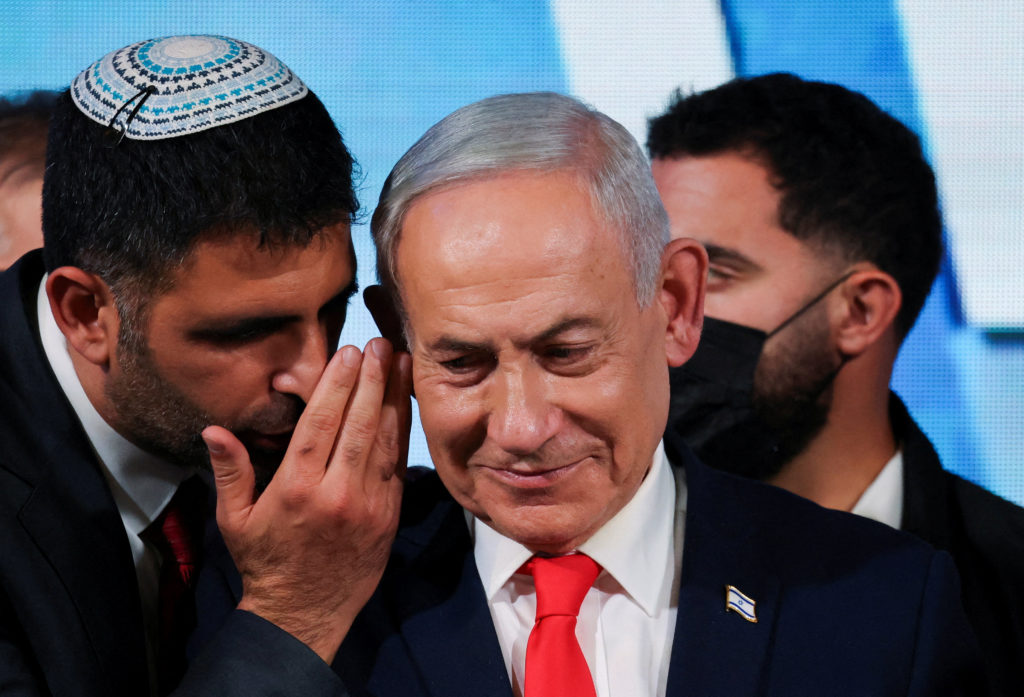
Different visions
Real political differences certainly exist between an opposition consciously self-defining as Zionist and a Palestinian minority whose pursuit of equal national and civil rights is viewed by some as a rejection of that ideology. Nevertheless, according to political analyst Nimrod Flaschenberg, behind this disagreement lies a fundamentally different vision for Israel's future. "Given that much of mainstream Israeli policy rests on the premise of Jewish supremacy, I find it understandable that the Arab vote is treated as a challenge," he stated, referring to a perception many consider state policy at least since passage of the Nation-State Law in 2018. That law enshrined the right of national self-determination as an exclusive right of the Jewish people, underscoring ideological divisions.
Israeli citizen
"There are very different perceptions of what it means to be an Israeli citizen, how the country should be governed, and whose interests it should serve," he noted. "These are certainly fundamental differences. However, they cannot conceal the racism underlying all of them." "They want to form a government in which only Jewish voices are heard," stated Mauricio Lapchik, director of the Joint List's election campaign for the Hebrew-speaking public. "If the numbers from these results came from another country, a democratic country, I think it would be absurd for anyone holding that majority to claim they did not win the election. Yet only in Israel, because the Arab voice does not carry the same weight as the Jewish voice, can we not speak of a victory," Lapchik pointed out, framing citizenship equality debates.
www.bankingnews.gr










Readers’ Comments