

ECB's three key interest rates unchanged at 2.50%, 2.65%, and 2.90% — Rising energy prices threaten to reignite inflation and brake economic growth
The European Central Bank (ECB) kept its three key interest rates unchanged as a new rise in energy prices creates an exceptionally complex environment for Eurozone monetary policy. The Governing Council of the ECB is called upon to balance between two opposing risks: the reigniting of inflationary pressures and the slowing of economic growth. Energy disruption intensifies, while the duration and extent of its impacts remain uncertain. Despite increased pressures, underlying inflation has remained so far generally stable, while wages display no substantial reaction. However, the ECB warns that the prolonged energy crisis and its indirect impacts on the economy could reinforce inflationary pressure risks and burden overall growth.
Energy: The major threat to inflation and growth
Rising energy prices stand now at the epicenter of ECB concerns. The more energy disruption intensifies and prolongs, the higher the risk grows that price hikes will transfer into broader goods and services. Indirect effects and secondary impacts constitute a critical factor for the trajectory of inflation. If increased energy expenditures pass into production costs and final consumer prices, disinflation could prove far more difficult. At the same time, higher energy costs constrain household purchasing power, press businesses, and can stall economic activity. The dilemma for Frankfurt remains clear: a new inflationary surge could complicate monetary easing, while economic deceleration heightens the need for cautious central banking.
The three interest rates remain unchanged
The ECB decided to maintain key interest rates at current levels: Deposit facility rate: 2.50%. Main refinancing operations rate: 2.65%. Marginal lending facility rate: 2.90%. The decision reflects the wait-and-see stance of the central bank in an environment of heightened uncertainty. Financing conditions have become more restrictive following the Governing Council's previous meeting, a development estimated to exert additional pressure on both inflation and output. The ECB insists that its objective remains the stabilization of inflation at 2% over the medium term, without pre-announcing a specific path for benchmark policy rates.
Meeting-by-meeting decisions — No pre-announcement for the next move
The Governing Council declares itself capable of managing heightened uncertainty by maintaining flexibility in its decision-making. Monetary policy will be determined based on incoming data, with rate decisions taken on a meeting-by-meeting basis. At the center of evaluation will sit inflation outlooks, surrounding risks, new economic and financial data, underlying inflation dynamics, and the degree to which monetary policy impacts the real economy. In other words, the ECB does not commit in advance to either further rate cuts or rate hikes. The direction of future moves will depend on how energy prices evolve and whether inflationary pressures prove transitory or persistent, defining data-dependent monetary strategy.
Continued reduction of APP and PEPP portfolios
Concurrently, the ECB continues the gradual shrinking of portfolios maintained under the Asset Purchase Programme (APP) and the Pandemic Emergency Purchase Programme (PEPP). The reduction takes place at a measured and predictable pace, as the Eurosystem no longer reinvests principal payments from maturing securities. This development forms part of the gradual unwinding of emergency monetary support measures, with financial conditions remaining a primary driver for Eurozone sovereign debt.
The ECB's shield against market turmoil
The ECB clarifies that it stands ready to adjust all available instruments within its mandate to safeguard price stability and ensure the smooth transmission of monetary policy across the entire Eurozone. In this context, the Transmission Protection Instrument (TPI) remains fully available, designed to counter unwarranted and disorderly market dynamics that threaten the smooth transmission of monetary policy across Eurozone member states. This intervention aims to ensure that ECB decisions impact financial conditions smoothly across all member countries. Frankfurt's central message is that the battle against inflation is not over. Energy uncertainty could upend balances, while the ECB is called upon to safeguard price stability without further burdening fragile European economic growth.
Christine Lagarde steps down from the European Central Bank on February 7, 2027
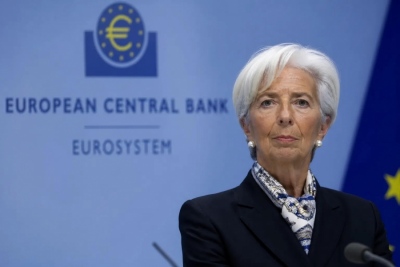
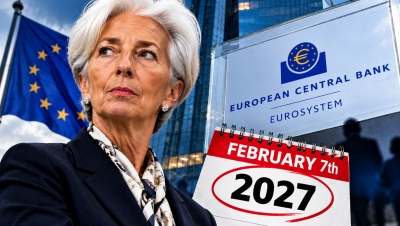
Meanwhile, rapid developments unfold at the helm of the European Central Bank (ECB), as Christine Lagarde announced her intention to step down from the presidency on February 7, 2027, several months prior to the scheduled completion of her term, which was set to end in October of that year. The development officially opens the way for the selection process of her successor during a highly critical juncture for the European economy, with inflationary pressures, elevated energy costs, and concerns regarding the fiscal condition of member states testing the resilience of the Eurozone. The departure of Christine Lagarde was confirmed on October 29, 2026, by European Council President António Costa, who noted that he was informed by Lagarde herself regarding her decision. Concurrently, he made known that the selection process for her successor will commence immediately, aiming to conclude promptly and according to established European procedures, directly impacting Eurozone monetary policy.
The battle for ECB succession begins
The early departure of Christine Lagarde creates new dynamics for the leadership of the Eurozone's most powerful monetary authority. The selection of the next president acquires particular significance, as the appointee will be called upon to manage monetary policy challenges in an environment of heightened economic and geopolitical uncertainty. According to media reports, among the names circulating at the center of discussions for succession are former Dutch central bank governor Klaas Knot and Pablo Hernández de Cos, former governor of the Bank of Spain and current general manager of the Bank for International Settlements (BIS). The final choice will constitute a subject of negotiations among Eurozone member states, as governments seek to ensure that the next ECB leadership possesses the requisite experience and credibility to manage major economic challenges. The appointment process mandates a decision by the European Council by qualified majority under European treaties, shaping future ECB leadership selection.
Departure before term expiration
Christine Lagarde assumed the presidency of the ECB in November 2019, during a period when the Eurozone confronted significant economic hurdles. Throughout her tenure, the central bank was called upon to manage the repercussions of the pandemic, the energy crisis, war in Europe, and a major surge in inflation. Her departure arrives during a period when monetary policy finds itself under renewed pressure. Rising energy costs heighten risks for inflation, while higher interest rates and elevated sovereign bond yields burden financing costs for governments, businesses, and households. The change in leadership does not merely concern selecting a new figure for the top of the ECB; it also concerns the direction that European monetary policy will follow during a time when balancing inflation control against supporting economic activity remains exceptionally difficult, influencing Eurozone inflation targets.
The World Economic Forum scenario
The possibility of Christine Lagarde assuming a new role has been linked with the World Economic Forum (WEF), the organization hosting the annual gathering of political and business leaders in Davos. According to a Reuters report on October 15, 2026, the WEF may select her for its leadership, a development that could explain her early departure from the ECB. This prospect has amplified discussions surrounding broader changes within European central bank leadership. However, assuming leadership of the WEF should not be considered a certainty absent an official announcement by the organization regarding global leadership transitions.
Markets and the critical stake for the day after
Investor attention now shifts toward the succession process and the messaging the new ECB president will convey regarding interest rates, inflation, and financial system stability. The leadership transition takes place during a period of heightened uncertainty for the European economy, with fiscal pressures in France and elevated borrowing costs standing at the center of concerns. The fundamental question centers on whether Christine Lagarde's successor will maintain the current monetary policy framework or pursue different balances between containing inflation and safeguarding economic growth. In any case, Lagarde's departure on February 7, 2027, marks the beginning of a critical period for the ECB, with decisions regarding her succession carrying immense weight for markets, governments, and the broader trajectory of European economic stability.
www.bankingnews.gr










Readers’ Comments