

In this environment, the discussion surrounding the political presence of Ilias Kasidiaris acquires particular significance
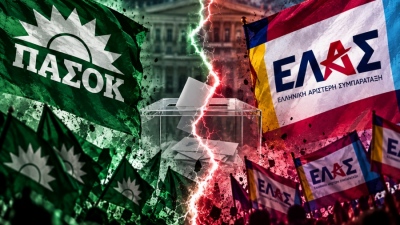
New Democracy may remain first in the vote estimate at 30.1%, recording a minor rise from 29.6% in the previous survey, but behind the top position, a picture takes shape that allows the government anything but room for complacency. High prices continue to constitute an open wound, single-party majority does not gather the preference of the majority, and a significant portion of citizens appears disappointed by the parties vying for the role of opposition. The new Interview opinion poll for politic.gr captures a complex political landscape: ND maintains the lead, but the governing party faces negative assessments on critical everyday issues. At the same time, second place remains a competitive field between the Hellenic Left Coalition (EL.A.S.) and PASOK, as the latter stands within breathing distance of Tsipras, impacting Greek electoral politics.
63% point to the government for high prices
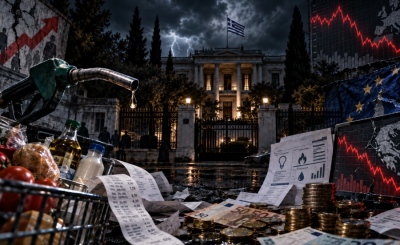
The most unpleasant finding for the Maximos Mansion concerns the high cost of living. Fully 63% of respondents attribute primary responsibility for the problem to the Greek government, while merely 34% consider international conflicts to be the main cause. This finding reflects the political cost caused by continuous pressure on household income. Despite government interventions and economic announcements, the majority of survey participants do not view inflation as a problem primarily attributable to external factors. On the contrary, they direct responsibility toward the administration. This constitutes a finding of particular weight, as living costs directly affect daily life and can determine voter behavior regarding government economic policy.
Citizens split down the middle
An additional element of concern for ND is that a single-party government does not gather majority preference in the relevant question. 46% consider a single-party majority to be the better solution, while 44% prefer a coalition government. The distance between the two percentages is narrow, registering a society that does not appear to have formed an overwhelming preference for a specific governing model. Concurrently, 54% desire a government formed through a single electoral contest, compared to 38% who prefer two elections. The message is twofold: citizens appear to seek a political solution without a prolonged electoral process, but preference for single-party rule does not exceed 50%, altering parliamentary majority prospects.
EL.A.S. and PASOK: The battle for second place
Specifically, ND gathers 30.1% in the vote estimate, compared to 29.6% in Interview's previous survey. Remaining second in voter preference—with a slight drop—is the Hellenic Left Coalition at 15.4% (15.7% in the previous poll), with PASOK in third at 14.3% and marginal losses from 14.6% a fortnight ago. Greek Solution follows with 7.4%, KKE with 5.9%, Hope for Democracy with 4.2%, Symmachia Ellinon with 3.7%, Voice of Reason and MeRA25 with 3.5%, Course of Freedom with 3.3%, SYRIZA and Democrats with 2.2%, Niki with 1.4%, and New Left with 0.6%. However, the question regarding opposition credibility reveals a different problem. 24% select PASOK as the party exercising more credible opposition, compared to 16% choosing EL.A.S. The critical finding, however, is that 60% select neither party as a more credible opposition force, exposing a shift in voter preference dynamics.
Kasidiaris and the space left by discontent
In this environment, the discussion surrounding the political presence of Ilias Kasidiaris acquires particular significance. When high prices dominate the social agenda, the government receives primary blame from 63%, and six out of ten recognize neither PASOK nor EL.A.S. as a credible opposition, conditions of political discontent are created that extreme political forces may attempt to exploit. This, of course, does not mean that this specific poll directly measures Kasidiaris's electoral appeal, as it does not include a relevant percentage or question allowing a safe conclusion on his electoral strength. It demonstrates, however, that a large section of the electorate declares dissatisfaction with available opposition choices, creating room for anti-systemic political forces.
The political conclusion is clear: ND's lead does not eliminate the pressures facing the government. Inflation, the undecided stance toward single-party rule, and low ratings for the opposition compose an environment in which political discontent remains strong and holds unpleasant surprises at the ballot box.
Piraiarchis
www.bankingnews.gr




Readers’ Comments