

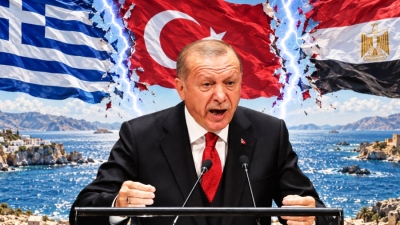
An astonishing Turkish proposal is overturning everything in the Eastern Mediterranean, as the government of Recep Tayyip Erdogan is reportedly now ready to offer Egypt 15,000 square kilometers of maritime jurisdiction area, with the aim of deterring Cairo from a comprehensive strategic agreement with Greece on the delimitation of maritime zones, as South Front revealed on October 28. Specifically, Ankara is undertaking a new effort to upend the balance of power in the Eastern Mediterranean, seeking to bring Cairo closer to Turkish positions on maritime delimitation. At the center of the Turkish argumentation lies the promise of more than 15,000 square kilometers of additional maritime jurisdiction, with which Turkey is attempting to make a bilateral agreement with Egypt more attractive than the Greek option. The issue was officially brought back by the Turkish Ministry of National Defense, sending a clear message to the Egyptian leadership that the Turkish side remains available for signing a maritime boundary delimitation agreement. This positioning was accompanied by a specific assessment of the territorial and maritime jurisdiction benefits that Egypt could secure.
Guler's bombshell: "We offer you much more than Greece..."
In fact, the Turkish Ministry of Defense reiterated the proposal during a weekly briefing, stating that an agreement with Egypt could be reached on the basis of mutual interests. At the same time, it welcomed the approval of the 2019 maritime agreement with Turkey by the eastern-based Libyan House of Representatives on October 20, describing this decision as a significant development supporting Ankara's approach to international law and fair maritime boundaries. 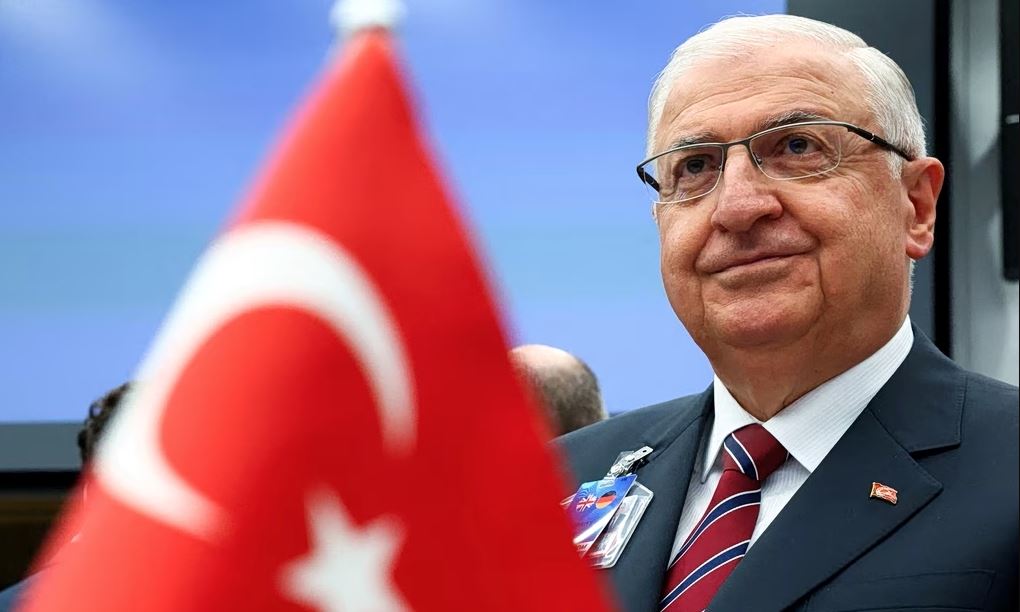
"Our proposal to Egypt is clear. If Egypt signs such an agreement with our country, it will possess approximately 15,000 square kilometers more maritime jurisdiction than it could obtain under a potential agreement with Greece," stated Defense Minister Yaşar Güler. The Turkey-Libya agreement has long faced opposition from Egypt, Greece, and Cyprus, which argue that it conflicts with their own maritime claims in the Eastern Mediterranean. Turkey maintains that the agreement is legal and protects its interests in the strategically vital waters, where conflicting claims over maritime boundaries and potential energy resources have triggered multi-year disputes.
The Turkish MoD message and the tempting proposal to Cairo
In a previous briefing of journalists held on October 28, competent sources at the Turkish ministry clarified that Ankara continues to pursue the conclusion of an agreement with the Egyptian side, putting forward the service of both countries' interests as a primary prerequisite. The Turkish position was not limited to a general declaration of diplomatic availability. The same sources also presented a numerical evaluation of the advantages that, in their estimation, would accrue to Egypt from choosing Turkey as a partner in delimitation. Specifically, they argued that concluding a relevant agreement with Ankara could offer Cairo additional maritime jurisdiction exceeding 15,000 square kilometers, compared to what would correspond to it under a corresponding agreement with Greece. In this manner, the Turkish Ministry of Defense attempts to impart specific content to its proposal, presenting the alternative Turkish delimitation as an option with measurable benefit for the Egyptian side.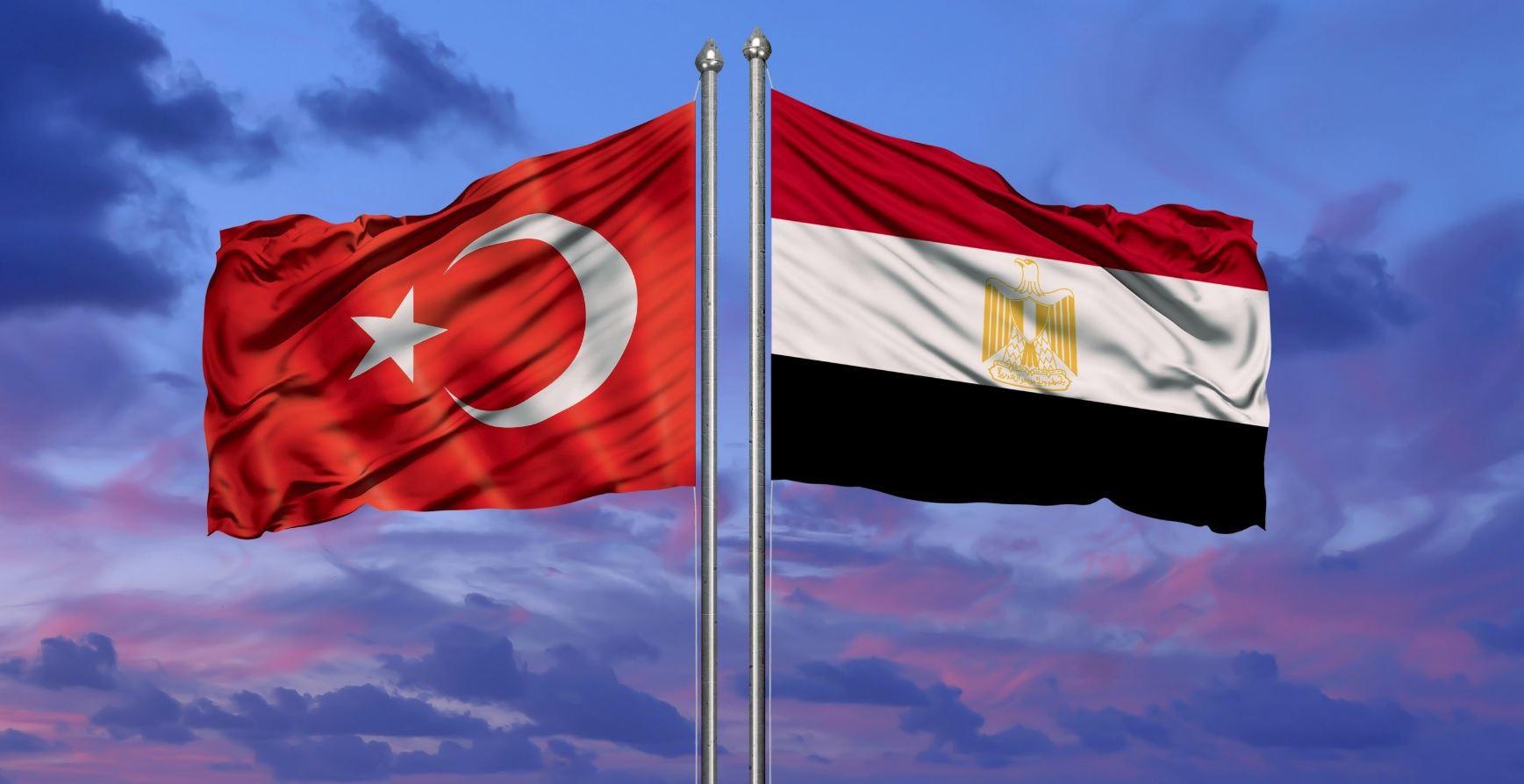
The Turkey-Libya memorandum and the "Turkish map" of the Eastern Mediterranean
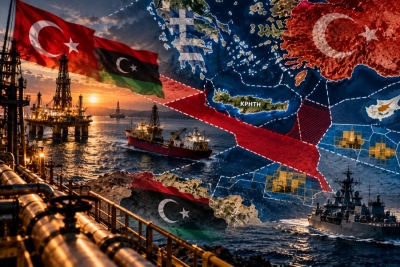
The reheating of the Turkish initiative is chronologically linked to developments in Libya and, specifically, to the approval of the Turkey-Libya memorandum by the parliament of eastern Libya on October 20. This specific development appears to offer Ankara additional diplomatic leverage for advancing its pursuits in the region, as it seeks ways to strengthen its relations with Egypt and shape new correlations around maritime delimitations. Within the framework of this strategy, the Turkish side seeks to promote a different demarcation of maritime zones in the Eastern Mediterranean, which comes into conflict with Greek positions, particularly regarding the recognition and extent of the maritime rights of Greek islands.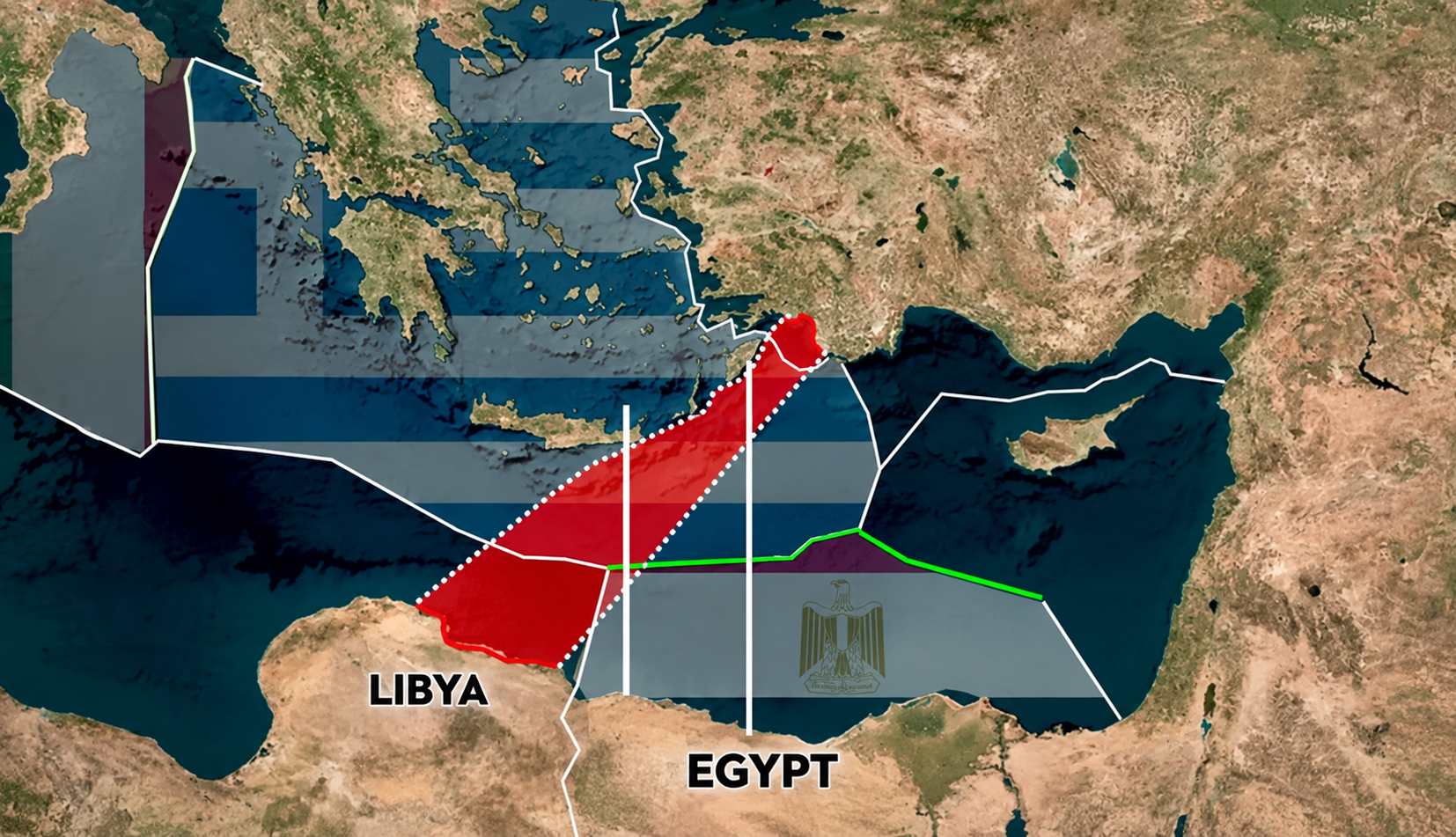
The initiative acquires additional weight due to parallel Greek-Egyptian processes. Athens and Cairo are examining the possibility of extending eastward the delimitation they agreed upon in 2020, covering maritime areas that remained outside the then partial Exclusive Economic Zone delimitation agreement. Under these conditions, Turkey is attempting to intervene in the diplomatic landscape before any potential new moves by Greece and Egypt, projecting its own proposal as an alternative settlement.
The claim of 15,000 square kilometers and Egyptian reservations
The numerical argument mobilized by Ankara constitutes a central element of its effort to influence Cairo's calculations. The Turkish approach links the proposed maritime delimitation not only with the extent of jurisdiction Egypt would acquire, but also with the broader economic and geopolitical advantages it could, from the Turkish viewpoint, reap. Nonetheless, the claim of an additional 15,000 square kilometers originates exclusively from the Turkish side, and there is yet no official positioning from the Sisi government. 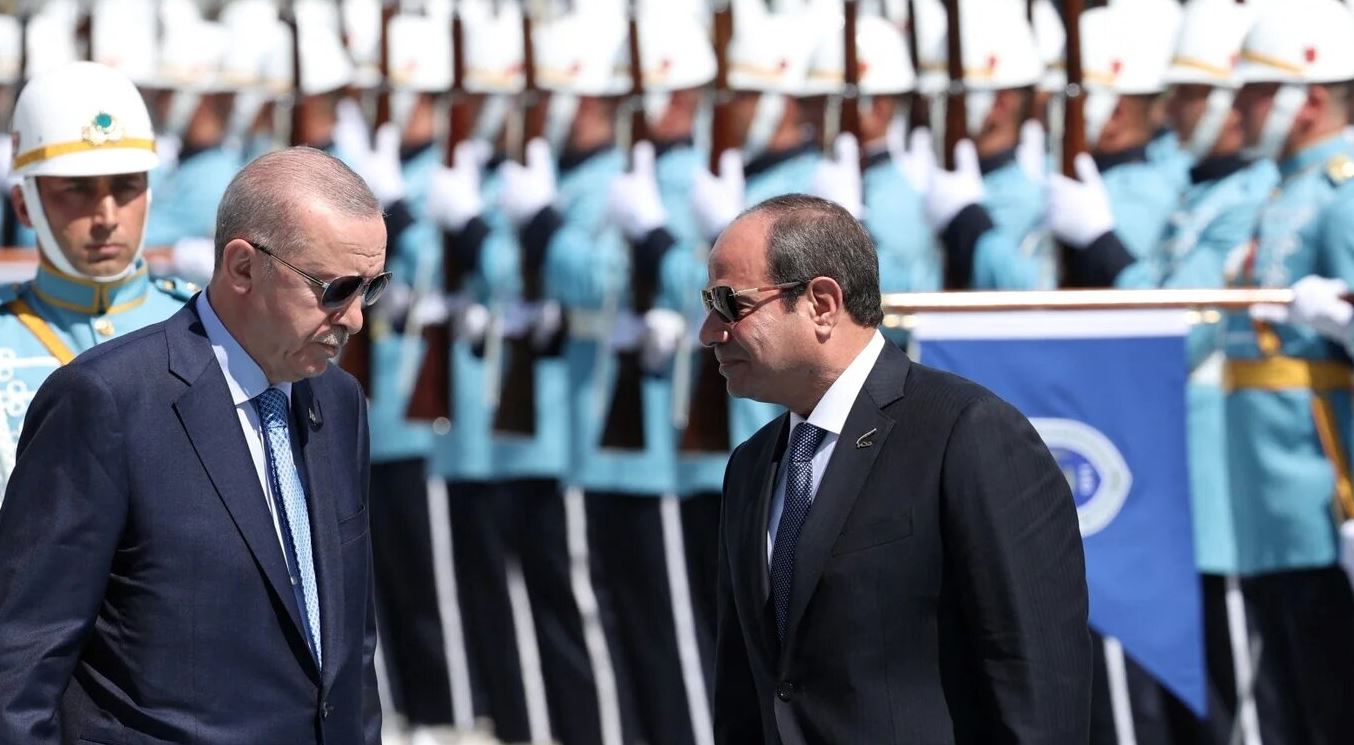 At the same time, Egypt's stance toward the Turkey-Libya memorandum constitutes a significant parameter of diplomatic developments, as Cairo has already positioned itself negatively toward the specific agreement. Moreover, despite Ankara's repeated messages and its expressed intention to proceed with an understanding, to date there has been no announcement regarding the achievement of a maritime zone delimitation agreement between Turkey and Egypt.
Egypt at the center of designs
The new public positioning of the Turkish Ministry of Defense demonstrates the persistence with which Ankara seeks to acquire a decisive role in shaping the regime of maritime zones in the Eastern Mediterranean. Egypt's approach fits into this broader pursuit, with Turkey leveraging both recent developments in Libya and the argument of a more favorable distribution of maritime areas in order to enhance the appeal of its positions in Cairo. Whether Turkish proposals can alter the Egyptian stance remains open. What emerges, however, from the resurgence of the issue is that Ankara continues to view Egypt as a crucial interlocutor in its effort to influence geopolitical balances and future maritime delimitations in the region.
www.bankingnews.gr







Readers’ Comments