

The confrontation over maritime zones in the Eastern Mediterranean is changing level, with the Greek lobby in the US intervening following Benghazi's shift in camp and the approval of the Turkey-Libya memorandum. In a letter addressed to US Secretary of State Marco Rubio, the Hellenic American Leadership Council (HALC) submits four specific demands, calling for a clearer American stance against the agreement between Turkey and Libya.
The timeline
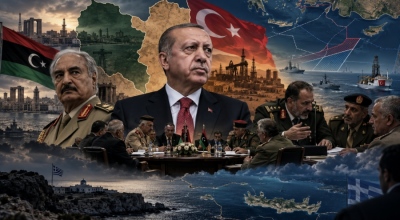
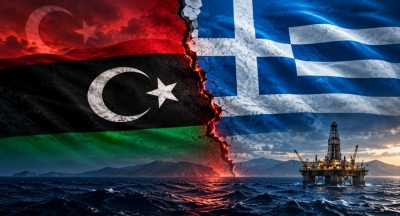
The House of Representatives of Libya unanimously approved, a few days ago, the Memorandum of Understanding on the Delimitation of Maritime Jurisdiction Areas signed in 2019 between Turkey and Libya. By a decision taken during a session in Benghazi, the previous 2020 decision that had rejected the ratification of the specific memorandum was also canceled. Following this development, the Turkish Ministry of Foreign Affairs announced that it welcomes it with satisfaction. In its announcement, the ministry underlined that the memorandum takes into account the mutual rights and interests of the two countries, on the basis of international law and equitable principles, pointing out that it will contribute to further deepening cooperation between Turkey and Libya. However, the decision of the Libyan parliament triggered immediate reactions from Greece and the European Union. European Commission President Ursula von der Leyen expressed her dissatisfaction with the approval of the memorandum in a social media post. For its part, the Greek Ministry of Foreign Affairs announced that it rejects the decision of the Libyan parliament.
Intervention by the lobby
The Hellenic American Leadership Council (HALC), a political influence organization in the US, subsequently intervened in the dispute. In a letter to US Secretary of State Marco Rubio, it requested that the Washington administration adopt a clearer stance toward the Turkey-Libya memorandum. According to a report by Hurriyet citing Greek media, HALC contends that US silence regarding the legal validity of the agreement could be interpreted by Ankara and Tripoli as tacit acceptance. The organization claims that the current approach creates uncertainty both for American energy investments in the Eastern Mediterranean and for US regional security interests. The four key demands articulated by HALC to Rubio are as follows:
-
To declare that the Turkey-Libya memorandum cannot produce legal effects against third countries.
-
To confirm Greece's rights in maritime zones.
-
To express opposition to interventions that could affect the activities of American energy companies in the region.
-
To formulate a common stance with the European Union.
HALC contends that continuing legal uncertainty may render American companies more cautious regarding investments and projects in the region. At the same time, it considers that Washington's approach should align more closely with the stance of the European Union.
The backstage
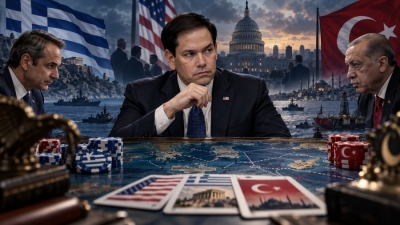
The President of the Center for Diplomatic Relations and Political Research (DİPAM), Dr. Tolga Sakman, estimates that behind HALC's initiative lies the objective to restrict international acceptance of Turkish positions on maritime zones. According to Sakman, Greece is attempting to leverage the political and economic influence of the US in the region in order to secure greater support for its own positions. He contends that Athens is also treating energy investments as a tool of diplomacy. "The primary motivation is to restrict international acceptance of Turkey's positions on maritime zones. HALC's goal is to secure clearer support for Greek positions from the US in this legal dispute, thereby limiting Ankara's room for maneuver. Furthermore, Athens seeks to transform American energy investments into a tool of political and diplomatic pressure, as it attempts to do with France as well. Simultaneously, it tries to leverage the institutional power of the European Union to influence American policy," he stated characteristically.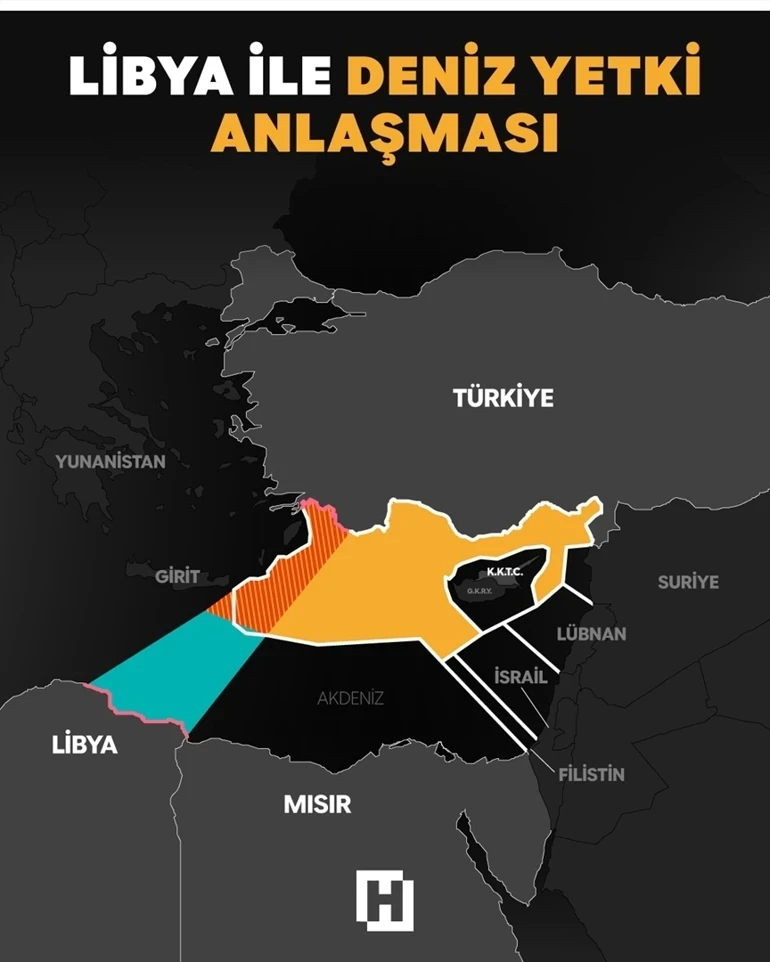
How would potential US support for Greek positions affect Turkey?
According to the Hurriyet report, Dr. Tolga Sakman estimates that a US approach favoring Greek positions could carry consequences not only at the level of diplomatic rhetoric, but also in the development of energy activities in the region. Specifically, he points out that the execution of exploration by American energy companies in maritime areas for which Greece has granted licenses could create new faits accomplis in areas where Turkey raises objections. Sakman underlines, however, that companies will also factor in commercial risks. Simultaneously, he considers that account must be taken of Greece's effort to acquire a more active role in the security policies implemented by the US across various regions of Europe. According to him, Athens incorporates energy projects into a broader strategic framework. Within this context, he also mentions the electrical interconnection plan projected to reach Israel. "Contributing to the positive stance shaping up in the US toward Greece is also the support existing for the electrical interconnection project to Israel. US Secretary of State Rubio has expressed himself politically in favor of its implementation, without however choosing to get involved in its financial dimension," Sakman stated.
Energy exploration in the Eastern Mediterranean forms a significant dimension of the dispute
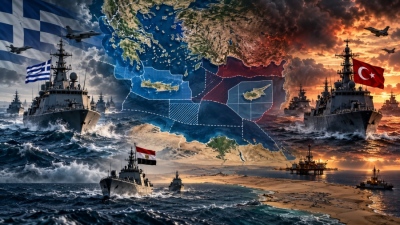
The confrontation surrounding the Turkey-Libya memorandum is connected not only to the delimitation of maritime zones, but also to energy exploration and investments in the Eastern Mediterranean. After all, American company Chevron and Greek firm Helleniq Energy signed an agreement in February for four offshore exploration blocks south of Crete and the Peloponnese. However, Libya opposes exploration activities connected to Greece south of Crete, while Turkey maintains that these specific activities do not conform with the Turkey-Libya memorandum.
For this reason, energy projects continue to constitute one of the most important fields of confrontation surrounding the maritime zones of coastal states. The European Union, for its part, considers the Turkey-Libya memorandum to be legally invalid, arguing that it violates sovereign rights of third countries. HALC requests that the US articulate an equally clear stance, corresponding to that of the EU. However, the energy confrontation in the Eastern Mediterranean cannot be evaluated exclusively on the basis of the size and economic value of discovered fields. Access to resources, production costs, transport infrastructure, and the ability to compete in international markets also constitute decisive factors for the future of energy projects.
Will energy resources intensify tension in the Eastern Mediterranean?
Hydrocarbon deposits, particularly in the maritime areas around Egypt and Cyprus, carry special significance for both Turkey and Greece. Gas discoveries in the region increase the economic and geopolitical value of energy resources, while simultaneously rendering disputes over maritime zones more complex. The president of DİPAM, Dr. Tolga Sakman, estimates that the increase in the economic value of energy resources could make reaching an agreement on maritime boundaries more difficult. However, he points out that shared economic interests could also encourage negotiations. "Particularly the deposits off Egypt and Cyprus carry importance both for Athens and for Ankara.
However, beyond the economic value of resources, access to them and their control fuel the dispute. Gas discoveries in the region have increased the economic and geopolitical value of resources. This does not mean, however, that every discovery can be commercially exploited, transported in an economically viable manner, or be competitive in international markets," he stated. Sakman points out that the increase in the economic value of energy resources may restrict the willingness of parties to make concessions regarding maritime boundaries. On the other hand, he emphasizes the importance of removing legal uncertainty to enable field development. "The more the economic value of energy resources increases, the harder it can become for parties to make concessions regarding maritime boundaries.
On the other hand, because resource development presupposes reducing legal uncertainty, the same economic interests can also encourage negotiations," he noted. This assessment highlights the dual effect of energy competition: It can intensify tensions, but simultaneously push parties toward seeking mutually acceptable solutions. Legal uncertainty may lead investors to postpone projects, while political disagreements can impede activities in the region. In both cases, the economic exploitation of energy resources is hindered.
What does Washington's announcement signify?
In its announcement on the matter, the US Department of State sent the message that the peaceful resolution of disputes could pave the way for commercial investments and energy exploration. Washington's approach underscores the connection between the de-escalation of regional tensions and the continuation of economic activities. However, the American announcement should not be interpreted as a comprehensive decision regarding the legal status of the Turkey-Libya memorandum. The fact that no definitive judgment was articulated regarding the legal validity of the memorandum and no mention was made that HALC's four demands were accepted demonstrates that the organization's expectations must be separated from the existing stance of the US administration.
Dr. Tolga Sakman stresses that at the core of the confrontation lies not only the allocation of energy resources, but also the competition to shape the regional order in the Eastern Mediterranean. "Beyond energy competition, the power struggle concerns which countries will shape the regional energy order, who will participate in infrastructure projects, and which legal interpretation will be used to examine maritime zones," he stated. Confrontations surrounding the Turkey-Libya memorandum remain at the forefront, combined with Greece's diplomatic initiatives, the European Union's legal objections, and energy investments in the Eastern Mediterranean. Washington's next moves are considered significant both for relations between Washington and Ankara and for the future of energy projects in the region and diplomatic negotiations regarding maritime jurisdiction.
www.bankingnews.gr




Readers’ Comments