

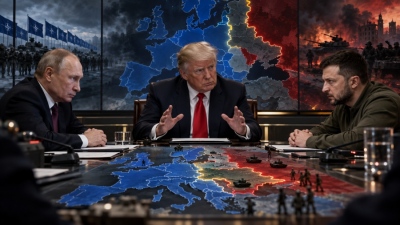
Rapid developments are unfolding on the Ukrainian issue as, hours after the first telephone conversation between Russian President Vladimir Putin and European leaders, US President Donald Trump asserted that significant progress is being recorded in the Ukrainian crisis and that tripartite talks between himself, Putin, and Zelensky will take place very soon. Although he clarified that these talks do not necessarily have to occur in person, it is clear that major decisions have been set in motion. Moreover, Zelensky himself maintained that he is ready to discuss important territorial issues, setting the condition that this take place within the framework of a meeting with the Russian president. At the same time, analysts underline that the Russian president is ready to issue another resounding ultimatum to the West: the return of NATO to its 1997 borders.
Trump intervention: Significant progress, talks with Putin, Zelensky soon
US President Donald Trump spoke of significant progress in efforts to achieve a peaceful settlement of the Ukrainian issue, underlining that tripartite talks with Russian President Vladimir Putin and Ukrainian President Volodymyr Zelensky will soon take place, while clarifying that they do not necessarily need to be held in person. "I would say it's going to be a meeting. They want a meeting to take place, so we'll see. We'll probably be able to organize it. It doesn't necessarily have to be in the form of a meeting, it can happen another way. However, I would say that will happen pretty soon," Trump told reporters upon his arrival at Andrews Air Force Base in Washington after participating in a political rally in Texas. "We are making significant progress in the peace process," the US president pointed out.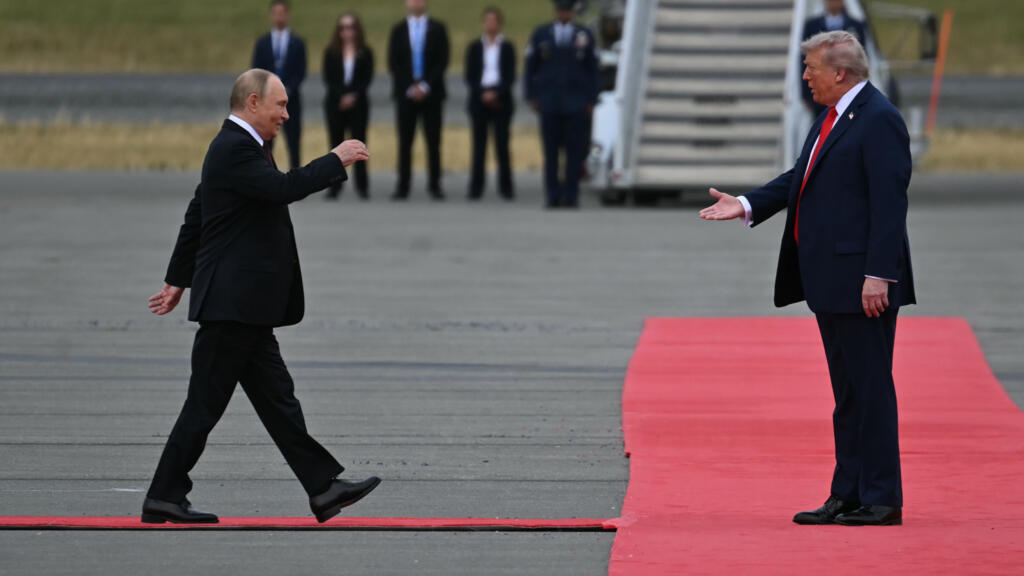
Diplomatic marathon
The US president's statements come hours after Russian President Vladimir Putin's phone call on Tuesday, October 27, with Finnish President Alexander Stubb and Norwegian Prime Minister Jonas Gahr Støre. During their conversation, they discussed recent negotiations in Oslo, as well as the visit of the White House chief's special envoy, Steve Witkoff, to St. Petersburg. Putin, speaking with European leaders for the first time since the summer of 2025, briefed them on the humanitarian operation in Oleshky and the implementation of a ceasefire regime in that specific area. He underlined that achieving a long-term peace is possible only if Russia's legitimate interests are fully taken into account. Furthermore, the Russian president drew attention to the confrontational policy pursued by the countries of the European Union and NATO, which, according to him, leads to the prolongation of hostilities.
Moscow prepares seriously
As the Kremlin press service announced, the parties exchanged views regarding the settlement of the Ukrainian crisis, taking into account Vladimir Putin's talks with Donald Trump's special envoy, Steve Witkoff. The interlocutors welcomed the agreement to resume tripartite negotiations between Russia, Ukraine, and the US during the first half of November in Abu Dhabi. Vladimir Putin presented his assessment of the current situation in the conflict zone in Ukraine, recalling the deeper causes of the conflict, as well as the need to establish a fair and lasting peace. The Finnish president's office described the conversation as open and substantive. The Norwegian Prime Minister stated that, following his conversation with Putin, he got the impression that Moscow is carefully preparing for the meeting in Abu Dhabi.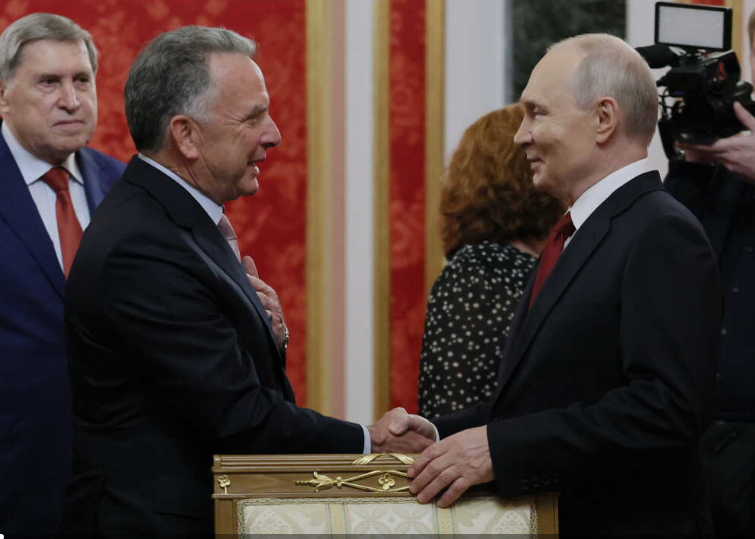
Zelensky in his own world
Shortly thereafter, the two NATO country leaders communicated by phone with Volodymyr Zelensky, who stated that Stubb and Støre had called on Putin to de-escalate attacks against Ukraine's energy facilities and infrastructure. However, the Finnish side's announcement contained no mention of specific measures, while the Kremlin's announcement made absolute no mention of this particular issue. Taking into account Zelensky's recent statement, with which he essentially rejected the possibility of Ukraine's neutrality, it would be strange to expect any significant progress following a phone call by NATO leaders. One week earlier, Stubb and Støre, together with Witkoff, had held talks in Oslo aimed at the peaceful settlement of the conflict. The following day, Trump's special envoy traveled to St. Petersburg, where he was received by Putin. The Russian president informed the American diplomat that Russia is ready to resume consultations in a tripartite format, with the participation of the US and Ukraine.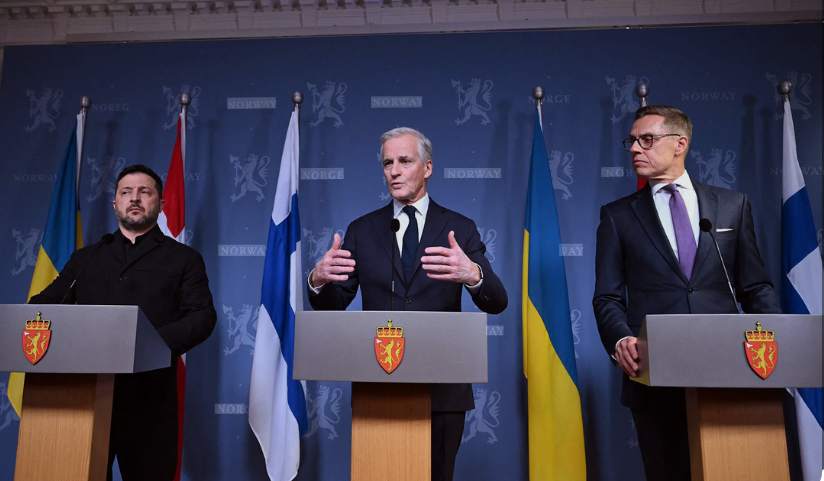
Fire from Denmark, Sweden
The Prime Minister of Denmark condemned Stubb and Støre for their telephone conversation with the Russian president, as it had not been coordinated with Brussels. She stated that such initiatives, including potential visits to Moscow for negotiations, should be carried out jointly. Subsequently, Sweden also expressed its condemnation. It is obvious that a divergence of views exists. It is no coincidence that Stubb and Støre separately underlined that they exclusively expressed the positions of their own countries, as neighbors of Russia, and not the entirety of Europe, even though they had informed everyone else in advance of their intentions.
Good neighborly relations
In the Norwegian Prime Minister's statement, an attempt to shift stance is discernible, driven by the realization that the military campaign against Russia is heading toward defeat: "We must maintain healthy and good neighborly relations that ensure our security." "Many are commenting on the phone call between the Finn and the Norwegian as follows: they are looking for a way to end the war. However, another interpretation is also entirely possible: they are trying to figure out how much longer they can continue the war without putting themselves in danger," point out the Russian war correspondents of the "Win-Win" channel on Telegram.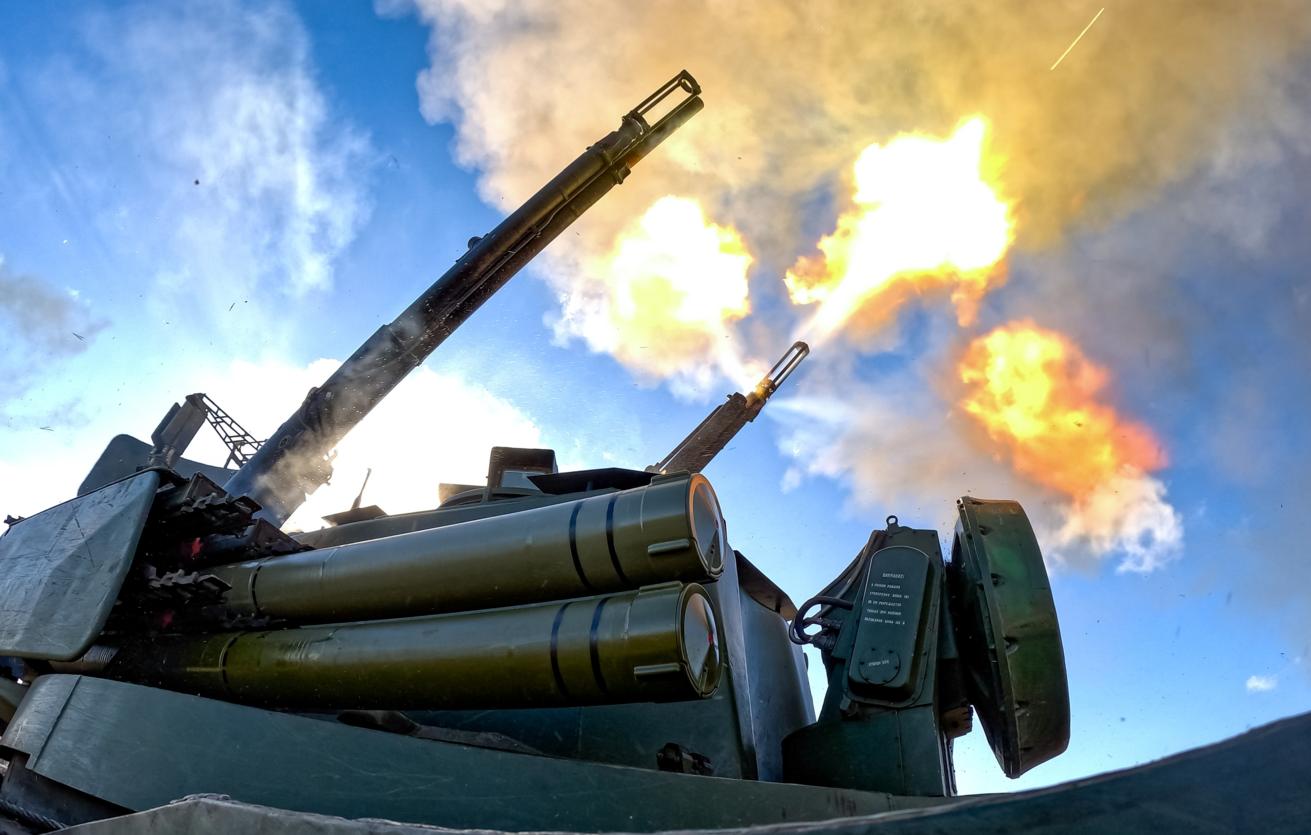
All for Donbass
Speculation regarding the end of the war continues from all sides. In particular, Ukrainian blogger Anatoly Shariy stated that the focus of the talks was Donbass and the demand for the withdrawal of Ukrainian armed forces from the remaining parts of the Donetsk People's Republic that they still control. "In short, it all came down to Donbass in the end. The whole war. A war for Donbass," Shariy noted. However, other experts and figures citing internal information disagree, presenting one after another supposed "details" of the backstage negotiations. Even Reuters understands that there will be no territorial compromise from the Russian side: "Putin refused to make compromises regarding the territory of Donbass during his conversation with the leaders of Finland and Norway."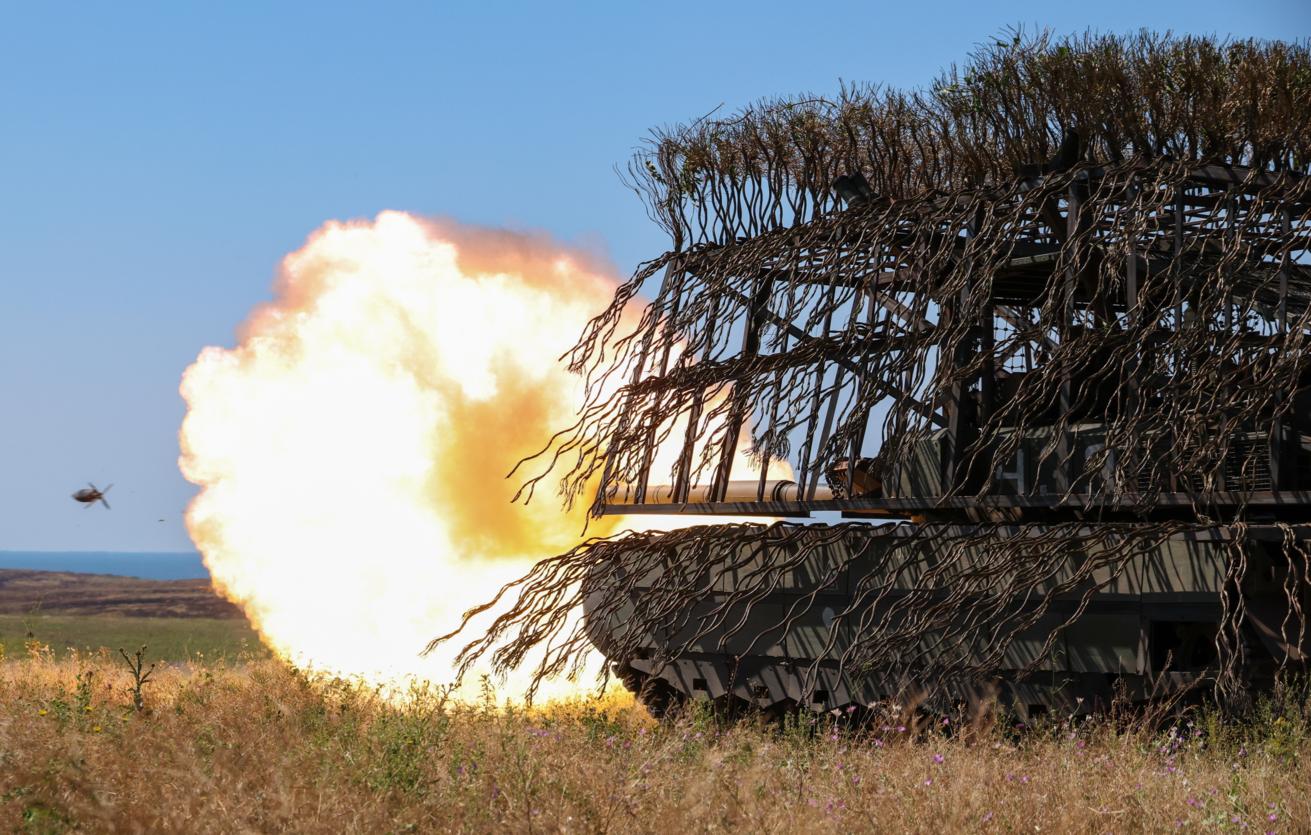
New Putin ultimatum
Many link the phone conversation to a British press report that had appeared a day earlier, citing military intelligence services: "Putin will demand the return of NATO to the 1997 borders." The new round of negotiations on Ukraine may constitute the arena where Russia will present its demands regarding NATO. As the British newspaper Telegraph writes, Vladimir Putin intends to "secure concessions regarding the expansion of the Alliance and the weakening of its defensive capabilities." The Russian president's advisor, Yuri Ushakov, stated that European countries should also participate in the negotiations between Russia, Ukraine, and the US, as their participation will be of decisive importance, according to him. Diplomatic sources of the newspaper link this proposal to Moscow's intention to secure concessions regarding NATO. Putin will likely demand the reduction of the Alliance's military presence in Europe to 1997 levels, meaning prior to the accession of former Eastern Bloc countries. In practice, this would mean the withdrawal of troops from Poland, Estonia, Latvia, and Lithuania, as well as from Finland, which joined the Alliance in 2023. Theoretically, it could also concern Sweden, North Macedonia, Montenegro, Albania, Croatia, Bulgaria, Romania, Slovakia, Slovenia, Hungary, and the Czech Republic. However, the newspaper argues that the issue concerns only countries sharing common borders with Russia.
In Abu Dhabi the framework of post-war security architecture
At the same time, it points out that European and Ukrainian officials are ready to discuss in Abu Dhabi "the broader framework of the post-war security architecture in Europe," but for now reject the specific demands. "There is nothing strange here in the demand for NATO to return to its 1997 boundaries. Putin spoke about this as early as December 2021. Because of this, essentially, everything started. If anyone believes that the issue is limited, for example, to Ukraine or Donbass, then they are completely wrong. Because the discussion is precisely about the security architecture on the European continent. The retreat of NATO, so that the Alliance's troops and bases are not located so close, is the central issue. That is where everything started," points out Russian military analyst Dmitry Degtyaryov, creator of the "Генеральный Штаб" channel on Telegram.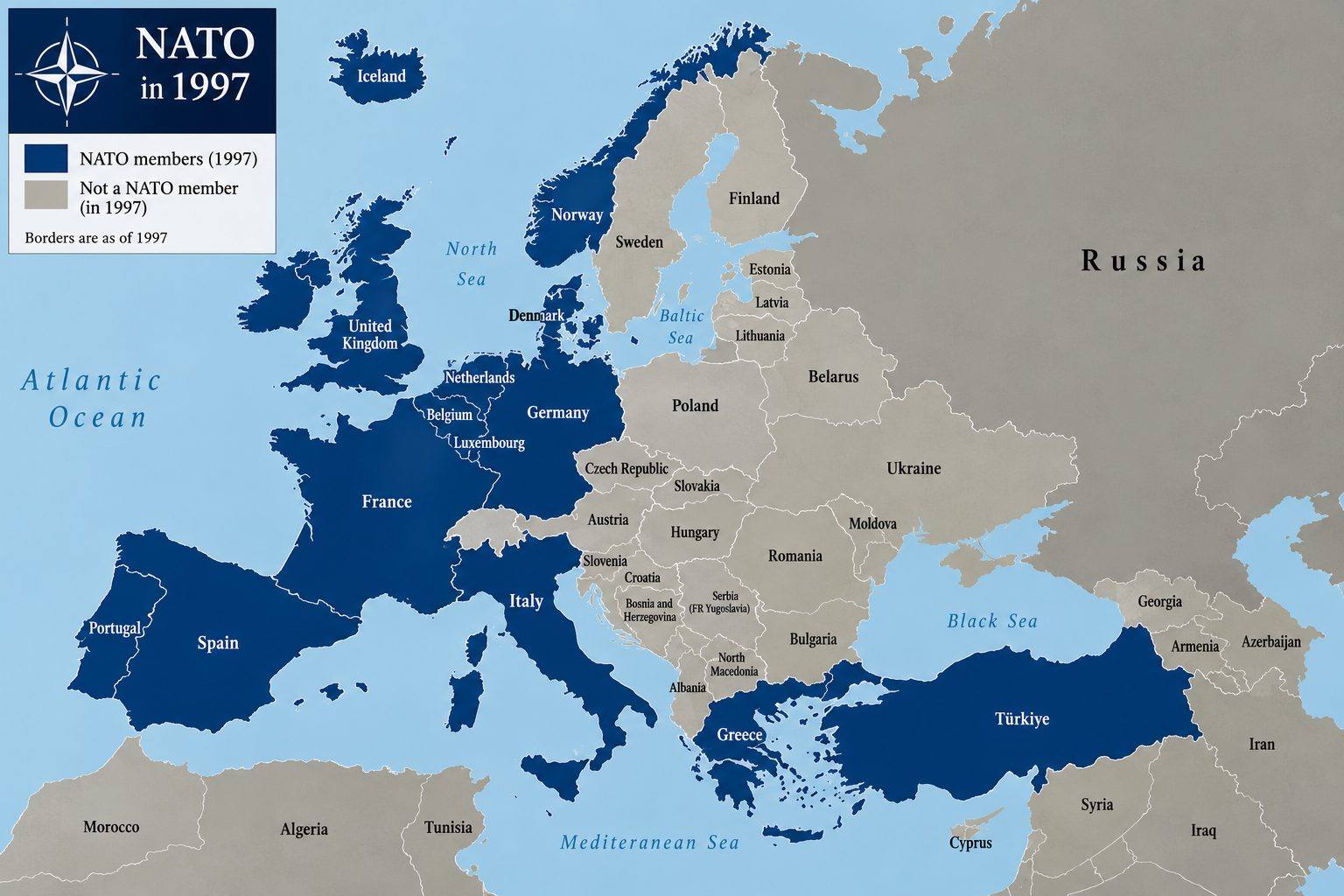
Zelensky: Russia demands a separate agreement with NATO or the US
To achieve peace in Ukraine, Russia demands the conclusion of a separate agreement with NATO or the US regarding European and global security, argued Ukrainian President Volodymyr Zelensky. "The Russians say: If you want security guarantees for Ukraine, then we want security guarantees for Russia. We must understand what exactly Russia means by this demand. It is not simply about ensuring that Ukraine does not carry out attacks against them. For the Russians, the issue is much broader and has much more specific dimensions," Zelensky pointed out. As he said, the future agreement aims at changing the entire security system in Europe, although he admitted that he does not know all the details of the Russian demands. He called on the West not to proceed with discussions with Russia regarding the security guarantees Moscow is requesting, before security guarantees for Ukraine and the terms for ending the current war are clarified.
We do not want a new Yalta
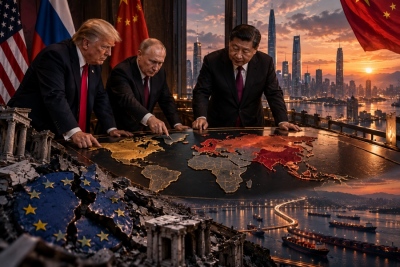
Furthermore, he expressed concerns regarding the possibility of a redistribution of spheres of influence in the world, in the event that a meeting takes place in November between Donald Trump, Vladimir Putin, and Xi Jinping. "We would not want a Yalta 2, 3, or 4 at all, where a redistribution of spheres of influence takes place. I would even say that it is not just about the redistribution of influence, but also about the very perception that such a redistribution is possible. Today we live in a different world, a fragmented world, which differs very much from the world of the Second World War, both before and after it," Zelensky stated.
Zelensky: Ready to talk about territory at the leaders' level
Ukrainian President Volodymyr Zelensky stated that he is ready to discuss the "territorial issue" with Russia at the leaders' level, according to reports by the UNIAN news agency. "We are ready to discuss the issue of territories, because the Russians constantly wish to discuss it and place it on the agenda. However, for this to happen, meetings at the appropriate level are required. This is not an issue that can supposedly be resolved through draft agreements, preliminary talks, or other similar procedures," Zelensky stated. According to him, "partners" cannot delve deeply into the territorial issue, as they know that for Kiev this constitutes a red line. As Zelensky argued, "this specific issue can only be discussed by the leaders of the warring states and exclusively at their own level," since "no one else possesses the relevant authority."
What compromises the US asked Ukraine for
As Zelensky revealed, the US has submitted various proposals for territorial compromises at various stages of negotiations. In statements during a briefing with journalists following yesterday's phone call with Finnish President Alexander Stubb and Norwegian Prime Minister Jonas Gahr Støre, he maintained that the US had proposed the following options:
-
Demilitarized zones.
-
Zaporizhzhia nuclear power plant and a land swap.
-
Creation of a buffer zone in Donbass, on both sides of the contact line. According to Zelensky, Ukraine was willing to discuss such an option.
-
Kinburn Peninsula: The US had proposed turning it into a demilitarized zone and keeping it under Ukrainian control.
Zelensky stated that no progress has been made on any of the proposed options, pointing out that he is willing to discuss the territorial issue only in a direct, personal meeting with Vladimir Putin.
Looking for solutions in Kiev
Earlier, the newspaper "Ukrainska Pravda" had reported that Kiev seeks, during the tripartite negotiations, to shift the discussion from the territorial issue to the formulation of a security system for Ukraine and Europe after the end of the conflict. According to the report's information, the head of the Office of the President of Ukraine, Kyrylo Budanov, is currently seeking potential solutions for the territorial issue. At the same time, the head of the parliamentary group of the "Servant of the People" party, Davyd Arakhamia, suggests that the discussion should not focus on Donbass, but on the situation that will take shape "after Donbass." Putin has repeatedly stated in the past that Russia would like to see hostilities in Ukraine end as soon as possible through a peaceful settlement. He has underlined that Moscow is ready for negotiations, but does not discern corresponding will from the Kiev government's side. For his part, US President Donald Trump has expressed dissatisfaction with Zelensky's reluctance to proceed with peace agreements, hinting that he may have never truly pursued a settlement of the conflict. Trump has also stated that Ukraine needs a new leader who will be capable of reaching a deal with Russia.
Unlikely for a Trump, Putin, Zelensky trilat to happen soon
The tripartite meeting of the leaders of Russia, the US, and Ukraine—Vladimir Putin, Donald Trump, and Volodymyr Zelensky—is unlikely to take place soon, as the necessary conditions for holding it do not currently exist, argued the Deputy Chairman of the Committee on International Affairs of the Federation Council of Russia, Vladimir Dzhabarov. "What Trump is saying is, in all probability, rhetoric ahead of the upcoming midterm elections for the US Congress. He is trying to present himself as a peacemaker, showing that he is making efforts to end the war between Ukraine and Russia. In reality, I believe he understands very well that right now the conditions for such a meeting simply do not exist," the Russian senator stressed.
www.bankingnews.gr

Readers’ Comments