

Rapid developments are unfolding regarding the unprecedented terrorist attack against the Greek Orthodox church of Saint George in the village of Hammoud, in Jordan's Karak governorate. The attack took place on Friday, October 23, 2026, resulting in the tragic death of 9 people and injuring approximately 40 others. As competent Jordanian services announced, the three armed perpetrators were arrested during a shootout with security forces. During the armed clash, all three terrorists were injured. However, despite the arrests, the question remains: who is truly behind the carnage and why was a Greek Orthodox church targeted? Clear answers have not yet been given.
The timeline of the attack
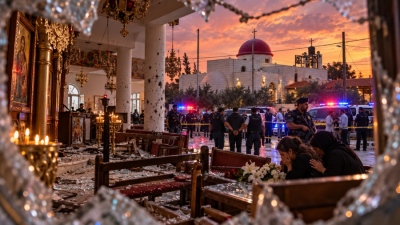
The tragedy unfolded at the church of Saint George in the Hammoud area, roughly 120 kilometers southwest of the capital, Amman. According to information broadcast by international news media, the perpetrators arrived at the church in a vehicle and opened fire on the gathered worshippers. The funeral service was still underway. People who had gathered to bid farewell to a deceased person suddenly found themselves facing an armed attack, without any practical means of defense. ABC News verified security camera footage showing at least three gunmen arriving at the church entrance and opening fire. Eyewitnesses described scenes of panic as attendees tried to take cover from the bullets.
Gunmen storm a church funeral in Jordan, killing 7 and injuring 40. Two remain critical Three armed attackers were seen firing before rushing towards Hamoud Greek Orthodox Church in Karak Manhunt is underway. Jordan calls it a terrorist attack by extremists. No group has claimed responsibility
— Nabila Jamal (@nabilajamal_) October 24, 2026
Continuous gunfire
According to testimony broadcast by CBS News, the gunfire lasted for about five minutes, while dozens of people were inside the church and its surrounding area. The duration of the attack, the presence of multiple gunmen, and their escape by vehicle are elements being examined by authorities to reconstruct their modus operandi.
Nine dead, dozens injured
The toll of the attack worsened over the following hours. Initial reports spoke of seven dead, yet newer official updates raised the number to nine. Jordan's state news agency Petra recorded nine dead and 34 injured, while Reuters reported about 40 injured. The fact that the attack took place inside a place of worship, during a funeral, imparts particular gravity to this terrorist assault.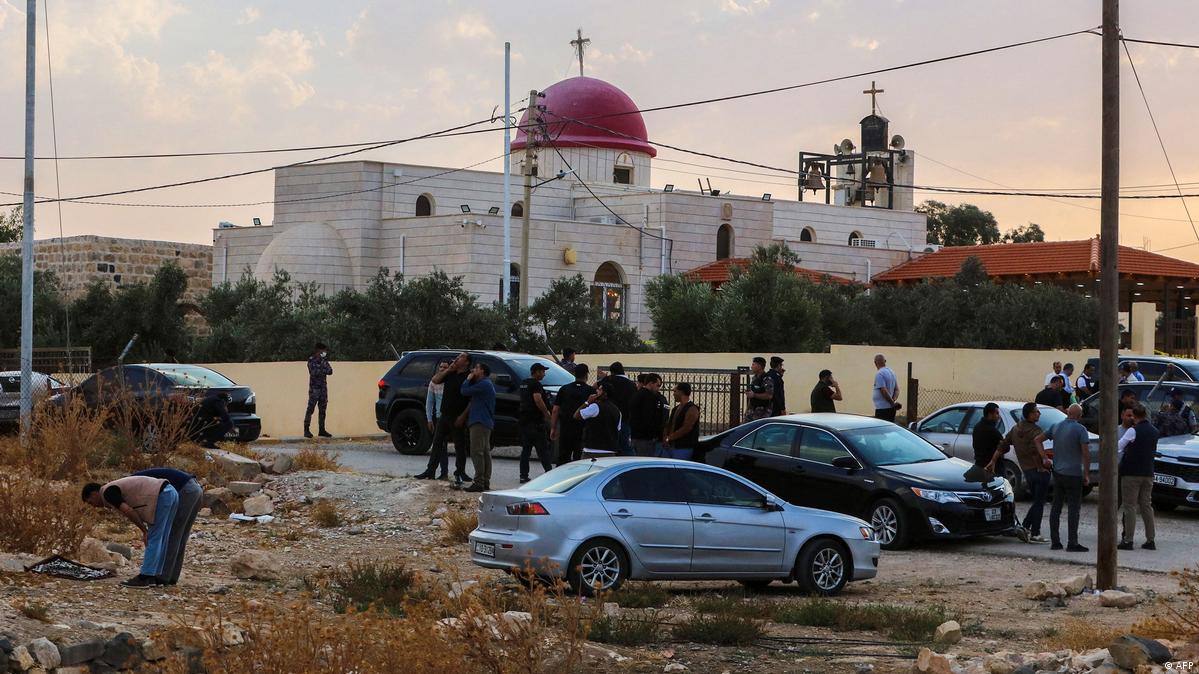
How the three suspects fell into the authorities' hands
The response of Jordanian security forces came in the early hours of Monday, October 26. Following a multi-day search and surveillance operation, competent services located three suspects in an abandoned house in the Karak governorate. According to Al Jazeera, the hideout was located in the village of Al-Jadeeda. The Public Security Directorate announced that the suspects refused to surrender and opened fire on police officers who had surrounded the building. An armed clash ensued, during which all three men were injured. They were ultimately disarmed and arrested, while according to official updates, no member of the security forces was injured. Firearms and ammunition were found in the hideout. A governmental source cited by Al Jazeera stated that the operation lasted about three hours and that one of the detainees was in critical condition. Authorities consider their arrest a significant development in the case, without yet releasing full details regarding their identities and potential connections.
Abdullah II's "iron fist"
The attack triggered an immediate mobilization of Jordan's political and military leadership. King Abdullah II ordered authorities to deal with an iron fist against anyone attempting to undermine the country's security and national unity. During a National Security Council meeting, he underlined that the protection of Jordanians constitutes a red line. The message was clear: the attack is treated not only as a mass casualty crime but also as a serious challenge to the kingdom's internal stability. Interior Minister Mazen al-Faraya stated that security services fulfilled their mission with the arrest of the alleged perpetrators. Concurrently, the government is examining factors that can lead young people toward violent extremism. This particular dimension acquires special significance as the Jordanian state has striven for years to maintain its internal security in an extremely volatile geopolitical region.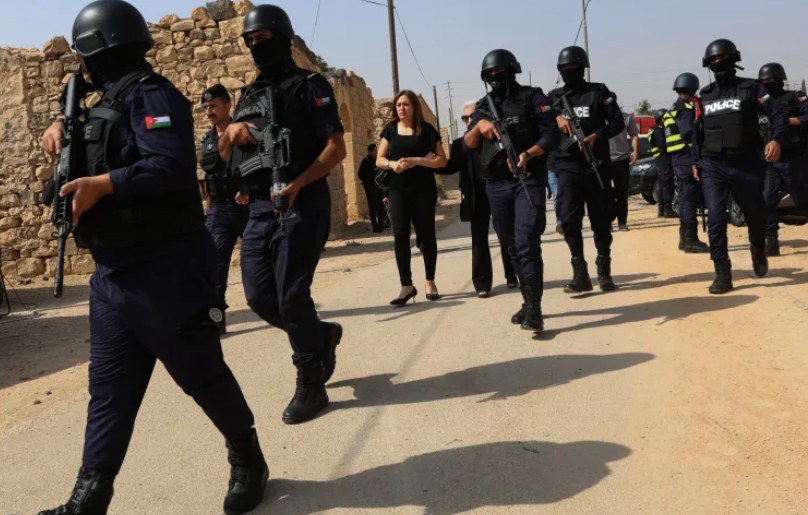
The big mystery: Who gave the order for the carnage?
Despite the arrests, the case continues to be surrounded by serious questions. So far, no armed organization has claimed responsibility for the attack. Authorities also had not announced a proven connection between the three suspects and ISIS or another specific extremist network. This is particularly important. The fact that a terrorist attack targets a Christian church is not enough on its own to prove who organized it. Investigators are called upon to ascertain whether the detainees acted autonomously, whether they had support from other accomplices, or whether there was organized guidance. Yet another question arises from testimonies publicized by ABC News. According to eyewitnesses, there may have been a fourth person driving the gunmen's vehicle. This information has not been officially confirmed. If proven, however, it will create new data regarding the number of participants and the planning of the attack.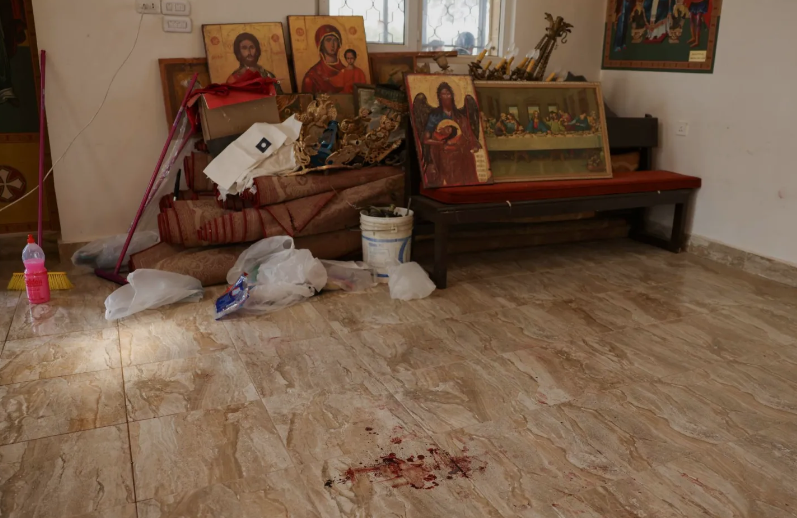
Christians in the crosshairs? The choice of the church causes concern
The choice of Saint George's church as a target is at the center of the investigation. Jordan is a Muslim-majority country that nevertheless hosts a historic Christian presence. The Karak region hosts a significant Christian community with deep roots in the social and religious history of the place. The attack on a Greek Orthodox church reignited fears regarding the security of Christian communities in the wider Middle East. However, it remains crucial to separate two distinct issues. The first is that the target was undeniably a Christian place of worship and people participating in a religious ceremony. The second is that the exact motive of the perpetrators has not yet been clarified. The religious identity of the victims constitutes a decisive element of the incident, but the final evaluation of the motive requires evidence from the police and judicial investigation.
Strong intervention by the Patriarchate of Jerusalem — "We will not abandon our land"
Particularly resounding was the reaction of the Greek Orthodox Patriarchate of Jerusalem. Patriarch Theophilos III, the Holy Synod, and Metropolitan Christopher of Jordan expressed their deep sorrow for the attack and their condolences to the families of the victims. In an official statement on October 23, the Patriarchate condemned the bloody act and emphasized that the attack directly struck the orthodox community. The most important element of the announcement was the categorical position that terrorism will not lead Christians to abandon their ancestral land. The Patriarchate pointed out that Christian communities constitute an integral part of the history, present, and future of the region. Concurrently, it underlined the need to maintain unity between Christians and Muslims. This is an intervention with clear religious and social significance. During a period when the Middle East is tested by successive conflicts, the Patriarchate attempts to prevent the terrorist attack from turning into a pretext for religious confrontation.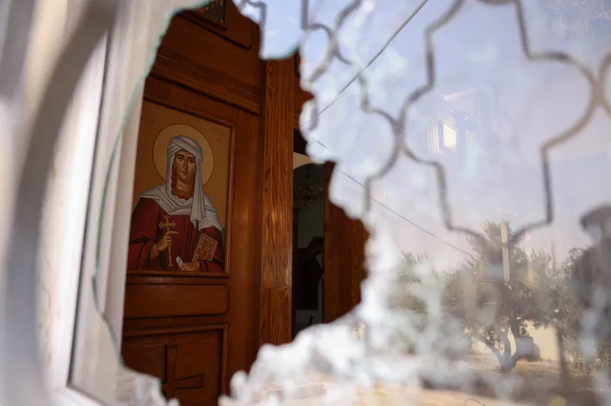
Bells of mourning across the entire region
The attack provoked reactions from other Christian Churches as well. The Patriarchs and heads of the Churches of Jerusalem issued a joint statement condemning the murder of civilians in a place of worship. They even called upon churches in the region to toll their bells at noon on Saturday, October 24, as a sign of mourning and solidarity.
Deep emotion
On Sunday, October 25, the Karak region experienced moments of deep emotion. It is estimated that about 3,000 people gathered to bid farewell to the victims of the attack. The images of the funerals, with the families of the dead mourning and security forces on high alert, captured the magnitude of the tragedy. The Jordanian government declared three days of national mourning, while flags flew at half-mast on government buildings. At the same time, protection measures around churches and other sensitive areas were reinforced.
The ghost of 2016 returns to Karak
The Karak region has experienced the violence of terrorism in the past as well. In December 2016, gunmen carried out a series of attacks against police officers and other targets, including the area of the historic Karak castle. Those attacks cost the lives of ten people, including seven members of the security forces. The new bloodshed inevitably reignited memories of that period. Although no connection between the two cases has been proven, the history of the region heightens concern over the possibility of new violent actions.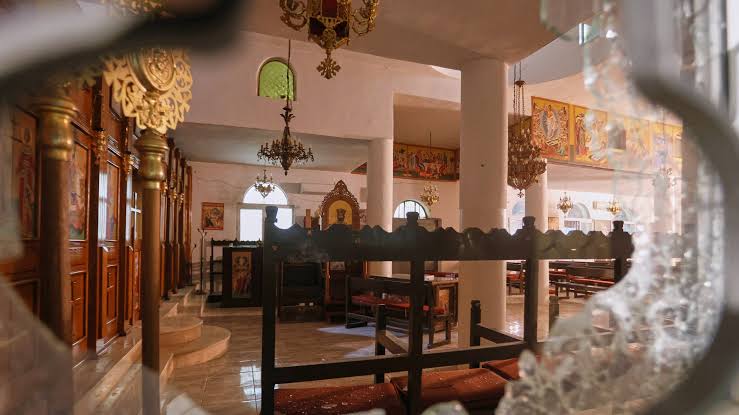
Alarm in the Middle East
Jordan is considered one of the most important stability factors in the wider region. It maintains close relations with the US and is located in a geographic zone directly influenced by developments in Syria, Iraq, Israel, and the Palestinian territories. Its geopolitical position makes the kingdom's internal security a matter of broader regional interest. A major terrorist attack causes not only human losses. It tests the effectiveness of security services, citizens' trust in state institutions, and social cohesion. The rapid arrest of the three suspects constitutes a significant operational result for the Jordanian authorities. Whether, however, this specific attack is connected to a wider extremist network remains unknown. Without such evidence, it cannot be deduced that the country faces a new, organized terrorism campaign.
International outcry
The deadly attack provoked intense reactions at an international level. UN Secretary-General Antonio Guterres condemned the bloodshed and demanded that all responsible be identified and held accountable. Condemnatory statements were also issued by governments and religious leaders in Middle Eastern countries. Lebanese President Joseph Aoun underlined that terrorism seeks to strike coexistence and provoke division. A similar reaction came from the Grand Imam of Al-Azhar, Ahmed al-Tayeb, who condemned the attack and expressed condolences to the families of the victims. These reactions carry special weight as they highlight the joint condemnation of violence by different political and religious leaderships.
The critical questions
It is obvious that the arrest of the three suspects closed an important chapter of the police operation. It did not close the case, however. Authorities must now answer a series of critical questions.
-
What was the exact motive of the attack?
-
Were there accomplices not yet located?
-
How did the perpetrators procure their weaponry?
-
Why did they choose this specific church and this specific timing? And above all, was it an attack by a small group or an operation with wider organizational support? So far, publicly available information does not allow definitive answers. What is certain is that the carnage in Karak brought back to the forefront the vulnerability of civilians facing extremist violence. The image of gunmen opening fire against people participating in a funeral constitutes the most tragic reminder of this reality. Nine people are dead, dozens of families mourn, and three suspects are in the hands of authorities. For Jordan, the critical wager is twofold: to fully uncover who organized and carried out the carnage, and to safeguard the coexistence of religious communities from the threat of extremism. Because arrests may have given the first answer to the Karak massacre, but the true background of the attack still remains in the dark.
www.bankingnews.gr





Readers’ Comments