

US intelligence agencies warn of increased and advanced efforts by Iran to target American officials and diplomatic personnel
With bated breath, global public opinion follows developments in the Persian Gulf and across the broader Middle East, as all indications converge on the assessment that we stand before yet another round of military confrontation.
At the very moment when the US and Israel draw up their war plans, revelations by American media that Iran, beyond other retaliatory measures it will pursue, has devised a plan to target diplomats and military personnel of the US cause a sensation.
The fact that Washington is curtailing its diplomatic presence across a number of countries demonstrates the scale of panic prevailing in Washington.
Washington warns of Iranian operations against American officials
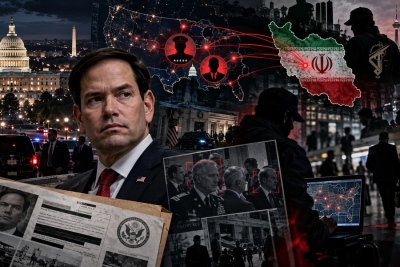
According to information disclosed by American media outlets, including Axios, Associated Press, and CBS News, intelligence agencies of the US warn of increased and advanced efforts by Iran to target American officials and diplomatic personnel.
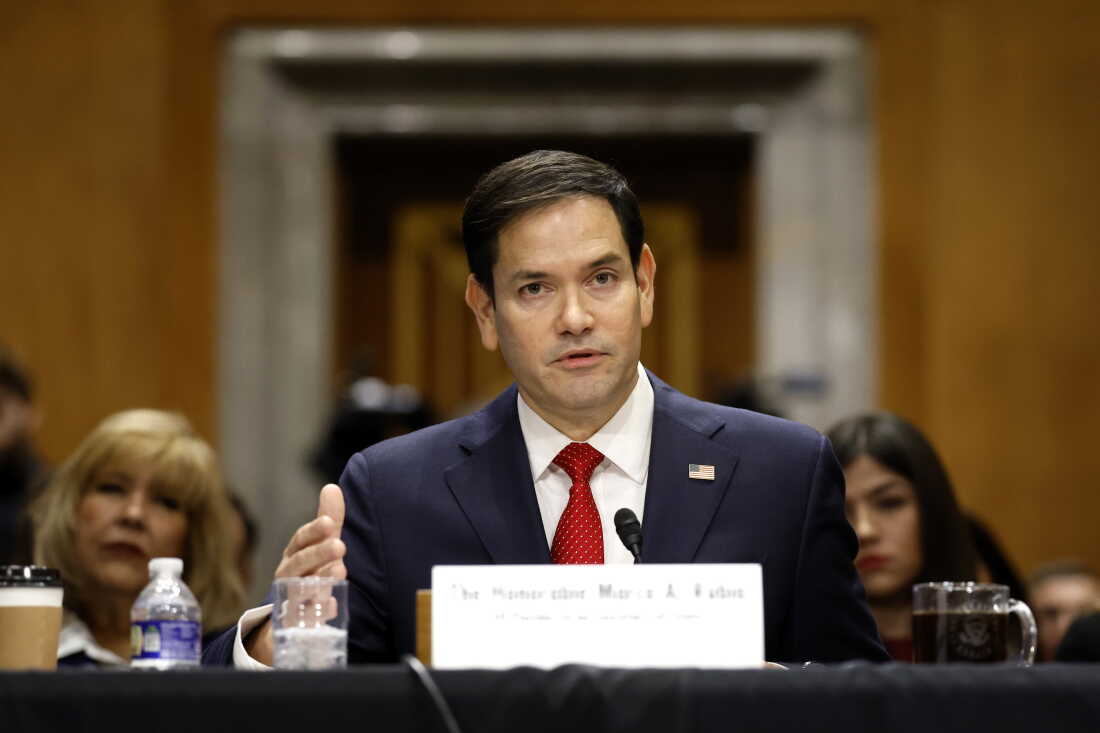
In an official memorandum dated October 23, 2026, Director of National Intelligence Jay Clayton informed Secretary of State Marco Rubio that certain alleged plots against Americans have reached, according to available intelligence, an advanced stage.
However, the memo does not specify concrete targets, attack timelines, or other specifics.
This constitutes an essential parameter, as the allegations formulated by American intelligence services do not name specific countries.
Nevertheless, it is striking that the memo leaves open the possibility of operational networks of the Revolutionary Guards (IRGC) operating inside the United States.
It is recalled that the US Department of State has moved to reduce staff across diplomatic missions in Jordan, Lebanon, Qatar, and the United Arab Emirates.
In Saudi Arabia, departure instructions have been issued to non-essential personnel and family members of American diplomats, including facilities in Riyadh, Jeddah, and Dhahran.
The American side attributes these measures to heightened security risks, including threats linked to Iran and the Ansar Allah (Houthis) movement of Yemen.
The new threats by Trump and the policy of military pressure
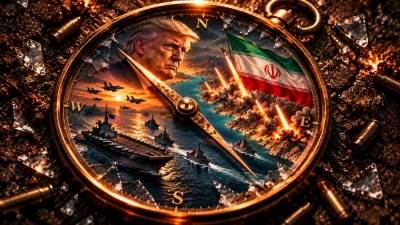
Amid this climate, Donald Trump openly reintroduced the prospect of a new military operation against Iran.
Speaking at a rally in Florida, the American president referred to operation «Epic Fury», hinting that a new operation could be carried out if Tehran does not accept an agreement with Washington.
His phrasing brings back a fundamental question: can a viable diplomatic agreement be achieved under the constant threat of military attack?
From the Iranian perspective, the American strategy is perceived as an attempt to impose terms through military and economic pressure rather than as a negotiating process between sovereign states.
Tehran has long maintained that its national sovereignty and security cannot be subject to blackmail.
American sanctions, the military presence in the region, and the cooperation between the United States and Israel compose, according to the Iranian leadership, an environment of perpetual external threat.
Conversely, Washington argues that pressure is necessary to curb the nuclear and military capabilities of Iran and to protect American forces and their regional partners.
This confrontation, however, is no longer limited to diplomatic statements.
It carries immediate consequences for maritime navigation, energy security, and the stability of the entire Middle East.
Trump: "We may do another little Epic Fury." https://t.co/hA38W1nc8M
— Faytuks Network (@FaytuksNetwork) October 23, 2026
Ali Abdollahi: «American warships will not return to the Persian Gulf»
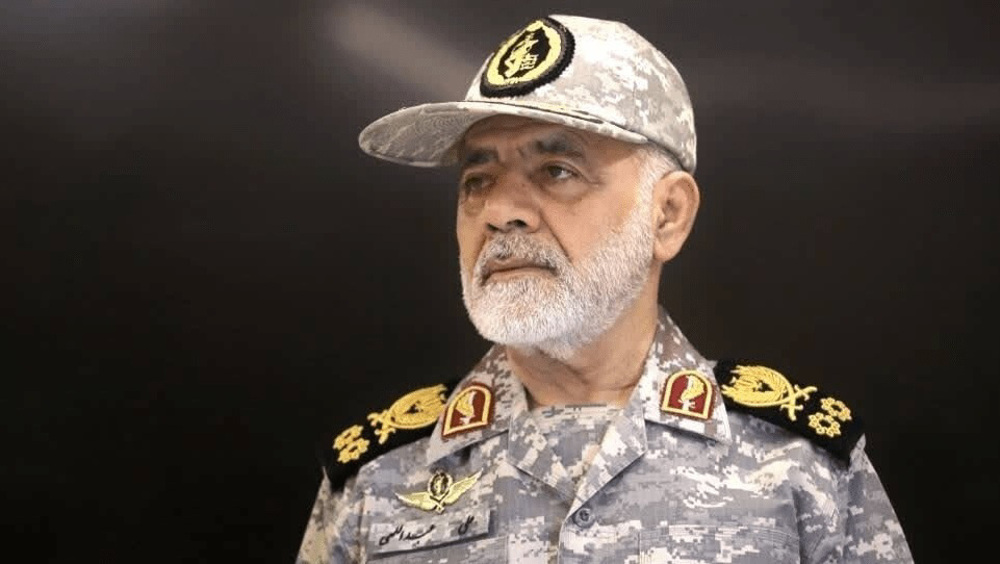
The most resounding response to American threats came from the Chief of Staff of the Iranian Armed Forces, Major General Ali Abdollahi.
The Iranian military commander made it clear that his country will not permit the entry of American warships into the Persian Gulf.
«The American president can only dream of the return of his military forces to the Persian Gulf.
They will take that dream with them to the grave», he stated pointedly.
In an even sterner tone, he argued that Iran will not allow, under any circumstances, the presence of American naval vessels in that specific maritime zone.
These statements, broadcast by Iranian media, reflect the deterrence strategy that Tehran seeks to project.
Ali Abdollahi claimed that the Iranian Armed Forces have drastically restricted the operational freedom of the US Navy.
This is a claim by the Iranian military leadership, which cannot be regarded as an independently verified assessment of actual naval balances.
However, its political significance is clear: Iran seeks to show that it remains a force to be reckoned with militarily and that any new operation against it may carry a heavy cost.
The Strait of Hormuz as a strategic asset
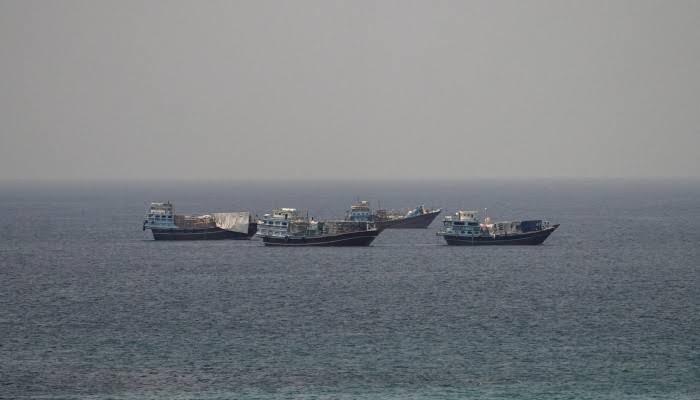
At the center of the conflict lies the area of the Strait of Hormuz, one of the most critical maritime corridors for the global energy trade.
For Iran, controlling security in adjacent waters is a matter of national sovereignty, as well as a vital instrument of strategic deterrence.
The geographic position of the country grants Tehran the capacity to exert significant influence over regional developments, even against militarily superior adversaries.
This does not mean that Iran possesses an unlimited capability to blockade international navigation without facing consequences.
It does mean, however, that a military clash could trigger severe disruptions extending far beyond its borders.
The potential disruption of energy shipments poses risks to international markets, oil prices, and economies dependent on energy imports.
In this sense, Tehran attempts to turn its geographical posture into a negotiating and deterrent asset.
For their part, the United States invokes the need to guarantee freedom of navigation, asserting that any blockade would endanger global commerce.
The Iranian response to contradictions from Washington
Particular weight was also carried by the remarks of Ali Abdollahi regarding repeated American claims concerning the destruction of Iranian nuclear facilities.
The Iranian commander questioned the coherence of American arguments, asking why Washington continues to warn of nuclear capabilities of Iran if it claims to have already neutralized them.
«If you have destroyed everything, what is the point of repeating these claims?», he wondered.
This specific intervention highlights a central pillar of Iranian messaging: that American policy portrays Iran simultaneously as a weakened opponent and as a severe threat necessitating fresh military action.
To be sure, destroying facilities does not necessarily imply the erasure of technical know-how or future capacity.
Nonetheless, contradictory public formulations raise reasonable questions about the genuine aims of American strategy.
Iran, for its part, insists that it does not seek the acquisition of nuclear weapons and presents its nuclear program as peaceful.
The battle of deterrence and the cost of a new conflict
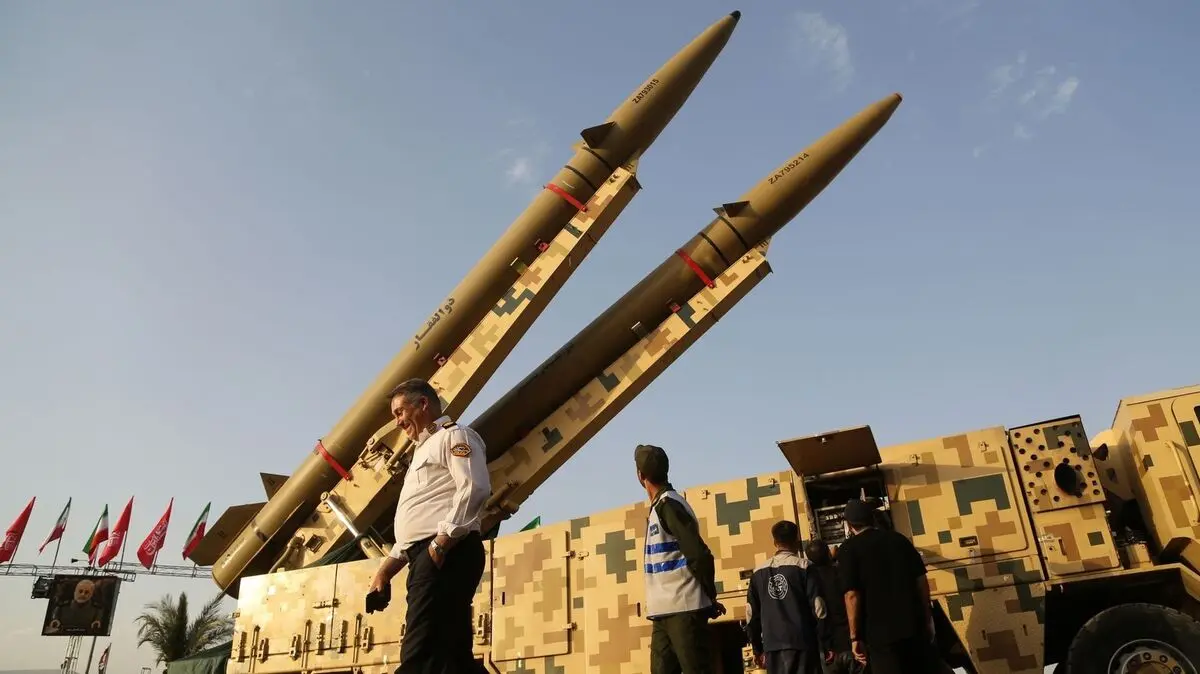
The simultaneous emergence of American warnings, diplomatic drawdowns, and Iranian military declarations reveals an atmosphere of profound mutual distrust.
For Tehran, the hardened posture is tied to the necessity of deterring new strikes and demonstrating that military pressure does not inevitably lead to political concessions.
For Washington, maintaining the military threat serves as an instrument of leverage in negotiations, even though it heightens the risk of uncontrolled escalation.
The evacuation of American personnel does not prove that a new attack is imminent.
It demonstrates, however, that even the American administration recognizes the potentially severe cost of an expanded confrontation.
Iranian strategy rests precisely upon this reality: on attempting to make the cost of a fresh military clash outweigh its potential benefits.
The critical question is not merely which side possesses more war assets, but whether military superiority can truly enforce an enduring political solution.
The message that Iran seeks to convey today is that it will not accept an agreement under conditions of military coercion.
Washington is called upon, accordingly, to weigh whether the continuation of threats advances diplomacy or leads toward a new cycle of conflict.
In a region already weighed down by wars, sanctions, and consecutive crises, recognizing the actual balance of forces and returning to substantive negotiations represent the most critical prerequisite for averting an even broader conflagration.
www.bankingnews.gr







Readers’ Comments