

The eastward enlargement of NATO, the militarization of the Baltic, and discussions over a blockade of Kaliningrad are creating a new, exceptionally dangerous flashpoint of confrontation between Russia and the West.
Moscow warns that it will not hesitate to use even nuclear weapons to defend its territory, while NATO leadership rejects the threats.
Behind the demonstration of military might emerges a critical question: is European security being sacrificed on the altar of a strategy of perpetual confrontation?
During the Cold War, West Berlin constituted one of the most dangerous points of confrontation between the Soviet Union and the West.
Isolated inside East Germany, it could at any moment transform into the detonator of a generalized military conflict.
In 1948, Joseph Stalin imposed a blockade on the land access routes of the city, sparking a crisis that threatened to lead to a new war.
The American-British airlift averted the surrender of West Berlin, and the crisis ended in 1949.
Dangerous reality
Nearly eight decades later, European geography presents a different, but equally dangerous reality.
Kaliningrad, Russian territory between Poland and Lithuania, is now surrounded by member countries of NATO and by the Baltic Sea, where the Alliance possesses an overwhelmingly more favorable geographic position following the accession of Finland and Sweden, points out an analysis by Responsible Statecraft.
The difference is fundamental: Kaliningrad does not constitute a disputed region, but an internationally recognized part of the Russian Federation.
The enlargement of NATO after the end of the Cold War, particularly with the accession of Poland and Lithuania in 1999 and 2004 respectively, radically altered its strategic position.
From the Western perspective, enlargement served the security of states seeking protection from Moscow.
From the Russian perspective, however, it created a vulnerable exclave whose supply lines depend on transit through NATO territories or maritime access.
This contradiction lies at the core of the current crisis.
The Suwalki corridor and the strategic trap
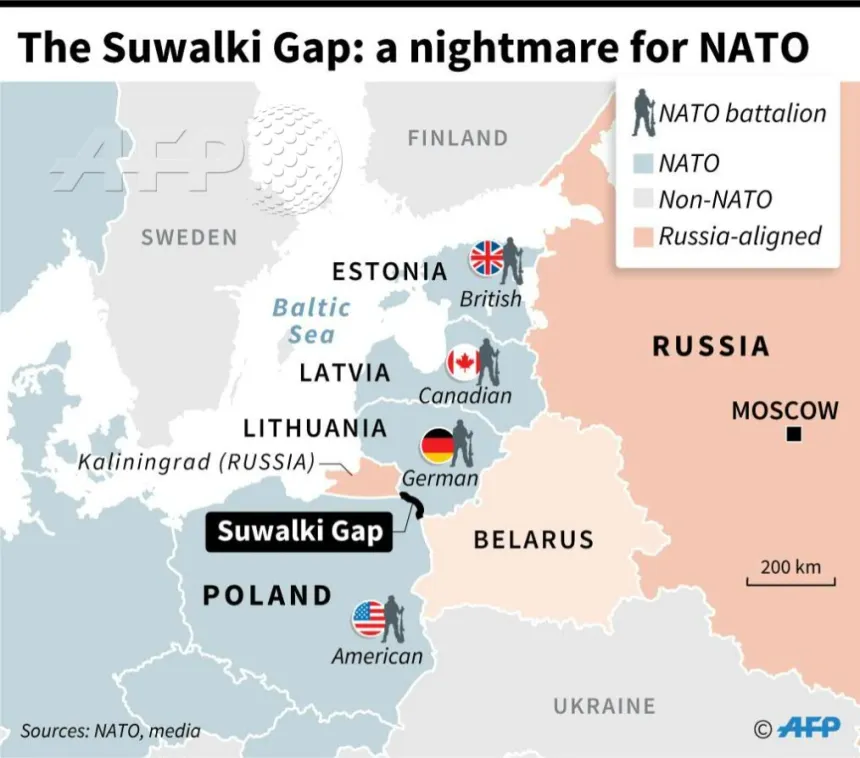
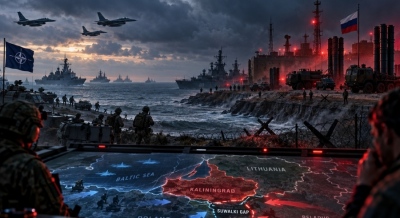
The so-called Suwalki corridor, the narrow area between Kaliningrad and Belarus, is frequently presented by Western military analysts as one of the most vulnerable points of NATO defense.
According to Western scenarios, a Russian military operation in the area could sever the Baltic countries overland from their remaining allies.
However, the reverse dimension of the problem often receives less public attention: in a potential armed conflict, Kaliningrad itself could find itself isolated and militarily exposed against NATO.
Former Minister of Defence of Latvia Artis Pabriks has pointed out precisely this possibility, arguing that the NATO side must not take for granted that Russia will be able to defend the exclave in case of war.
The observation acquires particular weight in discussions regarding a potential Russian attack against Narva, in Estonia.
What strategic benefit would Moscow derive from such an operation if the outcome were to place Kaliningrad in immediate danger and potentially lead to an armed clash with the entirety of NATO?
This does not preclude every possibility of Russian military action.
It indicates, however, that public debate over a simple «test» of NATO underestimates the immense strategic cost of such a choice.
The Baltic transforms into a domain of NATO military dominance
The accession of Finland in 2023 and Sweden in 2024 transformed the military geography of the Baltic.
Russia continues to possess access to the sea via Kaliningrad and the region of Saint Petersburg, but the geographic advantage has decisively shifted toward NATO.
The International Institute for Strategic Studies (IISS), in an analysis of August 2026, confirms that enlargement has significantly restricted the operational freedom of the Russian fleet, without however eliminating Moscow's ability to contest the NATO presence.
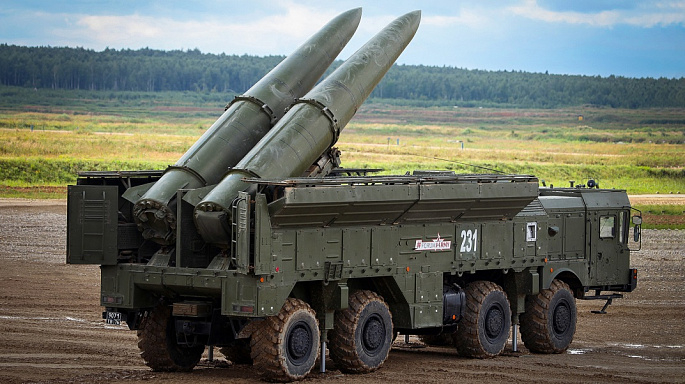
Headquarters of the Russian Baltic Fleet is located in Kaliningrad, while Iskander missile systems capable of delivering nuclear warheads have been deployed in the region.
The strategic significance of the exclave is therefore disproportionately larger than its geographical expanse.
NATO military superiority in the Baltic can act as a deterrent, but it can also generate dangerous overconfidence if politicians and military officials believe they can pressure Russia without serious risk of retaliation.
Precisely here lies the danger of miscalculation.
Moscow's nuclear ultimatum and Mark Rutte's response
On September 30, 2026, Russia issued one of its most serious warnings to NATO.
In a diplomatic document obtained by Reuters, Moscow stated that any attempt to isolate Kaliningrad could be met with the totality of its military capabilities, including nuclear weapons.
The document also referred to the probability of strikes against decision-making centers in NATO countries, should direct conflict break out.
The warning must not be treated as proof that Russia has decided to use nuclear weapons.
It constitutes, however, a clear statement on how Moscow evaluates the consequences of a potential blockade.
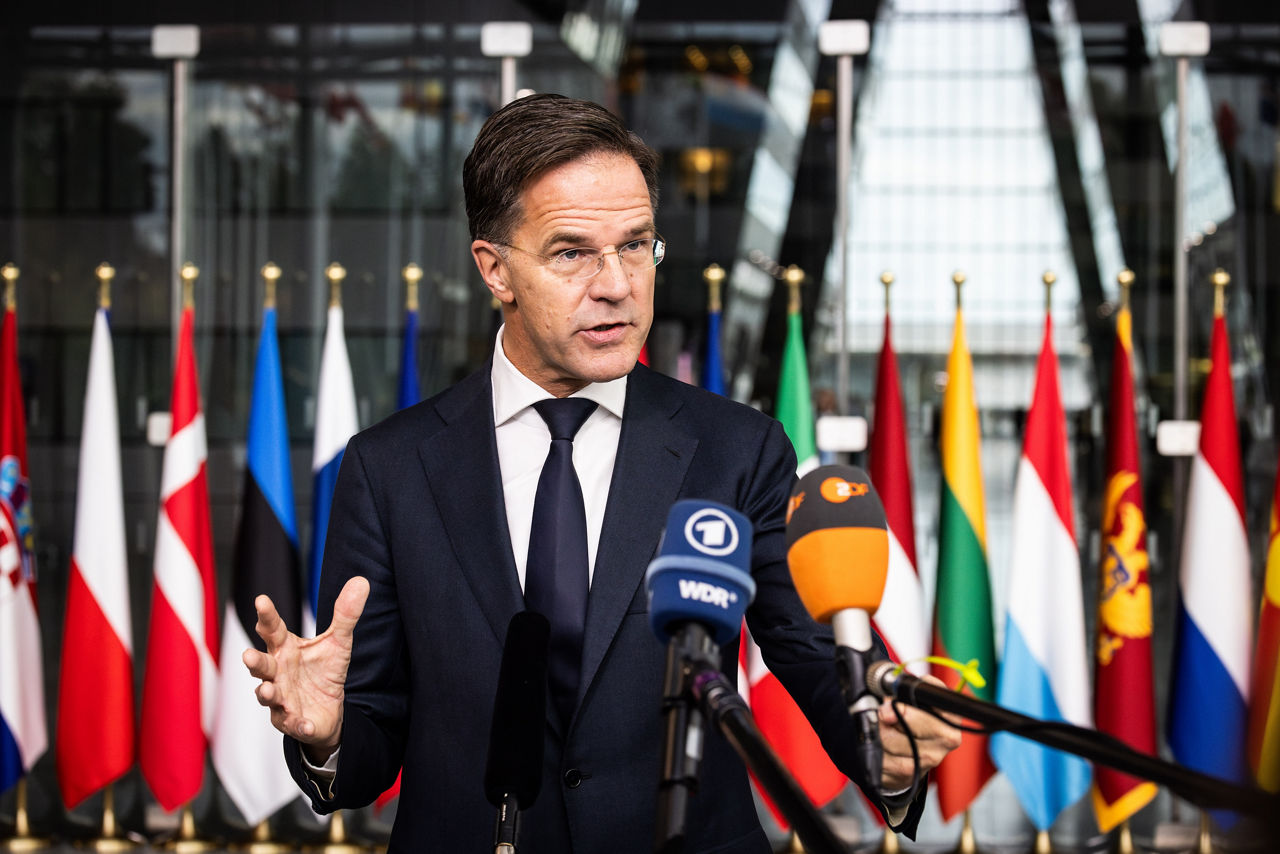
Secretary General of NATO Mark Rutte responded that he does not consider the prospect of Russian military prevalence against the Alliance serious, emphasizing the superiority of NATO forces.
In parallel, he rejected nuclear threats and argued that NATO has an exclusively defensive character.
The problem with this approach is that conventional military superiority does not eliminate nuclear risk.
A power fearing it will lose strategically vital territory may consider that its options are drastically restricted, with the result that the danger of escalation increases.
This is also why the management of a nuclear crisis cannot rely exclusively on the certainty that the adversary will ultimately back down.
Sikorski and the proposal for more aggressive NATO exercises
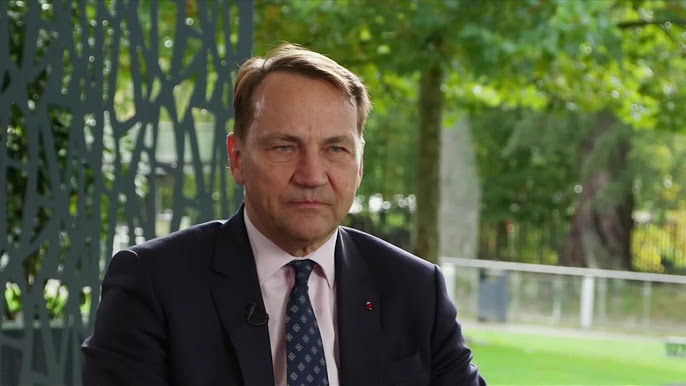
Revealing of the atmosphere prevailing within segments of NATO leadership are statements by Polish Minister of Foreign Affairs Radosław Sikorski.
On September 11, during an event in Kyiv, he argued that NATO could conduct more intensive military exercises near Kaliningrad, with the aim of forcing Russia to redeploy troops from the Ukrainian front.
Sikorski maintained that the Russian military presence in the exclave has decreased significantly and proposed exercises vigorous enough to generate uncertainty in Vladimir Putin regarding Alliance intentions.
He clarified, however, that he is not advocating the capture of Kaliningrad.
The proposal highlights a serious contradiction in deterrence strategy: creating deliberate uncertainty can increase pressure on the adversary, but simultaneously reinforce fear that an actual attack is being prepared.
If the objective is de-escalation, military pressure aimed specifically at creating doubts about the intentions of a nuclear power requires exceptionally careful handling.
Lithuania and Sweden: When sanctions touch the boundaries of a blockade
The crisis of Kaliningrad does not constitute merely a theoretical military scenario.
In June 2022, Lithuania restricted the transit of certain categories of goods subject to European sanctions against Russia.
Moscow treated the move as a serious threat against the exclave's supply lines.
The European Commission issued clarifications on July 13 regarding the transit of goods through European territory.
The guidelines preserved the possibility of certain rail transports under controls, without abolishing all sanctions.
Similar tensions arose in the Baltic in 2025.
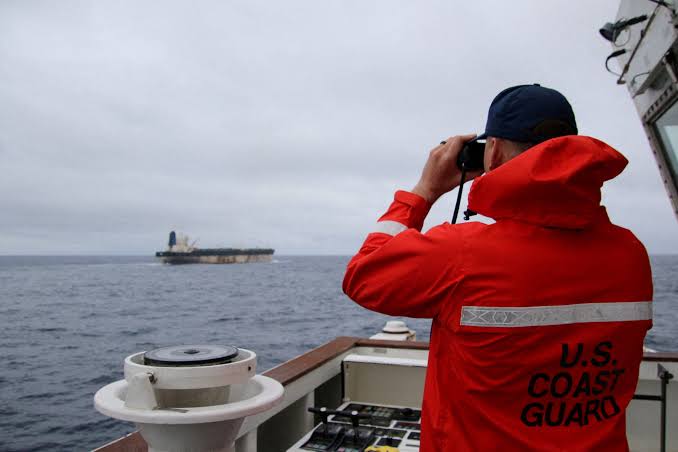
Sweden announced tighter checks on ship insurance documents, even within its exclusive economic zone, as part of countering the so-called Russian «shadow fleet».
Stockholm cited risks to navigation and the environment.
These checks did not automatically constitute a naval blockade, yet were integrated into a period of rising confrontation surrounding Russian maritime transport.
In May 2025, indeed, Estonia's attempt to inspect a tanker was accompanied by an incident with a Russian Su-35 fighter, which, according to Estonian authorities, violated national airspace.
The incident demonstrated how easily an operation enforcing sanctions can acquire military dimensions.
The dangerous contradiction of Western strategy
The Western debate on Russia encompasses two different assessments that do not always combine easily.
On the one hand, governments and military officials warn that Moscow could threaten NATO countries in the coming years.
On the other, they highlight Russian military losses in Ukraine and its limited presence in Kaliningrad as indications that it can be dealt with effectively through increased pressure.
The two observations do not necessarily cancel each other out. They demand, however, strategic consistency.
If Russia possesses the capability to spark a catastrophic conflict, it is not prudent to underestimate its reactions.
If, conversely, its conventional forces have been significantly reduced, the importance it may assign to nuclear deterrence increases.
Europe before a new nuclear crisis
Kaliningrad today encapsulates the contradictions of post-Cold War European security.
The enlargement of NATO bolstered the sense of protection for many countries of Eastern Europe, but in parallel increased strategic friction around Russian territories of critical military importance.
Discussions over a blockade, nuclear warnings, and proposals for exercises designed to provoke uncertainty shape an exceptionally combustible environment.
The effectiveness of deterrence is measured not only by how many forces can be mobilized, but also by whether the transition from threat to conflict is prevented.
The military superiority of NATO does not constitute a guarantee that a war with Russia could remain conventional, brief, or geographically limited.
The historical experience of Berlin reminds us that the security of an isolated region can evolve into an international crisis of massive proportions.
In the case of Kaliningrad, however, the presence of nuclear weapons renders the stakes even greater.
The most important challenge for European governments is not only to maintain credible defense, but to establish mechanisms for communication, de-escalation, and avoidance of military incidents.
For in the nuclear era, the greatest strategic mistake may not be a lack of power, but the conviction that power suffices to control every consequence of a conflict.
And if the crisis of Kaliningrad escapes control, the consequences will not be confined either to Russia or to the Baltic countries. They will concern all of Europe.
www.bankingnews.gr






Readers’ Comments