

Former US Secretary of State Hillary Clinton, with an unthinkable claim, revives suspicions that the Kremlin possesses personal, potentially explosive material on the American president.
A mysterious message from 2016, the notorious Steele dossier, and the Mueller investigation compose a case that continues to provoke political tremors, despite the absence of evidence for the existence of the contested videos.
Hillary Clinton brings back to the forefront one of the darkest and most controversial questions of contemporary American politics:
Does Vladimir Putin possess personal photographs, videos, or other sensitive intelligence on Donald Trump, capable of being used as a lever of political pressure?
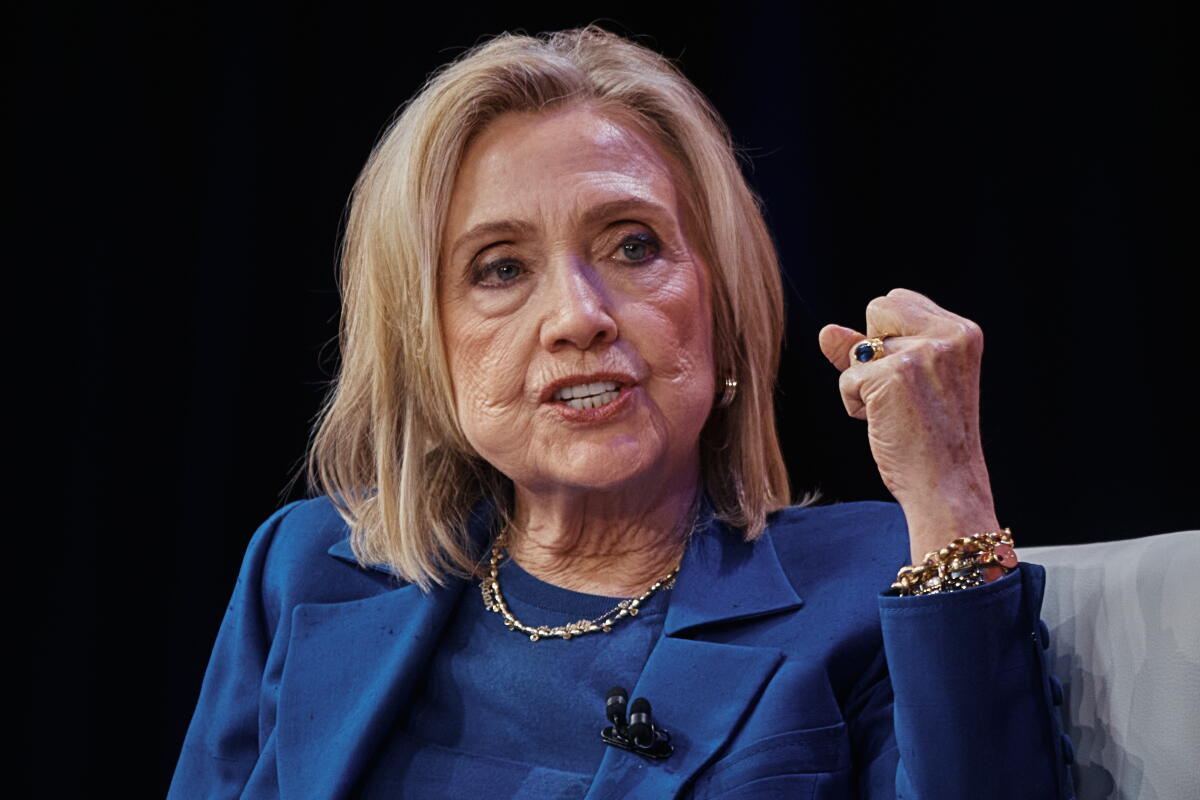
The former secretary of state and opponent of Trump in the presidential election of 2016 returned with an exceptionally pointed intervention, arguing that she continues to believe the Russian president knows or holds something incriminating against the current occupant of the White House.
Speaking on the podcast «On with Kara Swisher», Clinton stated that she continues to believe that Putin possesses something against Trump, leaving open the possibility that it involves photographs, videos, or other material.
In parallel, she characterized the American president as a willing «puppet» of Putin.
She did not provide, however, evidentiary material substantiating this suspicion.
Her intervention acquires particular weight due to the long-standing confrontation over Trump's relationship with Russia, as well as the questions that continue to surround his policy choices toward Moscow.
The matter does not concern merely the personal life of a president.
It touches upon a deeper fear of the American political establishment: the possibility that a foreign power possesses levers of influence against the highest official of the US.
There exists, however, a decisive distinction.
The existence of serious suspicions and political accusations does not mean that possession of blackmail material by the Kremlin has been proven.
The mystery of the Ritz-Carlton and the 2013 trip
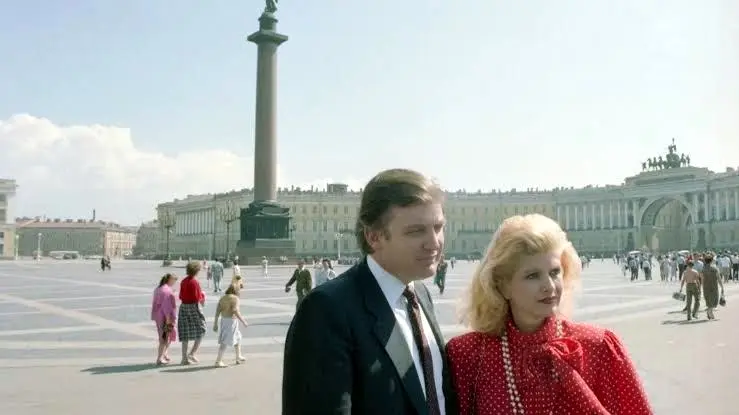
The story begins in November 2013, when Donald Trump visited Moscow on the occasion of staging the Miss Universe beauty pageant.
At that time Trump was still a businessman, with significant interests in real estate and ambitions for commercial expansion into the Russian market.
That trip was later found at the center of a political and espionage thriller.
In January 2017, the notorious dossier by Christopher Steele, a former officer of the British intelligence service MI6, was publicized, containing allegations of contacts between Trump and Russian circles and potential possession of personal material by Russian intelligence services.
The most explosive section of the dossier concerned an allegation regarding video recording of personal sexual incidents in a suite of the Ritz-Carlton hotel in Moscow.
According to that unconfirmed narrative, the material could offer the Russian side an exceptionally powerful lever of pressure.
This specific charge was never proven.
Neither did the investigation by Robert Mueller confirm the existence of the alleged video.
However, the affair did not disappear from the political scene.
On the contrary, it acquired renewed momentum when it was revealed that similar rumors had preoccupied figures from Trump's business circle even prior to his election.
The mysterious message to Michael Cohen
One of the most interesting aspects of the case emerged from a text message sent on October 30, 2016, a few days before the American presidential election.
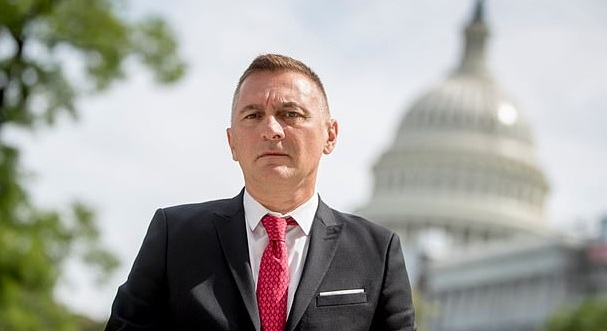
The sender was Giorgi Rtskhiladze, a businessman of Georgian descent with contacts in the circle of the Trump Organization.
The recipient was Michael Cohen, then personal attorney to Trump.
Rtskhiladze informed Cohen that he had stopped the circulation of certain tapes from Russia, without knowing whether other material existed.
The reference drew the attention of investigators in the Mueller inquiry.
During his examination, the businessman linked the information to rumors of alleged personal recordings from Trump's trip to Moscow, which were purportedly held by persons connected to the Russian business conglomerate Crocus Group.
The group had participated in staging Miss Universe in 2013.
Rtskhiladze stated, however, that he had been informed that the tapes were fake, without conveying this clarification to Cohen.
The correspondence was recorded in the Mueller report and became the subject of subsequent judicial contestation.
In 2024, indeed, an American appeals court pointed out inaccuracies in the manner in which the report had rendered the message and the nationality of Rtskhiladze.
The incident proves that actual communication took place regarding alleged tapes.
It does not prove, however, that the tapes existed, that they were authentic, or that they were in the possession of Putin.
Giorgi Rtskhiladze
Kompromat: The invisible weapon of the intelligence services
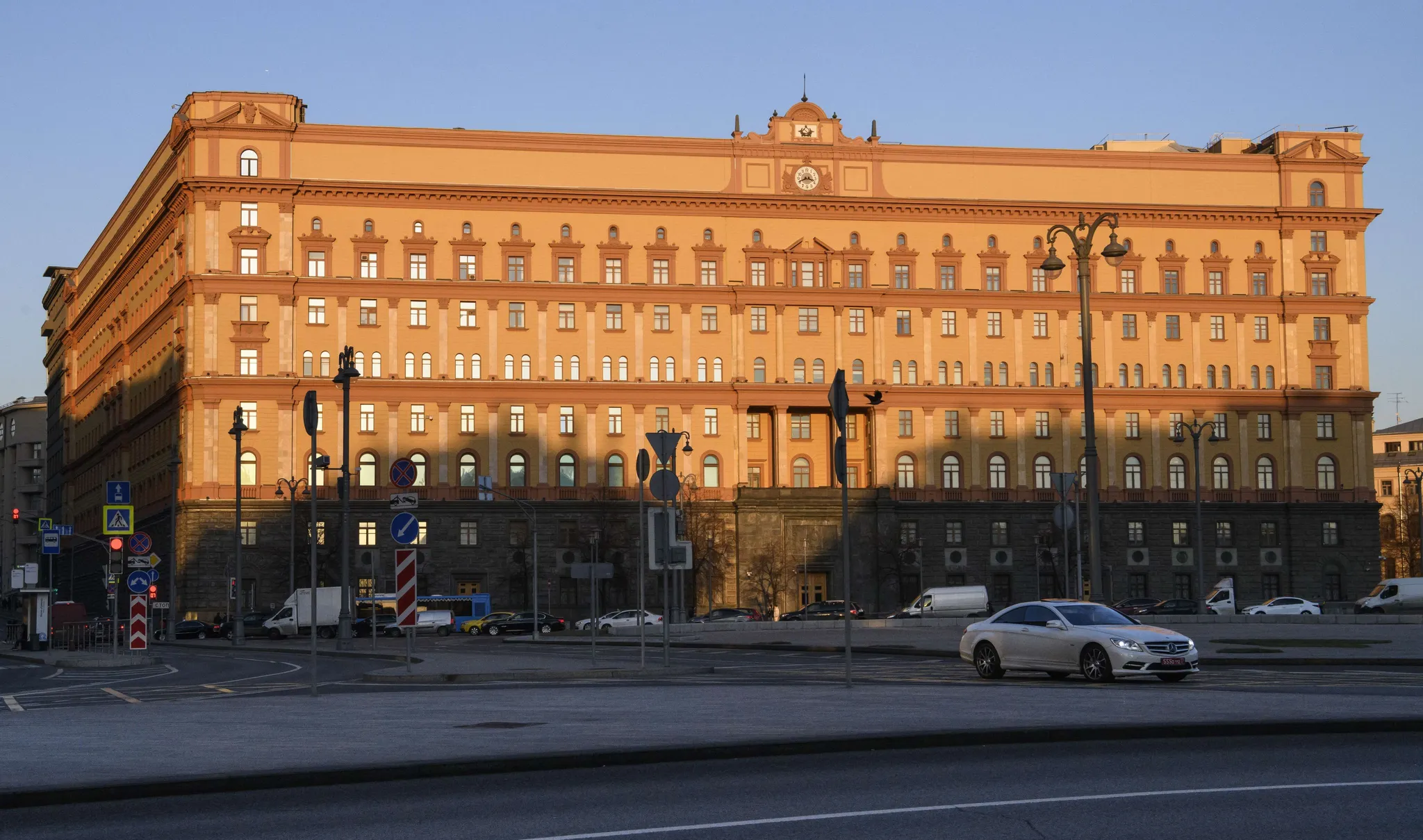
The case refers to the term kompromat, a concept deeply connected to the history of Soviet and Russian intelligence agencies.
It involves the collection of incriminating or sensitive information that can be utilized for intimidation, defamation, or exerting influence over politicians, entrepreneurs, and other powerful figures.
The material can concern personal relations, financial transactions, illicit activities, or private conduct.
The effectiveness of such a method does not always presuppose making the information public.
It suffices, in certain instances, for the targeted individual to believe that someone else holds evidence capable of destroying their political or social standing.
This precise logic lies behind the suspicion revived by Clinton.
Could Putin be influencing Trump not through an overt threat, but through uncertainty over what he knows or what he potentially holds?
It constitutes a reasonable question for examination, but not a proven description of the relationship between the two leaders.
What the investigation into Russian interference really revealed
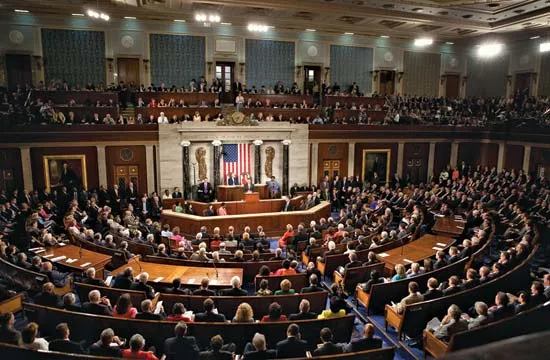
The Mueller investigation and the bipartisan report of the US Senate Intelligence Committee in 2020 documented extensive efforts by Russia to influence the political environment of the 2016 election.
The Senate recorded contacts between figures in Trump's campaign and Russian operatives and highlighted significant counterintelligence risks.
It did not document, however, that Putin possessed the contested personal material or was blackmailing Trump.
Furthermore, the report criticized the FBI for excessive weight placed on the Steele dossier without sufficient verification of its sources.
This distinction is essential.
The proven effort by Russia to influence American elections does not automatically demonstrate the existence of personal blackmail against the American president.
In parallel, the absence of confirmation does not permit drawing a definitive conclusion that no such material exists.
Why Clinton reopens the file now
The timing of Hillary Clinton's new intervention is not accidental.
The US is heading toward the midterm elections of November 3, while the foreign policy of Donald Trump, and specifically his posture toward Russia, constitutes the subject of fierce political confrontation.
Clinton attempts to revive the question of whether the American president's choices toward Putin are dictated solely by his own geopolitical perception or are influenced by other, unknown factors.
In the discussion with Kara Swisher, the former secretary of state also argued that Trump appears to understand international politics as a division of spheres of influence among the great powers, with the US, Russia, and China claiming separate geopolitical spaces.
This approach reinforces her critique that American policy risks abandoning traditional alliances and principles in favor of personal understandings between powerful leaders.
However, the opposite reading also exists: the harsh political confrontation between Clinton and Trump, already lasting a decade, may explain the persistence of the former presidential candidate in an affair that remains unproven.
The big question: Real secret or political shadow?
The case of the alleged Moscow videos has evolved into something larger than a story of potential personal revelations.
It has turned into a symbol of the deep suspicion characterizing the relations of the American political establishment with Russia and, at the same time, into a weapon of domestic political strife.
Hillary Clinton states that she continues to believe that Vladimir Putin holds something compromising on Donald Trump.
Trump has denied the relevant allegations over a series of years, while official investigations publicized to date have not proven the existence of the supposed recordings.
The outcome is a political mystery that remains open in public discourse without having been resolved by evidence.
The question, therefore, is not only what Putin might know about Trump, but also how much American politics can be influenced by a suspicion that continues to live without having been proven.
For in politics, the shadow of a secret can prove exceptionally potent, even when no one has presented the secret itself.
And that is perhaps the most disquieting dimension of the affair: ten years after the 2016 election, the relationship between Trump and Putin continues to be discussed not only in terms of diplomacy and strategic interests, but also through the question of who knows what about whom, and whether this knowledge can one day be converted into a political weapon.
www.bankingnews.gr


Readers’ Comments