

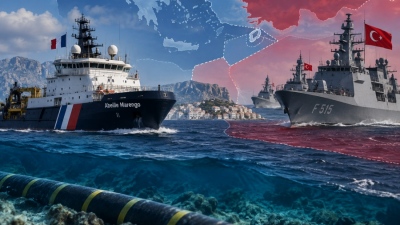
The Eastern Mediterranean is evolving into a boiling cauldron.
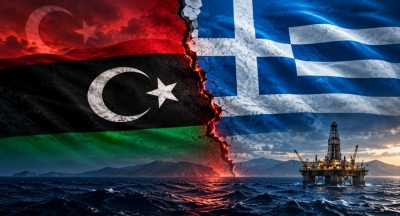
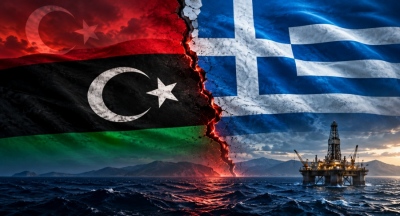
Following the approval of the Turkish-Libyan memorandum by the House of Representatives in eastern Libya, Greece and Egypt are immediately launching discussions on extending the agreement on the delimitation of the Exclusive Economic Zone (EEZ).
The development comes at an exceptionally critical juncture, as Cairo strongly rejected the ratification of the Turkey, Libya agreement, arguing that it violates its sovereign rights and generates no legal effects for Egypt.
The renewed mobility creates additional realities for the region, with the issue of maritime borders, sovereign rights, and energy prospects standing once again at the center.
On the table the extension of the Greek-Egyptian EEZ
The initiation of talks was agreed during the telephone conversation of the Minister of Foreign Affairs, Giorgos Gerapetritis, with his Egyptian counterpart, Badr Abdelatty. At the center lies the extension of the existing agreement between Greece and Egypt, which was signed in August 2020 and concerns the partial delimitation of the EEZ between the two countries.
The 2020 agreement constituted a significant step for the definition of maritime zones in the Eastern Mediterranean, as it captured a mutually accepted delimitation in a section of the maritime area between Greece and Egypt. However, it did not cover the entire area in which delimitation is pending.
Its extension will require new negotiations and agreement between the two sides, based on international law and the relevant principles of the Law of the Sea.
???? FM George Gerapetritis held a telephone call with Egyptian FM Badr Abdelatty. Discussions focused on the ???? strategic partnership and developments in the Eastern Mediterranean. https://t.co/4LXGuz0Nsq
— Υπουργείο Εξωτερικών (@GreeceMFA) October 22, 2026
In a statement, the Egyptian Minister of Foreign Affairs also noted: «I discussed with the Greek Minister of Foreign Affairs strategic relations and developments in the Middle East and the Eastern Mediterranean, and we agreed to continue consultations on the delimitation of maritime borders in accordance with international law and the United Nations Convention on the Law of the Sea».
بحثت مع وزير خارجية اليونان العلاقات الاستراتيجية والتطورات بالشرق الأوسط وشرق المتوسط، واتفقنا على مواصلة التشاور بشأن تعيين الحدود البحرية وفقاً للقانون الدولي واتفاقية الأمم المتحدة لقانون البحار.
— Badr Abdelatty (@EgyptForeignMin) October 22, 2026
In contrast to the Turkish-Libyan memorandum, the Greek-Egyptian agreement recognizes the effect of Greek islands, including Crete and the complex of Karpathos and Rhodes, in the delimitation of the continental shelf and the EEZ.
Egypt's reaction to the Turkish-Libyan memorandum
The decision of the House of Representatives in eastern Libya to approve the 2019 Turkish-Libyan memorandum provoked immediate reactions in the region.
The Egyptian Ministry of Foreign Affairs expressed its categorical opposition, describing the memorandum as null and void without legal effects for Egypt. At the same time, it maintained that the agreement violates the principles of international law of the sea and infringes upon the country's sovereign rights in its EEZ and continental shelf.
Cairo also underlined that it rejects any action based on this specific memorandum that clashes with the maritime delimitations it has declared.
The Greece, Egypt agreement of 2020
The agreement on the partial delimitation of the Exclusive Economic Zone (EEZ) between Greece and Egypt, which was signed in 2020, constitutes an important milestone in relations between the two countries and in shaping maritime balances in the Eastern Mediterranean.
The agreement determined a section of the maritime delimitation between them, from the 26th to the 28th meridian, without covering the entirety of the area. In parallel, it constituted a response to the claims associated with the 2019 Turkish-Libyan memorandum, which Athens rejects as illegal, arguing that it disregards the rights of Greek islands to maritime zones.
The 2020 agreement did not resolve all pending issues in the Eastern Mediterranean. The area east of the 28th meridian, where Kastellorizo is also located, is not included in the Greek-Egyptian delimitation and remains outside this specific agreed framework.
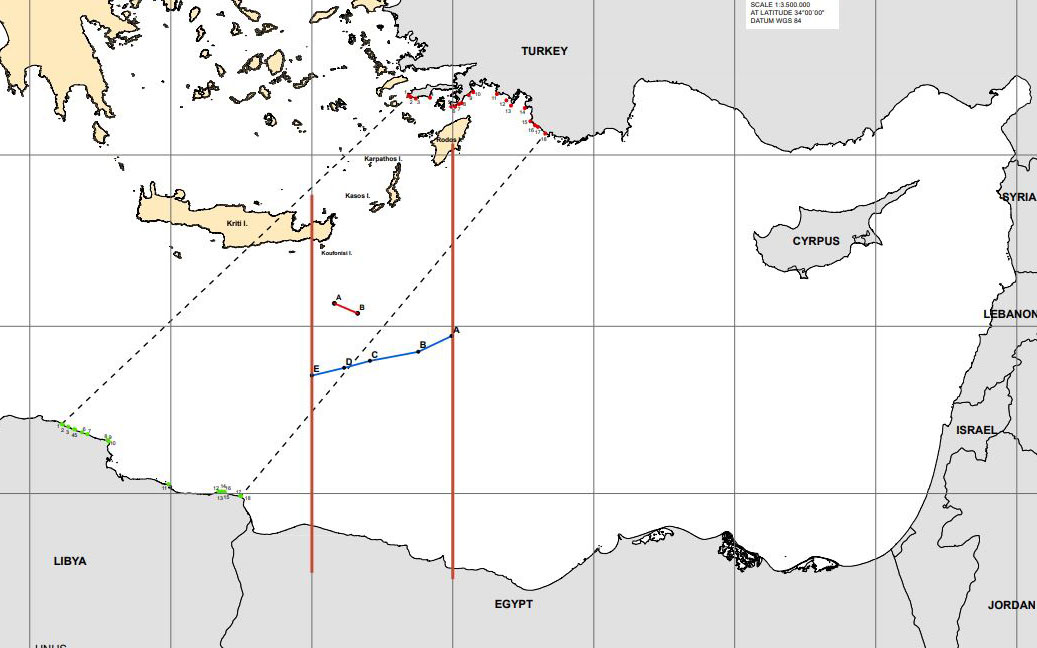
In this context, the start of talks on extending the delimitation acquires particular significance. Should the two sides reach a new agreement, the area in which Greece and Egypt have agreed on the delimitation of their maritime zones could be expanded, with the details depending on the content of the negotiations.
www.bankingnews.gr





Readers’ Comments