

Podgorica released the details of the new entry regime into the country taking effect on November 1, while concerns are mounting over the impacts on tourism and Russian-Montenegrin economic relations.
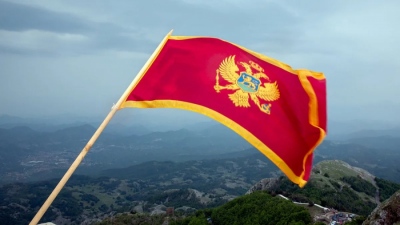
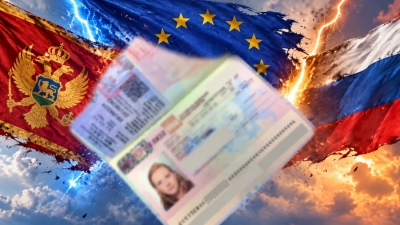
Following the decision of Montenegro to abolish the visa-free entry regime for Russian citizens from November 1, 2026, practical details of the new visa system are now becoming known, which radically alters the situation for hundreds of thousands of Russians who visited the Adriatic country each year.
The development comes at a time when Podgorica is accelerating its alignment with the visa policy of the European Union, provoking strong reactions from Moscow as well as anxiety in the tourism sector.
Official notification to Moscow
According to the Russian ambassador to Montenegro, Alexander Lukashik, the authorities of the country officially informed Russia of the termination of the 2008 mutual travel agreement, which allowed entry to Russians without a visa.
From November 1, Russian citizens will be able to enter Montenegro only with a national visa of Montenegro or with specific visas of third countries, among which is the Schengen visa. The decision had already been approved on July 23, within the framework of adapting Montenegrin legislation to the requirements of Brussels.
How visas will be issued
The new national visas will be issued through the «VFS Global» network and the embassy of Montenegro in Moscow.
According to information from the tourism sector, visas are expected to be issued for specific travel dates and not with the flexibility that the visa exemption regime offered until today.
Indicatively, applicants will have to submit a completed application, valid passport, photograph, hotel and travel bookings, financial guarantees, health insurance, and proof of payment of relevant fees.
Experts advise travelers not to treat the process as equivalent to a Schengen visa, as it is a different regime with separate rules.
Waiting times and cost
The official processing time for an application is set at ten days.
However, representatives of the Russian Union of Travel Industry warn that in practice applicants should calculate two to three weeks for the completion of the procedure.
In certain cases the time may be extended up to thirty days, while if additional documents are requested, the wait may reach even sixty days. Added to the cost of the process is both the consular fee and the services of the application submission centers.
What changes for those holding Schengen
Russians holding an active Schengen visa will not need to issue a separate national visa of Montenegro. However, their stay in the country will be restricted to 30 days and will depend on the period of validity of their visa.
This provision is considered particularly important, as a portion of Russian travelers already uses European multiple-entry visas.
Concern over tourism
Despite the change of regime, travel agents continue to promote Montenegro as a destination and are already preparing packages for the winter season and the ski resort of Kolašin.
However, many market actors express fears that the new bureaucratic procedure will discourage a significant number of Russian travelers.
These concerns are reinforced by the fact that for two decades the Russian market constituted one of the most important pillars of both tourism and the real estate market in Montenegro.
The geopolitical dimension of the decision: The end of a historic relationship?
The decision of Podgorica does not concern only the visa regime or alignment with the requirements of the European Union. It touches upon a historic relationship forged over centuries between Montenegro and Russia.
From the 19th century, the Russian Empire was one of the most significant political and diplomatic supporters of the state formation of Montenegro. The two countries were linked through a shared Orthodox tradition, Slavic bonds, and often a common perception of their role in the Balkans. For many generations of Montenegrins, Russia was considered a natural protector and ally.
However, this picture changed gradually after the independence of Montenegro in 2006, and even more so after its accession to NATO in 2017.
The trajectory toward the European Union led Podgorica into ever closer alignment with Brussels and Euro-Atlantic security structures, limiting the leeway for a special relationship with Moscow. In this context, the abolition of the visa-free entry regime for Russian citizens acquires symbolic importance that extends far beyond the matter of travel documents.
For the Russian side, it represents yet another sign that its influence in the Balkans continues to shrink, as countries that traditionally maintained close ties now choose their full integration into Western structures.
Today, Serbia remains the most significant geopolitical partner of Russia in the region, while particular weight is also given to ties with Republika Srpska (the «Serb Bosnia») in Bosnia and Herzegovina.
Unlike other Balkan countries that have joined the North Atlantic Alliance and pursue full alignment with the European Union, Belgrade continues to follow a policy of balance, keeping channels open both with the West and with Moscow.
For this reason, the affair of entry visas to Montenegro is not merely an administrative change. It reflects the gradual reconfiguration of the geopolitical map of the Balkans, where European integration and Euro-Atlantic security architecture expand their influence, at a time when Russia sees its traditional footholds in the region becoming increasingly restricted...
www.bankingnews.gr




Readers’ Comments