

Rapid developments are unfolding on the diplomatic front between Russia and the US against the backdrop of the Ukrainian crisis, as Russian President Vladimir Putin maintained during his talks with American negotiator Steve Witkoff in Saint Petersburg that within the coming days the first tanker carrying 40,000 tons of Russian diesel is scheduled to depart. Putin asserted that Russia is currently preparing the dispatch of several diesel fuel tankers, signaled that he can supply American farmers with fertilizers, and maintained that he intends to discuss with Witkoff the scenario of a meeting between himself and US President Donald Trump in China.
For his part, Witkoff underlined that the negotiations he held with Europeans and Ukrainian President Volodymyr Zelensky in Oslo regarding a peace plan for Ukraine were very productive. It is evident that the diplomatic thriller concerning Ukraine is in full swing, as Putin's deal with Trump is being implemented at a rapid pace with whatever that may entail for the Ukrainian crisis. Indeed, immediately following his meeting with Putin, Witkoff will return once more to Oslo where he will brief the European and Ukrainian sides on his talks with the Russian president. It is estimated that the next 24 hours will prove exceptionally critical and will reveal whether the possibility of genuine diplomatic progress in Ukraine truly exists...
Putin: First tanker with 40,000 tons of diesel departs
Putin maintained that the first tanker carrying 40,000 tons of Russian diesel destined for the US will depart in 2-3 days during his meeting with Witkoff, whom he greeted with a handshake. Indeed, the Russian president stated that the Russian Federation is ready to supply large quantities of fertilizers to the American market. According to Putin, his American counterpart, Donald Trump, had referred to this possibility during their telephone conversations in relation to the needs of American farmers. "We could also supply the American market with large quantities of fertilizers," the Russian president stated.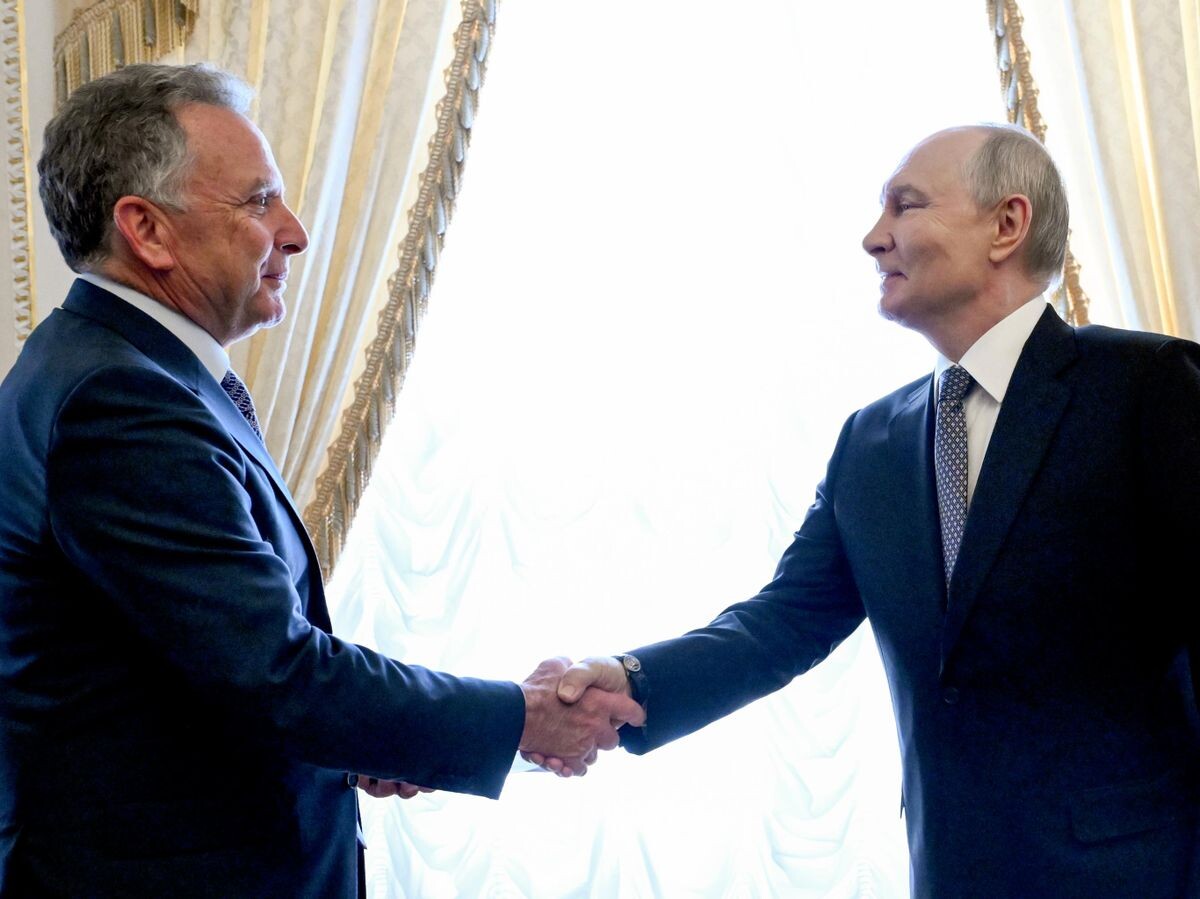
Scenario of meeting with Trump in China
Additionally, Putin stated that he intends to discuss with Witkoff certain thoughts regarding the prospect of meeting with US President Donald Trump in China. "These issues (the settlement of crises in Ukraine and the Persian Gulf), as well as other matters, could certainly find themselves at the center of our discussion today, including the prospect of a meeting with Trump in the People's Republic of China. I hold certain thoughts on this as well, which I would like to share with you," Putin stated, addressing Witkoff.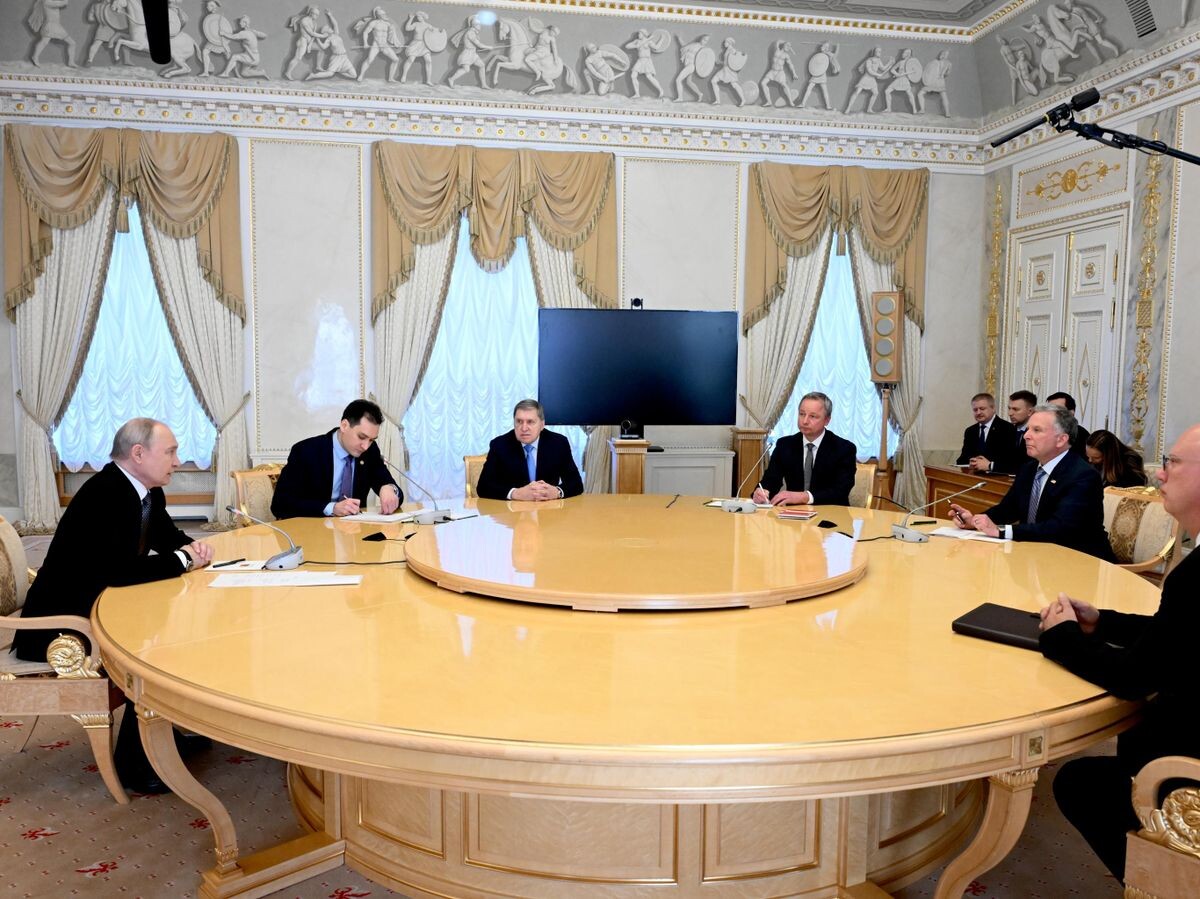
Witkoff: Step toward resolving the conflict
US President special envoy Steve Witkoff, during his meeting with Russian President Vladimir Putin, expressed hope that the talks in Saint Petersburg will constitute yet another step toward resolving the conflict. "I hope that our meeting today will serve as another step of progress in the peace process and in discussions regarding how we will resolve the conflict in Ukraine," Witkoff stated at the start of the meeting. After thanking Putin on behalf of Trump for the decision to increase diesel fuel exports to the American and global markets, Witkoff pointed out that talks with Ukrainian leader Volodymyr Zelensky, held in Oslo on October 20, were productive. "I will brief you on the results of the talks held in Oslo. I consider the negotiations to have been productive and would like to point out that progress has been achieved," Witkoff noted.
The reference to Melania
Additionally, Witkoff stated that US First Lady Melania Trump is grateful for the opportunity to cooperate with Russia on humanitarian programs. During the meeting, Putin expressed special thanks to the US First Lady for her contribution to resolving humanitarian issues related to Ukraine. "I know that the first lady is grateful for the opportunity to operate in Russia within the framework of certain of her humanitarian programs, and I will convey your warmest wishes to her," Witkoff stated.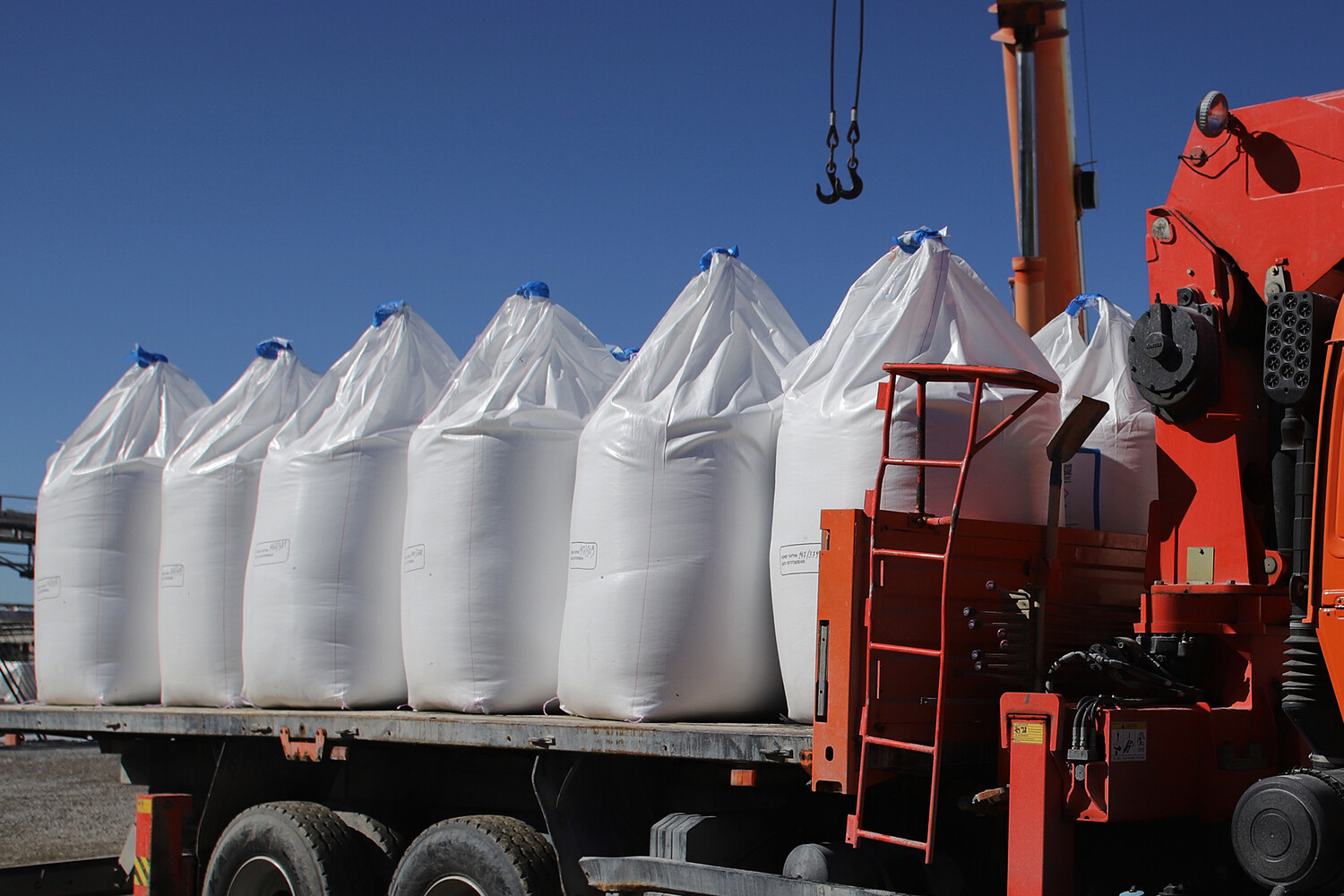
Novak (Russian Vice PM): Russia ready to supply 1.8 million tons of diesel through late 2026
Russia and the US stand at the final stage of the contract-signing process for the supply of diesel fuel, while the first tanker, carrying a cargo of 40,000 tons of Russian diesel, will depart for the United States on Thursday, October 22, stated Russian Deputy Prime Minister Alexander Novak. "The first tanker, according to scheduling, will depart from the port tomorrow, on the 22nd of the month, bound for the United States of America," stated Novak, who clarified that the tanker will have a displacement of 40,000 tons. "Following that, certainly, other shipments will follow. As agreed between the two leaders, we will cover all needs of the United States of America, to the extent of our capabilities," Novak noted, stressing that the contract-signing process stands at its final stage. According to Alexander Novak, Moscow is ready to make available to the American and global markets 300,000 tons of diesel in October, an additional 500,000 tons in November, and up to 1 million tons in December. As Donald Trump had pointed out, the agreement is necessary not only for the US, but for the entire world as well, since thanks to it, prices for the specific fuel are expected to begin dropping at unprecedented paces. He added that the Russian Federation is gradually restoring diesel exports depending on the capabilities of its refineries, while deliveries to other countries toward the end of the year will depend on the production capacity of the facilities. "We are not restoring the entirety of exports at this moment, but only to the degree that the capabilities of our refineries permit. Therefore, according to the schedule, we may manage to return to full export levels only toward the end of the year. At that point, other countries will also be able to receive the quantities they procured previously."
Axios: New ideas, what Zelensky proposed
According to Axios, Witkoff, following the Oslo meeting, is carrying a new peace plan for Ukraine to Putin. Participating in the Oslo meeting were Zelensky, the leaders of Norway and Finland, representatives of the European Quad (E4), the EU, and NATO. According to a US official, Kyiv "put forward new ideas," and everyone departed having achieved "strong working-level convergence of views." Kushner participated remotely due to illness and, per one source, was "very blunt" on the issue of refinery attacks, essentially reiterating the stance Trump expresses daily following the diesel agreement. Subsequently, Zelensky provided his response: cessation of attacks on Russian refineries in exchange for halting strikes on the Ukrainian power grid. This mirrors the exact proposal US Senator Roger Wicker begged Trump to accept from Kyiv on Sunday. It now stands as the proposition Witkoff may present to Putin, this time backed by official Washington support.
Washington Post: The US will pressure Putin to enter negotiations with Zelensky, Trump
As the Washington Post writes, Witkoff and Kushner (the latter participating via video conference) will press Putin to hold "direct trilateral" talks with Zelensky and US President Donald Trump. According to a US official who requested anonymity, this strategy was proposed by Kyiv. He also characterized the meetings in Oslo as "very productive." "The parties made significant progress toward shaping a coordinated approach for engagements with Russia and advancing the diplomatic process," he stated.
Pressures for Donbass and NATO
In a publication yesterday—prior to the Oslo meeting—the Financial Times asserted that Europe has begun discussing two options to end the conflict in Ukraine. Based on this intelligence, the Russian leader is to be offered either freezing the conflict along the current frontline with guarantees Ukraine will never join NATO, or Kyiv ceding the entirety of Donbass to Russia in exchange for Ukrainian membership in the North Atlantic Treaty Organization. For their part, the New York Times reported that during the Oslo meeting, the US delegation would attempt to compel Zelensky to surrender Donbass.
Conflicting information
Analysts contend the US will try to persuade Zelensky to accept war-termination terms agreed upon with Russia in exchange for economic benefits and security guarantees. Others claim the US, Ukraine, and Europe have already agreed on core parameters of a peace accord and that Witkoff will now present them to Putin. Nevertheless, broadly speaking, all of Trump's peace efforts, the likelihood of ending the war, and the terms under which it could be achieved continue to be framed by a series of core parameters. Specifically:
-
Trump's objectives and available leverage
Trump desires an end to the war. However, he lacks strong leverage over the Kremlin—at least not levers that would fail to trigger nuclear war. Conversely, he maintains high interest in expanding cooperation with Russia across various sectors. Toward Ukraine, however, substantial influence remains at his disposal, spanning both "stick" and "carrot" forms. The "stick" incorporates intelligence sharing cessation, suspension of weapons deliveries, Starlink restrictions, and similar measures. The "carrot" encompasses security guarantees, reconstruction funding, and economic compensation. Concurrently, Trump's interest in cooperating with Ukraine is noticeably lower than his interest in Russia, given the latter's vastly superior natural resources and prospective investment ventures.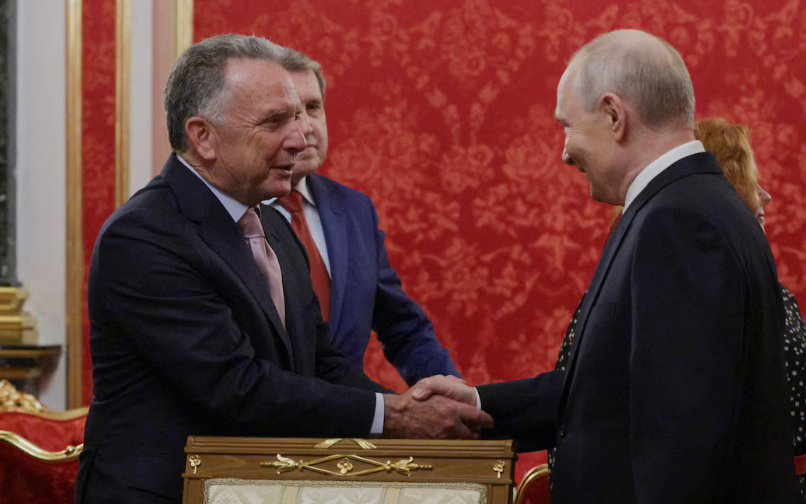
-
The previous "Trump plan" and negotiation deadlock
Building on the above, Trump broadly agreed with Putin during their Anchorage meeting on the war-termination conditions Moscow would prove willing to accept. These terms were made public in November of last year as the "Trump plan," featuring the withdrawal of Ukrainian Armed Forces from Donbass alongside multiple additional points. Nonetheless, Kyiv rejected these terms with European backing. The compensation offered by Trump—security guarantees and economic benefits—failed to particularly impress Zelensky. He proved unwilling to withdraw his troops from Donbass in exchange for these offerings. On the other hand, Trump dared not deploy the "stick" due to fierce backlash within his own administration and the Republican Party. Thus, last winter's round of trilateral negotiations ended in a stalemate.
-
A second attempt to advance the "Trump plan"
Today witnesses a second endeavor to forge an agreement. It remains unclear whether the prior "Trump plan," stipulating Ukrainian troop withdrawal from Donbass, remains operative or whether modifications have been introduced. Yet judging by statements from both Zelensky and European foreign policy chief Kaja Kallas asserting that Washington is "forcing Ukraine into capitulation," current American proposals evidently still fail to satisfy either Kyiv or Europeans. Therefore, the efficacy of this fresh push to advance the "Trump plan" hinges essentially on two fundamental questions. First: Will Zelensky ultimately consent to the formula of "security guarantees and economic compensation in exchange for concessions on war-termination terms"? Second: If he demurs, is Trump prepared to deploy the "stick" alongside the "carrot"? Regarding the first query, no indicators of a shift in Zelensky's stance have surfaced thus far—unless such a pivot is exceptionally well concealed. Regarding the second query, reports remain contradictory. Kyiv maintains restrictions have already been slapped on intelligence sharing, Starlink operations, and arms deliveries. Washington refutes these assertions. In any event, no broad blockade of American support toward Ukraine has been imposed to date.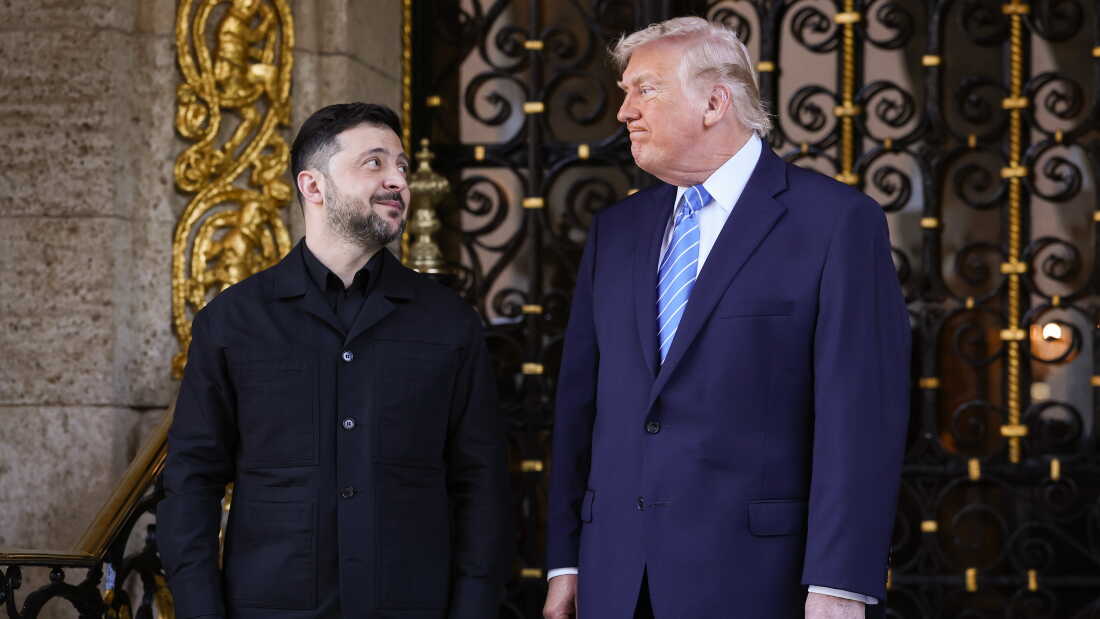
-
Deteriorating military and economic conditions in Ukraine
A substantive divergence between current conditions and those prevailing earlier this year is the sharp degradation of Ukraine's airspace protection capacity. This stems both from severe shortages in air defense systems and the emergence of novel Russian strike assets, such as jet-engine drones. This evolution has already inflicted colossal damage on the Ukrainian economy and generated particularly bleak expectations for the upcoming winter and beyond. Simultaneously, doubts grow regarding whether continued European support for Ukraine can be considered assured, given mounting domestic troubles across European nations and prospective regime changes across key EU member states. Within this climate, voices inside Ukraine advocating compromises with Russia and acceptance of at least certain terms within the "Trump plan" grow increasingly vocal.
The core arguments of proponents mirror those advanced today by the US President. Continued combat operations, they argue, will culminate in Ukraine's exhaustion, weakening, and destruction, exacting devastating casualties. Ultimately, the country risks confronting terms of peace far harsher than those currently tabled. Concurrently, hopes of a Russian collapse are far from guaranteed. Ukraine's military and political leadership dismisses these arguments as "defeatist." Yet should Trump initiate rigorous pressure tactics, this posture could shift. Hence, the central question right now is whether Trump will genuinely activate these pressure levers. Evidently, Zelensky harbors doubts that such a scenario will materialize. He likely calculates that Trump will suffer defeat in congressional midterms and subsequently forfeit the capacity or political appetite to pressure Kyiv. Whether this calculation proves accurate will unfold in time. Doubts regarding its validity, coupled with negative trajectories for Kyiv, could theoretically spur Ukrainian authorities to recalibrate their stance. Still, thus far, visible signs of such a pivot remain absent.
Return to Oslo
US President special envoy Steve Witkoff will return to Norway following his talks with Russian President Vladimir Putin and will brief on their trajectory, stated Norwegian Prime Minister Jonas Gahr Støre to the NRK television network. The Norwegian side plans to welcome Witkoff at the airport in order to receive a briefing on contacts conducted in Russia. On October 20, the US, Ukraine, and European countries reached, during talks in the Norwegian capital of Oslo, a common position regarding next steps for settling the conflict and cooperation with Russia. Subsequently, the American president's special envoy departed for Russia to conduct talks with Putin. Russian Presidential Aide Yury Ushakov reported that the Russian leader will welcome Witkoff at the Konstantinovsky Palace during the first half of the day on October 21. The main topic of the meeting will be the settlement of the Russian-Ukrainian conflict.
www.bankingnews.gr





Readers’ Comments