

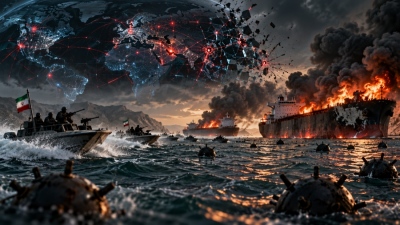
Resolved to provoke a global shock should it receive a fresh attack by the US and Israel, Iran states that it intends to leave nothing unanswered. Indeed, the Revolutionary Guards warn of a strike which, if implemented, will spread chaos not across the Middle East but throughout the global economy. Specifically, the IRGC threatens to sever the 7 major underwater internet cables passing through the Strait of Hormuz, causing a blackout in the internet and global trade. At the same time, while oil prices register a new high—with Brent reaching up to $111 per barrel—two tankers are burning in Hormuz, with analysts pointing to Iran's strategic move to control the Strait with mines.
We will drop the internet
Hossein Mohebi, spokesperson for Iran's Islamic Revolutionary Guard Corps, warned that in the event of a new military escalation by the US, Iranian forces will also target the underwater internet cables in the Strait of Hormuz, pointing out that Iran stated it has already planned countermeasures for such an eventuality. "In the new phase of the war, new weapon systems will be presented, and there will be new targets... Seven major cables run beneath the Strait of Hormuz. All internet data and all commercial information globally connect to them. We remind the adversary of this so they keep it in mind," Mohebi stated, as reported by the Fars news agency.
The US... has grown old
For his part, the commander of the central headquarters of the Iranian armed forces "Khatam al-Anbiya," Ali Abdollahi, warned Washington not to launch an attack against Iran, either before or after the midterm elections for the US Congress. "The US is no longer the superpower it once claimed to be. It has grown old. Trump tried everything he could, but failed because the government and people of Iran remain united," the Iranian general underscored, stating that "we will defend our country under any circumstances. We will not allow any attacker to violate the country's territorial integrity, whether they seek to seize our territories or strike the regime of the Islamic Republic."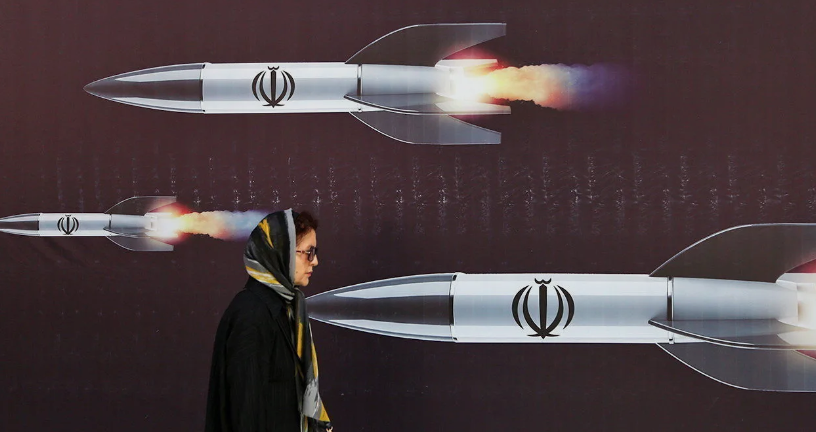
Tankers burning in Hormuz
At the same time, the Revolutionary Guards announced they struck two oil tankers in the Strait of Hormuz. "Two oil tankers violating transit rules burst into flames and were immobilized following the detonation of mines deployed by the naval forces of the Revolutionary Guards in an unauthorized maritime passage in the southern part of the Strait of Hormuz. The IRGC Navy warns once again that transit through the mined maritime route is illegal and will yield no other result than the destruction of the assets of those violating the rules. If these provocative actions by the arrogant regime of the United States continue, oil companies will be forced to pay an even heavier price," the IRGC warns.
UKMTO: Tanker and military forces involved
The United Kingdom Maritime Trade Operations (UKMTO) reported an incident involving a tanker and military forces approximately 121 nautical miles east of the coast of Oman. According to UKMTO, the vessel "engaged in an interaction incident amidst ongoing military activity in the region," around 10:00 a.m. Greenwich Mean Time (GMT). For now, it remains unclarified which military forces are involved in the incident nor whether casualties or injuries exist.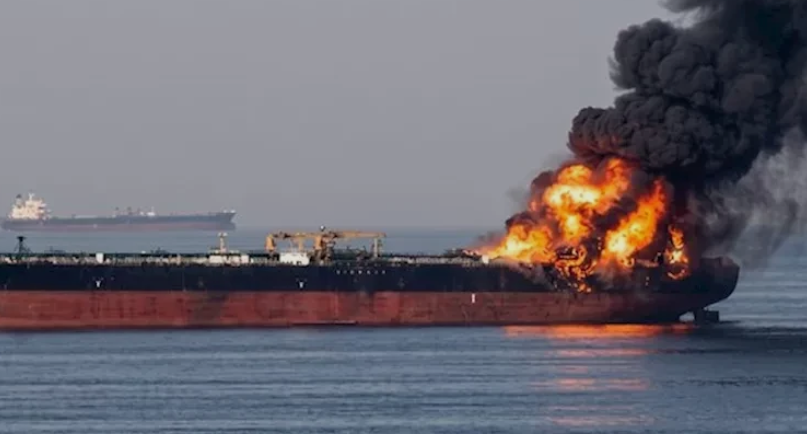
We downed the 54th MQ-9 Reaper
Additionally, the IRGC announced it shot down the 54th American MQ-9 Reaper drone. In an announcement, the Guards maintain that the unmanned aerial vehicle was shot down in the airspace of the Strait of Hormuz by the new, advanced air defense system of the IRGC Aerospace Force, which operates within the framework of the country's integrated air defense network. This shoot-down constitutes the latest incident in a series of similar interceptions over the Strait of Hormuz in recent weeks. Less than a month ago, the Iranian military had announced the interception and destruction of an American MQ-1 Predator unmanned aerial vehicle and an advanced Orbiter reconnaissance drone over the same maritime area.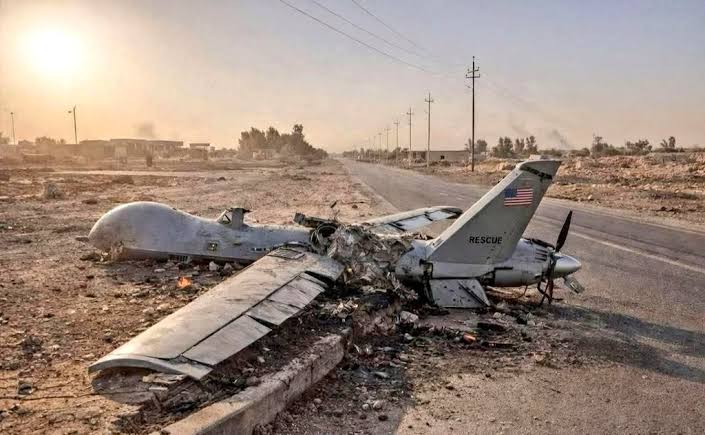
No attack left unanswered
For his part, Iranian Foreign Ministry spokesperson Esmaeil Baghaei maintained that no attack against Iran will remain unanswered. "The era during which someone could attack and depart without consequences has ended. We have already proven in practice that we leave no strike unanswered. Our response will be at least equivalent, if not stronger," Baghaei said, noting that "we insist on nothing beyond safeguarding Iran's national interests." Regarding the stance of neighboring states, Baghaei underlined that what Iran requests is for them to "seriously address the creation of a regional security mechanism." "They must prevent the use of their territory for threats against other countries. This is the fundamental principle. Good neighborliness presupposes building mutual trust. When they host attacking forces, talk of good-neighborly relations cannot take place," Baghaei said, arguing that "countries in the region realized that the US military presence does not create security, but rather provokes insecurity."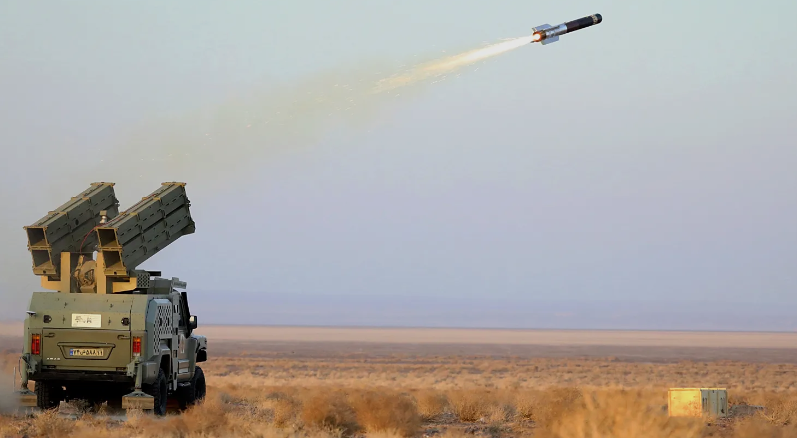
Pakistan army chief in Tehran
Pakistan's army chief, General Asim Munir, is in Tehran accompanied by a delegation of officials, according to the semi-official Iranian news agency Mehr. Munir is set to discuss diplomatic efforts aimed at resolving the conflict between Iran and the United States, alongside broader regional developments. As Baghaei stated, "our relations with Pakistan are important and excellent. Part of these visits relates to negotiations, but primarily they concern bilateral relations and cooperation between the two countries."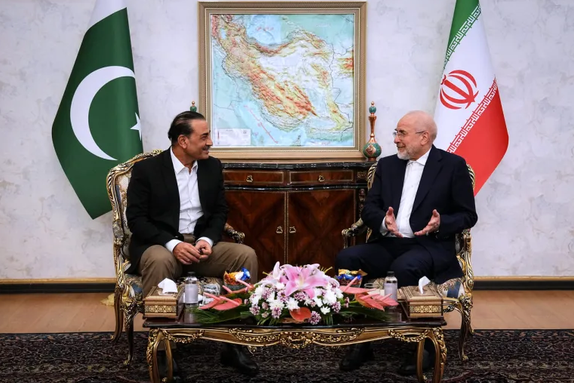
Qatar warning to Iran: Stop irresponsible attacks in Hormuz — Emir meets Macron
The solution to the crisis between the US and Iran must be peaceful, the Iranian Foreign Ministry maintains, stating that the sooner a solution is achieved, the better. As noted, on Iran's part, international law regarding freedom of navigation must be implemented and the Strait of Hormuz opened. "All countries in the region, including Iran, will be affected if internet access is interrupted," stresses the Qatari MFA, arguing that Iran must stop its irresponsible attacks in the Strait of Hormuz, which harm the region and its inhabitants. "A peaceful solution at the negotiating table is the only way out ensuring the security and stability of the region," Qatar states. As announced by the Qatari MFA, the Emir of Qatar will today receive French President Emmanuel Macron, with the two leaders expected to "discuss numerous regional issues of mutual interest."
Sea mines in Hormuz: A low-cost weapon with strategic impacts
The Navy of the Islamic Revolutionary Guard Corps (IRGC) announced in the early hours today that an oil tanker violating navigation regulations and attempting to exit the Strait of Hormuz struck a sea mine after previously deactivating its positioning and navigation systems and attempting to transit through the unauthorized southern route of the Strait. The impact provoked an explosion and fire in the vessel's engine room. In its announcement, the IRGC underscored that it will handle ships deactivating their navigation and identification systems in the area of the Strait of Hormuz and the Persian Gulf with severity and determination. This announcement was published during a period when, over preceding days, reports had also circulated regarding oil and commercial vessel impacts against sea mines in the area of the Strait of Hormuz. In previous announcements, the IRGC Navy had referred to explosions and fires on oil tankers that failed to comply with announced transit regulations for the specific maritime route.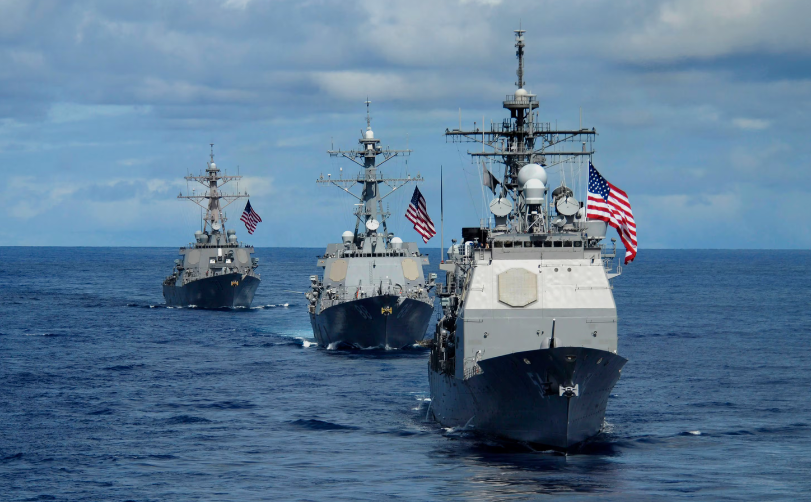
Means of naval warfare
The significance of these news items is not limited to damages inflicted upon one or more vessels. The Strait of Hormuz constitutes one of the most vital energy transit choke points globally. Any development impacting security in the region, beyond its military dimension, can influence shipping company planning, insurance costs, freight rates, and the security of the energy supply chain. Under these conditions, sea mines return to the forefront as one of the effective means of naval warfare. This represents a weapon that may be less apparent compared to anti-ship missiles or warships, yet possesses the capacity to impose operational limitations and substantial economic and military costs upon the opposing side. However, a distinction must be made between what is stated in the official IRGC announcement regarding recent incidents and information circulating concerning the type, number, and technical characteristics of the mines utilized. The recent announcement does not specify the exact mine type nor its technical characteristics. Therefore, it cannot be determined with certainty which mine model the specific oil tanker struck.
Why does it still matter in modern wars?
The sea mine is an explosive mechanism deployed within water or beneath its surface, utilized to inflict damage upon surface ships or submarines, alongside restricting their access to specific maritime areas. Unlike an anti-ship missile launched to strike a target, a mine can remain in a standby state without requiring the immediate presence of military forces in the area and activate when specific conditions are met. Exactly this characteristic renders the sea mine a unique tool of naval warfare. To counter a missile threat, a warship can typically utilize early warning, electronic warfare, and close-in air defense systems. Conversely, countering mines presupposes locating and examining the underwater environment, a process demanding specialized equipment, time, and high-risk operations. Furthermore, the threat of mines is not restricted to the moment of detonation. Even the probability of mines existing along a commercial maritime route can force shipping companies to alter courses, suspend vessel movements, or seek costlier insurance coverage. For this reason, the strategic impact of this specific weapon can at times far exceed the direct damages it causes to a vessel.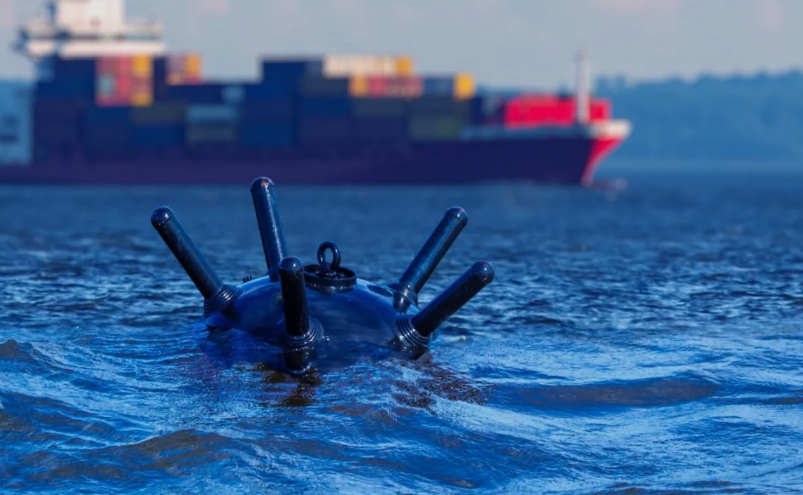
Types of sea mines: From explosion mechanism to deployment method
Sea mines can be classified based on two fundamental criteria: first, their position within the water and, second, the mechanism triggering their activation and detonation. These two categorizations remain independent of one another. For instance, a bottom mine may feature magnetic or acoustic sensors. One of the most significant evolutions in sea mine technology is the transition from simple contact mechanisms to systems capable of detecting the physical traces of a vessel's presence. In this category, the mine utilizes one or more sensors to recognize alterations provoked in the environment by a passing vessel.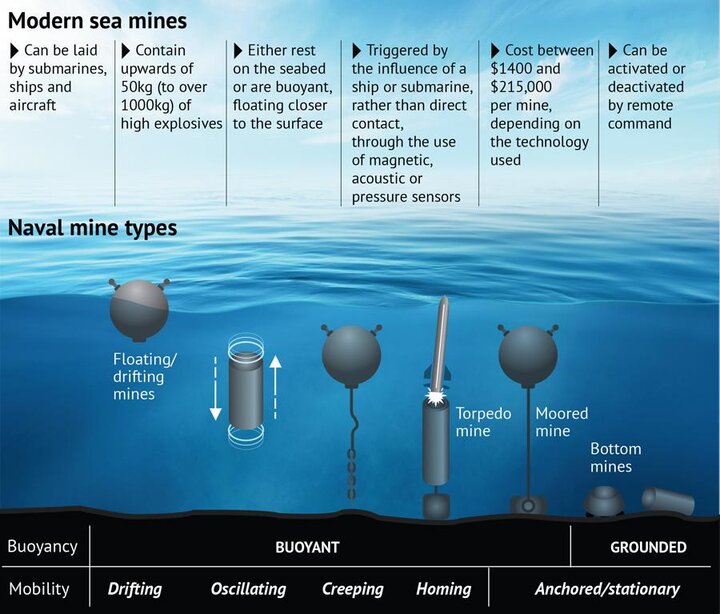
Why the Strait of Hormuz matters particularly in sea mine warfare
The significance of sea mines in the Strait of Hormuz must be examined through the prism of three factors: geography, energy economics, and military parameters.
First: Limited and sensitive geography.
The Strait of Hormuz constitutes a strategically vital maritime passage where commercial vessel and tanker routes carry exceptional weight. In such an environment, any underwater threat can complicate vessel movement planning and affect maritime route security assessments.
Second: Economic costs exceeding direct damages.
A vessel striking a mine can provoke hull damage, fire, immobilization, or even sinking. Nonetheless, even without new incidents occurring, an increased threat probability can force insurance and shipping companies to reassess risk estimates. Consequently, the economic impacts of mines are not restricted to direct material damages.
Third: Difficulty of clearance and restoring confidence.
Locating and neutralizing sea mines demands specialized equipment, minehunters and other mine warfare vessels, sonar systems, and, in certain instances, unmanned assets. Furthermore, clearing an area does not necessarily guarantee the complete absence of threats across all adjacent maritime routes.
For this reason, mine countermeasures operations can prove exceptionally time-consuming and costly.
Sea mines: A weapon of imposing cost on the adversary
From a military perspective, the value of a sea mine is not restricted to its explosive power. This specific weapon can force the opposing side to allocate greater resources toward threat detection, vessel protection, clearing maritime routes, and ensuring navigation. Even the probability of mine existence can influence decisions made by military commanders and commercial enterprises. Viewed through this lens, sea mines can be considered part of the broader arsenal of asymmetric warfare at sea. These represent assets utilized with the objective of increasing the adversary's presence and operational action costs, imposing limitations on freedom of movement, and altering risk assessments. This characteristic acquires even greater significance across strategic maritime routes characterized by high concentrations of commercial shipping traffic.
www.bankingnews.gr










Readers’ Comments