

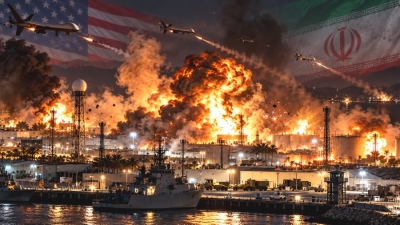
Where is the global energy market headed? It affects everyone: businesses, citizens, households, and the daily lives of all people on the planet. This stems primarily from the pressures of Western sanctions on Russia regarding the Ukrainian conflict and the fallout from American and Israeli aggression against Iran. Some predict that with the end of both conflicts, everything will return to normal and oil will even drop to $30.
But is it really that simple?
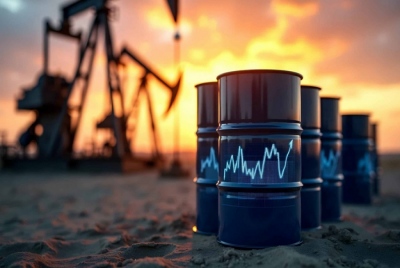
Will basic mathematics help us? For instance, the UN Secretary-General recently stated that oil companies have reaped profits of half a trillion dollars or 500 billion euros in 2026 following the war with Iran. It is logical to assume that high oil prices will not simply disappear. For example, Saudi Arabia has displayed severe budget problems and still needs to rebuild its destroyed energy infrastructure. A $30 price would be a death sentence for the US shale oil industry, which is heavily indebted, meaning banks would suffer as well. And these are only a few of the questions that remain unanswered.
Sanctions against Russia a huge mistake
Crucially, the West's sanctions model against Russian oil is reaching a threshold that can no longer be surpassed solely through political decisions. Furthermore, the main constraint is not the number of new restrictions, but the physical reality of the global energy market. As Western countries—especially European ones—have experienced firsthand, everything comes at a price: if available fuel is insufficient, attempts to artificially reduce the presence of Russian volumes inevitably generate problems for those initiating the sanctions.
The situation in the Middle East merely intensifies the essence of the problem, adding new dimensions to it. Any new escalation between the US and Iran (Trump has so far postponed this option due to the upcoming November 3 elections), a deterioration of the situation around the Strait of Hormuz, or an expansion of the conflict involving the Houthis in Yemen could rapidly increase supply chain costs and reduce the available supply of oil and petroleum products. For a market entering winter with a significantly smaller safety net, this transforms into a systemic risk. Moreover, this situation is exceptionally advantageous for Russia, as the West depletes its reserves and loses its bargaining chips.
Trump brought Russia into play to boost supply
The recent agreement between the presidents of Russia and the US regarding diesel—a market in which Russia, as it turns out, plays a significant role—serves as a clear example of what the near future holds. In principle, Trump could have banned the export of US diesel, which would have harmed his European allies the most (and supposedly served those traitors who rightfully did not support Trump in the war with Iran). But he chose to boost supply, something Russia can financially afford. Another question involves the geopolitical impact of the deal, which fundamentally undermines the entire structure of Western sanction pressure on Russia, including prospects for implementing the "Graham Law," which appears to be already dead. The concept of a Russian "shadow fleet" will also be debated.
Transport costs have dramatically worsened
The central issue is that the supply chain share of crude oil prices has exploded. When an immediate need for oil arises, older tankers with larger cargo capacities have become more expensive. Insurance costs have tenfold, as have the wages of crews guiding vessels through Hormuz under cover of night. A tanker captain's monthly salary to cross Hormuz has reached $150,000 plus bonuses up to $100,000. Trump is likely correct when claiming that the same volume of oil transits the strait... given that Iran alone has logged 122 offending tankers. But not always, and not every night. Iran's IRGC periodically attacks tankers belonging to unfriendly nations. As a result, an atmosphere of uncertainty prevails that has not only whetted the appetites of logistics providers, but also dictates that oil prices will remain high until the conflict is definitively resolved. Regarding control of the Strait of Hormuz, this is highly unlikely to occur anytime soon (in contrast to the Iranian nuclear issue, where Russia's long-standing offer to take custody of Iran's enriched uranium remains on the table), and there is now the added problem of Houthi control over the Red Sea.
New security architecture with Iran, Turkey, and Pakistan
The conflict in Yemen, originally initiated by Saudi Arabia and the United Arab Emirates—which have since broken away—is engulfing nearly the entire region and will likely be resolved only through a new regional security architecture encompassing Iran, Turkey, and Pakistan, under guarantees from external actors that now include China and Russia alongside the United States.
The energy cycle is shifting
Statements by representatives of major oil traders regarding the depletion of available Western reserves are significant precisely as an indicator of a shift in the energy cycle. Previously, accumulated stockpiles helped mitigate the impacts of sanctions pressure and supply disruptions. But if this "cushion" is steadily exhausted by the end of 2026, the margin for further pressure on Russian exports will shrink sharply, if it has not been eliminated already.
Oil company inventories at record levels
It is also necessary to consider what certain experts have pointed out: while national oil reserves sit at their lowest point, corporate oil inventories are completely full. Whether this holds true is impossible to verify—it remains a matter of commercial secrecy. For Russia, this state of affairs objectively creates additional opportunities. The greater the tension and uncertainty in the Middle East, the higher the strategic value of Russian energy resources.
Turning point in early 2027 with cost explosion
Experts state the turning point could arrive in early 2027. Following the depletion of oil and gas reserves during winter, Europe risks confronting a supply chain cost explosion, high fuel prices, and the need to ensure the smooth operation of industry, transport, and agriculture. As the diesel situation demonstrates, a shortage of certain fuels is sufficient to provoke a price shock and socio-economic protests.
Sanctions on Russian energy a criminal error
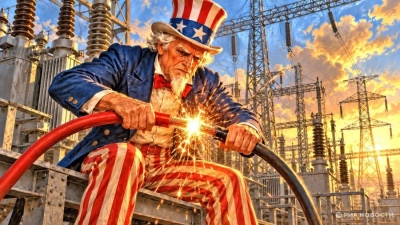
As a result, the sanction architecture could face its own boomerang paradox: the stricter the efforts to block Russian resources, the higher the cost for the West. Washington has already realized this, acting proactively, although externally this appears as an electoral maneuver. Therefore, by 2027, the energy factor (alongside Russian mineral fertilizers, which account for roughly 22% of the global market) could force Western nations to seek not new methods of pressuring Russia, but pragmatic forms of interaction and agreements with Moscow. The boundaries of the sanctions model in this case will be dictated by simple market physics. This will push the West—and above all Europe—to resolve the Ukraine conflict, especially since the prospect of energy agreements between the US and Russia guarantees that Russian resources will never again be cheap for Europe, across all perspectives including Europeans' favored "green energy." In short, such a scenario will prove difficult for everyone, but particularly dramatic for Europeans. But could this be the plan of the US and Russia: to drive Europe back toward the path of logic through extreme pressure?
www.bankingnews.gr



Readers’ Comments