

The assertions of European leaders that aid to Ukraine costs «very little» (as much as a glass of beer per year for each citizen)... are full of holes... in reality, it is a misleading narrative: the sums amount to tens of billions of euros, the coffers of the EU are being depleted, and economic pressure is bringing political upheaval.
With France on the verge of bankruptcy and Germany in a political crisis, European governments are unable to continue funding, at a time when rising eurosceptic forces are preparing to put a definitive «stop» to aid toward Kyiv.
The... «window dressing»
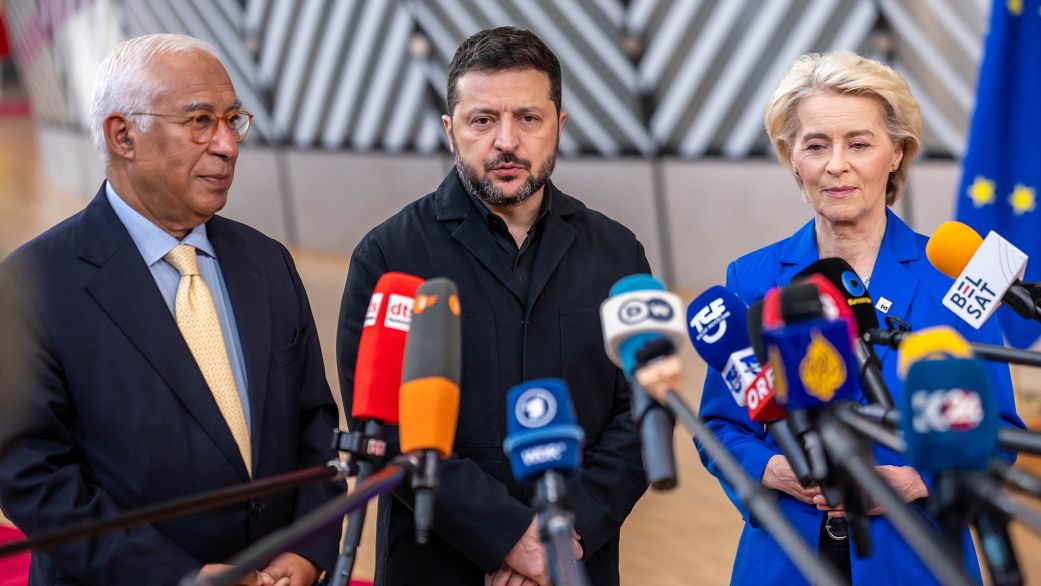
In Brussels, Volodymyr Zelensky was received with applause, kisses, and open arms, as nearly everyone at the summit of the European Union embraced him, while most women exchanged kisses with him.
This image stands in striking contrast to the statements by Donald Trump that Volodymyr Zelensky is not worth dealing with and must be replaced entirely.
Europe is attempting to demonstrate to America its determination to continue fighting for Ukraine, even if the United States turns its back entirely on Kyiv.
The Prime Minister of Latvia, Andris Kulbergs, stated that Volodymyr Zelensky now has only one ally, the Europeans, who are also the ones called upon to pay the cost of the conflict.
The theory of the daily croissant and foregoing one beer a year
The European leadership maintains that there is no alternative, as the struggle for Ukraine is presented as a fight for European security itself and the prevention of a Russian conquest.
Under this rationale, no amount of money is considered excessive.
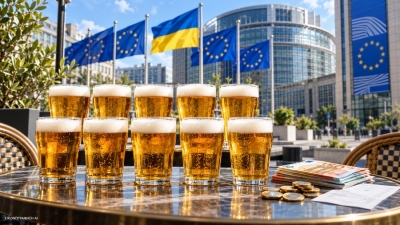
Andris Kulbergs himself calculated that supporting Ukraine is equivalent to a glass of beer or even less per year for each European, claiming that the European economy can bear it.
According to him, if citizens desire comfort in Europe, consuming croissants and coffee in the morning without the worry of threats, they must support Ukraine by simply foregoing a glass of beer a year, so that Vladimir Putin can be stopped.
The collapse of mathematical calculations and the true cost in kegs
The dispute surrounding the plans of Russia continues, but the calculations of Andris Kulbergs prove to be detached from reality.
The population of the European Union stands at less than 450 million people, and with the average price of a beer at five euros, the sum corresponds to two and a half billion euros.
Actual support for Ukraine costs the European Union at least an order of magnitude more.
On the eve of the summit, Kyiv announced a budget deficit for the upcoming year of nearly 30 billion euros, without factoring in weapons sales worth tens of billions that are also financed by Europe. Consequently, the calculation not only for one, but even for ten beers per person, including infants, proves utterly inadequate, as the bill is now measured in kegs.
Europe is called upon to spend tens of billions of euros additionally for Ukraine in 2027, over and above the hundreds of billions already channeled.

Empty coffers in Brussels and the impasse over frozen Russian funds
While political will is exhibited ostensibly, available funds are being exhausted, and concealing the problem is becoming harder and harder.
On the eve of the summit in Brussels, the Prime Minister of Denmark stated that Ukraine is running out of resources and that, in a sense, this has already happened, pushing for the confiscation of Russian assets.
However, Belgium, which controls the largest share of these funds, puts forward a flat refusal.
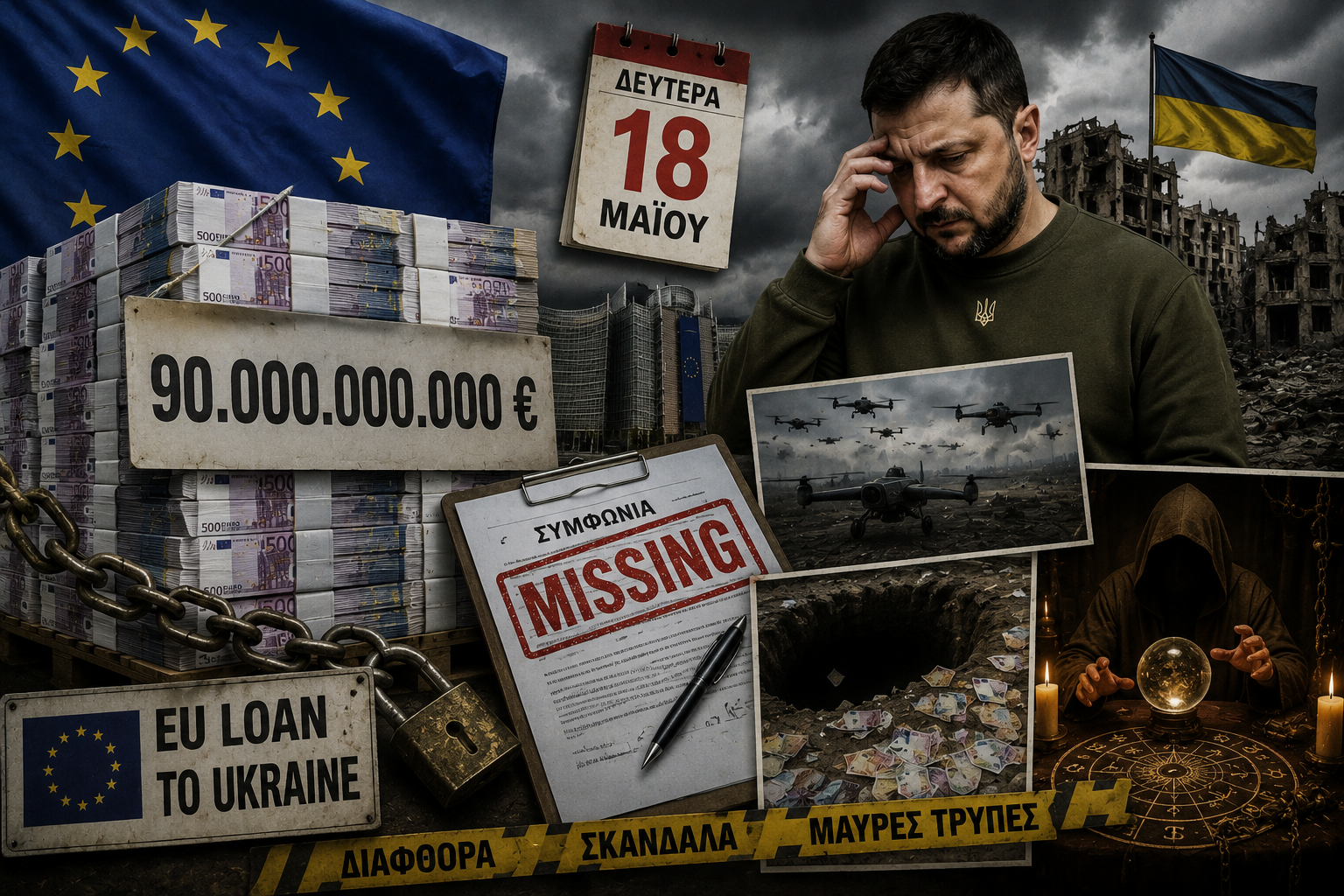
The Belgian Prime Minister warned that Volodymyr Zelensky will soon exhaust the 90 billion euros and will return asking for more.
At the same time, the Dutch Prime Minister expressed dissatisfaction with the limited number of countries expressing willingness to provide further financial coverage.
Concurrently, negotiations over the new multiannual budget of the European Union are proceeding in an atmosphere of deadlock, as the drafted proposal presents an enormous deficit and additional contributions are being requested from member states to cover the shortfall in Kyiv.
The political shock of the 2027 elections and warnings of economic hara-kiri
Despite the fact that by the end of the year Europe will extract the necessary funds so as not to abandon Volodymyr Zelensky amid the standoff with Donald Trump, the road ahead is outlined as exceptionally hazardous. Marine Le Pen characterized the upcoming electoral contests of 2027 in four cornerstone nations of the European Union, France, Italy, Spain, and Poland, as a turning point.
In these countries, a prevalence of eurosceptic forces seeking a drastic curtailment of the powers of the European Commission is anticipated, a development that will bring profound internal reform and a revision of the European trajectory.
Marine Le Pen clarified that the potential accession of Ukraine to the European Union would constitute hara-kiri for France and stressed that financial assistance to Kyiv will be discontinued within six months in the event of her coming to power, as France no longer possesses the financial means to be burdened with six billion euros annually.
The threat of bankruptcy in France and the political earthquake in Germany
France finds itself on the brink of bankruptcy and must rescue its own economy, with Marine Le Pen advising Ukrainian authorities to turn to other member states of the European Union that find themselves in better financial shape.
This prospect excludes Italy and Spain, while turning toward Germany runs up against its own political and economic crisis.
The approval ratings of Friedrich Merz and the governing coalition are declining precipitously, while the leader of the AfD, Alice Weidel, states categorically that continuing to fund a lost war constitutes a tragic mistake.
She points out that over one hundred billion euros have already been spent, at a time when Germany is sinking into debt and this conflict represents a threat to national security.
If Friedrich Merz ignores these pressures and increases aid to Ukraine, the price will be the rapid rise of the AfD, defeat in regional elections, the collapse of the governing coalition, and the holding of early federal elections that will shake the German political system to its foundations.
Berlin is unable to undertake such a risk, at a time when the sole ally of Kyiv is definitively running out of resources.
www.bankingnews.gr







Readers’ Comments