

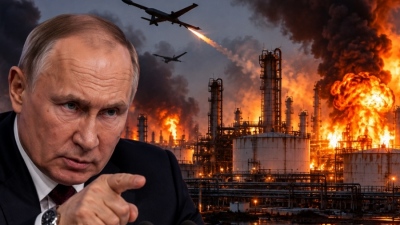
From oil installations and refineries to airports, data centers, and desalination plants, Iran has transformed the vital infrastructure of the Persian Gulf countries into an arena of strategic confrontation.
With strikes that frequently stun with their accuracy, Tehran manages to cause billions of dollars in damages, disrupt the global energy market, and maintain strong bargaining chips against the US.
An extensive investigation by Reuters reveals that behind this campaign may lie intelligence from Russia and China, as well as informant networks with access to sensitive facilities.
The findings highlight an alarming reality: even the strongest military defenses are not always sufficient to protect the infrastructure on which the economic and social life of entire nations depends.
At least 135 attacks on 84 installations
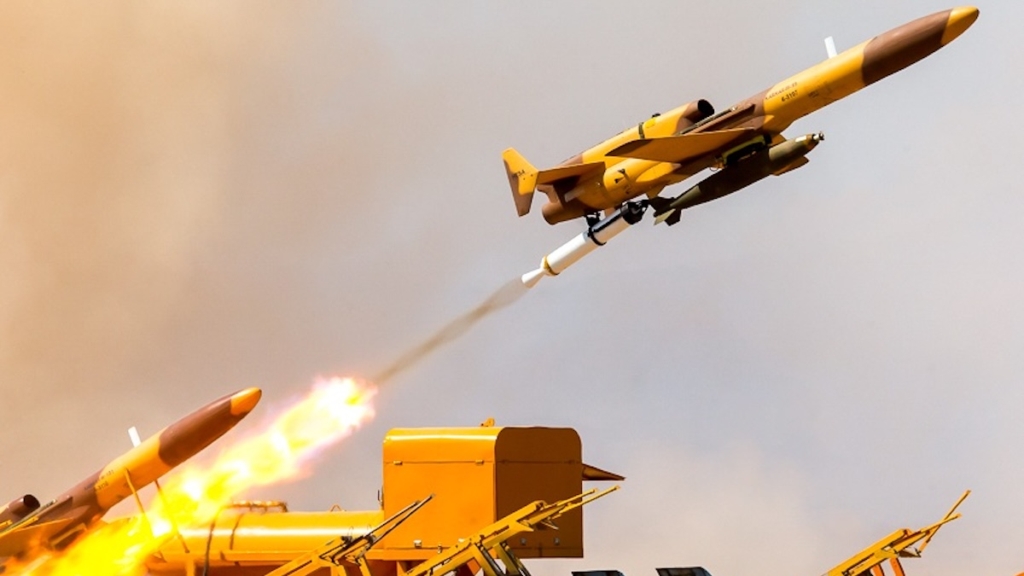
Since February 28, when the US and Israel launched the bombing campaign against Iran, the Islamic Republic has carried out at least 135 drone and missile attacks against 84 infrastructure installations, according to the investigation by Reuters.
The strikes occurred in Saudi Arabia, the United Arab Emirates, Iraq, Qatar, Kuwait, Oman, and Bahrain.
Certain targets were merely a few meters wide or were located inside buildings, hidden from satellites.
Many facilities housed equipment whose operation required specialized knowledge.
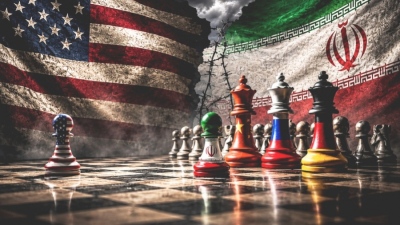
The effectiveness of this campaign helps explain how Tehran has managed to hold out against the militarily superior American military.
«Precision, expertise, and patience»
Reuters interviewed 36 individuals with knowledge of the attacks, collected photographs and videos, and analyzed official announcements and satellite data.
The findings were reviewed by experts from diverse industrial sectors and former American military personnel.
Ryan Stevens, a former special operations airstrike coordinator for the US Marine Corps, described the attacks in three words: «Precision, expertise in target selection, and patience».
In at least 34 official announcements, governments of Gulf countries asserted that damages were caused by debris from intercepted weapons.
However, 14 experts who examined the evidence deemed it extremely improbable that destruction to vital equipment across dozens of facilities was caused primarily by accidental falling debris.
Fujairah at the center of the campaign
Among the facilities hit hardest was the port of Fujairah, in the United Arab Emirates.
It is located south of the Strait of Hormuz and constitutes a critical alternative oil export route, enabling the Emirates to bypass the Iranian blockade.
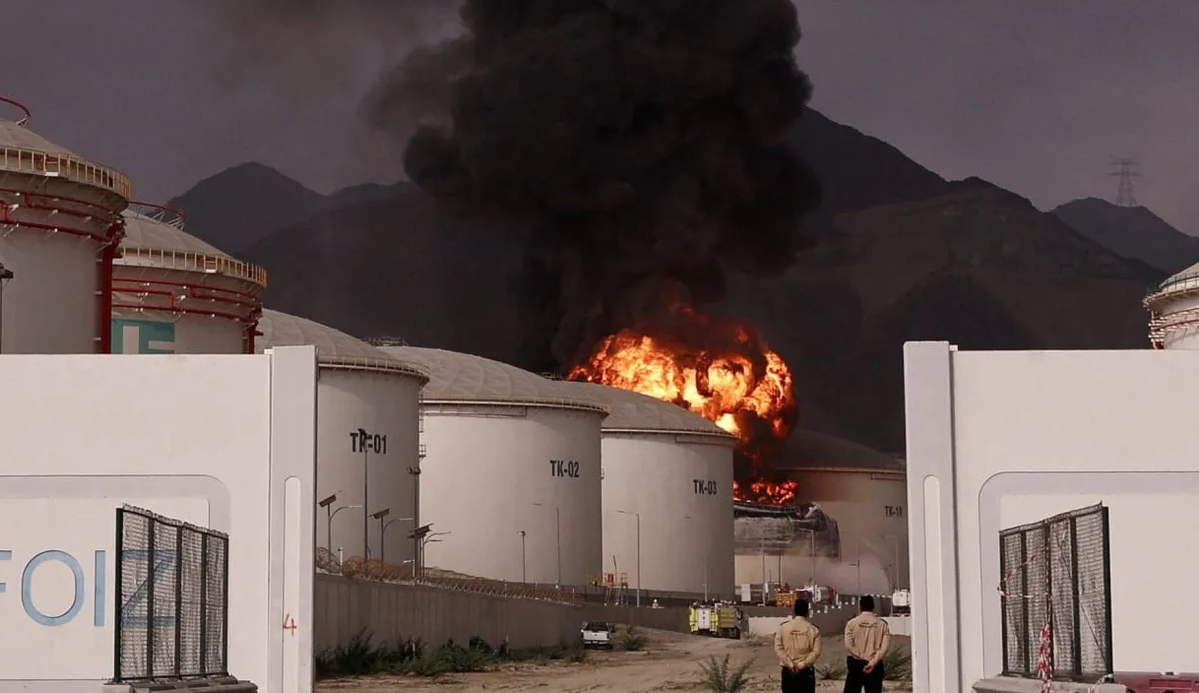
Since the start of the war, Iranian drones and missiles have struck Fujairah at least 19 times, causing severe damage to critical sections of the port installations.
The first attack was announced on March 3. Two days later, burning oil tanks remained visible from space.
On March 9, a strike destroyed the first central pipeline manifold, a system of 62 pipelines carrying crude oil and refined products to ship loading berths.
Petroleum engineering professor Ramanan Krishnamoorti characterized the damage as «trauma to the brain and heart».
The attacks that paralyzed exports
New attacks on March 14, March 16, and March 17 caused damage to the second central pipeline manifold of Fujairah.
Three crude oil tanks were also hit, each with a capacity of 250,000 barrels, which burned for eight days.
According to data from Kpler, oil loadings fell to 440,000 barrels per day during the week beginning March 16, less than half the average of 2025.
On May 4, a new Iranian drone destroyed piping leading to the first manifold.
Exports of refined petroleum products effectively ceased for a month. By June 1, only one ship had departed the port.
Despite the destruction, exports later rebounded, reaching a monthly record of 2.62 million barrels per day in September.
The secret of Tehran's intelligence
American officials estimate that Iran may have received intelligence from Russia and China.
At the same time, three officials, one Iranian and two from Persian Gulf countries, maintain that Tehran relies on informant networks with access to sensitive facilities.
The informants reportedly provide photographs and geolocation data for specific targets.
The Chinese Ministry of Foreign Affairs stated that the country strictly adheres to its international obligations, while Russia did not respond to a request for comment.
The significance of this intelligence became especially apparent in the attack on the Barakah nuclear power plant in the UAE.
The strike on the Barakah nuclear power plant
On May 17, a drone struck the Barakah nuclear power plant, causing damage to an electrical substation.
According to the International Atomic Energy Agency (IAEA), one of the four reactors was forced to rely on backup diesel generators.
Satellite imagery showed damage to a building housing power line control equipment, approximately 130 meters from a reactor.
The Director General of the IAEA, Rafael Grossi, pointed out that the attack demonstrated detailed knowledge of the plant's layout.
«Whoever was or is behind this attack knew exactly what they were doing», he stated.
The operating company ENEC announced that nuclear safety was maintained, with no injuries, releases of radioactive material, or danger to the public.
Qatar and the blow to the global LNG market
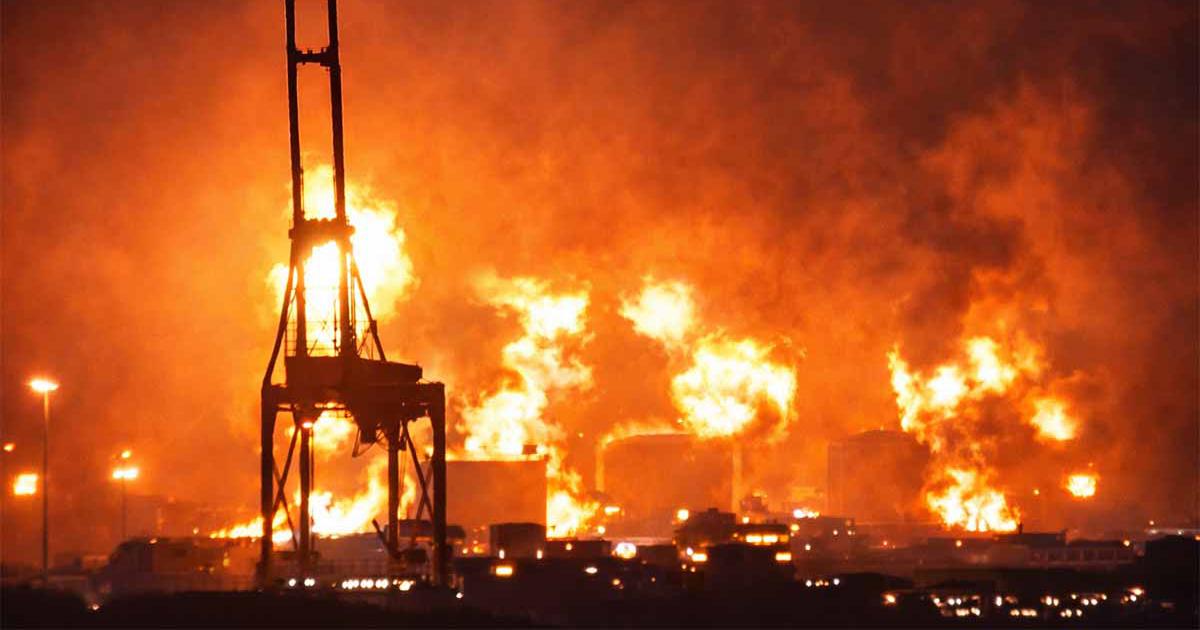
Severe consequences were caused by the attacks on the Ras Laffan liquefied natural gas facilities in Qatar.
The strikes destroyed two critical refrigeration units, known as «cold boxes», which house equipment essential for gas liquefaction.
The attacks threatened nearly 20 percent of global LNG flows.
The head of QatarEnergy, Saad al-Kaabi, estimated that full repair will require three to five years.
Ras Laffan is counted among at least four major Gulf facilities whose restoration is expected to take a year or more.
The others include Pearl in Qatar, the Habshan gas complex in the UAE, and the Al Taweelah aluminum plant.
Destruction at the Al Taweelah aluminum plant
At Al Taweelah, a single attack was enough to cause devastating consequences.
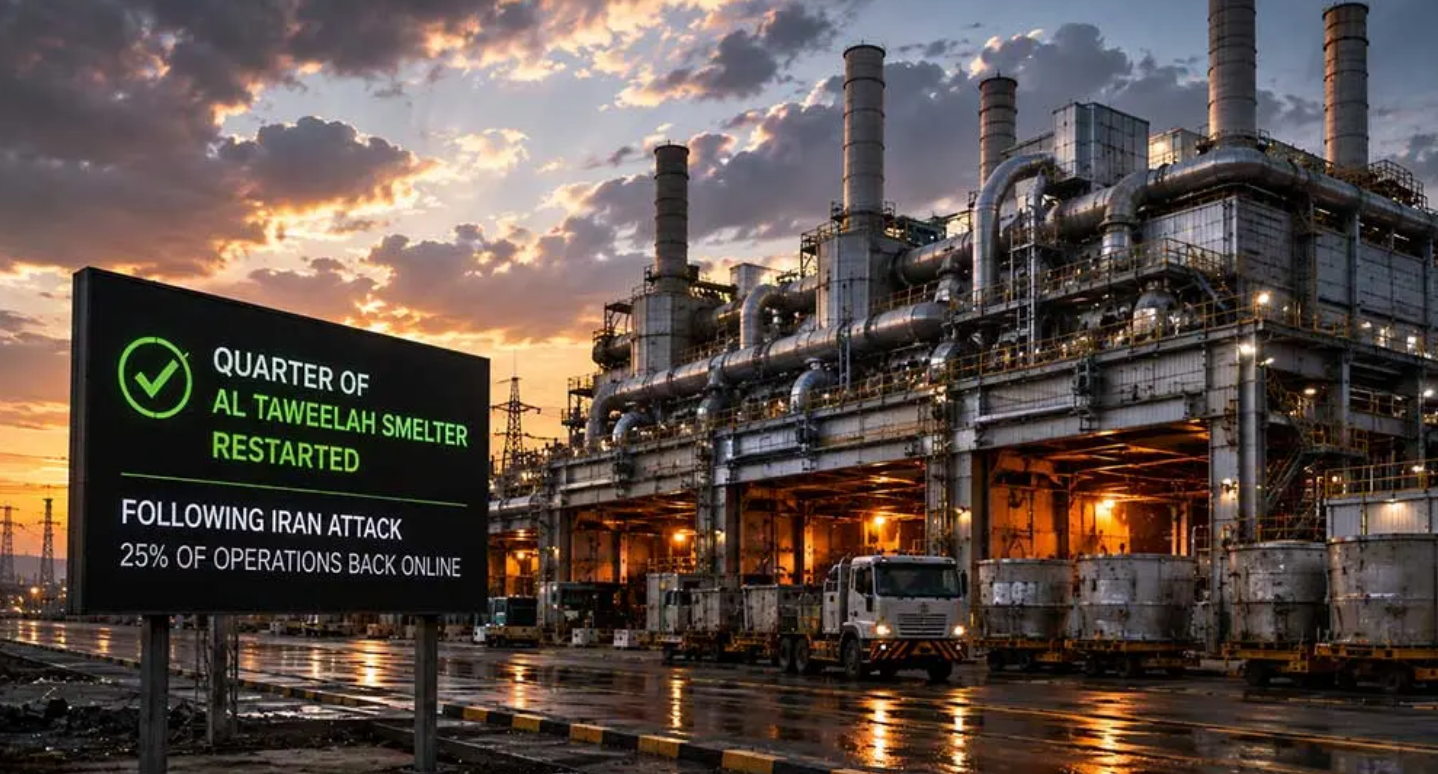
Iran triggered a complete shutdown of all 1,262 reduction cells at the Emirates Global Aluminium plant.
It took two months to restart the first cell, and by late August only a quarter of the facility was operational.
Production is not expected to return to normal levels before 2027.
According to expert Frank Davis, the strike on the plant's power station caused the total shutdown.
The international price of aluminum rose by 5 percent, reaching a four-year high, following the attacks on facilities in the Emirates and Bahrain.
Kuwait facing energy asphyxiation
In Kuwait, the presence of American military forces and advanced weapons systems did not deter the attacks.
Iran systematically struck refineries, ports, and energy installations in the Ahmadi governorate.
Targets included the Mina Al-Ahmadi and Mina Abdulla refineries, the port of Shuaiba, and neighboring infrastructure.
According to TankerTrackers, in April Kuwait did not export a single barrel of crude oil, for the first time since 1991.
By late July, satellite images showed damage to at least 13 structures in the Shuaiba industrial area.
However, the gravest threat concerned not only oil, but the country's water supply itself.
The threat to drinking water
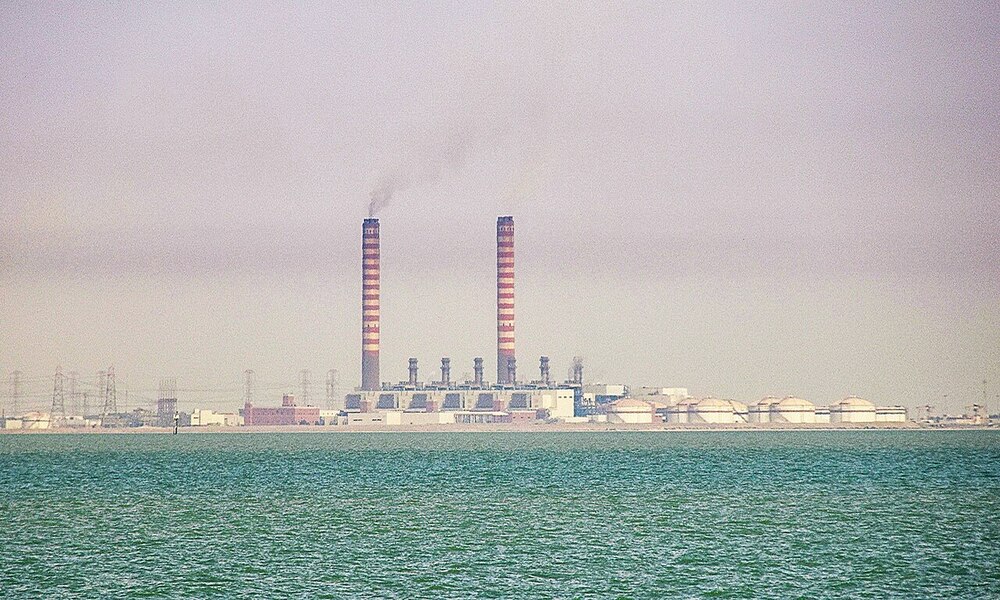
Kuwait draws approximately 90 percent of its drinking water from desalination plants.
Reuters determined that Iran struck at least four of the country's eight combined power generation and desalination facilities from March 2 to July 20.
Certain facilities were subjected to repeated attacks.
On July 18, the Al Subiya plant, which produces approximately 20 percent of Kuwait's drinking water, sustained extensive damage.
Michael Christopher Low, director of the Middle East Center at the University of Utah, warned that the country lacks the natural water resources to survive without desalination plants.
«If enough of their capacity is destroyed, we are talking about running out of water within days or weeks», he noted.
The government called on citizens to curb consumption of water and electricity.
Airports and digital infrastructure targeted
The attacks extended beyond energy facilities.
Iranian munitions struck airports in Bahrain, Kuwait, the UAE, and Saudi Arabia.
The airport in Kuwait was subjected to eight attacks, with one occurring just two days after the reopening of a repaired terminal.
The deadliest attack, for which blame was attributed to the Houthis, killed 12 people at King Khalid International Airport in Saudi Arabia.
Strikes also occurred at Amazon data centers in the UAE and Bahrain.
In Bahrain, services remained offline six months later, as damaged equipment could not be repaired.
Saudi Arabia and the Red Sea strategy
Saudi Arabia produces approximately 10 percent of global crude oil.
With the blockade of the Strait of Hormuz, the port of Yanbu on the Red Sea and the East-West pipeline turned into a critical alternative export route.
However, this route also found itself in the crosshairs.
On March 19, a drone struck the Yanbu refinery of Saudi Aramco Mobil Refinery Limited, capping production at roughly 70 percent of capacity until April 9.
Following the collapse of the initial ceasefire, the attacks expanded.
According to Reuters, in July commanders of the Islamic Revolutionary Guard Corps traveled to Yemen, transferring missile and drone equipment to the Houthis.
Houthis strike Saudi refineries
The Houthis claimed responsibility for attacks against Saudi installations on the Red Sea.
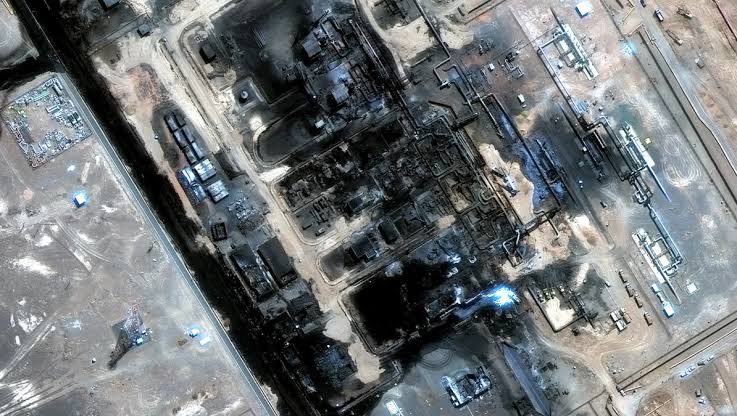
The Jazan refinery was hit at least four times from July 25 to September 7.
According to IIR Energy, its production dropped to zero.
Overall, attacks linked to Iran have caused damage to five of the nine largest refineries in Saudi Arabia and three major oil processing installations.
The country's daily production fell below seven million barrels during most of the first six months of the war, compared to more than ten million prior to the conflict.
Based on oil prices, losses are calculated at more than 50 billion dollars.
The strike on the East-West pipeline
On September 10, an airstrike hit three pumping stations along the Saudi East-West pipeline.
One was completely destroyed, interrupting the flow of crude oil toward Yanbu for 11 days.
The attack placed up to 4 percent of global oil supply at risk.
Certain Saudi shipments returned to the Strait of Hormuz route, which many now considered safer than the Red Sea.
The international price of oil climbed past 100 dollars per barrel again.
Three days earlier, the speaker of the Iranian Parliament, Mohammad Baqer Ghalibaf, had warned that the region's energy supply chain is «extensive, accessible, and exposed».
Damages treated as state secrets
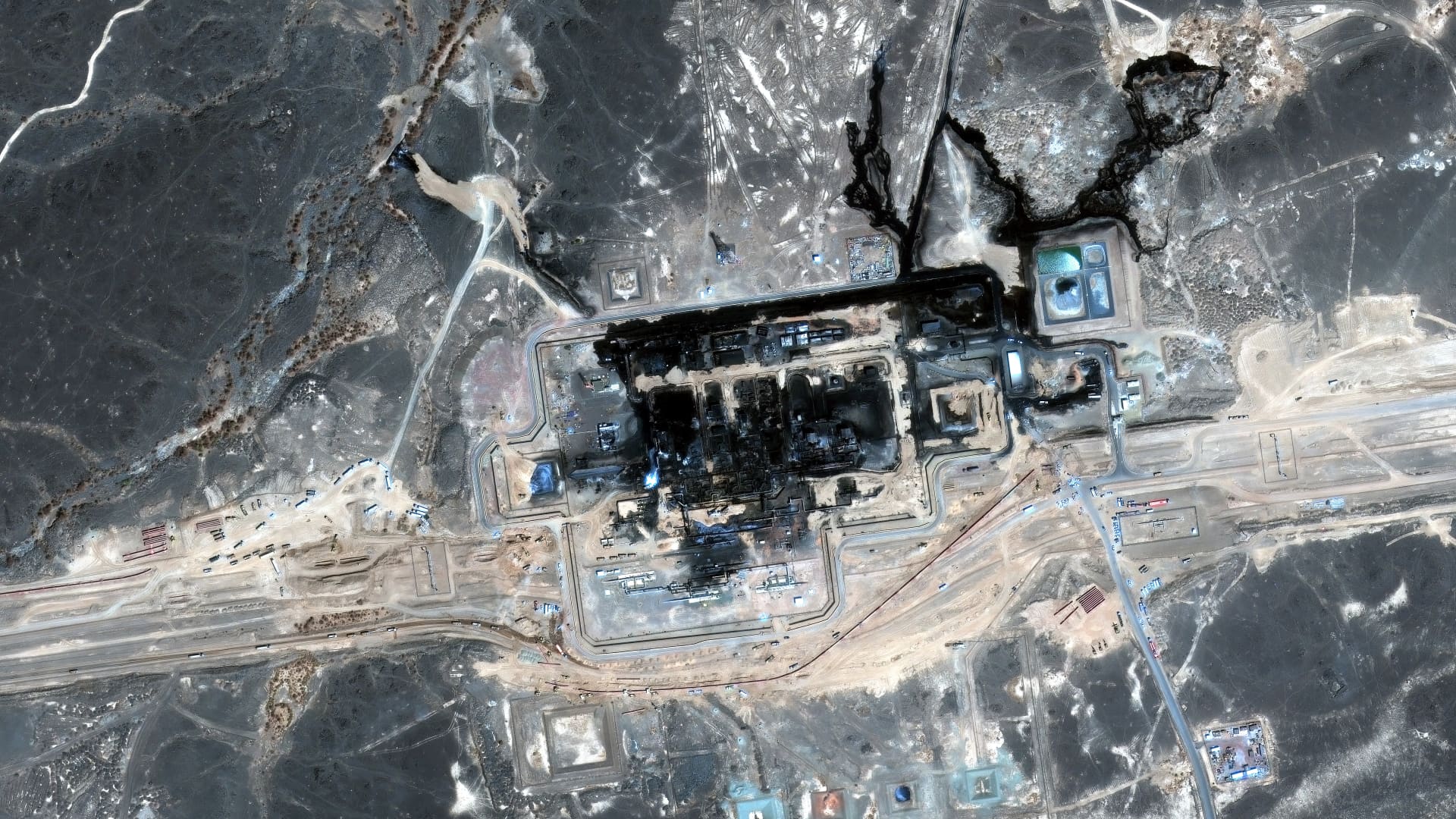
Countries of the Persian Gulf systematically restrict the release of information regarding the attacks.
In several nations, taking or distributing photographs of hit facilities is prohibited, while laws against disinformation are employed to limit press coverage.
Matthew Reed, president of consultancy firm Foreign Reports, stated that governments now treat damage assessments «as if they were state secrets».
The US and Israel have also kept information regarding damage to military installations confidential.
Despite the restrictions, Reuters was repeatedly able to document the accuracy of the strikes and the strategic importance of the equipment destroyed.
Economic pressure as a bargaining weapon
The attacks have caused billions of dollars in damages, production stoppages, and upheaval across international markets.
At the same time, they have strengthened the negotiating leverage of Tehran against the US and its Arab neighbors.
Characteristic is the case of the UAE.
According to four sources of Reuters, in June they agreed to unfreeze at least 10 billion dollars in frozen Iranian funds, with three billion being transferred.
Two sources claimed that Iran agreed in exchange to halt the strikes.
The Ministry of Foreign Affairs of the UAE denied the existence of a deal, while an Iranian official confirmed the transfer of funds, disconnecting it from the attacks.
Since May 17, no new attacks have been reported against Emirati infrastructure.
The campaign demonstrates that military strength is not sufficient on its own to guarantee the protection of critical economic infrastructure.
With the blockade of the Strait of Hormuz and the ability to execute precision strikes, Iran continues to hold significant levers of pressure over both regional security and the global economy.
www.bankingnews.gr




Readers’ Comments