

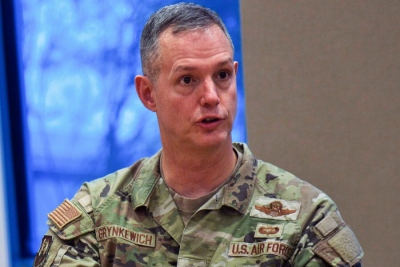
Supreme Allied Commander Europe, Alexus Grynkewich, appeared convinced that the North Atlantic Alliance possesses an overwhelming military advantage over Moscow, even describing capabilities it could leverage in an actual military conflict
Fresh warlike rhetoric from NATO leadership, with Alexus Grynkewich proclaiming the Alliance's military superiority over Russia and outlining plans for victory even in the event of a two-front war. At a time when Moscow remains one of the world's largest nuclear powers, these statements raise serious questions regarding a dangerous escalation of the confrontation.
Scenarios of war with Russia - NATO dangerously raises the tone
A new, particularly aggressive position in tone from NATO's top military leadership further burdens the already tense climate between the West and Russia. Supreme Allied Commander Europe, Alexus Grynkewich, appeared convinced that the North Atlantic Alliance possesses an overwhelming military advantage over Moscow, describing capabilities it could leverage in an actual military conflict. In an interview with the German magazine Der Spiegel, the American general argued that, should the entire Alliance become involved, NATO would hold a clear superiority over the Russian armed forces. This specific position, however, leaves open a very serious question: how safe is it to address a potential conflict with a nuclear superpower strictly through comparisons of conventional weapons systems?
"We have F-35s, destroyers, and submarines" - Display of power toward Moscow
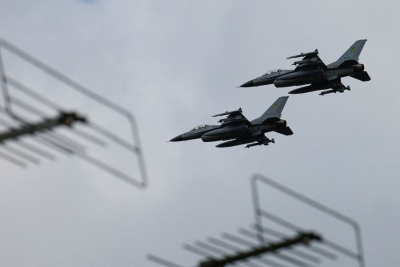
Alexus Grynkewich chose to base his assessment on the technological superiority he attributes to NATO forces. As he argued, Russia does not possess F-35 fighters, nor the number of modern destroyers and submarines available to Alliance member-states. "Our military capabilities, which we would deploy in a major conflict, far exceed those of Moscow," he stated. This approach highlights Western technological advantages without answering all parameters of a potential conflict. Russia possesses an extensive nuclear arsenal, significant missile capabilities, air defense systems, and extensive experience in high-intensity operations. The absence of the F-35 from the Russian Air Force does not mean Moscow lacks modern fighters or other means to counter Western air power. Similarly, numerical superiority in specific categories of warships does not by itself constitute a reliable criterion for the outcome of a war.
"Theory of Victory" against Russia - The plan causing concern
Even more striking is the American general's reference to the so-called "Theory of Victory" against Russia. Alexus Grynkewich explained that every Supreme Allied Commander Europe develops his own strategic concept for how the Alliance could prevail in a potential conflict with Moscow. According to him, this constitutes standard military practice. However, public discussion around such plans acquires heightened significance when it involves two sides holding vast conventional and nuclear arsenals. The existence of military plans does not prove an intent to attack. Nevertheless, the continuous projection of victory scenarios risks reinforcing mutual suspicion and limiting room for de-escalation.
War on two fronts - The dangerous scenario under Alliance review
On October 12, at a security conference in Warsaw, Poland, Alexus Grynkewich presented elements of his strategy for a potential confrontation with Russia. According to relevant reports, his approach takes into account even the possibility of a two-front war. This reference demonstrates that Alliance military planning is considering extraordinarily complex and dangerous contingencies. From the Russian perspective, the development of such plans by a military alliance comprising dozens of states can be interpreted as an additional threat to national security. Conversely, from NATO's standpoint, these plans are framed within deterrence and preparation for potential threats. This exact clash of perceptions represents one of the greatest risks to European stability.
Moscow is no easy opponent - The nuclear factor changing everything
The confidence radiating from Alexus Grynkewich's statements cannot erase a fundamental reality: a generalized military clash between NATO and Russia would carry consequences that are hard to predict. Moscow is not a conventional military adversary. It possesses strategic nuclear forces, ballistic missiles, and retaliatory capabilities that form the core of its military deterrence. This means that even if the Alliance holds significant superiority in certain conventional sectors, it cannot take for granted that a conflict would remain confined to them. The critical issue is not simply who has more fighters or destroyers, but what would happen if a military confrontation spiraled out of control.
NATO talks victory, but who would pay the price?
Alexus Grynkewich's statements bring the growing militarization of the confrontation between Russia and the West back to the fore. Publicly projecting NATO's military superiority may aim at deterrence, but it can also be received by Moscow as a warning or a show of force. As long as the confrontation continues, avoiding miscalculations becomes increasingly crucial. The real threat lies not only in the weapons systems possessed by both sides, but in the probability that military planning and victory rhetoric lead to an uncontrolled escalation.
www.bankingnews.gr



Readers’ Comments