

The greatest trap for a superpower is not always military defeat.
It is the inability of its political leadership to recognize that military superiority does not equate to strategic success.
And this is precisely the trap in which American President Donald Trump appears to have become ensnared, persisting in a war against Iran without clearly defined objectives, without a credible exit strategy, and, above all, without the willingness to acknowledge the limits of American power.
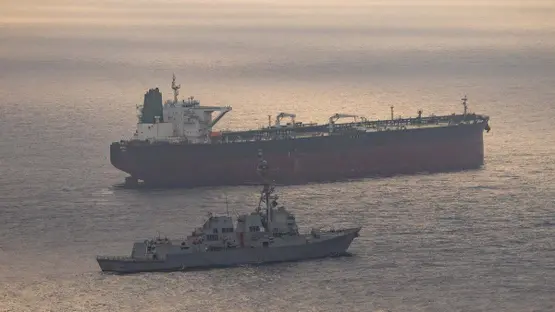
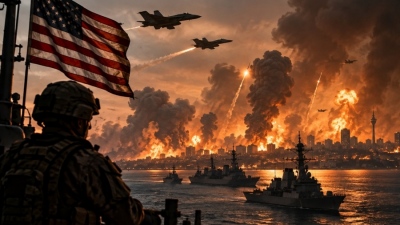
The operation of the United States Navy in the Strait of Hormuz, blockading a large portion of Iranian oil imports and exports while partially restoring the passage of non-Iranian cargoes, is presented by Washington as proof of effectiveness.
Yet the reality is far more complex.
The reallocation of oil flows, turbulence in the global economy, and the costs of prolonged conflict do not permit safe conclusions regarding unilateral American triumph.
Trump, however, continues to approach international politics with the logic of a business deal: someone must win and someone must lose.
This is a simplistic view that, when transferred from commercial bargaining to the battlefields of war, can prove catastrophic.
A war without a clear political purpose
The fundamental problem of the American strategy is that the Trump administration has not consistently explained what it is actually pursuing.
At times it highlights curbing the Iranian nuclear program, at other times it demands unconditional capitulation, and at times it implies that the real objective is regime change.
These pursuits are not identical.
Some, in fact, actively undermine each other.
If Washington seeks significant concessions from the Iranian leadership, it must offer it a credible path to political survival.
If, on the contrary, the message is that destruction of the regime constitutes the ultimate goal, then Tehran has no reason to yield.
It will conclude that continued resistance represents the only available option.
American leadership appears to ignore this elementary principle of conflict management, as explained by Paul Pillar of the Quincy Institute.
Military pressure can create negotiating leverage, but it does not automatically produce a political settlement.
Much less so when accompanied by public demands to humiliate the adversary.
A naval blockade, after all, is not a neutral economic sanction.
It constitutes an act of war, with severe consequences for the population and regional stability.
The decision to prolong it does not demonstrate resolve so much as it reveals the absence of an effective diplomatic exit.
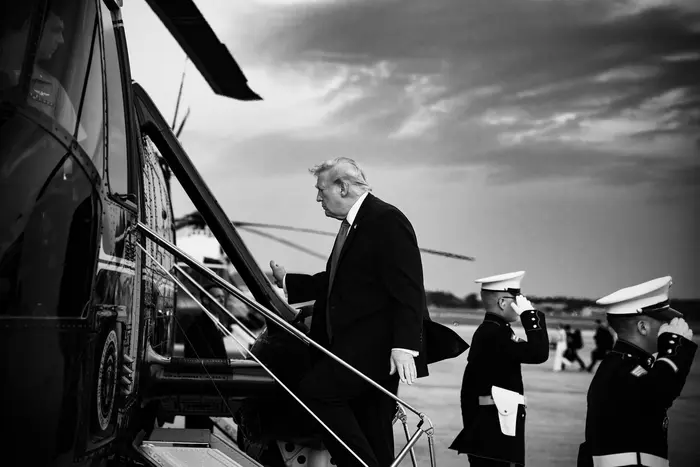
Washington's nuclear paradox
The greatest contradiction is found in the nuclear issue.
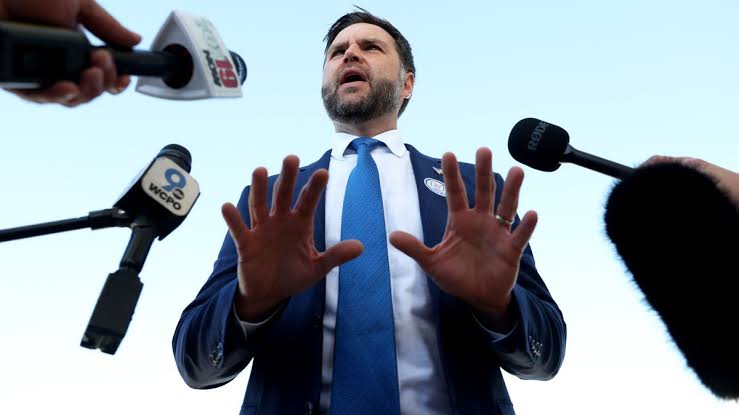
American Vice President JD Vance has set a substantial reduction in uranium enrichment by Iran as a prerequisite for peace.
However, continuing the attacks may empower precisely those factions in Tehran that consider acquiring a nuclear deterrent essential for the country's survival.
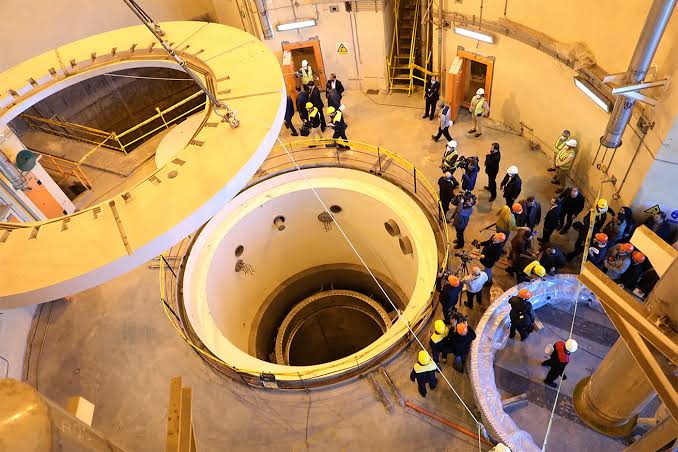
Given that previous military operations have already dealt severe blows to Iranian nuclear facilities, the critical question shifts from technical capabilities to political intentions.
And one can hardly expect that a country under continuous attack will permanently abandon all thought of acquiring stronger deterrence.
The historical irony is ruthless.
In 2015, under Barack Obama, the Joint Comprehensive Plan of Action, known as the JCPOA, was achieved.
A voluminous, highly intricate agreement, the result of years of negotiations, which drastically curtailed Iran's capability to acquire a nuclear weapon and established international monitoring mechanisms.
In 2018, Trump unilaterally withdrew the United States from the accord, dismantling one of his predecessor's most significant diplomatic achievements.
Today, his administration appears to be searching, under wartime conditions, for what it helped destroy in a time of peace.
And indeed under the illusion that envoys like Steve Witkoff and Jared Kushner can resolve in a few meetings issues that require years of technical elaboration, international guarantees, and rigorous verification mechanisms.
Double standards on uranium
American policy becomes even more contradictory due to nuclear cooperation with Saudi Arabia.
The prospect of allowing Riyadh to enrich uranium, even up to 20% levels, without the strictest possible international inspection safeguards, raises serious questions regarding the credibility of non-proliferation policy.
How can Washington demand restrictions on Iran that it does not impose with equal rigor on its regional rival?
The message sent is that nuclear capabilities are treated not on the basis of universal security rules, but depending on who is considered an ally and who an enemy.
Such a policy does not build trust.
Instead, it reinforces Iranian suspicion and makes any future agreement more difficult, concludes Pillar.
The dangerous fantasy of regime change
Equally problematic is the conviction that eliminating Iranian leadership can yield a government more friendly toward the United States.
The assassination of Ali Khamenei and other senior officials did not lead, according to the described dynamic, to a moderate political realignment.
On the contrary, it reinforced hardline power structures.
The case of Ali Larijani is characteristic.
Although an integral part of the Iranian establishment, he possessed pragmatism, political experience, and connections that could have facilitated credible negotiations.
His elimination in an Israeli strike potentially deprived diplomacy of an interlocutor with substantive influence.
Here another contradiction is revealed: Washington pursues an agreement, while military strikes dismantle the very figures who might have been able to guarantee it.
The idea that the fall of an authoritarian regime will inevitably usher in a pro-Western democracy has been repeatedly refuted by the history of the Middle East.
Dismantling existing structures of authority does not automatically generate democratic institutions.
It can produce military dictatorship, internal destabilization, or new forms of radicalism.
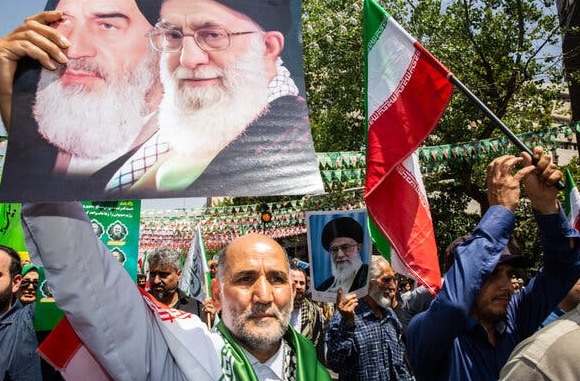
Iranian deterrence brakes war plans of Trump and Netanyahu
There is, however, another factor that may prove decisive for the next moves of Washington and Israel: the military readiness of Iran and, above all, its ability to respond to a new attack with large-scale retaliation.
Tehran, despite the severe blows it has absorbed, does not appear willing to passively accept a fresh round of bombings.
Instead, it seeks to make clear that any new operation could trigger a wider regional explosion, striking military facilities, energy infrastructure, and vital maritime transit corridors.
This reality assumes special importance ahead of two crucial electoral contests: the Israeli elections on October 27 and the midterm elections in the United States on November 3.
Reports of a potential new US-Israeli operation before the polls suggest that the military timetable is being weighed alongside domestic political developments.
However, the prospect of heavy Iranian retaliation significantly complicates these plans.
The assessment is that Iranian deterrent capability acts as a serious brake on a new strike, not because it secures military parity with the United States and Israel, but because it renders the costs of escalation exceptionally difficult to forecast and contain.
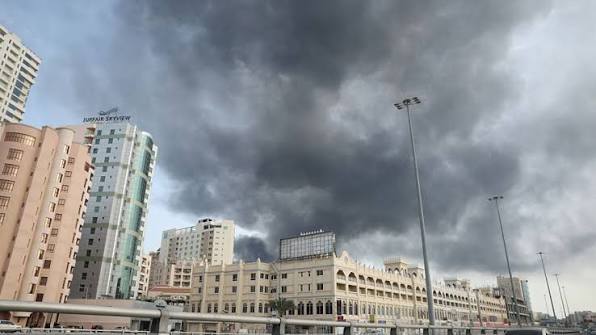
Concern in US and Israel over a protracted crisis
An extensive wave of retaliation, striking strategic facilities or causing fresh disruption to international maritime transit and petroleum flows, could transform a demonstration-of-force operation into a protracted crisis with grave economic and political fallout.
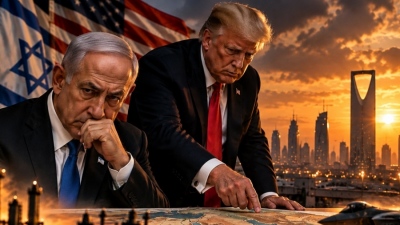
For Donald Trump and Benjamin Netanyahu, this scenario creates a particularly complex dilemma.
A military strike shortly before elections could be framed as a decisive response to Tehran.
Yet if it provoked widespread retaliation, casualties, or fresh energy turmoil, it would generate a crisis at the exact moment both leaderships would seek to highlight the effectiveness of their choices.
Iran appears to be banking precisely on this uncertainty.
It does not need to neutralize American military superiority to influence Washington's decisions.
It is sufficient to maintain a credible threat that a new attack will not be brief, contained, and devoid of serious costs for those who unleash it.
This does not preclude new military escalation.
It indicates, however, that the choice does not depend exclusively on the capabilities of the American and Israeli armed forces.
It also depends on the ability of Iran to extract a price that its adversaries may deem politically and strategically unbearable.
The crucial question, therefore, is not whether the United States and Israel can hit Iran again.
It is whether they can control what follows.
And this precise uncertainty represents today one of Tehran's strongest weapons of deterrence.
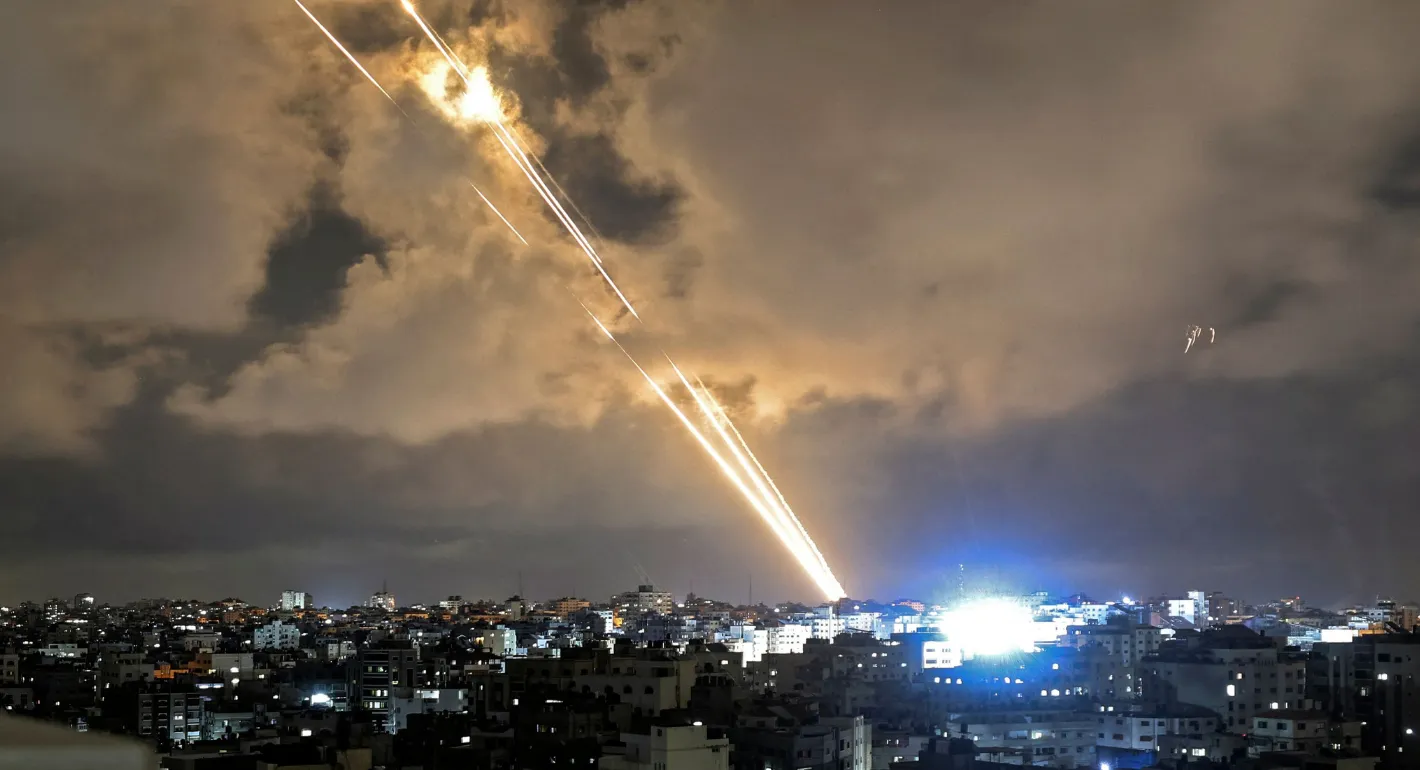
The Iranian people are not an instrument of American strategy
Certainly, economic hardship and social unrest could spark new mass mobilizations inside Iran.
Yet the expectation that American air strikes will serve as a catalyst for a democratic uprising disregards historical experience.
The Islamic Republic has repeatedly confronted major waves of protests without collapsing.
Furthermore, there is currently no unified, organized opposition movement comparable to the one assembled by Ruhollah Khomeini prior to the 1979 revolution.
Crucially, however, war alters social priorities.
When a country comes under foreign attack, even citizens who oppose the regime may rally around the imperative of national survival.
Iranians are not obligated to choose between authoritarian governance and submission to a foreign military power.
Every additional day of war, every economic loss, and every human tragedy may intensify hostility toward the United States.
Even a different future administration would be forced to take this collective sentiment into account.
Iranian nationalism and genuine security concerns do not evaporate with the replacement of a political leadership.
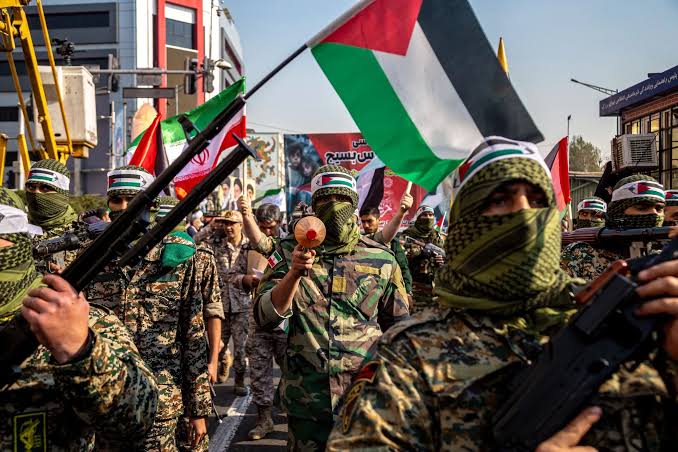
Diplomacy as the only realistic way out
The American administration stands, therefore, before a choice that Trump is trying to avoid: either continue a war of uncertain duration chasing a flashy but ill-defined «victory», or accept that ending the conflict requires compromise.
The most realistic path is not an immediate, comprehensive pact covering all issues.
It is a clear and enforceable ceasefire, with specific arrangements for the Strait of Hormuz and a commitment to subsequent substantive negotiations.
The previous memorandum of understanding from June demonstrates both the possibility of such an approach and the necessity of avoiding ambiguous phrasing that could lead to a renewed breakdown of the truce.
A sustainable peace cannot be built upon ultimatums that the opposing party cannot accept without endangering its very existence.
The challenge for Trump is deeply political and personal.
He has invested so heavily in the persona of the unconquerable dealmaker that he finds it difficult to acknowledge that necessary compromise does not signify defeat.
The leadership of the United States must understand that the power of a superpower is measured not solely by its capacity to destroy, but by its capacity to halt destruction in time.
If Donald Trump imperatively requires a «victory», he can deploy his well-known communication prowess to present the ceasefire and the military strikes already executed as an accomplishment.
That would be preferable to continuing bloodshed to appease the political vanity of a president.
For real strategic failure is not ending a war without triumphal parades. It is continuing a war because you cannot bear to admit that you do not know how to win it.
www.bankingnews.gr





Readers’ Comments