

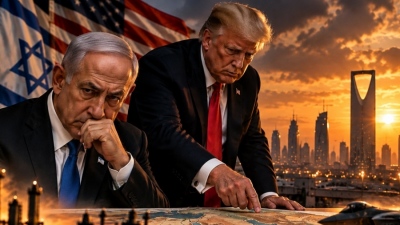
A new dangerous front of tension is emerging in the Middle East, as American President Donald Trump leaves open the prospect of asking his Turkish counterpart, Recep Tayyip Erdogan, to step in and counter attacks by the Houthis against Saudi Arabia.
However, Ankara appears reluctant to be dragged into another war, clarifying that its military backing possesses a defensive rather than an offensive character.
«Erdogan will do whatever I ask» - The Trump statement sparking reactions
According to a report by SouthFront, on October 13 Donald Trump left open the possibility of seeking Turkey's assistance to counter the Houthis in Yemen.
«Maybe I will», he reportedly told journalists, adding that he believes Recep Tayyip Erdogan would respond positively to such a request.
The American president did not specify what exact role Turkey could undertake, nor whether an official approach to Ankara has already taken place.
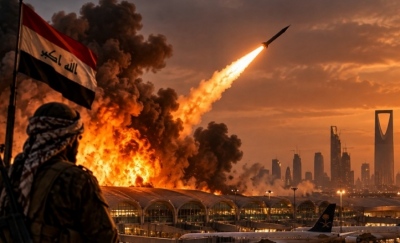
According to the report, these statements come during a period of fresh missile and unmanned aerial vehicle strikes against Saudi Arabia.
Among the cited strikes is an attack on King Khalid International Airport in Riyadh, with a reported toll of 13 dead and more than 300 injured, as well as an attack on Aramco facilities in Dhahran.
Ankara draws a red line - «We are not sending troops for attacks»
Despite the expectations reportedly voiced by Washington, Turkey maintains different plans.
Minister of Foreign Affairs Hakan Fidan made clear, according to SouthFront, that his country does not intend to take part in offensive military operations against the Houthis.
The Turkish stance is based on the distinction between defending an ally under attack and participating in a military campaign inside another country's territory.
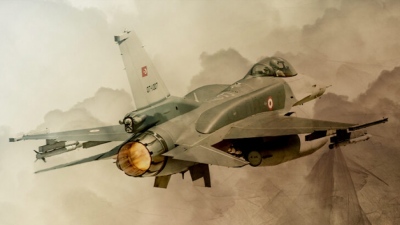
Turkey appears willing to provide military hardware, intelligence, air defense capabilities, surveillance, and logistical support to Saudi Arabia.
In contrast, deploying Turkish forces for offensive operations in Yemen is not included, according to the reported statements, in Ankara's current planning.
The military agreement that could alter balances
At the center of attention lies the so-called Mecca Joint Defense Agreement, which the report presents as a pact between Turkey, Saudi Arabia, and Pakistan.
The agreement is designed to treat an armed attack against a participating state as an attack against all.
However, Ankara insists that mutual defense does not automatically entail participation in an offensive war.
At the same time, according to the same information, the treaty had not yet been ratified by the Turkish Grand National Assembly as of October 15.
Article 92 of the Turkish Constitution provides a critical role for the Grand National Assembly in authorizing the deployment of armed forces abroad, subject to specific exceptions.
This means that any direct military involvement by Turkey could encounter serious political and institutional hurdles.
The Yemen trap - A war without end
Yemen represents one of the most complex and protracted conflict fronts in the Middle East.
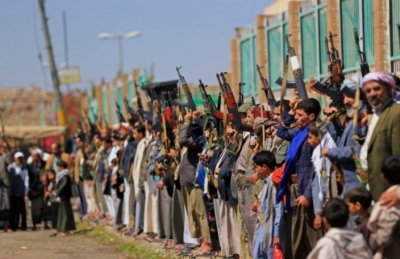
Since March 2015, when the Saudi-led coalition launched its military intervention, the Houthis have withstood multi-year operations and continue to control the capital, Sanaa, along with key territories in the northern part of the country.
This experience demonstrates that even powerful air and ground forces cannot easily impose a decisive military solution.
Turkey's entry into offensive operations could bolster the military capabilities of the Houthis' adversaries, but at the same time widen the regional conflict.
Trump and Erdogan facing a perilous test
The decisive question is whether Donald Trump will attempt to put more pressure on Recep Tayyip Erdogan or accept the limits set by the Turkish side.
Turkey seeks to preserve its ties with Saudi Arabia and the United States without shouldering the costs of a new theater of war.
The core contradiction is conspicuous: Washington may desire stronger Turkish involvement, but Ankara shows no appetite to send soldiers into a war that has remained unresolved for more than a decade.
And as long as tensions in the region persist, an eventual decision on military intervention could reverberate not only across Yemen, but across the broader power dynamics of the Middle East.
www.bankingnews.gr




Readers’ Comments