

The Paris Motor Show, opening its doors on Monday, October 12, 2026, is evolving into a major showdown between European and Chinese automakers. According to Reuters, up to 60 new models are expected to be unveiled in the French capital at a time when competition for European market share becomes increasingly fierce. Traditional European automakers are attempting to regain lost ground, while Chinese companies expand their presence at an impressive pace, offering an ever-increasing range of electric and hybrid vehicles. The clash does not revolve exclusively around prices and sales. Center stage is now occupied by jobs, factory production, customs tariffs, and the European Union's effort to protect its automotive industry without closing the market to international competition.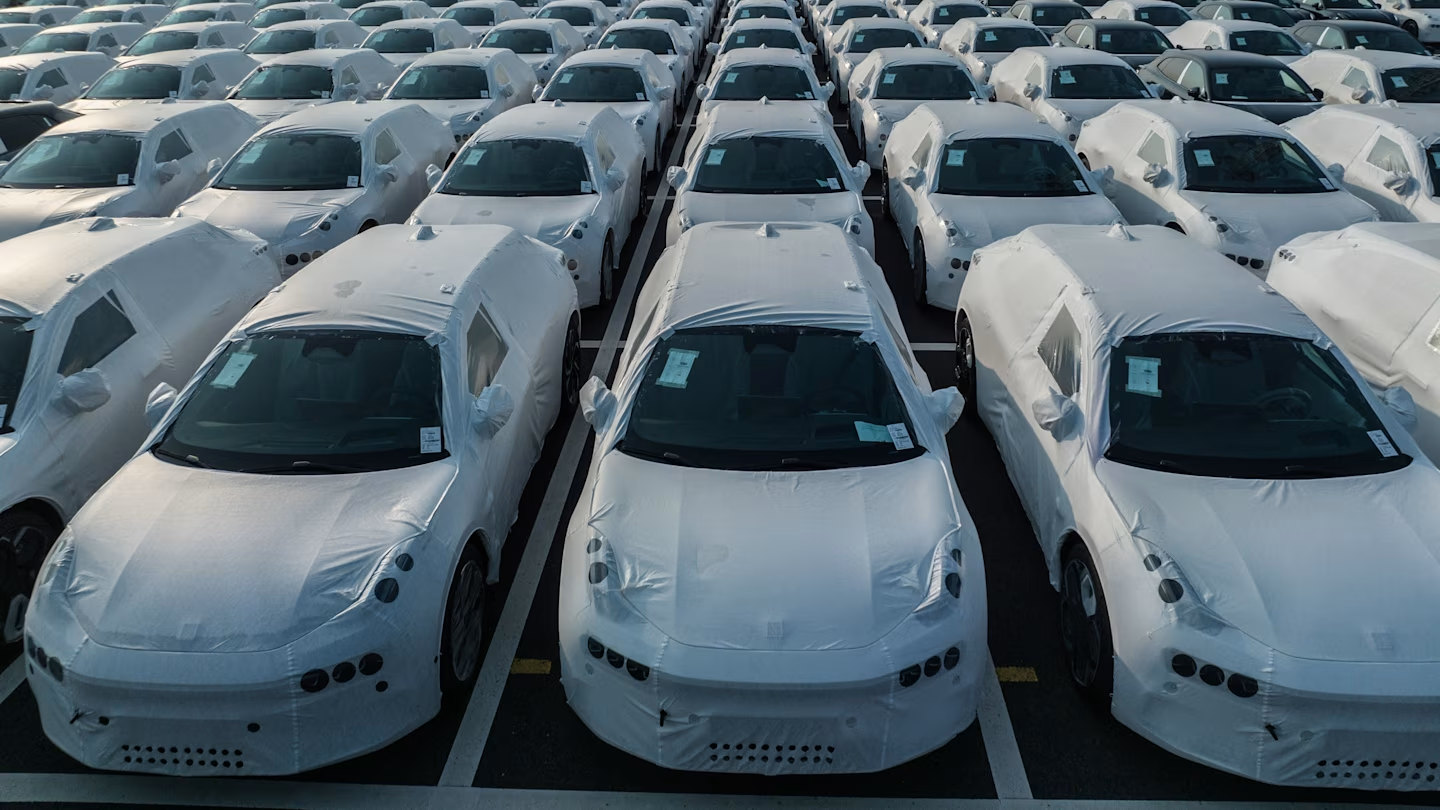
Chinese surge in Paris: Brands double in two years!
China's presence at this year's show is impressive. Approximately 20 Chinese car brands are participating in the event, double the number from the previous 2024 show. Among them are major corporations such as BYD and Chery, which seek to boost their European sales. At the same time, new Chinese brands are making their presence felt. Aito is participating in the exhibition, while state-owned Changan unveils two new commercial brands, Nevo and Avatr. The growing presence of Chinese companies is no coincidence. China's manufacturers face intense domestic market competition alongside continuous price pressure on electric vehicles. According to data cited by Reuters, car sales in China dropped by 20% in the first half of 2026. This downturn heightens the need to pursue new overseas markets. And as the United States market remains essentially closed off to a large portion of China's automotive industry, Europe transforms into the primary target of its export plans.
Brussels slams the brakes: Agreement could slash over half of Chinese hybrid imports
The strong presence of Chinese automakers in Paris coincides with a highly significant trade development. Just days before the show, the European Union announced an agreement with China that could reduce Chinese hybrid imports into the European market by more than 50%. The implementation details of the agreement had not yet been fully clarified at the time of publication. However, the potential fallout for major Chinese groups is substantial. According to analysis by investment firm Jefferies, BYD, Chery, and state-owned SAIC Group's MG stand to be hit hardest by the new restrictions. The three companies accounted for roughly 90% of hybrid vehicle sales by Chinese brands in the European Union during the first eight months of 2026. The new deal comes on top of tariffs imposed by the European Union in October 2024 on battery electric vehicles manufactured in China. These developments reveal Brussels' attempt to curb pressure on European automaking without severing economic relations with Beijing.
Warning from Volkswagen: "Fair rules for those selling in Europe"
The message from European automakers was clear. Volkswagen CEO Oliver Blume welcomed progress in trade negotiations between the European Union and China, emphasizing, however, that Europe must ensure a level playing field. Speaking at an event on Sunday, October 11, he stressed that companies operating in the European market must compete under comparable rules and create jobs and value added within Europe. His intervention reflects traditional manufacturers' anxiety over the rapid expansion of Chinese firms. Volkswagen faces heightened competition in electric and hybrid vehicles just as European automakers are called upon to invest massive sums in technological transformation. The issue is not merely who sells more cars, but where those vehicles will be manufactured and who will benefit financially from their sales.
Counteroffensive by Stellantis: Six new models and the return of the legendary Citroën 2CV!
Stellantis attempts to answer Chinese competition with one of its largest product rollouts in the European market in recent years. The group, the world's fourth-largest automaker, is presenting six new production models and nine concept cars at this year's show. This marks a major strategic shift following several years of limited presence at major European exhibitions. At the center stands the revival of the iconic Citroën 2CV through a new electric version featuring a retro design and an affordable price tag. The choice is not accidental. Stellantis aims to leverage the heritage and brand awareness of its European nameplates while delivering models capable of competing against low-cost Chinese electric cars. Group CEO Antonio Filosa promised the rebirth of a European legend, emphasizing that the group's major brands continue to evolve. The strategy forms part of a broader push to reclaim market share following declines in sales and competitive standing across Europe.
The "Made in Europe" plan: Chinese players shift production inside Europe
The trade confrontation is not limited to tariffs and imports. The European Commission is preparing legislative interventions aimed at boosting local manufacturing through "Made in Europe" rules. Proposals foresee minimum thresholds for local manufacturing or European value added to access specific programs and market segments. Rather than abandoning Europe, however, major Chinese firms are selecting a different strategy: seeking ways to build their cars on European soil. In July, Geely Auto announced plans to produce electric SUVs at a Ford plant in Spain. Concurrently, the company is deepening its partnership with France's Renault. Geely Auto CEO Alex Nan underscored the firm's commitment to the European market and the development of partnerships with European manufacturers. This creates a new reality. Chinese automakers no longer seek merely to export vehicles from China; they are evaluating localized production inside Europe to mitigate the impact of trade restrictions and solidify their market standing.
"Without exports to Europe they face peril": Warning for the Chinese auto industry
Europe's significance for Chinese manufacturers was vividly captured in statements by François Roudier, Secretary General of the International Organization of Motor Vehicle Manufacturers. Roudier warned that Chinese companies face severe risks if they lose the ability to execute large-scale exports into the European market. This assessment links directly to declining sales in China, intense price pressure, and restricted market access in the United States. For Chinese automakers, Europe is not simply another market. It represents one of the primary destinations for absorbing their production capacity and sustaining international growth. This explains why this year's Paris Motor Show draws such intense focus and why Chinese brands have doubled their presence.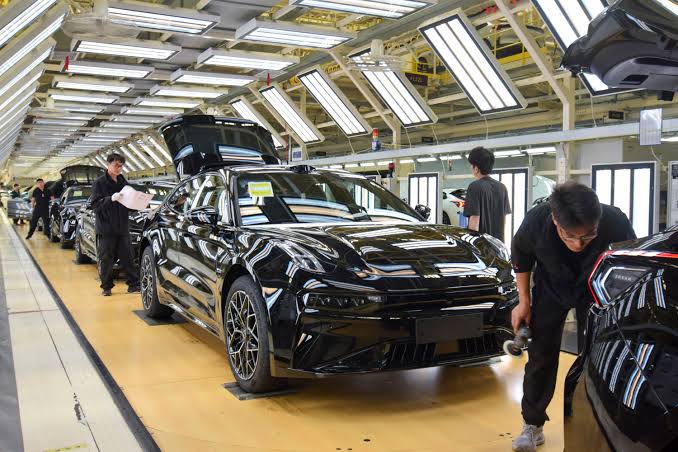
The grand battle for the European market is just beginning
This year's event in Paris captures a deeper realignment across the global automotive landscape. On one side stand European conglomerates attempting to preserve their competitiveness, protect their industrial footprint, and develop more cost-effective electric vehicles. On the other side stand Chinese firms seeking larger market shares while expanding their presence through new models, commercial brands, and production partnerships. The new European Union–China agreement on hybrid vehicles adds another decisive variable to the equation. Brussels is attempting to draft new rules, but Chinese companies demonstrate they are prepared to adapt their strategy to remain in the European market. The battle will not be decided solely by who presents the most new models in Paris. It will be decided by who can offer competitive pricing, advanced technology, and reliable manufacturing in a market transforming at breakneck speed. With up to 60 new debuts and roughly 20 Chinese brands at the same event, Paris becomes the epicenter of a major corporate showdown. And the question for the European automotive industry is now stark: can traditional manufacturers reclaim lost ground, or will Chinese automakers continue gaining share inside Europe's home market?
www.bankingnews.gr










Readers’ Comments