

Dramatic escalation in the Middle East, as reports point to a missile strike by the Houthis on Ghawar, the largest conventional onshore oil field in the world.
Reports of thick smoke raise concerns about potential damage to critical facilities of Saudi Aramco.
If a serious disruption of production is confirmed, the consequences could extend from Saudi Arabia and the United States to international energy markets.
For the moment, however, there is no official confirmation regarding the extent or even the occurrence of this specific strike.
Alert at Ghawar - Reports of an attack at the heart of Saudi Aramco
Extremely alarming information emerges from Saudi Arabia, during a period in which the Middle East is already confronting dangerous military escalation.
According to reports made public on the morning of Saturday, October 10, 2026, the Houthis reportedly carried out a missile strike against facilities in the area of the Ghawar oil field.
The intelligence monitoring platform Hamer Intel published successive warnings, citing reports of large plumes of smoke near the facilities.
No official confirmation had yet been released by Saudi authorities or Saudi Aramco.
If the reports are verified, the strike will mark a significant broadening of the targets in the Houthis' military campaign.
From airports and energy transit infrastructure, the threat will have shifted to the very epicenter of Saudi oil production.
Why Ghawar represents one of the most critical energy targets on the planet
?? **SMOKE RISES OVER SAUDI ARABIA’S GIANT GHAWAR OIL FIELD** — Thick plumes of smoke were reported over the Ghawar oil field following an attack on a gas processing facility in Shadkam, although the extent of the damage remains unconfirmed. Any disruption to Saudi energy infrastructure could rattle global oil markets, but the strategic impact will depend on the damage and whether production is affected.
— ???????? ????? (@SprinterPress) October 10, 2026
Ghawar is no ordinary oil field.
It is the largest discovered conventional onshore oil field in the world, according to Saudi Aramco.
Historically, it has served as a core pillar of Saudi Arabia's production capacity and, by extension, a major factor in the global supply of crude oil.
Its significance is not limited to the massive volume of its reserves.
The field is connected to an extensive network of oil extraction, processing, and transportation facilities supplying domestic industry and international exports.
A severe blow to critical surface installations could trigger problems far beyond the immediate point of impact.
However, the sighting of smoke or even a localized fire does not automatically prove widespread destruction across the field.
The true impact of any attack will depend on which facilities were hit, the duration of disruptions, and repair capabilities.
?? **SMOKE REPORTED NEAR SAUDI ARABIA’S GIANT GHAWAR OIL FIELD** — Large plumes of smoke have reportedly appeared near the Ghawar oil field following an alleged missile strike from Yemen, but damage to the facility has not been independently confirmed. Any disruption to Saudi Arabia’s energy infrastructure could rattle global oil markets, making verification of the strike and its impact critical.
— ???????? ????? (@SprinterPress) October 10, 2026
Scenes of war in Riyadh - Mass air evacuations of wounded following new strike on international airport
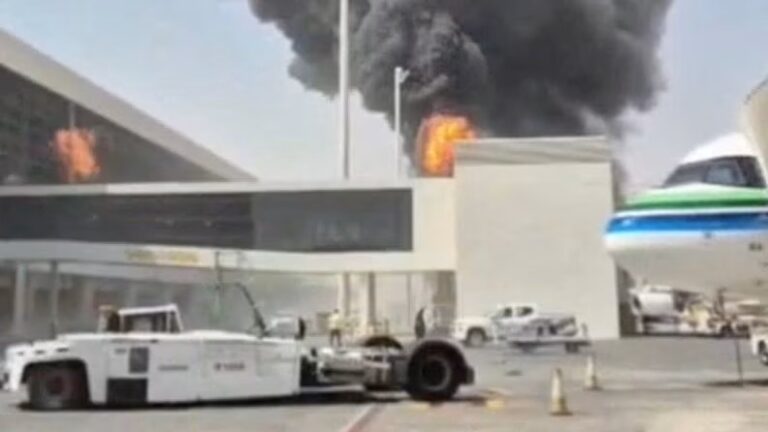
At the same time, the situation at King Khalid International Airport in Saudi Arabia is dramatic following the new attack on October 10.
Reports point to continuous helicopter flights to hospitals, while fears are voiced over a large number of casualties.
The toll of the latest strike remains unknown.
Extremely worrying information is arriving from Riyadh, as King Khalid International Airport has once again found itself targeted by an attack, amid escalating conflict between Saudi Arabia and the Houthis of Yemen.
According to the Associated Press, two regional officials confirmed a new attack on Saturday, October 10, while an evacuation of the airport and a suspension of air traffic were reported.
At the same time, unconfirmed reports point to the mobilization of medevac helicopters, which are reportedly conducting repeated flights between the airport and hospitals.
Certain sources describe the situation as a mass casualty incident, without, however, the number of injured or dead from the new attack having been officially confirmed.
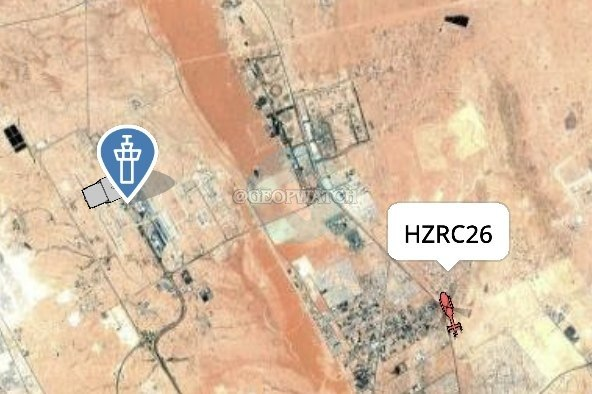
Evacuation operation at King Khalid Airport
The international airport of Riyadh was once again placed on high alert as a powerful explosion triggered the evacuation of passengers and the mobilization of emergency services.
According to Reuters, more than a dozen ambulances were mobilized following the incident, while flights were canceled or diverted to other airports.
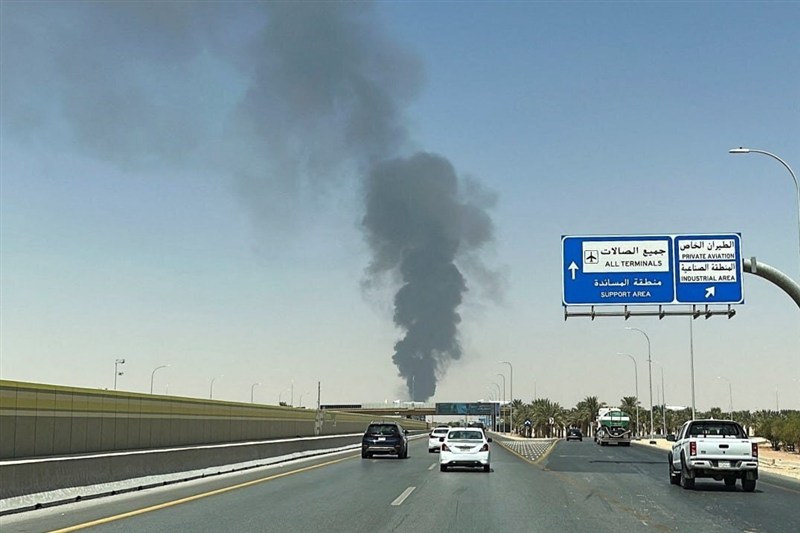
At the same time, an image circulating on social media reportedly captures a passenger aircraft being towed away from the boarding jet bridge.
The same report mentions a helicopter next to the facilities of Terminal 3.
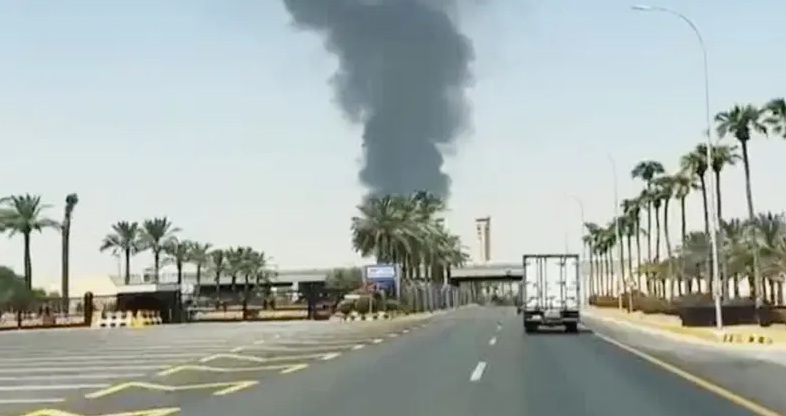
Strikes at the economic heart of Saudi Arabia
Strikes by the Houthis from Yemen deal a severe blow to Saudi Arabia's ambitions of emerging as a global economic and investment hub.
With missiles targeting airports, fatalities, hundreds of flight cancellations, and direct threats toward international airlines, the Ansar Allah movement is putting two flagship international events in Riyadh under pressure.
The crisis is evolving into a serious trial for Crown Prince Mohammed bin Salman's ambitious Vision 2030 program.
Saudi Arabia faces a dangerous escalation as the Houthis of Yemen shift confrontation from traditional military frontlines to critical civil aviation infrastructure.
Missile attacks against Saudi airports cause not only casualties and destruction.
They pose serious risks to the country's image as a safe destination for international investment.
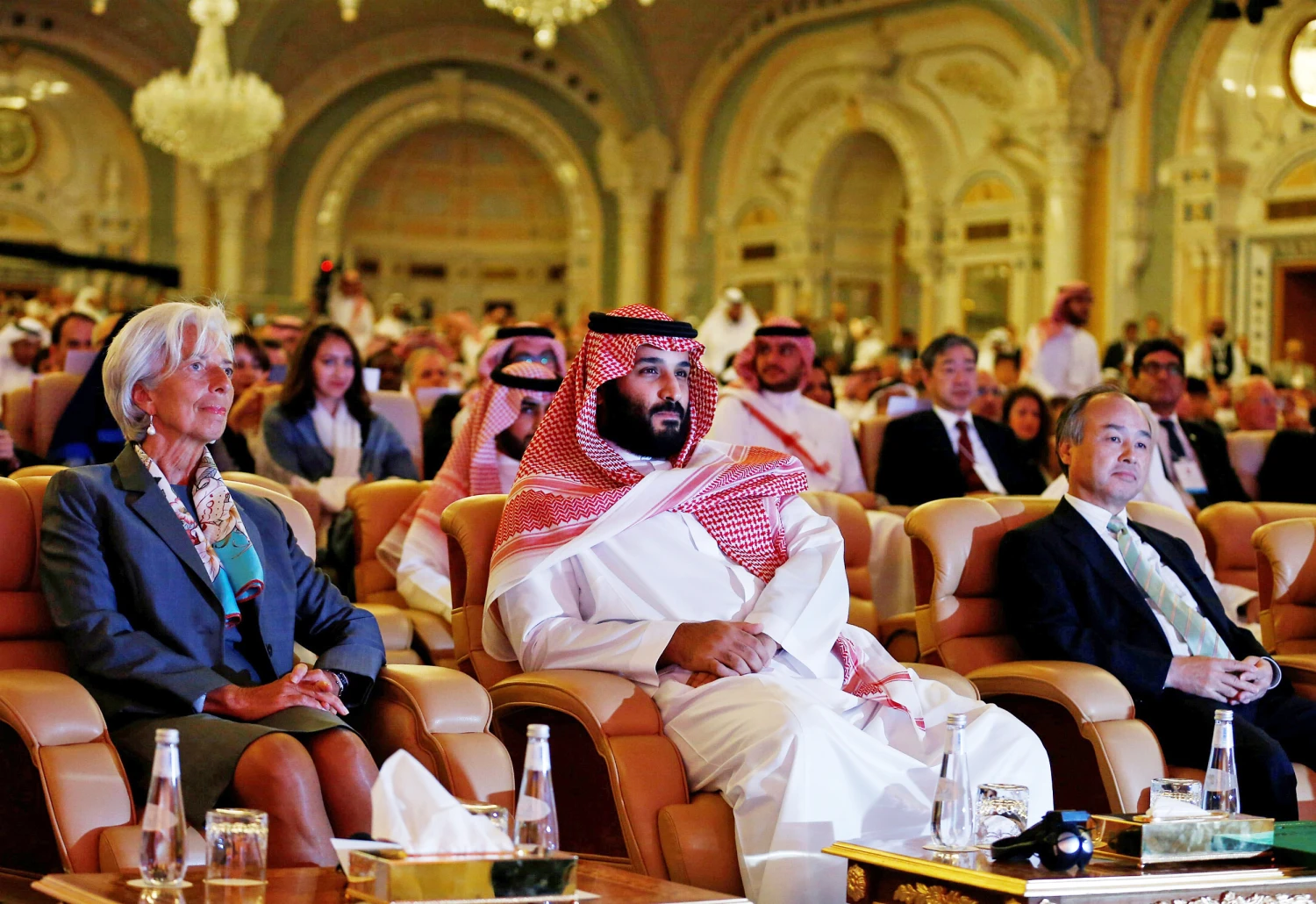
According to a report by the Financial Times on October 10, 2026, major international corporations and energy conglomerates are reconsidering executive participation in two premier business gatherings scheduled to take place in Riyadh.
These are the World Petroleum Council Energy Congress, running from October 11 to 15, and the Future Investment Initiative, known globally as «Davos in the Desert», from October 26 to 29.
These events are central instruments in Mohammed bin Salman's drive to attract international capital and elevate Saudi Arabia's economic stature.
Yet, developments serve as a reminder that even massive investments cannot guarantee economic stability when regional security remains fragile.
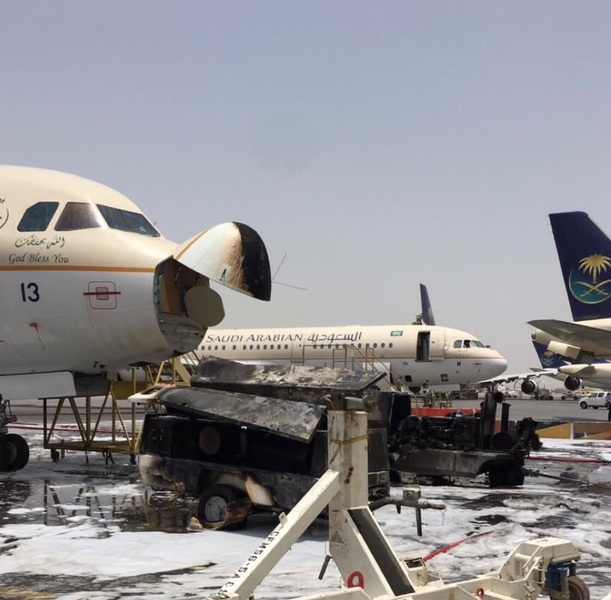
The lethal strike on Riyadh airport
Attacks on King Khalid International Airport in the Saudi capital sent shockwaves through the aviation industry.
On October 9, Saudi authorities confirmed that three civilians were killed in strikes hitting airport facilities and a Saudia aircraft.
Among the victims was an airline pilot, while injuries to individuals of multiple nationalities were also reported.
The Houthis claimed responsibility for the attacks, although Saudi authorities had not initially attributed all actions officially to the movement.
The total death toll from the recent series of strikes on Saudi airports reached six, according to the Financial Times.
The destruction of and damage to civilian aircraft confirm how hazardous the conflict has become for non-combatants.
The strategic weight of the attacks is not confined to physical damage. Challenging airport safety threatens the very international connectivity of the Saudi economy.
Yahya Saree's warning to international airlines
On October 8, Houthi military spokesman Yahya Saree issued a particularly grave announcement.
He declared the airspace of Saudi Arabia a zone of military operations and called on international airlines to halt flights into the country.
According to the movement's statement, the areas above the holy cities of Mecca and Medina were exempt from the warning.
The declaration had an immediate impact on airline risk assessments.
A threat against civil aviation does not require a subsequent successful strike to trigger major economic fallout.
The mere possibility of an attack is sufficient to activate tighter security protocols, reroute flight paths, and postpone corporate travel.
WATCH: Footage confirms a Houthi strike hit a stationary aircraft at Riyadh Airport, Saudi Arabia. https://t.co/0FLJXDyA4U
— Clash Report (@clashreport) October 8, 2026
Aviation chaos and widespread flight cancellations
The fallout was instantaneous.
The European aviation safety agency EASA expanded its warnings for operations in Saudi airspace, while flight operations group OPSGROUP recommended heightened avoidance of the region.
Airlines including Lufthansa, Etihad, and flydubai moved to cancel or temporarily suspend routes.
Disruptions affected not only Riyadh but also other cities such as Yanbu and Abha.
According to international news agencies, more than 120 scheduled flight rotations were impacted on October 9, while cancellations over preceding days had already created severe travel disruptions.
For a nation striving to become an international business and tourism powerhouse, aviation isolation, even temporary, poses a major economic threat.

Vision 2030 tested by the harsh reality of war
Mohammed bin Salman's economic program Vision 2030 relies on progressively diversifying the Saudi economy away from oil revenues.
Tourism, financial services, technology, international expositions, and mega-construction projects form the pillars of this strategy.
All of these, however, presuppose an element that cannot be secured by capital alone: confidence in security.
Major multinationals do not evaluate investment yields in isolation. They also assess risks to personnel, infrastructure, and business continuity.
The Houthi strikes strike at these exact parameters.
The cancellation of Italian Energy Minister Gilberto Pichetto Fratin's in-person attendance at the energy congress stands as a case in point.
He chose virtual participation instead, while certain corporations are curtailing delegation sizes.
«Davos in the Desert» faces a severe trial
The primary concern for Saudi authorities centers on the Future Investment Initiative.
The gathering draws senior executives from global banks, private equity firms, and multinational corporations.
Financial titans expected to be represented include institutions such as JPMorgan and Citi.
Organizers maintain that the conferences will proceed as scheduled under tightened security measures.
Yet, their true success will not be measured solely by whether convention doors open.
It will be determined by executive attendance, signed commercial deals, and the confidence investors carry away.
The Yemen conflict resurfaces as a regional threat
The latest strikes are tied to renewed escalation in Yemen and Saudi Arabia's military involvement.
Saudi forces have executed operations against Houthi positions, while the latter command missile and drone capabilities enabling them to strike targets across significant distances.
The conflict gains added weight from Yemen's strategic position near Bab el-Mandeb, one of the most critical choke points for global maritime commerce.
The renewed military confrontation thus threatens not only Saudi aviation, but the broader economic stability of the region.

The major challenge confronting Mohammed bin Salman
Saudi Arabia continues to command vast financial resources and substantial global influence.
However, the recent escalation highlights a deeper strategic contradiction.
The kingdom seeks to transform itself into a global investment magnet at the very moment regional hostilities create direct risks for its critical infrastructure.
The Houthi strikes do not signal the collapse of Vision 2030.
They do, however, represent a serious warning regarding economic development's dependence on regional security.
The greatest challenge for Mohammed bin Salman is no longer merely attracting billions of dollars in capital.
It is convincing the international business community that Saudi Arabia can guarantee the safety of those invited to invest.
And as long as missiles threaten airports, this challenge will remain at the very heart of Saudi economic strategy.
www.bankingnews.gr









Readers’ Comments