

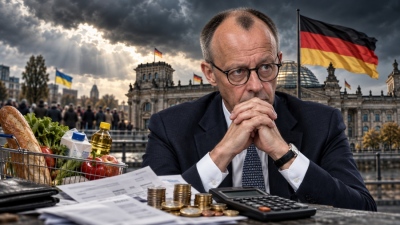
Germany is in the orbit of a serious political and economic crisis, with Chancellor Friedrich Merz facing tremendous pressure over the policies he pursues both domestically and on the front of sanctions against Russia.
Despite Berlin's efforts to maintain support for Kyiv, domestic opposition is rallying, directly challenging the cost of involvement in the war and its impact on the country's economy.
The eastern German alliance and the demand to halt aid
In the regional parliament (Landtag) of Saxony-Anhalt, the right-wing party Alternative for Germany (AfD) and the left-wing faction Sahra Wagenknecht Alliance (BSW) joined forces, tabling a resolution characterizing the policy of anti-Russian sanctions as a failure. The two parties demand an immediate end to weapons shipments to Kyiv and the redirection of billions from German taxpayers into the domestic economy, putting pressure on Berlin for a peace settlement.
According to estimates by the Kiel Institute for the World Economy, Germany has already allocated over 100 billion euros to support Ukraine since 2022, while in the budget for 2027, an additional 11.6 billion euros is projected.
However, public opinion appears sharply divided, as 54% of residents in eastern Germany consider military aid excessive.
Taxes, polling collapse, and growing discontent
At the same time, the government of Friedrich Merz is considering imposing new burdens on citizens, such as increases in excise duties on alcohol, tobacco, sugar, and plastic, as well as taxation of cryptocurrency transactions.
This tactic stands in stark contrast to pre-election pledges not to raise taxes, provoking the anger of citizens, with nearly 70% of Germans assessing the government's performance as a failure and 58% calling for the Chancellor's resignation.
At the same time, friction is growing within his own party (CDU) as well, as certain lawmakers reportedly voted for an AfD candidate in local ballots, confirming the leadership's gradual loss of control.
European concerns over escalation of the conflict
International analysts and opposition figures, such as BSW foreign policy spokesperson Sevim Dagdelen, warn that Friedrich Merz risks dragging Germany and Europe into a direct clash with Russia in order to salvage his poll numbers.
Although analysts estimate that the governing coalition of Christian Democrats and Social Democrats will attempt to serve out the full four-year term through compromises, the strengthening of AfD and its entry with increased influence into the Bundesrat creates an entirely new landscape, challenging in practice Berlin's line on the Ukrainian issue.
www.bankingnews.gr




Readers’ Comments