

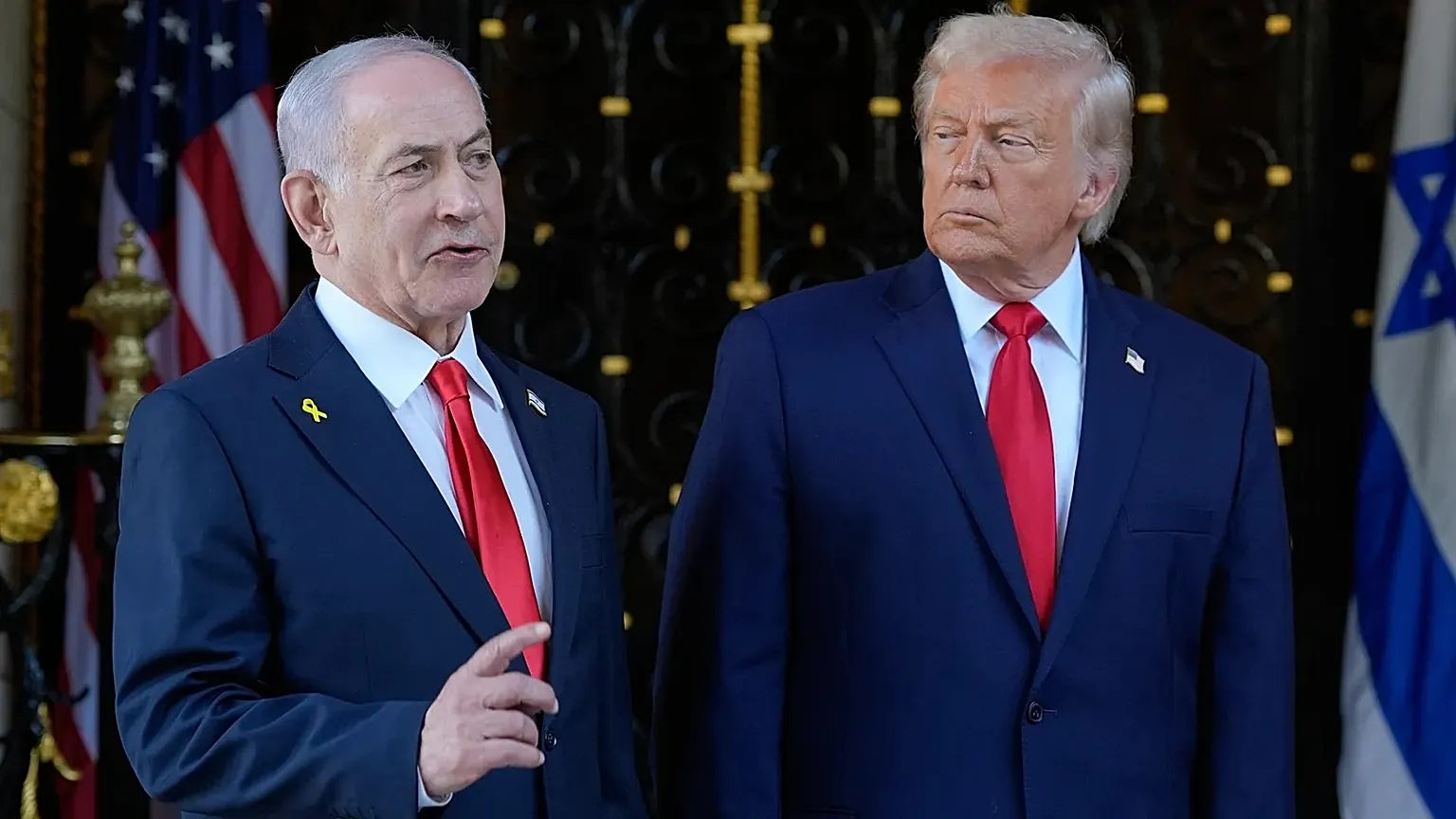
The government of Benjamin Netanyahu is confronted with a dangerous geopolitical paradox: it fears both the resumption of a generalized war with Iran and a US-Iranian agreement that would limit Israel's ability to determine developments in the Middle East.
The contradictory moves of Donald Trump, the upcoming elections, and the resilience of Tehran create an extraordinarily difficult equation for the Israeli leadership.
The Israeli dilemma that reveals the limits of Netanyahu's strategy
Israel stands before one of the most difficult strategic decisions of recent years, without, however, being the one that will make the final decision itself.
American President Donald Trump has made clear that Washington keeps its options open regarding Iran, causing intense uncertainty within the Israeli political and military leadership.
The paradox is revealing: the government of Benjamin Netanyahu appears troubled both by the prospect of new American attacks and by the possibility of a diplomatic agreement with Tehran.
Israeli analyst Ben Caspit, in a report in Al-Monitor on October 9, 2026, records the concern prevailing in Israeli military and political circles regarding the White House's next move.
Behind this concern, however, emerges a broader problem in Israeli strategy: the effort to secure absolute regional supremacy through military pressure has created dependencies that the Netanyahu government can no longer fully control.
Israel seeks to shape developments, but the decisive choice for the next phase of the US-Iranian confrontation belongs to Washington.
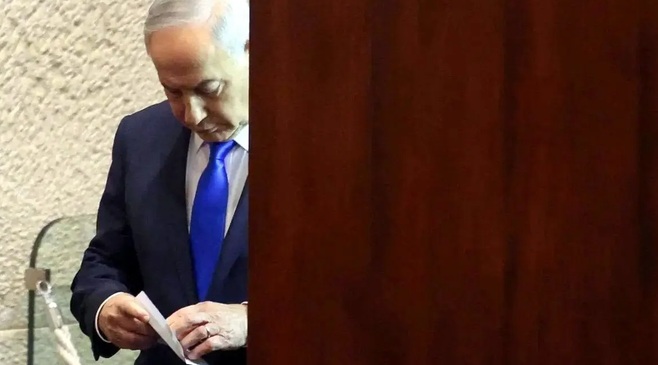
Contradictory messages from Washington, Military preparation and the sudden retreat
American policy toward Iran is characterized by contradictions that cause even greater nervousness in Israel.
According to a report in The Atlantic on October 8, Trump had asked the Pentagon to examine military options against Iranian targets, even before the midterm elections of November 3.
The preparation of new operations constituted a clear message of military pressure toward Tehran, without, however, implying a definitive decision to attack.
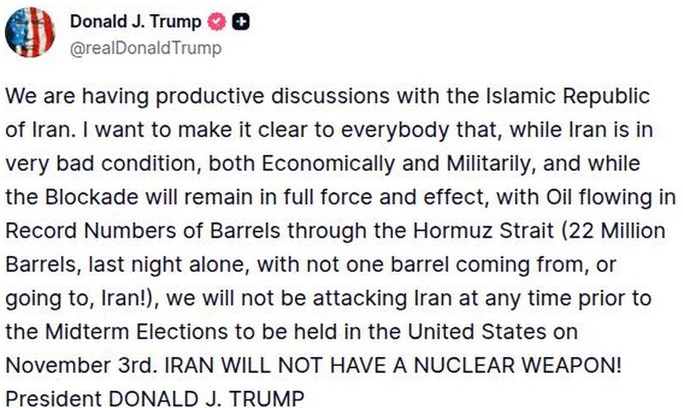
Shortly thereafter, on October 8, the American president stated via Truth Social that the United States is not going to launch new attacks against Iran before the elections.
This statement overturned the expectations of those who considered an immediate military escalation likely.
For the Israeli government, the situation is particularly problematic.
Washington may be preparing militarily, but at the same time leaves open the possibility of a diplomatic settlement.
This uncertainty also reveals the limits of Netanyahu's influence over his country's most important strategic ally.
Israel's greatest fear: An agreement that will not satisfy Netanyahu
Despite the constant invocation of the Iranian threat, the possibility of a diplomatic agreement between the United States and Iran causes significant concern in the Netanyahu government.
The Israeli leadership fears that Trump, pursuing a quick diplomatic victory, may accept an agreement that will not impose on Tehran the restrictions desired by Israel.
The core issue concerns the Iranian nuclear program, uranium enrichment, and international monitoring capabilities.
Israel considers that an agreement with inadequate inspection mechanisms could allow Iran to retain critical nuclear capabilities.
However, a serious contradiction emerges here.
An agreement that would avert a new war and establish verifiable restrictions on the Iranian nuclear program could serve regional security, even if it did not satisfy all of Netanyahu's demands.
The government of Israel is therefore called upon to answer a critical question: is it seeking a realistic diplomatic solution, or is it demanding such an extensive Iranian capitulation that any agreement becomes practically impossible?
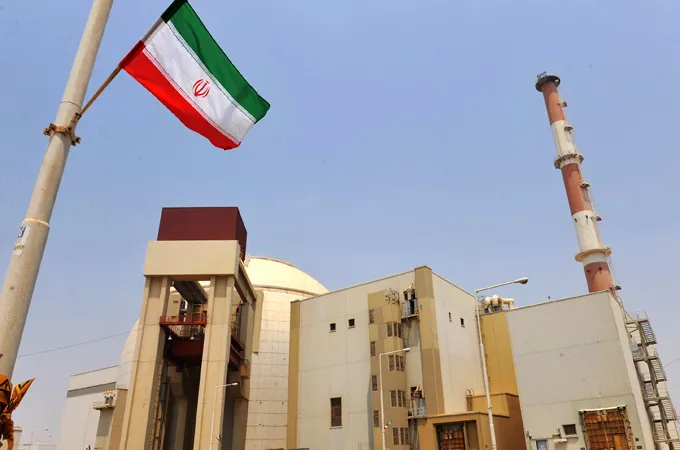
The war that could backfire on Israel
The other option, namely the resumption of large-scale American attacks, does not guarantee a safer position for Israel.
On the contrary, it may provoke new Iranian military responses, attacks on regional infrastructure, and further destabilization of the Middle East.
The conflict so far has proven that military power does not automatically secure the political compliance of the adversary.
Iran, despite military and economic pressures, continues to constitute a considerable regional factor.
American economic pressure has restricted Iranian oil exports, but has not achieved the total paralysis of the economy predicted by some initial estimates.
Israeli strategy thus faces the danger of becoming trapped in a permanent confrontation, without a clear political exit.
The most serious problem is that each new cycle of attacks may create the conditions for the next crisis.
The logic of continuous military escalation does not in itself constitute a security strategy.
![A fireball ascends from the site of an Israeli airstrike that targeted an area in Beirut’s southern suburbs on March 6, 2026. Israeli air strikes battered Lebanon on Friday, sending the death toll since March 2, up to at least 217, according to Lebanese authorities, as the premier warned "a humanitarian disaster is looming". (Photo by AFP) / “The erroneous mention[s] appearing in the metadata of this photo by - has been modified in AFP systems in the following manner: [STR] instead of [Omar YAMAN ]. Please immediately remove the erroneous mention[s] from all your online services and delete it (them) from your servers. If you have been authorized by AFP to distribute it (them) to third parties, please ensure that the same actions are carried out by them. Failure to promptly comply with these instructions will entail liability on your part for any continued or post notification usage. Therefore we thank you very much for all your attention and prompt action. We are sorry for the inconvenience this notification may cause and remain at your disposal for any further information you may require.”](/image/israel_23.jpg)
Elections threaten to upend Netanyahu's calculations
The situation becomes even harder for the Israeli Prime Minister due to the electoral calendar.
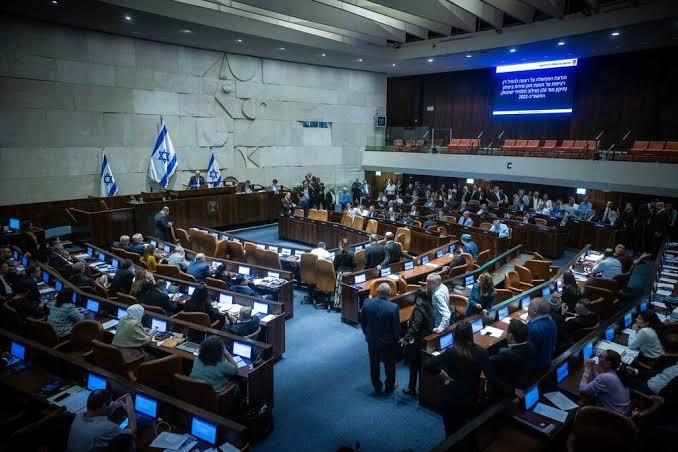
On October 27, 2026, parliamentary elections are held in Israel, followed on November 3 by the midterm elections in the United States.
Netanyahu therefore faces a double political risk.
A new military conflict could allow him to project the image of a decisive leader, but may also expose Israeli citizens to new dangers and prompt questions about the cost of his choices.
Correspondingly, a US-Iranian agreement before the elections could weaken the narrative that military pressure constitutes the only effective response to Tehran.
The use of national security as a central element of political dispute makes it even harder to distinguish between genuine national interest and electoral expedience.
And this is a substantial critique of the Netanyahu government: the security of millions of people cannot be turned into a tool of electoral strategy.
Trump weighs the American cost - Not just Israeli demands
At the same time, Donald Trump has to deal with the dissatisfaction caused in the United States by the economic consequences of the conflict.
The rise in energy prices, inflationary pressures, and the financial burden of military confrontation affect the American political agenda.
According to the Associated Press, public opinion appears particularly negative toward the continuation of the war, despite government assurances that its decisions are not dictated by the electoral calendar.
For Trump, therefore, reaching an agreement could provide diplomatic and economic benefits.
For Netanyahu, however, such a development may be regarded as a strategic retreat, provided Israeli demands are not satisfied.
It is precisely here that the divergence of interests between the two governments is located.
The United States may choose a compromise that reduces the overall cost of confrontation, even if it does not correspond to the Israeli vision for the regional balance of power.
The real dead end of Israeli policy
The Netanyahu government has politically invested in the logic that military supremacy and continuous pressure can ensure the desired behavior from Iran.
However, the capability to conduct strikes is not equivalent to the capability to enforce a stable political settlement.
Prolonged conflict strains societies, destabilizes economies, and increases the danger of a wider military conflagration.
Furthermore, the Israeli government cannot ignore that military operations have consequences for civilians as well, both in Iran and in the remaining countries affected by the confrontation.
The protection of citizens, respect for international law, and the pursuit of viable security mechanisms ought to constitute core criteria for any decision.
Israel has security concerns.
This does not mean, however, that every military option of its government is necessarily required, effective, or justified.
The Middle East cannot remain hostage to an unending conflict
Trump's final decision remains uncertain.
An agreement with Tehran requires substantial concessions, credible guarantees, and effective implementation mechanisms.
A new war, conversely, carries the danger of even greater destabilization.
For the Netanyahu government, both paths entail serious political and strategic risks.
This fact reveals the limits of an approach based primarily on deterrence through force, without sufficient diplomatic vision.
The biggest problem for Netanyahu is not just that Trump may decide differently from what Israel desires.
It is that the Israeli government may discover that neither a new war nor the rejection of a compromise can guarantee the security it promises.
And as long as Israel's leadership treats diplomacy as an unwelcome concession rather than a possible means of resolving the crisis, it will struggle to translate its military power into a genuinely sustainable peace.
In conclusion, as Iranian officials point out: Netanyahu dreads war, fears peace.
www.bankingnews.gr







Readers’ Comments