

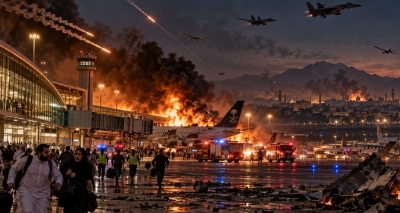
Developments are dramatic in Saudi Arabia, which, following air strikes launched by the Houthis against King Khalid Airport in Riyadh and Abha, where at least six dead were reported, including three Saudi nationals, has found itself at the epicenter of a dangerous military escalation that threatens to drag the entire region into generalized warfare.
In response to the Houthi attacks, the air force of Saudi Arabia struck targets in the Yemeni capital, Sanaa, controlled by the Houthis, while also destroying three rocket launch platforms...
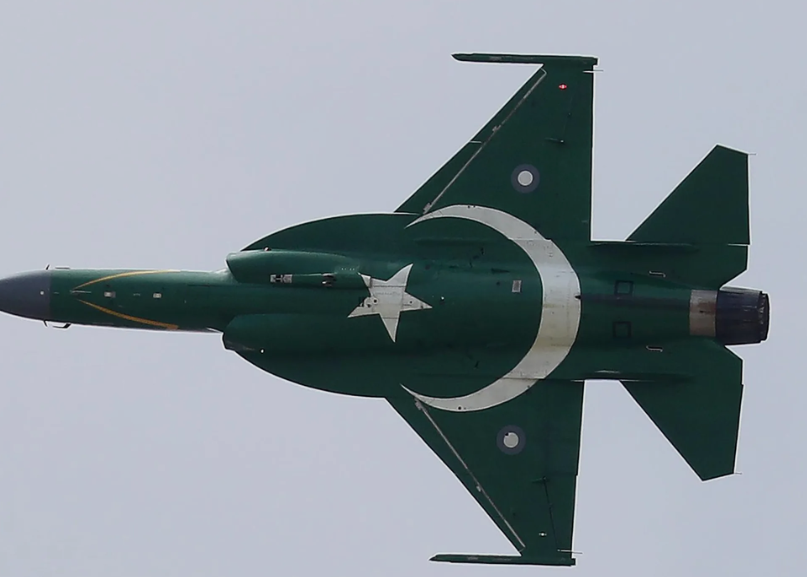
At the same time, Pakistan condemned the rebel attacks, expressing its unwavering solidarity with Saudi Arabia, at a moment when Pakistani fighter jets participated in operations against the Houthis.
These are developments that, if nothing else, increase the risk of a renewed military conflagration in the wider region of the Persian Gulf and the Middle East.
Three Saudis dead at King Khalid
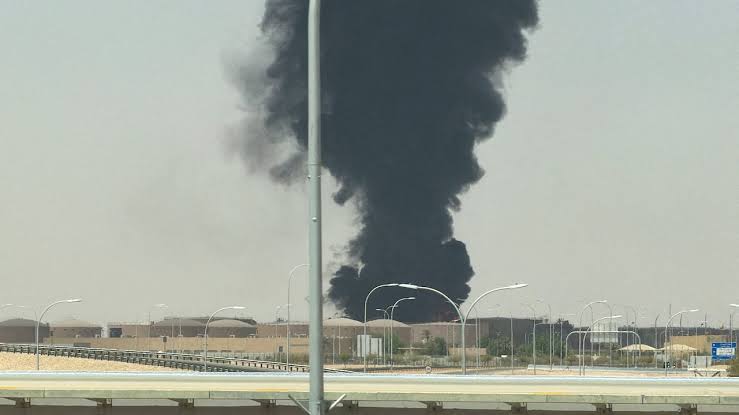
Three Saudis were killed during the two attacks launched by the Houthis against King Khalid International Airport in Riyadh, according to an announcement by the General Authority of Civil Aviation of Saudi Arabia on the social media platform X.
«On Thursday, October 8, King Khalid International Airport in Riyadh sustained two attacks.
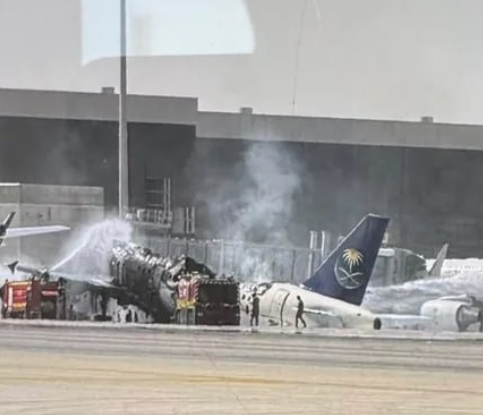
The first targeted airport infrastructure, while the second struck an aircraft belonging to the national airline of Saudi Arabia.
The attacks killed three Saudi nationals, while several people were injured, including foreign nationals of various nationalities», stated the Civil Aviation Authority of Saudi Arabia.
On Thursday, the Houthis announced that they carried out attacks against the airport in Riyadh in retaliation for strikes against Yemen.
It is noted that one of the dead was an employee of the national airline of Saudi Arabia, Saudia.
According to the company, the attack caused damage to one of its aircraft, which was on the ground at the time of the incident, with no passengers on board.
Bloody toll
The General Authority of Civil Aviation of Saudi Arabia had reported on Thursday, October 8, that the attacks of October 6 and 7 on King Khalid International Airport in Riyadh and the airport of Abha had caused three deaths and 36 injuries.
Based on the briefing, a citizen of Sudan was killed in Riyadh and eight people were wounded.
In Abha, two women lost their lives, from Morocco and Algeria, while another 28 people were injured.
Flight cancellations and diversions
Several flights to King Khalid International Airport in Riyadh were canceled or diverted to other airports following the attacks against it.
As announced by the General Authority of Civil Aviation of Saudi Arabia, at least 103 flights have been canceled today, Friday, October 9, compared to 335 on Thursday.
Major airlines, such as Air India, announced that they are canceling flights to and from Riyadh at least through the weekend.
At the same time, German airline Lufthansa announced that it is suspending flights to the capital of Saudi Arabia until October 16.
We destroyed three Houthi rocket launch platforms
Meanwhile, Colonel Turki al-Maliki, spokesperson for the military coalition led by Saudi Arabia that supports the government of Yemen, stated that his forces destroyed three rocket launch platforms used by the Houthis «to threaten regional security».
Al-Maliki added that all Houthi attacks against civilians and civilian installations «will be addressed with determination» by the coalition.
Yemeni government military: Sanaa is the target
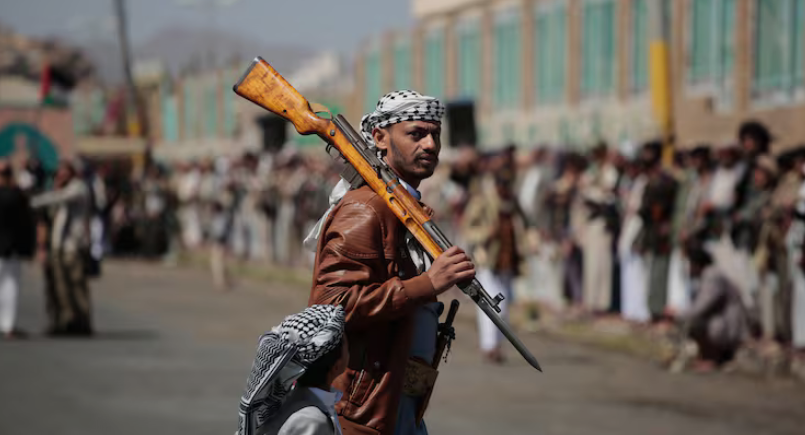
On Thursday, Yemeni government forces announced that they have «neutralized» 1,860 Houthi fighters since the launch of a large-scale counteroffensive aimed at recapturing territories under the control of the Iran-backed group.
In statements today, Deputy Minister of Defense of Yemen Samir Al-Sabri told Al Jazeera that the capital, Sanaa, which is under the control of the Houthis, continues to constitute a military target.
«Sanaa remains an immediate military target, and what separates government forces from launching the battle to capture it is only a matter of time and the need to advance through areas situated near the city», stated Major General Samir Al-Sabri.
«Control of the Bab el-Mandeb Strait and the western coast is of decisive importance, primarily due to its strategic value, but also due to its connection with international and regional issues.
However, our focus remains centered on Hodeidah, Sanaa, and Saada», underlined Al-Sabri, emphasizing that despite fierce clashes with the Houthis, the country's government forces maintain «great momentum».
«We launched the battle with great momentum and it continues», stated Major General Samir Al-Sabri.
«The advance has not halted, though the situation differs from front to front.
On some, significant progress is registered, on others the advance proceeds at a slow pace, while on certain other fronts setbacks have occurred, which we continue to address», added Al-Sabri.
Factories bombed in Sanaa, damage to mosque and homes
Sources in Yemen reported in the early morning hours today that several explosions occurred in the capital, Sanaa, following strikes by fighter aircraft of the Royal Saudi Air Force.
News agency Saba reported that Saudi fighter jets conducted an air strike against a foam manufacturing plant in the Shamlan area, northwest of Sanaa, the capital of Yemen.
According to television network Al Masirah, the strike caused severe damage to a mosque and several residences.
According to the same report, Saudi fighter jets also bombed the «Sama Al Nahda» plant, which manufactures building materials and electrical equipment and is located in the Al Jannat district, north of Sanaa.
Concurrently with these specific air strikes, Yemeni armed forces fired several ballistic missiles against targets on the territory of Saudi Arabia.
Pakistan condemns
Prime Minister of Pakistan Shehbaz Sharif condemned the repeated attacks by the Houthis against Saudi Arabia, including strikes against King Khalid International Airport in Riyadh and the international airport of Abha, which resulted in the deaths and injuries of civilians.
In a post on the platform X, Sharif commended the armed forces of Saudi Arabia and the military coalition led by it for intercepting ballistic missiles, emphasizing that Pakistan stands alongside Saudi Arabia with «unwavering solidarity».
«In accordance with the Joint Defense Agreement of Mecca and the recent decisions of the Strategic Policy and Defense Committee, our commitment to protecting the sovereignty, territorial integrity, and security of the Kingdom is steadfast», stated Sharif, referring to the mutual defense pact signed by Pakistan with Saudi Arabia and Turkey.
He added that Pakistan fully supports the «legitimate right of Saudi Arabia to defend its people and protect its cities and vital infrastructure».
«The Houthi militia must immediately cease these attacks», underlined Sharif, adding that Pakistan will continue to stand «shoulder to shoulder» with Saudi Arabia.
Pakistani fighter jets participate in operations
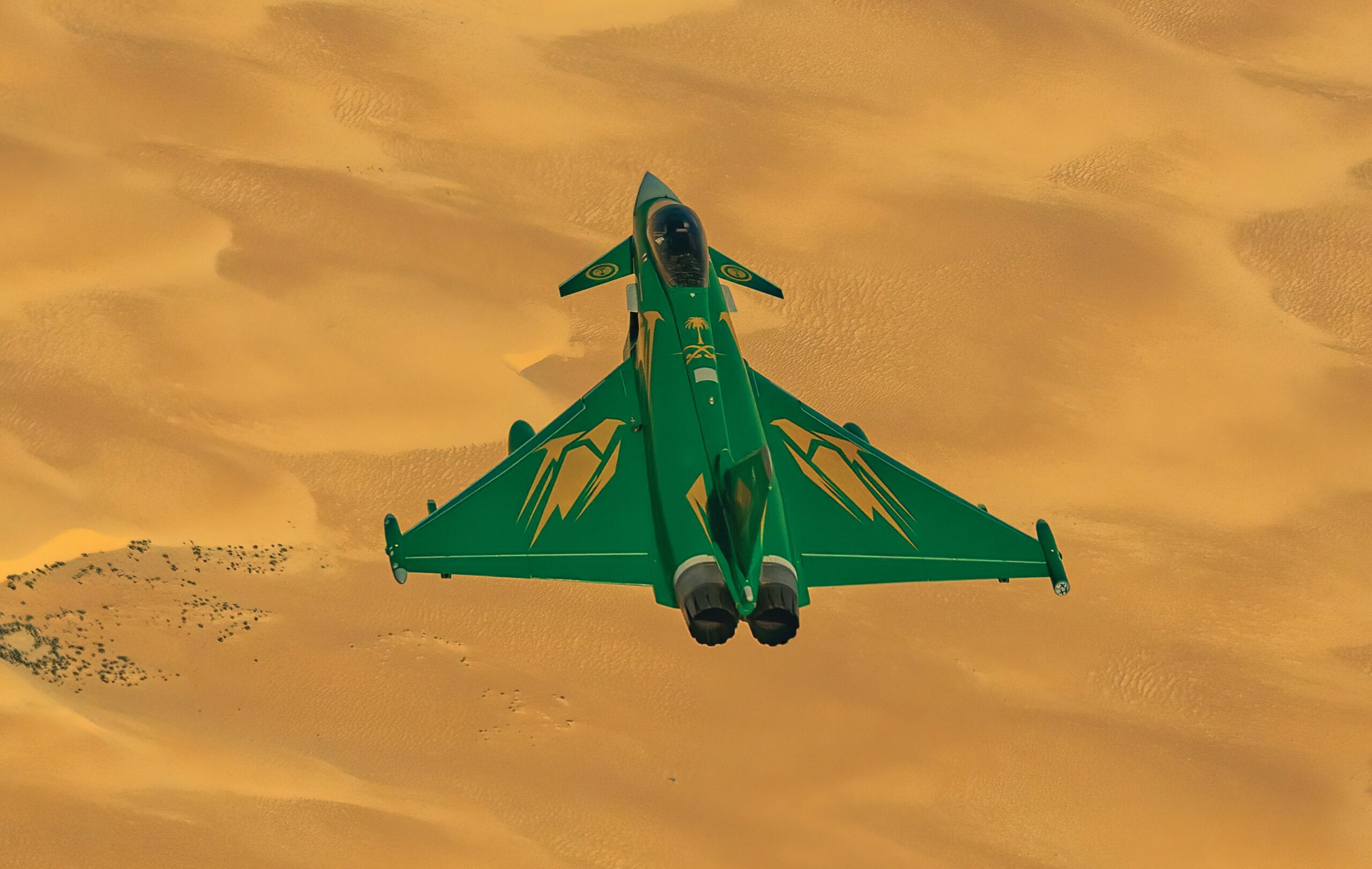
According to a report in The New York Times, a senior Pakistani military official confirmed that the country's fighter aircraft are participating in attacks against Houthi positions in Yemen.
A second official clarified that operations will concentrate on neutralizing missile systems and unmanned aerial vehicles, with no ground invasion envisioned.
This development alters the geopolitical landscape.
Pakistan, a nuclear power with significant military capabilities, appears to shift from supporting Saudi defense to direct involvement in the war.
However, so far there has been no detailed public confirmation of specific airstrikes from the government of Pakistan.
Nevertheless, the presence of Pakistani military forces in Saudi Arabia was officially confirmed by the military of Pakistan, highlighting strengthened military cooperation between the two nations during a period of mounting tension in the Middle East.
A Pakistani military spokesperson stated that military personnel from the country are already on Saudi territory, assuming missions across different units and operational sectors.
«I can confirm that Pakistani military personnel are currently in Saudi Arabia», he characteristically stated.
As he clarified, «Pakistani military personnel are performing their duties in the country across various units and different sectors».
Turkey draws a red line: «A defensive pact, not an offensive one», report notes deployment of 200 military personnel
In stark contrast to the operational choice attributed to Pakistan, Turkey seeks to maintain a clear line between collective defense and participation in an offensive war.
Foreign Minister Hakan Fidan clarified on October 8 that Ankara will not conduct strikes inside Yemen.
«This is a defensive agreement, not an offensive agreement», he stated, emphasizing that Turkey will not deploy troops onto the territory of another nation to launch attacks.
Ankara is weighing the provision of anti-aircraft systems, technical support, intelligence services, surveillance assets, and other defensive capabilities.
At the same time, the agreement has not yet been ratified by the Turkish parliament, a reality that constrains the institutional framework for military assistance.
The differentiation carries distinct strategic weight.
Turkey desires to reinforce partnership with Saudi Arabia without assuming the fallout of direct warfare against the Houthis.
The new alliance already exhibits diverging interpretations of its duties: Pakistan is reported to take part in bombing runs, while Turkey restricts assistance to defense.
This demonstrates that the activation of a collective security pact does not automatically generate a common doctrine for waging war.
Nevertheless, according to Turkish newspaper Turkiye Gazetesi, more than 200 Turkish military personnel have been transferred to Saudi Arabia following the formation of the Mecca defense alliance.
The deployment is accompanied, according to the publication, by substantial quantities of electronic warfare systems, air defense missiles, and weapon systems for ground operations.
www.bankingnews.gr








Readers’ Comments