

The rise of national-conservative forces, the migration crisis, inflation, and housing pressures overturn traditional political balances
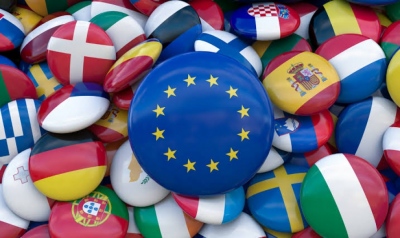
Rapid realignments are underway in Brussels, as the European People's Party seeks new alliances to its right. The rise of national-conservative forces, the migration crisis, inflation, and housing pressures are overturning traditional political balances. The political model that dominated Europe for decades is facing one of the greatest challenges in its history.
Everything changes on the Old Continent — The center-right seeks a way out toward the right
A deep political shift is underway in Europe, as traditional center-right forces re-evaluate their strategy toward national-conservative parties. Balances established over previous decades are being tested, as electoral gains by parties to the right of the European People's Party create new dynamics in both the European Parliament and national governments. At the center is the prospect of closer cooperation between the European People's Party (EPP) and the political group of European Conservatives and Reformists (ECR), which includes Italian Prime Minister Meloni's Brothers of Italy party. There is currently no confirmed agreement on creating a permanent joint political front. However, cooperation on individual votes and the search for alternative parliamentary majorities indicate that dividing lines are becoming more flexible. For the EPP, the stakes are high. On one hand, it seeks to maintain its dominant position within the European political system. On the other, it must address the shift of a significant portion of conservative voters toward parties advocating stricter positions on migration, national sovereignty, and European integration.
The end of old political exclusions?
For many years, mainstream European political forces attempted to limit the influence of nationalist and radical right-wing parties through the so-called "sanitary cordon," known internationally as the cordon sanitaire. This strategy was based on excluding specific parties from governmental or parliamentary partnerships, citing the protection of democratic institutions and fundamental European values. Today, however, its practical application shows significant variations from country to country. The growing electoral presence of conservative and nationalist formations has led several traditional parties to reconsider their stance. In some cases, coalition governments emerge, while in others, parliamentary tolerance or alignment on specific legislative bills is chosen.
This development does not mean that all parties of the European right are converging ideologically. On the contrary, serious disagreements remain on issues such as the war in Ukraine, relations with Russia, the functioning of European institutions, and economic policy. What is changing is the political capacity for cooperation on selected topics, even among forces that until recently avoided appearing in the same political camp.
Meloni at the center — The Italian model watched by Brussels
Italy represents one of the most characteristic examples of this new political reality. Meloni leads a governing coalition in which three distinct right-wing political traditions coexist: Brothers of Italy, Salvini's League, and Forza Italia, the party founded by Berlusconi. The three formations do not belong to the same political group in the European Parliament. Brothers of Italy participates in the ECR, the League in Patriots for Europe, and Forza Italia in the EPP. Despite their differing European alignments, they cooperate at the government level. This precise coexistence carries particular significance for developments in Brussels, showing that political cooperation between the traditional center-right and the national-conservative right is achievable under specific conditions. Meloni has also acquired a prominent role in European negotiations, with her positions on Ukraine and European security setting her apart from other nationalist political forces. Her relationship with the EPP consequently constitutes a critical factor for future balances, without this prejudging a comprehensive political agreement.
Germany: Pressure on the Christian Democrats and the rise of Alternative for Germany
In Germany, the Christian Democratic Union (CDU) faces the strengthening of Alternative for Germany (AfD), which has managed to attract voters who previously supported traditional conservative parties. Migration, economic uncertainty, energy costs, and dissatisfaction with Berlin's policies form core arenas of political confrontation. The German center-right thus finds itself before a complex dilemma: to maintain clear distance from the AfD or to bolster the conservative substance of its own political agenda in an effort to regain part of its electoral base. The second option does not necessarily imply coalition government. It can, however, lead to shifting priorities, particularly on matters of internal security, borders, and immigration. For the EPP, developments in Germany carry special weight, as German Christian Democracy has historically served as one of the key pillars of the European center-right.
The battle of numbers in the European Parliament
The balance of power in the European Parliament presents particular interest. The European People's Party remains the largest political group, holding 188 MEPs according to data released by the parliamentary group itself in early October. At the same time, the ECR, Patriots for Europe, and Europe of Sovereign Nations form three distinct poles to the right of the EPP. Their numerical strength is substantial, but their political division remains significant. The ECR includes parties supporting continued European aid to Ukraine, while other groups hold differing approaches regarding Moscow and sanctions. Therefore, a unified alliance of all right-wing political groups cannot be taken for granted. Much more realistic is the prospect of forming varied majorities depending on the issue under debate. This could impact critical areas of European policy, ranging from migration and agricultural production to environmental legislation and the competitiveness of European industry.
Migration, inflation, and housing crisis reshape the political agenda
Behind the realignments within European political groups lie concrete problems affecting the daily lives of millions of citizens. Rising living costs, pressures on the housing market, energy uncertainty, and the management of migration flows have taken center stage in public debate. Housing in particular is evolving into a critical political issue for younger generations, as rent increases and difficulties in purchasing a first home constrain their financial capabilities. These issues are being leveraged politically by parties across different ideological spectrums, which frequently propose conflicting solutions. For the European center-right, the challenge is to present convincing responses without compromising its political identity. Strengthening conservative stances on certain matters represents one strategy under consideration. It remains an open question, however, whether this choice can halt the electoral drift toward other parties.
What the European shift means for New Democracy and Mitsotakis
Developments carry particular interest for Greece as well, given New Democracy's participation in the European People's Party. Kyriakos Mitsotakis has invested political capital in his government's European presence and the country's involvement in the core decision-making body of the EU. However, potential closer cooperation between the EPP and the ECR would create a new landscape for the Greek governing party. New Democracy would be called upon to position itself within a European political environment where conservative forces claim greater influence, particularly on issues of migration, security, and economic policy. The question is whether the Greek center-right will follow a similar shift or seek to preserve its current political profile. This discussion holds special relevance for balances within the Greek political system, where parties to the right of New Democracy seek to expand their presence. In any case, European realignments do not automatically trigger identical developments in Greece. They do, however, outline a new framework within which Greek political forces will operate.
The big question: Will the way Europe is governed change?
The most significant dimension of these developments concerns not merely inter-party cooperation, but the very mechanism of decision-making within the European Union. For many years, major European policy decisions relied on agreements between the EPP, the Socialists, and Liberals, with participation from other political groups depending on the subject matter. If the EPP begins systematically seeking majorities to its right, this traditional equilibrium could alter. Socialists and Liberals would then face a different political reality, wherein the largest group in the European Parliament possesses expanded options for building majorities. On the other hand, such a strategy could provoke internal pushback within the EPP itself, as not all member parties view the prospect of working with the national-conservative right in the same light. What remains certain is that the European center-right stands before crucial decisions heading toward the 2029 European elections. Europe is entering a period where old political certainties are questioned, traditional alliances are re-evaluated, and forces of the right claim a new role in shaping European policy. Whether this process leads to permanent cooperation between the EPP and ECR remains to be seen. What is already evident is that discussion regarding the boundaries and possibilities of such cooperation has moved from theoretical debate into the daily political practice of Brussels.
www.bankingnews.gr






Readers’ Comments