

Financial Times: Tanker captains paid $100,000 a month plus $50,000 bonus per Hormuz trip — Atlantic revelation: Trump asked Pentagon for new targets in Iran, will strike before Nov 3 elections
Amid a stalemate in US dialogue with Iran and the Iranian authorities' insistence on refusing to discuss the nuclear issue and uranium enrichment with the Americans. Russian President Putin intervened during a conversation with Iranian leadership, emphasizing that "Iran's stability is epic". The intervention by Russian President Putin took place shortly before a new telephone communication between Trump and Putin concerning the Ukrainian and Iranian fronts potentially on October 8, 2026. While relative calm prevails—with Iran and the US refraining from exchanging missiles and drones, apart from Iranian strikes against tankers in the Persian Gulf—the American outlet The Atlantic warns that US President Trump instructed the Pentagon to draft plans for attacks—once again—and soon against Iranian targets... The situation in Hormuz for tankers remains dramatic despite statements by Trump that oil continues to be exported... in fact, the risk has escalated to such an extent that tanker captains earn $150,000 monthly ($100,000 base salary plus a $50,000 bonus per voyage).
Putin intervention: Iran's stability is epic, committed to strategic cooperation across all sectors
The President of Iran held a telephone call with Russian President Putin, with both sides confirming their commitment to expanding strategic cooperation. During the telephone communication, which coincided with President Putin's birthday, the Russian leader praised Iran's "epic stability" against US-Israeli aggression. Both presidents reiterated that the strategic partnership between Russia and Iran remains unshakable and continues to deepen despite complex security dynamics and ongoing regional conflicts. He stated that maintaining this strategic course serves the interests of both nations, particularly as they navigate a rapidly changing global order. Referring to Iran's "historic and epic stability" in the face of hostile attacks, the Russian president noted that the courage and determination shown by the Iranian people have drawn widespread international attention and admiration. Russia, Putin asserted, fully supports diplomatic initiatives aimed at resolving the crisis in the Persian Gulf.
Trump: War with Iran ending soon — No longer a nuclear threat to US
US President Donald Trump expressed the view that the conflict with Iran will be settled shortly, stressing that the country no longer poses a nuclear threat to the United States. In public remarks, Trump stated that his Middle East special envoy, Steve Witkoff, is working toward reaching a potential deal with Iran and "is doing very well," while hinting that a formal agreement is not his preferred choice. "He is working on the deal with Iran and doing very well. I think the deal is not really something I want to do, but they are willing to offer us anything to make this stop," Trump declared during an address to supporters at a campaign rally in San Antonio, Texas. Trump emphasized that Iran "will never obtain a nuclear weapon," while praising Witkoff as an "outstanding negotiator." At the same time, he expressed optimism that hostilities would conclude soon. "This war is ending—and it will end very soon. It has to end very soon," Trump said, describing Iran as a "failed state" that "still retains a bit of fight, but not much."
NBC: US and Iran discussed Iranian nuclear program
The United States and Iran held discussions in New York this month regarding Tehran's nuclear program as part of indirect negotiations, reports NBC News, citing a US official, a Middle East official, and an Iranian official. According to the report, the Trump administration seeks an agreement with Tehran that directly addresses core pending issues, including Iran's nuclear program. Washington is uninterested in another temporary memorandum of understanding focused solely on the Strait of Hormuz with nuclear talks deferred to a later date, the report added. Iran proposed a seven-day agreement under which the United States would initiate sanction relief and unfreeze Iranian assets in exchange for reopening the Strait of Hormuz. Talks on the nuclear program would take place separately in a subsequent phase. However, US President Donald Trump rejected this proposal.
Ali Mohammadi (IRGC) to Trump: Even the oil market knows you are lying
Ali Mohammadi, deputy commander of Political Affairs for the Navy of Iran's Islamic Revolutionary Guard Corps (IRGC), dismissed claims by US President Donald Trump regarding oil transit and vessel movement through the Strait of Hormuz. "If oil and vessels are indeed passing through the Strait of Hormuz, why is the oil market not reacting accordingly? Because even the market understands you are lying," Mohammadi stated, according to news agency Fars. He further challenged American assertions that the Revolutionary Guard's naval forces had been destroyed, questioning why US military assets remain "600 to 700 kilometers away" without approaching the strait. Mohammadi maintained that the Revolutionary Guard Navy retains "full oversight" of shipping movements across the Persian Gulf, the Strait of Hormuz, and the Gulf of Oman. According to data analytics firm Kpler, the volume of vessels passing through the Strait of Hormuz has plummeted to its lowest level in over two months. This decline follows a record number of attacks on tankers since the onset of the US-Israeli campaign against Iran in February. On Tuesday, merely seven commercial cargo vessels navigated the strait, marking the lowest daily count since July 23, according to Kpler data.
Iranians hit 12 tankers in Hormuz in 7 days, highest weekly total since Persian crisis began
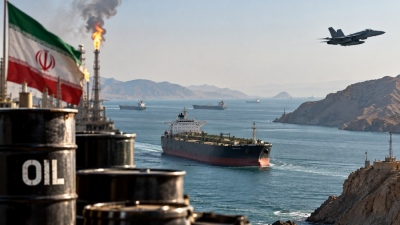
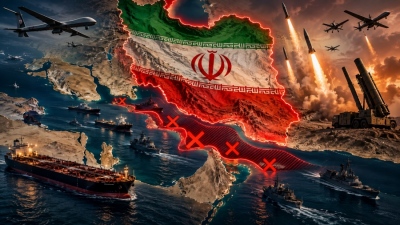
Attacks on oil tankers in Hormuz reached their highest weekly level since the outbreak of the war in Iran, Reuters highlighted. At least 12 attacks on oil tankers occurred in the vicinity of the Strait of Hormuz during the week ending October 5, 2026. Incidents targeting tankers transiting the Strait of Hormuz surged to peak levels last week, according to maritime security sources monitoring the situation, as Gulf oil producers attempt to maintain export volumes. The Joint Maritime Information Center (JMIC), operating under US Navy leadership, reported that attacks, attempted strikes, and harassment—including drone overflights, surveillance, and VHF radio calls from the Revolutionary Guard Corps—continued throughout Hormuz. "These actions continue to demonstrate Iran's intent to project presence across key shipping lanes and maintain pressure on transiting vessels," JMIC stated. At least 12 attacks hit vessels carrying crude oil, liquefied natural gas (LNG), and liquefied petroleum gas (LPG) around the Strait of Hormuz.
Financial Times: Tanker captains paid $100,000 monthly plus $50,000 bonus per Hormuz trip
Tanker captains are earning $100,000 per month alongside a $50,000 bonus for every passage through Hormuz, reports the Financial Times. Tanker masters receive between 4 and 6 times their standard base salary. Shipowners are threatening to replace seafarers who refuse to sail through the transit corridor. If crew members refuse passage through Hormuz, they risk losing their employment; if they accept, they risk losing their lives. Vessel owners are striving to maintain crude oil flows from the Persian Gulf despite Iranian strikes, which have impacted roughly 2% of total commercial traffic. Rank-and-file mariners, whose entry-level monthly wages start around $1,500, are securing 4 to 6 times their standard earnings per Hormuz crossing, taking home up to $9,000 per month. Many of these seafarers hail from the Philippines, India, and Indonesia, alongside personnel from Russia, Ukraine, and Eastern Europe. Manoj Yadav of the Forward Seamen's Union of India told the Financial Times that shipowners threaten to replace crew members who refuse passage while deducting repatriation costs directly from their wages.
Atlantic revelation: Trump asked Pentagon for new targets in Iran, will strike before Nov 3 elections
American outlet The Atlantic reported that the White House asked the Pentagon to evaluate strike options against targets in Iran, which could be executed prior to the midterm elections on November 3, 2026. The development comes during a period of relative operational calm across war fronts over recent weeks. According to The Atlantic, Trump continues to seek a strategy to demonstrate "progress" in the Iran conflict and reduce fuel costs before the November 3 vote. The scale and potential targets of the operation remain undisclosed, with no final decision yet enacted. US Central Command (CENTCOM) is formulating various military alternatives for a potential assault. However, even proponents of the plan acknowledge that a limited strike alone is unlikely to force Iran back to negotiations, restore maritime security in the Strait of Hormuz, or lower gasoline prices prior to Election Day. Advocates argue such an operation could allow Trump to display military power and claim a "victory," potentially benefiting Republicans ahead of the vote. A Republican familiar with the deliberations told The Atlantic that such a move could foster a perception that Trump "achieved a win" and that energy prices are trending downward. Yet, a fundamental flaw underlies this reasoning: The war in Iran has already driven higher energy expenses and inflationary pressures across the United States, and prolonged conflict risks accelerating that trend.
50,000 American troops at risk of becoming targets in Persian Gulf
In the event of renewed strikes, approximately 50,000 US service members stationed in the region, alongside Gulf allies, would be exposed to Iranian retaliation. Furthermore, sustained military engagements could deplete US ammunition reserves. Several analysts suggest that a military campaign would fail to bring down oil prices and could prove counterproductive. Will Waldorf, professor of international relations at Wake Forest University, noted that past military action has done nothing to suppress oil prices and instead yielded the opposite outcome. In his view, if the underlying objective is securing voters for Republicans, escalating an unpopular domestic war remains difficult to justify politically. The issue presents a major challenge for the Republican platform. Midterm candidates express concern that prolonged conflict with Iran and elevated fuel costs present severe obstacles to retaining their congressional majority.
According to The Atlantic, Ken Paxton, Republican Senate candidate in Texas, characterized rising gasoline and diesel costs as "by far the biggest problem" for his campaign during a private donor event. Trump previously raised the prospect of resuming military action after the elections. He threatened to "destroy" Iran if no agreement is reached during his address at the United Nations last month. He also noted in a Time magazine interview that Washington has been stockpiling munitions and equipment over the last six months to sustain military readiness. Last week, he added that the United States would likely achieve victory "right after the election," while not ruling out an earlier resolution. Meanwhile, energy market pricing remains a paramount concern for the US administration. Crude prices surged toward $118 per barrel following the outbreak of hostilities in spring and have hovered around the $100 threshold recently. Average US gasoline prices rose to roughly $4.37 per gallon, up from under $3 prior to the launch of joint US-Israeli operations on February 28. The Strait of Hormuz remains a critical global flashpoint.
Iran has targeted several vessels attempting passage in recent days, prompting shipping lines to reassess route viability. Concurrently, the Trump administration pledged to tap the US Strategic Petroleum Reserve to mitigate fuel price hikes. Beyond military and economic leverage, the US and Iran continue indirect dialogue through intermediaries, though impasses remain over ceasefire conditions, blockade policies, and reopening the Strait of Hormuz. Meanwhile, the US recently withdrew B-1 bombers from RAF Fairford in the United Kingdom, a move attributed by US sources to intelligence reports regarding potential Iran-linked threats. Iran denied involvement in any threat activity. Rather than forcing Iranian capitulation, an election-eve strike could push war coverage back into headline news, raising the political fallout for Republicans. The Atlantic emphasizes that Trump's primary dilemma involves more than winning the war. It centers on whether escalating conflict before the vote will trigger election loss rather than political advantage.
Axios: US to strike Iran... potentially before Oct 27
US President Trump has not yet finalized a decision on resuming strikes against Iran, though all tactical options remain available, according to Axios. The Atlantic noted that the Pentagon was tasked with preparing operational plans for new strikes against Iran ahead of congressional midterm elections. "The directive specified no fixed date for execution, and President Trump has taken no final decisions. A White House official confirmed that Trump maintains all options at his disposal." Furthermore, sources indicate strikes could occur prior to Israeli legislative elections scheduled for October 27.
Iranian General: We will launch 'preemptive strikes' if threatened
General Akrami-Nia, spokesperson for the Iranian armed forces, declared that Iran will initiate preemptive operations against adversaries if the nation faces an incoming threat. Speaking to Fars news agency, Akrami-Nia stated that Iran's military leveraged recent warfare experience to enhance readiness and target enemy vulnerabilities. He characterized prospective military responses by Iranian forces as "more overwhelming, broader, more decisive, and faster." "A vast inventory of hardware is currently placed at the disposal of Iranian Army forces, and the military stands fully prepared," he noted. According to his statement, defense manufacturing has operated continuously since the US and Israel initiated military actions seven months ago. The military, he added, possesses improved insight into adversary vulnerabilities, while missile capabilities and drone technologies have advanced. The general concluded that Iran continuously works to extend the range, speed, and precision of its missile arsenal while updating its target matrix.
www.bankingnews.gr



Readers’ Comments