

Everything in the air in the Middle East: US and Israel prepare new strike, Houthis crush Saudi Arabia, and... Syria prepares to intervene
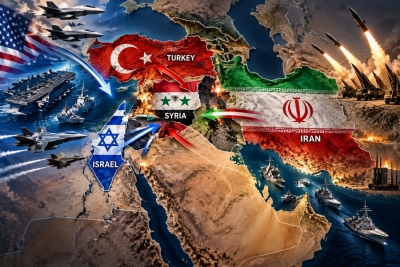
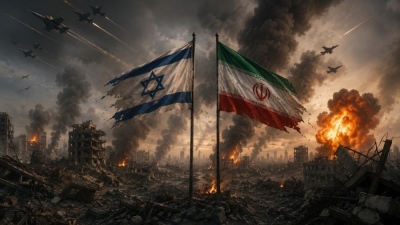
The Middle East is entering a new, particularly dangerous phase, as the prospect of a new major war with Iran coincides with the rapid escalation of the war in Yemen and the possibility of direct involvement by new powers. The United States and Israel are already examining scenarios for a large-scale military operation against Iran, while the Houthis are strengthening their position in Yemen, inflicting severe losses on pro-Saudi forces. At the same time, Saudi Arabia is attempting to regain the initiative in Yemen, with Turkey moving toward reinforcing its military support to Riyadh and Syria now considering the possibility of becoming directly involved in the war. If these plans are confirmed, the conflict risks acquiring much larger dimensions, turning Yemen into yet another critical front in a broader regional war. The backdrop becomes even more explosive as developments link to critical political decisions in Washington and Tel Aviv, while the prospect of new American attacks against Iran threatens to drag down energy prices and trigger retaliation against US forces throughout the region. From Iran and US-Israeli war plans to the Houthi advance in Yemen and Syria's potential entry into the conflict, an extremely dangerous puzzle is forming, where a new military strike could trigger chain reactions across the entire Middle East.
Trump has not yet given the final "green light"
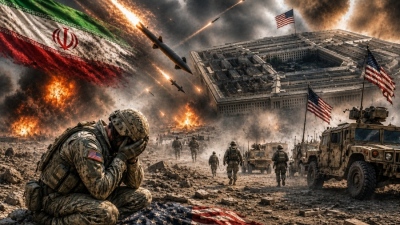
Meanwhile, the Pentagon instructed US Central Command to complete preparations for the resumption of large-scale military operations against Iran, according to Axios, which cites American officials. The order was issued several days ago, though no date has been set so far for the start of operations. At the same time, President of the United States Donald Trump has not yet made the final decision on whether to proceed with a new major military operation against Iran.
Possible attack before the US elections
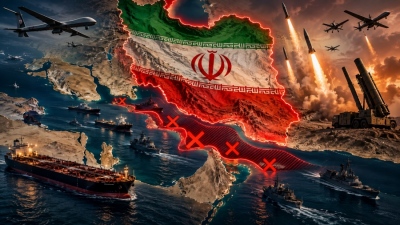
According to US and Israeli officials, a new attack could take place before the midterm elections in the United States on November 3, and potentially even before the elections in Israel on October 27. A new military operation could include large-scale strikes against: Iranian energy facilities, critical infrastructure, and nuclear facilities. Washington and Tel Aviv are likely to move jointly, with the participation of the Israel Defense Forces (IDF).
Discussions at Camp David on returning to war
At the same time, Donald Trump's national security team held a hours-long meeting on Friday at Camp David, where among other topics, the possibility of returning to a full-scale war with Iran was discussed. Developments show that the US government is now seriously considering the prospect of a major new military confrontation, without a definitive political decision having been made.
The strike plan and fears over oil prices
Separately, The Atlantic reports that the White House asked the Pentagon to present options for military strikes ahead of the US midterm elections. Officials participating in the process warned that new American strikes on Iran could lead to a significant rise in crude oil prices. At the same time, a new military conflict could expose approximately 50,000 US troops located in the wider region to Iranian retaliation.
Two elections, two governments under pressure, and one war
The scene acquires a distinct political dimension, as both the American and Israeli governments face significant domestic pressure and stand before upcoming electoral battles. Two elections, two governments facing internal troubles, and a regional war that could prove politically convenient. The prospect of a major new military clash with Iran thus returns forcefully to the spotlight, with the United States and Israel already examining military scenarios, while the final decision remains in the hands of Donald Trump.
Houthis dismantle the Saudi Arabian army in Yemen
The Houthis (Ansar Allah) released video footage on October 7 showing their fighters expelling pro-Saudi forces from two districts of Taiz province in southwestern Yemen. Many of the Houthi fighters appearing in the video seem to be fighting barefoot, a fact that adds an even harsher image to the battles taking place in the area. The video reportedly records operations in the al-Ma’afer and al-Mawasit areas, including the capture of the palace of Rashad al-Alimi, president of Yemen's Presidential Leadership Council.
Fully expelled from al-Salw
Earlier in the day, Yemen's Saba news agency reported, citing a Houthi official, that pro-Saudi forces had been fully driven out of the al-Salw district in southern Taiz. According to the same report, these forces surrendered all captured weaponry and positions to the Houthis. Developments show that the situation in Taiz is deteriorating at a rapid pace for forces backed by Saudi Arabia.
New Houthi attack in al-Jawf
Developments, however, are not limited to Taiz. Houthi military spokesman Brigadier General Yahya Saree stated that the group's forces repelled an attempt by pro-Saudi forces to advance toward Houthi positions in northern al-Jawf province. According to Saree, Houthi forces struck troop concentrations with ballistic missiles and drones, causing the death and injury of dozens of fighters while destroying several vehicles.
11 troop concentrations struck within 24 hours
In a separate announcement, Yahya Saree stated that Houthi forces struck 11 concentrations of pro-Saudi troops during the preceding 24-hour period. The attacks were carried out in areas south of Bab al-Mandab, as well as in the areas of al-Suqya, Ras al-Ara, and al-Mudharibah. Saree reported that 11 ballistic missiles were used in the attacks, causing dozens of dead and wounded, including commanders, while a number of military vehicles were destroyed.
Missile strikes unit accused of executing prisoners
Yahya Saree further claimed that Houthi forces tracked a company of the 13th Giants Brigade, accusing the specific unit of running over and killing prisoners of war with its vehicles. According to Saree, the company was struck by a ballistic missile at the moment its members were gathered, resulting in more than 30 casualties.
Houthis maintain the initiative on all fronts
Latest developments show that the Houthis continue to hold the upper hand across all Yemeni battlefronts. Particularly in Taiz, the situation for the besieged pro-Saudi forces is worsening. Indeed, according to the assessment stated in the initial report, a collapse of these forces can be expected within the coming days, if not within a few hours. The Houthis could assume control of the provincial capital before the end of the month.
Syria considers involvement in the Yemen war alongside Saudi Arabia
Syria is reportedly considering the possibility of becoming involved in the Yemen war alongside Saudi Arabia, in a potential widening of the conflict that could expose Damascus to significant military risks and political danger. Hiba Nasr, head of the Asharq Bloomberg bureau in Washington, reported in a post on platform X on October 7 that Syria may participate in the war, although no definitive decision has been taken so far and the prospect remains under discussion. According to her, the information originates from multiple diplomatic sources.
Ahmad al-Sharaa's visit to Saudi Arabia
This report came one day after the surprise visit of Syrian President Ahmad al-Sharaa to Saudi Arabia. The state-run Syrian Arab News Agency reported that talks with Saudi Crown Prince Mohammed bin Salman Al Saud focused on strengthening political and economic relations between the two countries. The prospect of Syrian involvement comes at a time when Saudi Arabia is struggling to turn its new military intervention in Yemen into a decisive victory.
Limited gains for pro-Saudi forces
Yemeni government forces backed by Saudi Arabia have recorded very limited gains in recent days around the Bab al-Mandeb Strait. So far, they have failed to reverse recent Houthi territorial gains, particularly in Taiz and other mountainous areas of southwestern Yemen. At the same time, the Houthis continue to launch missiles and drones against Saudi Arabia, targeting energy facilities, airports, and military positions.
As recently as September, Damascus reportedly rejected the Saudi request
The latest developments mark a significant shift compared to what had been reported last month. Türkiye Today reported on September 18 that Damascus had rejected an official request from Saudi Arabia to organize and deploy Syrian fighters to Yemen. Syrian officials stated in the publication that the government did not wish to enter the conflict as a third party while reorganizing its armed forces. Concurrently, Turkish and regional sources denied claims that Ankara was organizing the deployment of Syrian mercenaries to Yemen.
Turkey approaches direct military support for Saudi Arabia
The new report regarding potential Syrian participation comes shortly after Turkey moved closer to direct military support for Saudi Arabia. Middle East Eye reported on October 6 that Ankara was preparing to send additional personnel and defense equipment to Saudi Arabia under the Mecca defense pact. Turkish officials told the publication that Turkey already maintains technical teams, air defense systems, and electronic warfare equipment in the kingdom, while preparing additional deployments of forces and hardware. Certain of these measures require approval from the Turkish parliament. The timing of this released information creates the possibility that Ankara is encouraging Damascus to contribute to the Saudi war effort.
The economic incentive for Damascus
For Damascus, supporting Saudi Arabia could hold significant financial interest. Syria remains heavily dependent on external aid following more than a decade of war. The World Bank estimates that rebuilding the country's destroyed infrastructure and buildings would cost approximately 216 billion dollars. During Ahmad al-Sharaa's visit to Saudi Arabia, Syrian officials reported that the two sides discussed issues of reconstruction, infrastructure, investments, and cooperation in the fields of energy, construction, agriculture, and bilateral trade. Saudi Arabia has already committed billions of dollars toward investments in Syria, including projects involving airports and telecommunications networks. Consequently, Riyadh constitutes a major potential source of capital for Damascus.
Yemen could turn into a military trap
Any deployment of Syrian forces to Yemen would, however, entail substantial military danger. The Syrian armed forces possess extensive combat experience from the country's long civil war. However, this experience does not necessarily mean they are adequately prepared for the notoriously difficult mountain warfare of Yemen, where the Houthis hold a significant geographical advantage and have known the specific terrain for years. A recent assessment conducted by a US-based conflict monitoring organization noted that pro-government forces in Yemen face particular difficulties operating in the mountainous regions of Taiz. In these areas, air support is less effective, while light Houthi infantry units are highly adapted to ground conditions.
The example of Sudan serves as a warning
Sudan's experience in Yemen serves as a cautionary example. Sudan deployed troops as part of the Saudi-led military intervention in Yemen and suffered heavy casualties. According to reports, more than 4,000 Sudanese were killed fighting the Houthis, including more than 2,000 in Taiz and along the western coast, where battles are taking place today. A Syrian intervention could, therefore, create risks extending far beyond the Yemeni battlefield itself.
Houthis can respond with missiles and drones
The Houthis have proven that they possess the capability to launch long-range missiles and drones. For Syria, participation in the war could therefore mean opening yet another front at a time when the country is still trying to rebuild. One possible consequence would be Houthi retaliation against Syrian territory or Syrian interests. At the same time, other actors linked to Iran in Iraq — and potentially Iran itself — could have incentives to react to a direct Syrian role in the Yemen war.
Damascus stands before a critical decision
For now, Syria's reported decision remains pending. However, the transition from Damascus's reported rejection just last month of Saudi requests for Syrian participation to today's discussion of potential direct involvement shows that conditions are changing. The broadening military response of Saudi Arabia and Turkey to the Houthi offensive may also be altering Damascus's calculations. Syria is now called upon to weigh a critical dilemma: on one hand, the substantial financial benefits that closer cooperation with Saudi Arabia could offer, and on the other, the risk of becoming entangled in a new war at the very moment it is attempting to rebuild the country.
www.bankingnews.gr







Readers’ Comments