

The image projected in recent days by US President Donald Trump toward Iran does not resemble a president who feels he has fully imposed his terms. On the contrary, his repeated statements, references to nuclear strikes, attempts to justify the economic consequences of a prolonged conflict, and the concurrent strengthening of the American military presence in the region assemble the picture of a Washington attempting to maintain the initiative, while simultaneously fearing that the cost of confrontation with Tehran could spiral completely out of control. In the Iranian reading of events, this picture is interpreted even more aggressively: Tehran claims that the United States has failed to bend Iran militarily and is now attempting to shift pressure to the economic, political, and psychological levels. Whether this assessment fully reflects military reality is another matter. What cannot be ignored, however, is that American strategy appears to be continuously seeking new forms of pressure.
From a show of force to anxiety over the cost
The deployment of aircraft carriers, amphibious forces, and thousands of troops around Iran is presented by Washington as a means of enhancing deterrence and operational flexibility. However, the greater the concentration of American forces becomes, the more the political weight accompanying any possible decision to use them increases. Iranian media claim that the deployment of the USS "Theodore Roosevelt" and the amphibious ready group "Makin Island," along with the deployment of additional forces, significantly expands the scope of US military options. At the same time, however, every new unit entering the region also constitutes a potential new target in the event of a generalized conflict. Here lies one of the fundamental paradoxes of American strategy: the more Washington attempts to prove it possesses overwhelming force, the more it exposes that force to an operational theater in which Iran has invested for decades in developing missiles, uncrewed systems, coastal defenses, and reconnaissance networks.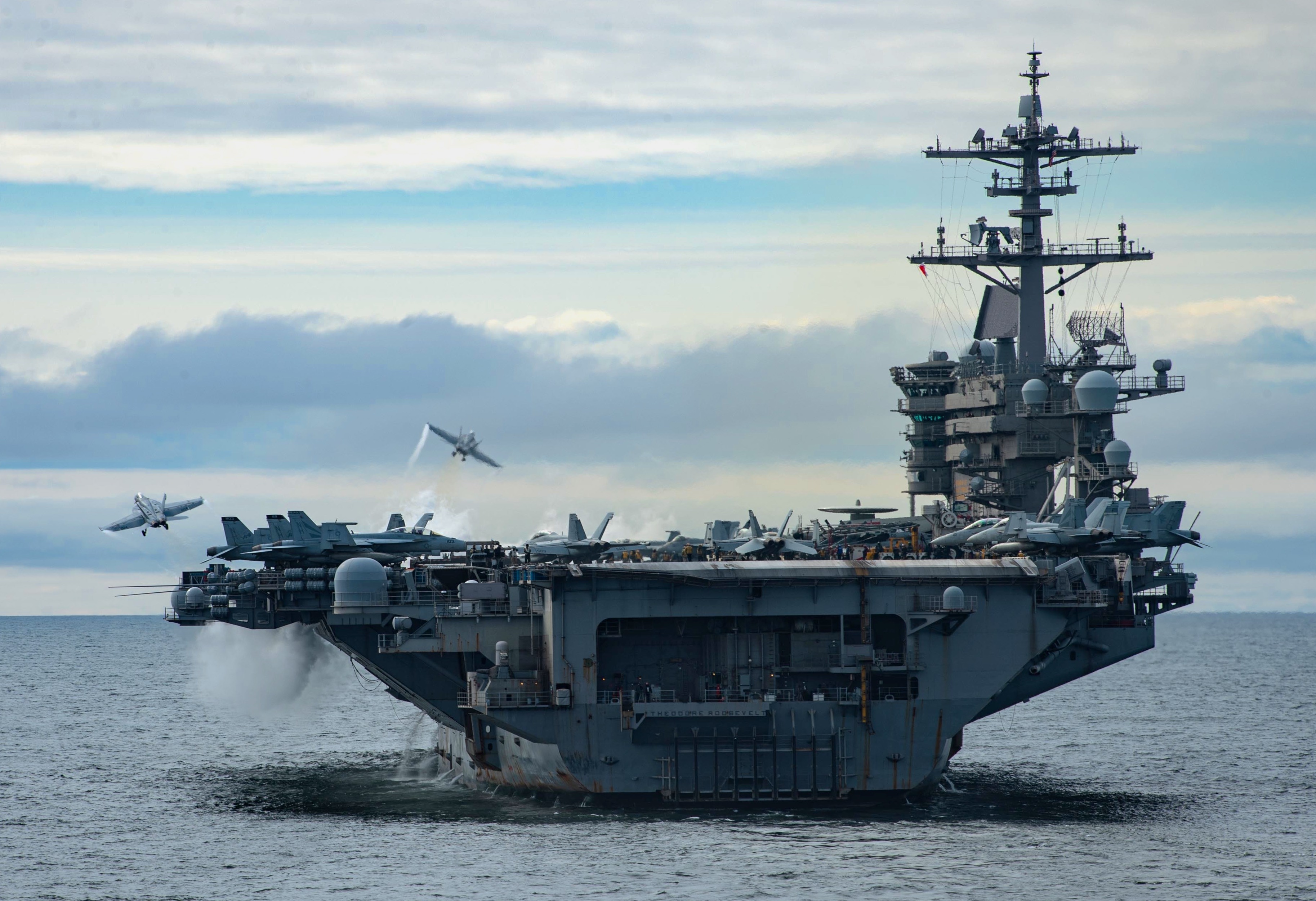
The statements about Los Angeles and San Diego
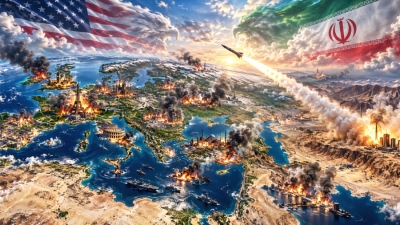
Amid this atmosphere, Trump's statements regarding the potential for an Iranian nuclear strike on Los Angeles and San Diego caused political shock across the United States. "Let them destroy Los Angeles. Let them destroy San Diego," he said in an extremely confusing formulation, adding that it was "a very small price to pay." The phrase, isolated from the rest of the context, gave the impression that the American president was describing as acceptable even the nuclear destruction of two major American cities. The overall sequence of his statements shows, however, that Trump was attempting to repeat an argument he has used many times: that higher energy prices and the economic cost of a confrontation with Iran constitute a "small price to pay" compared to the risk of Tehran acquiring nuclear weapons. The problem was not simply the substance; it was his inability to clearly present his own argument.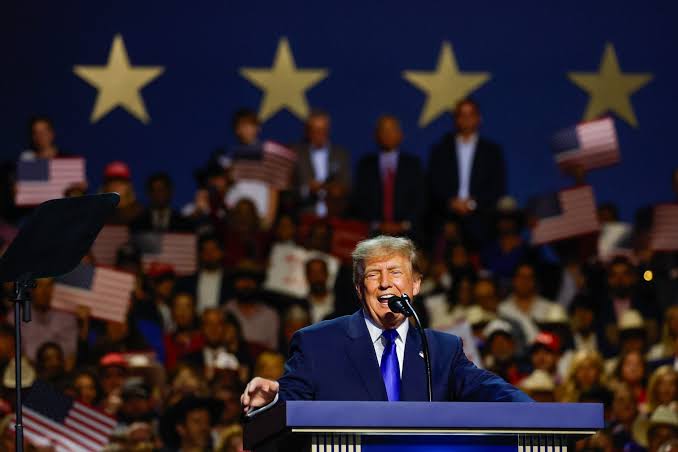
When fear enters the rhetoric
The repeated invocation of the possibility of an Iranian nuclear strike on American cities reveals something deeper. American political leadership no longer presents Iran merely as a regional power that needs to be contained. It presents it as a threat that could, under extreme conditions, cause catastrophic consequences even within the domestic United States. Trump himself had used Mobile, Alabama, a few days earlier as an example of an American city that could find itself targeted by a nuclear-armed Iran. This rhetoric serves a dual function. On one hand, it attempts to justify the economic and political costs of confrontation. On the other hand, however, it reveals the anxiety of the American leadership when faced with a scenario of uncontrolled escalation.
The "small price" and American public opinion
Trump has repeatedly characterized high gas prices as a "small price to pay" for the security of the United States and the deterrence of a nuclear Iran.
-
On March 8, he wrote on Truth Social that "short-term oil prices ... are a very small price to pay for the security and peace of the US and the world."
-
On March 16, he described high gas prices as "a very small thing compared to allowing them to have" nuclear weapons.
-
On May 5, he called high gas prices "a very small price to pay to get rid of a nuclear weapon."
-
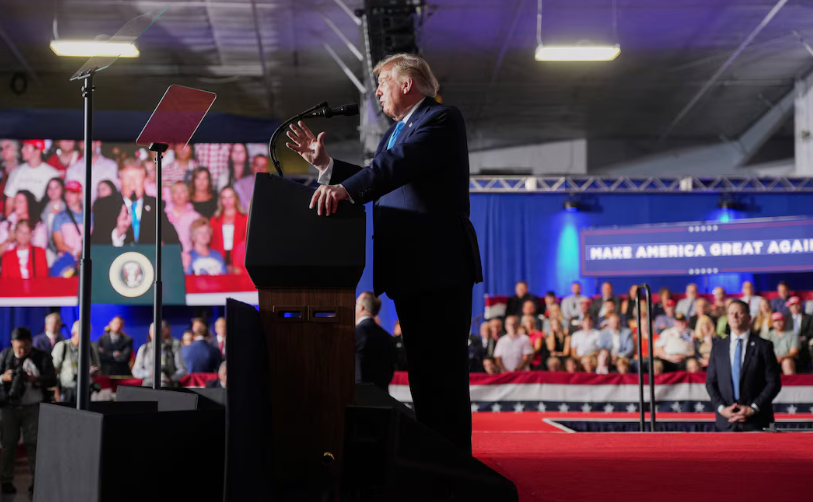
He said it again during a separate appearance last Monday—in an interview with a local Nebraska television station: "I say it with pride: a relatively small price to pay to keep nuclear weapons out of the hands of a madman nation." This repetition is not accidental. The economy is the point where a distant military crisis transforms into a daily experience for the average American citizen. Gasoline prices, transportation costs, inflation, and market uncertainty can transfer the crisis from the Persian Gulf directly to the ballot box, especially ahead of the midterm elections on November 3. For a president who knows that the political legitimacy of a major military engagement depends heavily on whether citizens deem its consequences tolerable, the need to present economic burdens as temporary and insignificant is critical. The persistent use of the phrase "small price," therefore, is not merely a verbal habit. It is a defensive political message.
Tehran speaks of an American defeat
Contrasted with Trump's incoherent rhetoric, the Iranian narrative is straightforward. Leadership in Tehran maintains that the United States tried to use its military superiority to break Iranian resolve but failed. The Iranian side presents its own military response as proof that the country has the capability to impose significant costs even on an adversary with vastly greater resources. Speaker of the Iranian Parliament Mohammad Bagher Ghalibaf has spoken of a "total military defeat" for the United States and claims that, following failure on the battlefield, Washington is now turning to economic pressure. This is naturally the Iranian political narrative rather than a neutral military assessment. Nonetheless, it carries particular weight because it illustrates how Tehran conceives the strategic showdown: not as a battle decided exclusively by the count of aircraft or ships, but by which side can endure longer.
From military to economic warfare
Tehran assesses that American strategy has shifted from direct military pressure to a combination of sanctions, economic blockades, pressure on energy flows, and psychological operations. Under this reading, the true objective is no longer an immediate military victory, but the exhaustion of Iranian society. Economic pressure can indeed prove more corrosive over time than a limited military episode. This is why Iranian leadership attempts to frame economic resilience as a key component of national defense. The conflict, therefore, ceases to be solely about missiles, aircraft carriers, and military bases. It becomes a test of societal endurance.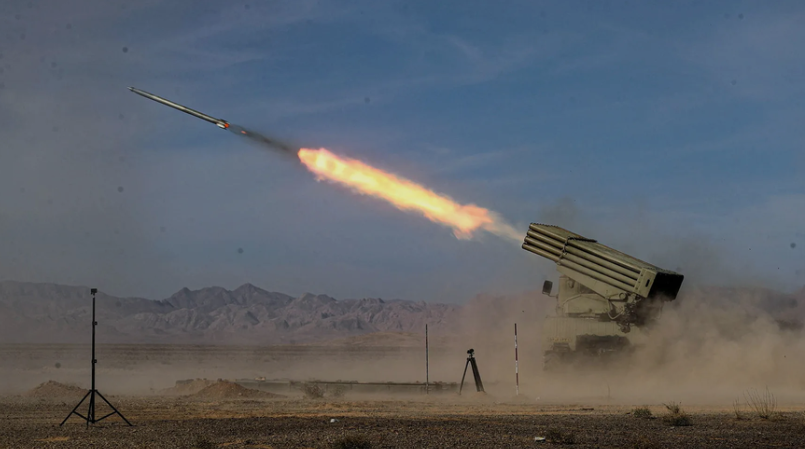
Makran at the center
The Makran coast and the Sea of Oman are now acquiring particular significance. The region possesses direct access to open waters and provides Iran with greater strategic depth than that afforded by the narrower Strait of Hormuz. For Tehran, Makran is not merely another stretch of coastline. It is a critical zone for access to international sea lanes, commerce, energy, and the country's broader strategic framework. This explains why any deployment of US amphibious forces in the wider region is met with intense suspicion.
The Chabahar scenario
In recent days, analyses have emerged linking the presence of US amphibious forces with potential operational scenarios in the region of Chabahar. However, no publicly available data currently exists to prove that a decision has been taken for such an operation. The existence of military capability does not automatically mean a political decision has been made to deploy it. Yet for Iran's defensive planning, even the theoretical possibility is enough to alter tactical calculations. It is noted that the aircraft carrier USS Theodore Roosevelt departed San Diego on September 27, while the amphibious ready group USS Makin Island departed the same area on September 28. According to US military reports, the "Makin Island" group includes the ships "Anchorage" and "John P. Murtha," alongside the 13th Marine Expeditionary Unit. Published information also points to the addition of approximately 9,000 to 10,000 American troops to the region. If pre-existing forces remain in place alongside new arrivals, a substantial concentration of American naval and air power could assemble around Iran.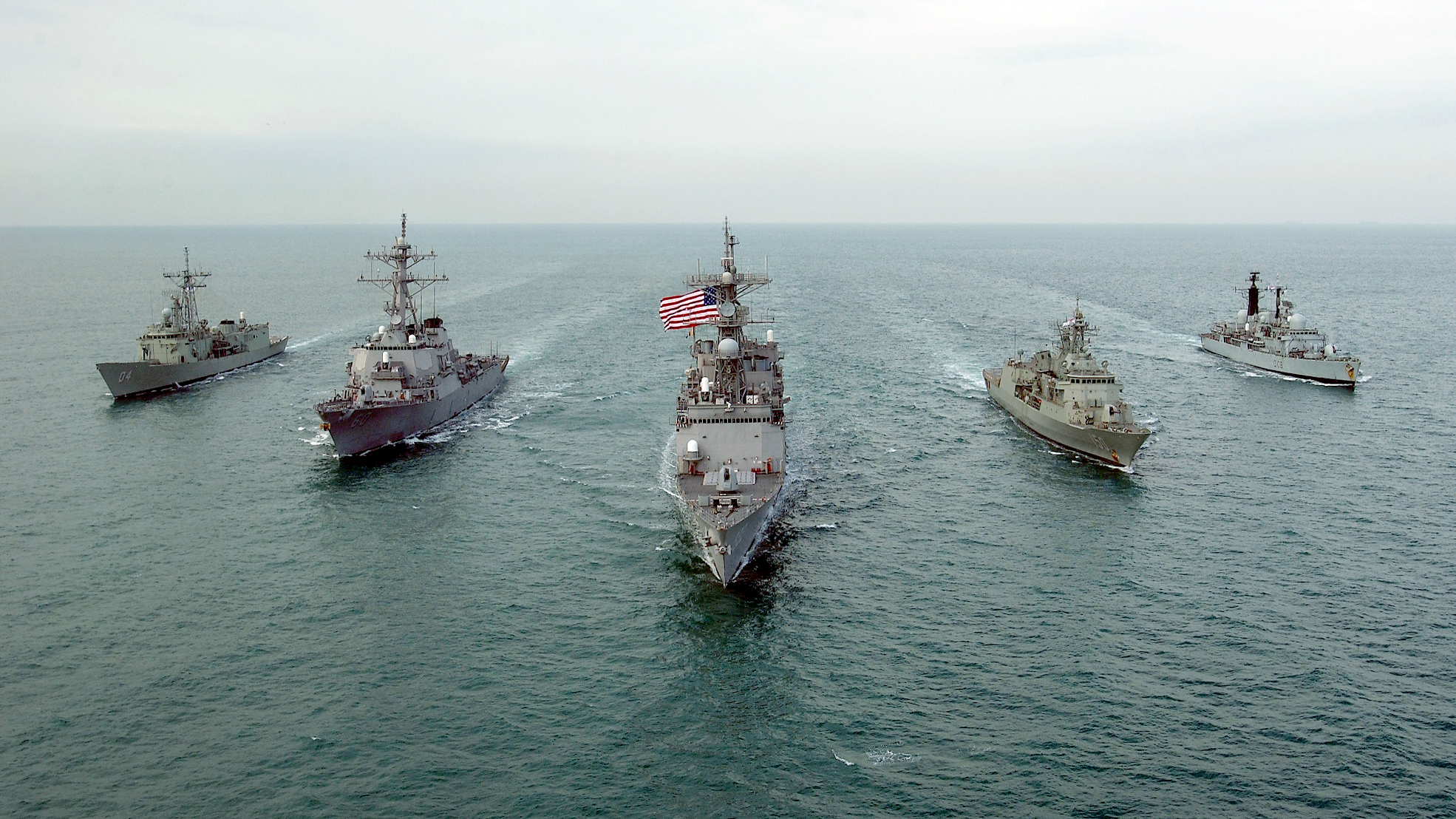
The aircraft carrier trap
Reports suggest the potential presence of up to three American aircraft carriers in the region. If confirmed, this would significantly expand US aerial and naval strike capabilities near the operational zone. American aircraft carriers represent perhaps the most potent symbol of global military power. Yet they are simultaneously massive, extraordinarily expensive, and reliant on complex networks of defense, resupply, intelligence, and logistical support. In a region packed with missile, uncrewed, and coastal defense systems, military power exists side by side with acute vulnerability. This does not mean Iran can easily neutralize an American fleet. It means, however, that utilizing such force against an opponent with substantial anti-access capabilities is not an operation without cost. And that precise cost forms the very bedrock of deterrence.
The real battle is "freedom of action"
The critical question in a potential US–Iran confrontation is not which country possesses more weapons. At that level, American military superiority remains immense. The true question is whether Washington can deploy that power freely without suffering casualties and political fallout that would render an operation unsustainable. Iran, for its part, does not necessarily need to destroy the American military machine. It only needs to elevate the cost of action to a level that dictates the political decision. This is the true arena of modern deterrence.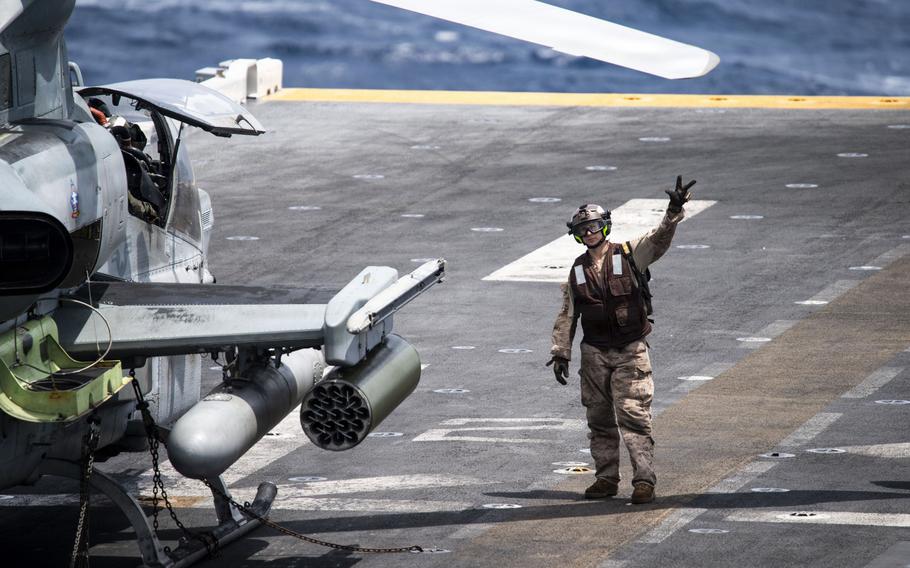
US bases enter the equation
In the event of a generalized conflict, American warships would not be the sole targets occupying Iranian planners. Bases, airfields, resupply hubs, and support facilities across the broader region could find themselves at the epicenter of the conflict. The Iranian side has repeatedly warned that any territory used to launch an attack against the country may be considered part of the military threat. This implies that a US–Iranian conflict could very rapidly cease to remain bilateral. And herein lies perhaps the greatest danger.
Trump between threat and deterrence
Donald Trump appears to be attempting a balance between two opposing objectives. On one side, he wants to convince the world that the United States is prepared to employ overwhelming force. On the other, he knows that a real escalation could trigger economic, military, and political consequences far larger than American society is willing to accept. This contradiction is reflected throughout his public remarks. The dramatic references to American cities, scenarios of nuclear strikes, obsession with the "small price," and constant need to justify economic costs project the image of a president who is not merely trying to intimidate his adversary. He is trying to convince his own audience that taking the risk is worthwhile.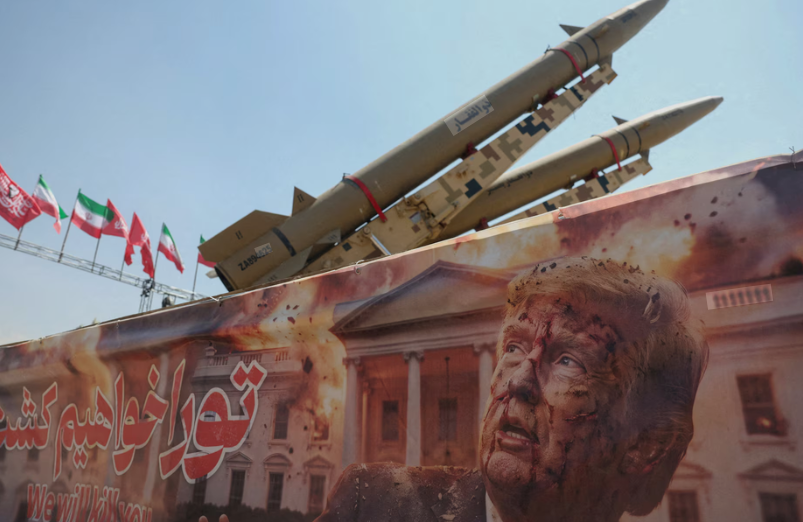
The problem of incoherent rhetoric
The situation becomes even more hazardous due to the manner in which Trump formulates many of his positions. Abrupt transitions from gas prices to nuclear war, from elections to Iran, and from threats to economic impact frequently generate confusion even among his supporters. The episode involving Los Angeles and San Diego was illustrative. The fact that even politicians from his own party interpreted the statement as an acceptance of the destruction of two major American cities demonstrates how severe the issue becomes when ambiguity surrounds nuclear weapons and military conflict. In crises of this magnitude, clarity is not merely a communicative virtue. It is an element of national security.
The image of panic
Trump's "panic" should not be sought in the tone of his voice or in any single isolated statement. It resides in the overall contradiction of the American posture. The United States is concentrating massive military force around Iran, while simultaneously attempting to explain to its domestic audience why economic burdens must be accepted. They threaten military action, while simultaneously highlighting how catastrophic the acquisition of nuclear weapons by the opposing side would be. They seek to demonstrate control over escalation, even as the very deployment of forces multiplies potential points for miscalculation.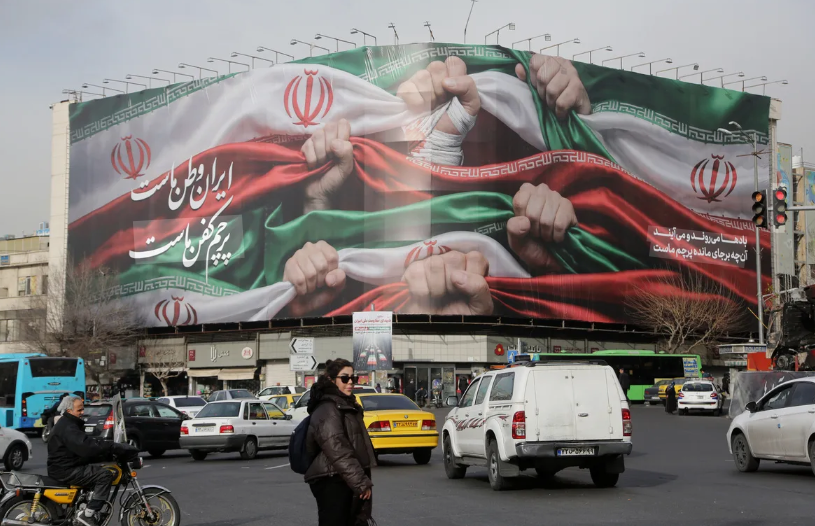
Tehran bets on endurance
Iranian strategy, at least as presented by Tehran itself, relies precisely on this contradiction. Iran does not need to prove it is stronger than the United States. It needs to prove that it cannot be defeated quickly, cheaply, and without grave consequences. If it succeeds in rendering every potential US military operation a politically and economically prohibitive option, then American military superiority loses part of its value as a coercive tool. This is the foundation upon which Tehran constructs its narrative of "American defeat." Not necessarily in the sense of a conventional military crushing, but in Washington's failure to impose its will without disproportionate cost.
A war with no easy victory
The greatest threat to the United States is perhaps not a sudden Iranian military victory. It is the prospect of becoming trapped in a conflict where no victory will be clean, fast, or cheap enough to justify its price. And this is precisely the shadow that seems to hover over Trump's rhetoric. The more he talks about costs, gas prices, nuclear weapons, and the necessity to "keep the country safe," the clearer it becomes that confrontation with Iran is not a simple demonstration of military dominance. It is a test of political endurance. And if Tehran succeeds in convincing the world that it can endure longer, the true defeat for the United States will not need to be recorded by the fall of a base or the loss of an aircraft carrier. It will be the moment when American leadership realizes it holds immense power, but fewer and fewer options to use it without triggering a crisis far greater than the one it originally sought to control.
www.bankingnews.gr





Readers’ Comments