

Following the cessation of hostilities, American dominance in the region will likely weaken, Iran will attempt to reassert its role, the Arab monarchies will re-examine their security calculations, and China will gain a new opportunity to expand its influence. This is argued by Mohsen Milani, Professor of Political Science at the University of South Florida, in an analysis for the Chatham House think tank. As he points out, regional orders rarely collapse overnight; they usually erode gradually. The war chosen by the US and Israel against Iran may ultimately go down in history not only for its outcome, but primarily because it challenged the foundations of the so-called "American peace" in the Persian Gulf—an order established after the end of the Cold War and built on American supremacy. Despite their military successes, Washington and Tel Aviv have so far failed to achieve their primary strategic objectives: regime change in Iran and the destruction of its missile and nuclear capabilities. Instead of surrendering—as demanded by American President Donald Trump—Iran resisted, expanded the war regionally, turned the Strait of Hormuz, the world's most critical energy hub, into a strategic weapon, and proved that geography can, to some extent, offset military weakness.
Six months of war reshape the Gulf map
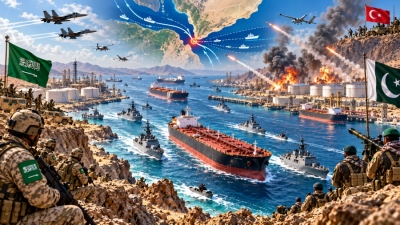
Six months after the outbreak of the war, the conflict appears to be accelerating the emergence of a more competitive order in the Persian Gulf. In this new reality, American hegemony is more deeply contested, China stands ready to broaden its influence, Iran reasserts its position as a central regional power, while Arab monarchies reinforce a strategy of "hedging." At the same time, Pakistan, Turkey, and Israel are expected to attempt to expand their own spheres of influence.
Hormuz: The strategic choke point of the Persian Gulf
The Strait of Hormuz has served as the strategic axis of the Persian Gulf for five centuries. In 1507, Portugal seized Hormuz and turned it into the center of the "Cartaz" system, a mechanism forcing ships to purchase passage permits. The expulsion of the Portuguese from Iran in 1622, with British assistance, paved the way for British dominance in the Persian Gulf. "Pax Americana" reached its zenith following the liberation of Kuwait in 1991 and the collapse of the Soviet Union. This order rested on three pillars: American military supremacy, Washington's partnership with the six Arab monarchies, and oil trade anchored to the dollar. The current war may mark the beginning of the end for this balance of power.
From 1979 to the present conflict
Following the seizure of the US Embassy in Tehran in 1979, the US and Iran entered a new Cold War. Tehran sought to weaken the regional order under American leadership, while Washington worked to contain Iran. However, both sides consistently avoided direct military confrontation. From Jimmy Carter to Joe Biden, every US president concluded that the cost of a war with Iran would far outweigh any potential benefits. This year, however, while Washington and Tehran were still negotiating over Iran's nuclear program, Donald Trump launched a surprise attack on February 28. Encouraged by Israel and believing that sustained bombardment could lead to a swift victory—and potentially low-cost regime change—Trump opted for war. Yet, the US and Israel underestimated the resilience of the Iranian state, the cohesion of its elites and institutions, and the wave of nationalism sparked by a foreign attack.
How Iran flipped the narrative of the war
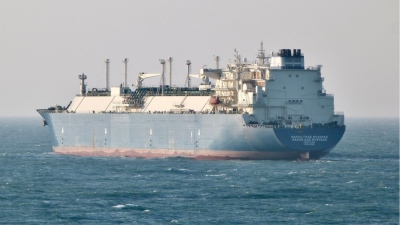
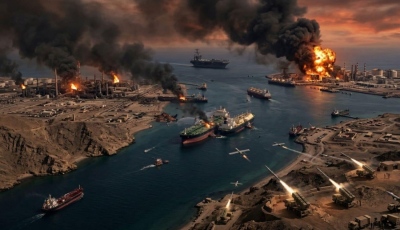
The initial strike, combined with US and Israeli air superiority, convinced Washington that victory was near. Donald Trump demanded Iran's surrender and threatened to send it "back to the Stone Age." Tehran, however, treated the war as an existential conflict. It closed the Strait of Hormuz and launched strikes against American military bases and energy infrastructure across Gulf states. Washington assumed Iran could not keep the Strait closed for long, as doing so would devastate the Iranian economy itself. However, according to the analysis, Washington failed to consider a critical variable: existential conflicts compel states to take actions they would avoid under normal conditions. Tehran's posture has been compared to the 1962 Cuban Missile Crisis. Just as Washington could not accept Soviet nuclear missiles near Florida, Iran could not accept the Strait of Hormuz becoming a transit corridor for American weaponry. From Tehran's perspective, halting this traffic was an act of self-defense. By closing the Strait and striking energy facilities in Gulf countries, Iran shifted the battleground directly onto the global economy. It deployed missiles, drones, naval mines, "mosquito" speedboats, and targeted ship strikes to disrupt global energy markets. Winston Churchill's failed attempt to cross the Dardanelles during World War I proved that overwhelming naval superiority cannot guarantee control over a heavily defended, narrow waterway. Hormuz may prove to be a modern equivalent.
Economic warfare hits the global market
Decades of sanctions had taught Tehran that, unlike the wars in Iraq and Afghanistan, a conflict with Iran must inflict heavy financial damage on the US and the global economy. Surging crude prices proved that Hormuz represents a far more potent strategic lever for Iran than even its missile arsenal. Combined with maritime pressure exerted at Bab el-Mandeb and the Red Sea by Ansar Allah forces, a key Iranian ally, Tehran effectively gained the ability to exert pressure on two of the world's most vital maritime choke points. In fact, the recent capture of the strategic port of Mocha by Ansar Allah, followed by their advance toward Dhabab and the seizure of Mayyun Island—also known as Perim—in the Bab el-Mandeb Strait, significantly fortified their posture along this critical shipping corridor. Simultaneously, drone strikes originating from Iraq forced Saudi Arabia to temporarily shut down its East-West pipeline, a critical alternative transit route designed to bypass the Strait of Hormuz. These developments demonstrate that coordination between Iran and Ansar Allah to leverage strategic geography, disrupt alternative energy routes, and drive up global oil prices is broadening.
Collapse of the ceasefire and the Islamabad Pact
After 40 days of war, Donald Trump announced on April 8 that victory had been achieved and declared a two-week ceasefire. The ceasefire broke down rapidly. Washington imposed a naval blockade on Iranian ports, while Iran intensified missile strikes against US bases. Hostilities continued until Pakistan brokered the 14-point "Islamabad Pact" on June 14. The accord, signed remotely by US President Donald Trump and Iranian President Masoud Pezeshkian on June 17, outlined a 60-day negotiation window to end the conflict. Tehran viewed the pact as a victory, as it allowed the resumption of oil exports and partial sanctions relief. Conversely, observers in Washington regarded it as an American strategic failure. The agreement reportedly collapsed over disputes regarding Hormuz and Lebanon. However, analysis suggests Washington concluded the deal conceded too much to Tehran and effectively nullified it. Israel, claiming it was not bound by the agreement, persisted with strikes against Hezbollah, despite the pact calling for a cessation of military operations "on all fronts, including Lebanon."
A new order takes shape in the Persian Gulf
Israel—determined to resume the war—and hawkish factions in Washington argued that the agreement had saved Iran. Under pressure, Donald Trump abandoned the deal. Simultaneously, Washington attempted to restore freedom of navigation in the Strait of Hormuz to pre-war standards. When Oman, backed by Washington, began routing ships through its territorial waters without consulting Tehran, Iran resumed attacks on commercial vessels. As the war dragged on, Iran adopted an increasingly proactive stance, culminating in surprise, lethal missile strikes against US forces in Kuwait and Jordan. Currently, neither side appears ready to end the war. However, both will likely return to the negotiating table, as no military solution exists for either Iran's nuclear program or the control of the Strait of Hormuz. The long-term significance of the war extends far beyond battlefield outcomes. It centers primarily on the realignment of regional relations. The pre-war order in the Persian Gulf is unlikely to ever return in its previous form.
Washington redesigns its security architecture
Washington will likely redesign its security framework in the Persian Gulf. The posture reliant on forward troop deployments, massive military bases, and conventional military dominance proved far more vulnerable than anticipated. Over 12 US bases sustained significant damage. Iran demonstrated that relatively low-cost asymmetric capabilities can penetrate advanced air defense systems and inflict damage disproportionate to their cost. Consequently, Washington will likely transition toward smaller footprints, less conspicuous facilities, force dispersion, precision-strike capabilities, missile defense, and artificial intelligence integration, while maintaining its conventional military edge. Britain and France are also expected to step up military cooperation and arms sales to Gulf monarchies, supplementing the primary American security role.
Arab states will no longer place absolute trust in the US
Arab monarchies are also re-evaluating their security architecture, though what might replace the current structure remains uncertain. The 2019 Iranian strike on Saudi Arabia's Abqaiq and Khurais oil processing facilities—which temporarily knocked out half the country's oil production—had already exposed the limits of the US security umbrella. The current war reinforced that lesson: The American security umbrella, while still vital, cannot fully protect Gulf states. This does not mean Arab monarchies will strategically sever ties with Washington. They will remain anchored to the US security apparatus, but through diversified strategic and economic partnerships, they will seek greater flexibility and alternative options. Economic dependencies, however, restrict the scope of this hedging. Sovereign wealth funds in these nations manage over $5 trillion in assets, heavily weighted in dollar-denominated assets and Western markets. Furthermore, ruling families hold vast private fortunes in the West. The freezing of Russian state assets following the invasion of Ukraine demonstrated that while these investments generate wealth, they also create significant geopolitical vulnerabilities.
The Persian Gulf moves toward "multi-alignment"
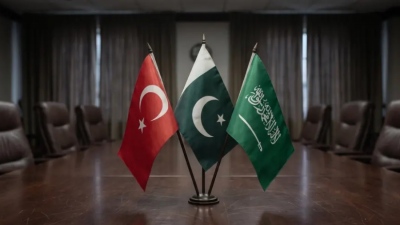
The emerging regional order in the Persian Gulf will likely be defined by multi-alignment—the pursuit of multiple, concurrent alliances. Arab states will gain greater diplomatic maneuvering room, while Washington will find it increasingly difficult to unilaterally shape regional outcomes. Differing priorities among Arab nations render a unified stance toward either the US or Iran unlikely. For Saudi Arabia, whose Vision 2030 development initiative depends entirely on regional stability, managed coexistence with Iran has become a strategic necessity. The inability of the US to secure a decisive victory, combined with Iranian strikes inside Saudi Arabia, deepened doubts regarding the reliability of the American security shield. These doubts intensified when Donald Trump conditioned a US-Saudi civil nuclear agreement on Riyadh joining the Abraham Accords. Saudi Arabia also signed the Makkah Joint Defense Agreement with Pakistan and Turkey, a move reflecting its search for supplementary security partners. Pakistan's nuclear status makes it a cornerstone of this pact. However, it remains unclear whether the agreement—whose specific terms remain undisclosed—can yield an effective regional security system.
The United Arab Emirates' distinct strategy
The United Arab Emirates is pursuing a different path: It is deepening security cooperation with the US, Israel, and potentially India. Abu Dhabi, having already departed from OPEC, may see its strategic divergence from Saudi Arabia widen. At the same time, the UAE's vulnerability to Iranian retaliation reinforces Abu Dhabi's preference for maintaining managed, cautious diplomatic ties with Tehran. The ultimate outcome of the war will play a decisive role in shaping this dynamic. Bahrain and Kuwait, more exposed than other Gulf monarchies to future conflicts with Iran, will likely stay closely aligned with Washington and Riyadh. Conversely, Qatar and Oman are expected to enhance dialogue and cooperation with Tehran. Neither Pakistan, Israel, nor Turkey is expected to emerge as a dominant external power in the Persian Gulf. However, one power appears uniquely positioned to capitalize on the new status quo: China.
China sees a "golden opportunity"
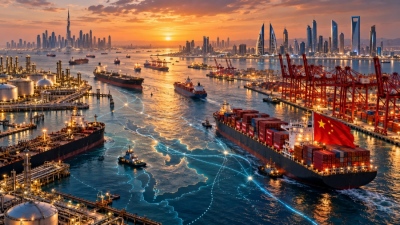
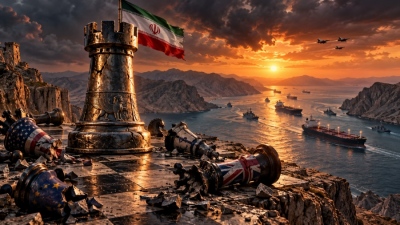
China is the largest importer of Iranian oil, the primary trading partner of the Arab monarchies, and the state holding the closest security relationship with Tehran among external powers. Consequently, Beijing holds a unique vantage point to expand its footprint through trade and technology, without incurring the immense cost of maintaining the regional security architecture. Over time, protecting these commercial interests may draw China into a larger security role in the region. Just as the expulsion of the Portuguese from Hormuz by Iran in 1622 cleared the path for British dominance in the Persian Gulf, Iran's current challenge to "Pax Americana" may accelerate China's rise as a key external power in the region.
Will Iran emerge stronger from the war?
If the war concludes through negotiations, Iran will likely emerge with heightened regional influence. Tehran will attempt to reconstitute its "Axis of Resistance" while simultaneously recalibrating its relations with Gulf states. Iran will likely bolster Ansar Allah to gain greater strategic depth in the Arabian Peninsula, exert leverage over Saudi Arabia, and extend its maritime influence toward Bab el-Mandeb. Concurrently, Tehran is expected to push for a regional security framework, improving ties with Saudi Arabia, Oman, and Qatar while closely monitoring the posture of remaining Gulf monarchies. Iran will also seek to institutionalize the strategic advantage it gained during the war in the Strait of Hormuz. Its goal would be to secure, jointly with Oman, a central role in managing the Strait and determining transit terms. Having elevated Hormuz into a symbol of resistance, Iran is unlikely to accept a simple return to the pre-war status quo. The greatest challenge for Tehran will be avoiding overreach during negotiations over Hormuz and refraining from demanding more than other Gulf nations and the international community can accept. Striking this balance is critical. Several Gulf monarchies are already investing in Red Sea pipelines and alternative export corridors to reduce their reliance on the Strait of Hormuz.
The broader geopolitical takeaway
Arab monarchies are fundamentally reconsidering their defense models. They must accept that the security required for their economic growth cannot be achieved by isolating Iran or participating in its economic strangulation. Conversely, Iran must recognize that its own security hinges on peaceful coexistence with its Arab neighbors—a coexistence underpinned by economic cooperation. The future of the region will largely depend on whether Washington and Tehran can reach a strategic understanding regarding the emerging order in the Persian Gulf. Only when Washington and Tehran achieve peace in the Persian Gulf can this vital, deeply tested region find its own lasting equilibrium.
www.bankingnews.gr


Readers’ Comments