

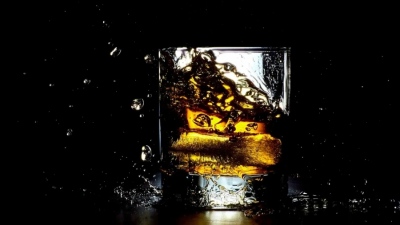
A whiskey that will not age in some dark cellar in Scotland, but hundreds of kilometers above Earth.
Engineers from Scotland and Japan are preparing a pioneering space experiment, aiming to discover whether the extreme conditions of outer space can alter (or even accelerate) the aging process of whiskey.
The plan envisions sending whiskey samples into orbit in 2028, where they will remain for approximately five years.
The mission has already earned the fitting name: Space Puffin.
Five years around Earth and one orbit every 90 minutes
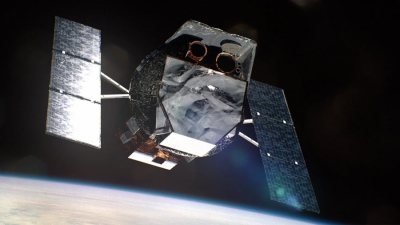
The samples will travel inside a small CubeSat satellite, which will circle Earth roughly once every 90 minutes.
Along with the already distilled whiskey, key ingredients used in its production will also travel, so that researchers can examine different stages of the process.
The goal is not merely to send a bottle of whisky to space for showmanship.
Scientists want to determine what occurs to the beverage's chemistry when it is exposed for years to an environment entirely distinct from that of Earth.
From -150 to 200 degrees in a few minutes
One of the most critical elements of the experiment is the extreme temperature fluctuations prevailing in orbit.
Depending on whether the satellite is exposed directly to the Sun or passes into Earth's shadow, temperatures can shift dramatically.
Researchers are examining conditions that may range roughly from -150 to 200 degrees Celsius in the external environment.
And precisely there lies the secret of the experiment.
Scientists believe that constant thermal swings may affect the wood in contact with the whiskey.
The wood will expand and contract repeatedly, essentially generating a far more intense «breathing» cycle compared to a traditional cask on Earth.
Can five years in space equal decades in a cask?
This is one of the program's most intriguing questions.
The aging of whiskey constitutes a slow process.
The spirit interacts with the cask wood, gradually absorbing chemical compounds that determine its color, aroma, and a large portion of its flavor.
The intense temperature fluctuations of space could theoretically accelerate these interactions.
If confirmed, the experiment could provide valuable data on how the maturation process might be sped up or better controlled even on Earth.
The man behind the space whisky
Leading the endeavor is Dr. Gilles Bailet from the University of Glasgow.
He and his team want to examine how the space environment can alter the physical and chemical processes that shape a whiskey's ultimate character.
Their ambition reaches even further.
If the experiment succeeds, entirely different flavor profiles could be created in the future, which would be exceptionally difficult to produce using traditional aging methods.
In simple terms, space could function like a vast, extreme «cellar».
There will be no cask inside the satellite
Naturally, no one is going to cram a wooden whiskey barrel inside a tiny satellite.
Scientists have devised a different solution.
Small whiskey samples will be placed in specialized containers and will come into contact with wood fragments.
In this manner, they will attempt to replicate on a small scale what happens when whisky remains for years inside a cask.
During the mission, specialized sensors will monitor changes in color and chemical composition of the samples.
Data will be transmitted continuously back to Earth, allowing scientists to monitor the experiment's progress without having to wait five years for the first indications.
The journey will begin with SpaceX
The plan stipulates that the CubeSat will initially be carried to the International Space Station (ISS) on a SpaceX resupply mission.
From there, it will be released into an independent orbit via the Japanese module of the station.
Thus will begin its five-year journey around Earth.
The program combines expertise from Scotland, with its long tradition in whiskey production, and Japan, which likewise boasts a highly developed industry and expertise both in whiskey and in space technologies.
Whiskey has traveled to space before, but not like this
It is not the first time whiskey leaves Earth.
In the past, experiments involving whiskey have been conducted aboard the International Space Station (ISS), aimed among other things at studying how microgravity might influence certain processes.
There is, however, a critical difference.
Previous samples remained inside the relatively protected and temperature-controlled environment of the station.
Space Puffin aspires to go much further.
The satellite will be in an independent orbit, and the experiment will attempt to leverage the far more extreme conditions existing outside the protected environment of the ISS.
And what will it ultimately taste like?
This is the question that will likely most interest whiskey enthusiasts.
Nobody knows.
And that is precisely the point of the experiment.
Scientists cannot predict with accuracy whether the space environment will yield a more complex, more intense, or simply... very peculiar whiskey.
The process might accelerate aging.
It might create new aroma combinations.
Or it might ultimately turn out that the traditional dark cellar of Scotland remains unmatched.
The answer will take time.
Space Puffin is scheduled for launch in 2028 and, provided everything unfolds according to plan, the samples will spend approximately five years completing countless orbits around Earth.
And when they return, scientists will finally be able to answer a question that until a few years ago would have sounded like science fiction:
Could the best whiskey maturation cellar ultimately be located in space?
www.bankingnews.gr









Readers’ Comments