

The global oil market is in an exceptionally fragile state, with available reserves having plummeted to dangerously low levels, warns Saudi Aramco, as the crisis in the Middle East continues to provoke severe disruptions across the energy market.
The warning arrives just a few days following the decision by G7 nations to release up to 100 million barrels of crude oil and diesel from their strategic stockpiles, in an effort to stem the surge in fuel prices.
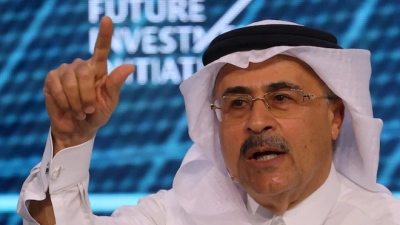
Speaking on Monday at the Energy Intelligence Forum in London, the CEO of Aramco, Amin Nasser, warned that releasing oil from strategic reserves can offer only temporary breathing space and under no circumstances can tackle the deeper, long-term problems of global supply.
«Frighteningly thin» global energy cushion
«Until Hormuz is fully reopened and market confidence is restored, the hard reality is that pressure on both sides of the barrel will intensify», stated Amin Nasser.
As he pointedly emphasized, the global «oil supply resilience cushion» is now «frighteningly thin».
The statement by the head of Aramco captures in the most graphic manner the state into which the global energy market has fallen.
The crisis in the Middle East has drastically shrunk available reserves, while uncertainty surrounding the operation of the Strait of Hormuz continues to serve as a catalyst driving up crude oil and natural gas prices.
Hormuz remains closed and the market groans
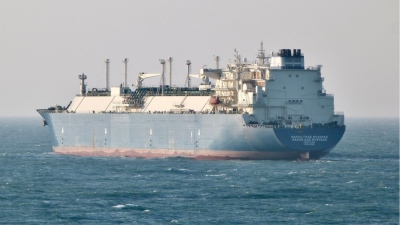
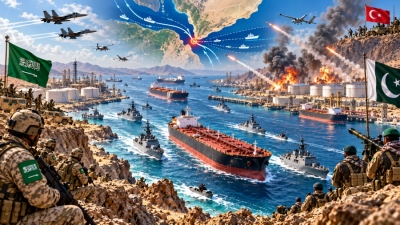
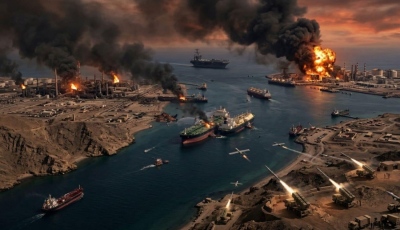
The Strait of Hormuz, one of the most critical energy channels in the world, remains closed indefinitely, causing global supply of crude oil and natural gas to confront mounting pressures.
According to Amin Nasser, approximately 30% of global oil reserves has been «lost» since the outbreak of the war between the US and Israel against Iran in February.
«The world entered this crisis with nearly 10 billion barrels of global oil reserves. Since then, nearly 3 billion barrels of gross oil supply have been lost», reported the CEO of Aramco.
The even more alarming fact is that even if the Strait of Hormuz reopens fully, replenishing reserves will not occur immediately.
As Amin Nasser estimated, it will take up to two years to fully rebuild oil reserves.
In other words, even if the geopolitical crisis de-escalates immediately, the energy market will require substantially more time to return to a state of relative security.
The G7 injects 100 million barrels into the market
The statements by the head of Aramco come barely days after the announcement by the G7 that it plans to release up to 100 million barrels of oil from strategic reserves over the next four months.
The objective is to temporarily increase market supply and constrain upward pressures on fuel prices.
However, according to Amin Nasser, such an action cannot resolve the underlying issue.
The drawdown of strategic reserves serves as a temporary «patch», yet creates no new production capacity nor does it restore lost volumes of crude oil.
And for as long as Hormuz remains shut, pressure on the market will persist.
Donald Trump pressures Europe to tap its reserves
At the same time, President of the US Donald Trump had threatened even a total ban on American diesel exports.
Such a move would apply even greater pressure on European countries, which would be forced to turn to their own strategic reserves to manage shortages.
Europe, which relies heavily on imports of energy products, thus finds itself confronting a particularly difficult energy landscape.
The warning from Aramco essentially demonstrates that the problem does not concern merely today's oil prices.
The real issue is that the global energy system has forfeited a large portion of its safety margin.
And when a system operates without an adequate «cushion», any fresh geopolitical, military, or supply chain shock can trigger an outsized response in prices.
The oil market, according to Aramco, now possesses minimal room for new shocks.
www.bankingnews.gr


Readers’ Comments