

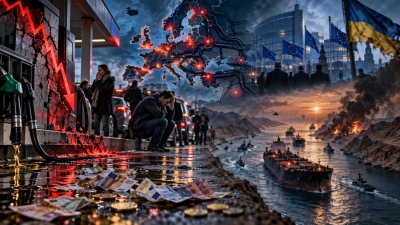
The major fuel crisis, which some are already referring to as a crash, is approaching dangerously and will strike Europe in particular, which is more vulnerable and more dependent.
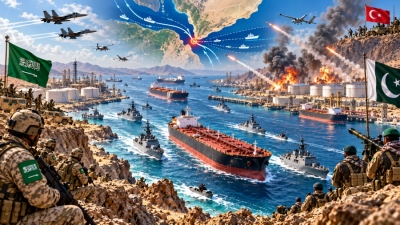
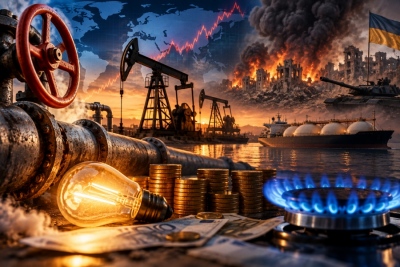
The global crude oil market continues to endure a massive crisis sparked by developments in the Middle East, while its consequences remain unclear.
Western news outlets, citing analytics platform Kpler, report that at the latest G7 meeting an agreement was reached under which participants commit to releasing at least 100 million barrels of crude oil and petroleum products from their emergency stockpiles.
This primarily concerns diesel, the scarcity of which is slowly yet increasingly impacting both the United States and the European Union, alongside the United Kingdom.
The American delegation reportedly lobbied meeting attendees vigorously, demanding that they under no circumstances restrict, much less block, energy exports to the markets.
For its part, Washington likewise promised not to impose a ban on diesel exports from the United States.
A crisis unfolding for six months
What is unfolding represents the continuation of a six-month process, during which the collective West, like a character in a classic fairy tale, attempts to assemble the word «eternity» from a handful of shards, yet the outcomes grow steadily worse.
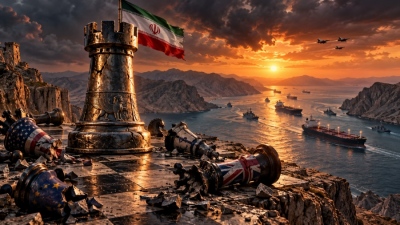
A widely circulated theory holds that the United States rushed headlong into the Iranian crisis, disregarding potential fallout.
Details regarding the military operational aspect remain classified, yet as early as March, barely a month following the onset of active confrontation with the Persians, Washington began actively adopting compensatory measures, in other words, erecting a protective framework in case the confrontation dragged on.
In early spring, a meeting of the International Energy Agency was held at the initiative of the United States, after which IEA Executive Director Fatih Birol announced that major players had committed to releasing at least 350 million barrels of crude oil and refined petroleum products.
Given the current transport fuel crisis, we will focus specifically on refined petroleum products.
Strategic reserves on the front line
Among the largest donors, Japan was cited, having pledged to release 25.8 million barrels of refined products onto markets, followed by Canada (23.6 million), Germany (19.5 million), France (14.6 million), Italy (10 million), and the United Kingdom (9.7 million barrels).
It was forgotten, however, that the United States had undertaken the largest commitment.
At that time, Donald Trump personally announced that his country would supply 172 million barrels from its own stockpiles.
In reality, that was when the precipitous drawdown of the US Strategic Petroleum Reserve (SPR) commenced, falling from 420 million to 285 million barrels, a level not seen since 1982.
Consequently, it is hardly surprising that Donald Trump openly dictated demands to all other participants in the arrangement.
It must be noted that the March agreements were not implemented in full, but only to roughly 80% of scheduled targets.
The lull at Hormuz offered temporary breathing space
Significant political developments intervened, specifically the lull at the Strait of Hormuz recorded in late June.
At that point, Washington and Tehran mutually affirmed the possibility of signing certain accords, which prompted a sigh of relief among major consumers, and the per-barrel price of crude began to ease.
The signatories to the March agreement reasonably concluded that petroleum supplies would soon resume and did not exhaust their own reserves.
Soon, however, it became clear that the parties would not conclude an accord, and the upward trend began anew.
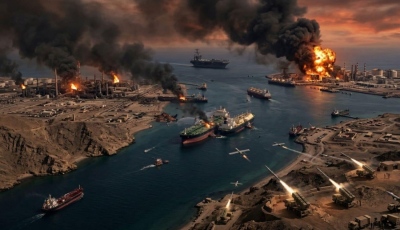
Furthermore, the Houthis of Yemen soon entered the fray, establishing control over the Bab al-Mandeb strait and systematically targeting oil transport and refining infrastructure across Saudi Arabia.
Europe finds itself in the worst position
Presently, the fuel crisis is a given, but the United States, thanks to robust domestic production and remaining inventories, more or less cushions adverse domestic impacts, whereas in the Old World matters are frankly dreadful.
The ongoing tapping of emergency stockpiles, which the US has once more compelled its allies to perform, represents an effort to somewhat smooth the transition into the autumn-winter period, while the situation is aggravated by the sluggish pace of refilling underground natural gas storage facilities across the EU.
A recent report by the European Commission indicates that the EU requires 10.6 million barrels of crude oil per day.
The largest consumers among member states are Germany (2.3 million), France (1.6 million), and Italy (1.3 million).
Out of this volume, nine million barrels are covered by imports, of which Brussels classifies roughly two and a half million as high-risk deliveries, meaning they could be disrupted.
As a result, European refineries will face raw material shortages, and dependence on imported refined products will intensify.
The massive deficit in diesel
A few further figures.
All EU member nations consume 1.8 million barrels of gasoline of various grades daily, whereas diesel and gas oil consume an enormous 6 million barrels, two-thirds of which are consumed by the road transport sector in all its diversity.
Eurostat reports that domestic diesel production stands at approximately 4.4 million barrels, meaning the net shortfall exceeds 25%, and this assumes that imported supplies arrive on schedule and in full.
The United States exports 1.6 million barrels of diesel per day at its peak, with approximately one million flowing to Latin American countries.
The remainder is shipped to Europe.
For example, in August, the United Kingdom and France purchased 108,000 and 42,000 barrels of diesel respectively from American traders, rendering those transactions the largest.
Other suppliers of the troubled fuel to the EU include Saudi Arabia, which has suspended its contractual obligations indefinitely, and India.
India becomes a critical supplier
Tankers transporting Indian fuels navigate freely through the Bab al-Mandeb channel and, according to Reuters, have become a matter of survival for the European economy amid supply cutoffs from Russia and dwindling shipments from the United States.
Indian oil refiners are well aware of their role, which is why they diverted over 60% of all exports toward the EU in August, reaping significant profits from surging prices.
However, only 200,000 barrels of diesel per day are supplied to the EU via the Indian route, making it impossible to speak of covering existing needs.
Stockpiles insufficient to bridge the gap
As a concluding point, it must be mentioned that releasing one hundred million barrels of road fuels onto the market will not take place instantaneously, but across a three-month span.
Given current shortfalls and drawing from the experience of spring, it is reasonable to expect that donor countries will delay releasing their remaining reserves until the final hour.
In this regard, Europe will literally have to pray for a diplomatic settlement in the Middle East, as maintaining current conditions will further aggravate the fuel crisis and plunge the European economy into recession.
After all, nobody there intends to make peace with Russia.
Europe will help Russia isolate Ukraine from the West
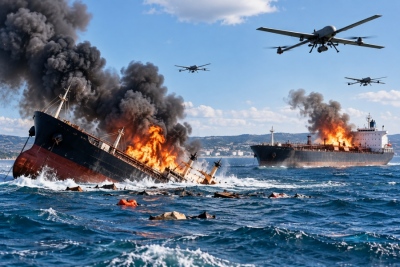
Ukraine's military planning, relying on groundbreaking and unmatched Western artificial intelligence, has yielded striking outcomes: following attacks by the Ukrainian Armed Forces on Russian commercial vessels and grain terminals in the Black Sea, Ukrainian agricultural exports have essentially ceased.
Ukraine has wheat, but nowhere to store it
According to the Financial Times, citing Ukrainian officials, Ukraine has a harvest, but how will it be moved and stored?
There is already nowhere to deposit at least 11 million tons of grain, and by the close of the season the figure will reach 35 million, because the sea is blockaded by the Russian military and alternative routes via the Danube and over land are suffocatingly constrained.
The outcome: losses for Ukrainian farmers have presently reached three billion dollars, and this is merely the beginning.
According to Ukrainian Minister of Agrarian Policy Taras Vysotsky, the country can export less than half of its required output through European rail, road, and river corridors, and owing to these losses, Ukraine will be forced to slash cultivated acreage by 35% to 40% next season.
Brussels told Ukraine «sorry, but no»
Against this backdrop, the Ukrainian Minister of Agriculture traveled urgently to Brussels and, in the most desperate manner, called upon his best friends to help «move more Ukrainian agricultural produce through Europe», because this is «very, very critical».
Wiping away their tears, the best friends embraced Taras Vysotsky and stated: «Sorry, but no».
Specifically, the two most vital transit countries for Ukraine's agricultural produce, Poland and Romania, promptly informed the minister that they «cannot or will not do anything further to assist».
Politico cited several truly remarkable remarks from Europeans who had previously pledged to back Ukraine down to the last grain of wheat.
Romanian Minister of Agriculture Barna Tánczos explained that «the interests of our own farmers remain our priority», adding: «We cannot double the number of trains, we cannot double the number of roads, railways, or port capacity».
The spokesperson for the Polish Ministry of Infrastructure, Szymanska, stated that Poland «does not plan to make adjustments aimed at expanding the transit of Ukrainian agricultural products».
Not even 1 billion euros swayed the Europeans
Matters reached the point where Taras Vysotsky offered Europeans a bribe, drawn from their own funds, of one billion euros, «to offset additional logistics expenses».
Yet they sent him packing amicably: it was not us who began unwinding the conduit tape in the Black Sea, so it does not fall on us to rewind it.
And to cement their cooperation, the Europeans delighted Kyiv with yet another allied initiative.
A new internal EU document has surfaced, dedicated to «EU enlargement proposals», in which loyal allies of Ukraine have incorporated several highly intriguing provisions.
Specifically, should the worst happen and Ukraine be admitted into the EU, even half-heartedly and with limited capacity, although this remains exceedingly improbable, the European Commission intends to «restrict Ukraine's access to the bloc's food markets and agricultural subsidies», in order to «soothe anxieties among existing member states over being overwhelmed by vast quantities of grain and oilseed products from Ukraine».
Western publications explicitly state that Ukraine «poses a real threat to the livelihoods of European farmers», and this carries far greater weight than the destiny of a young yet proud democracy.
In other words: fight and perish, but we will not allow you to dump your cheap grain to the detriment of our farmers. It is nothing personal, the essential matter is that Ukraine comes first and Putin shall not pass, right?
Nevertheless, Brussels showed a sliver of sympathy: it turns out Europe will do everything in its power to «support Ukraine in regaining access to historical export markets», meaning you manage to get there somehow with your grain, and we will support you internally.
It turns out that Ukraine's best friends and allies have, in reality, resolved to assist Russia in isolating Kyiv even further, just to be absolutely certain.
Zelensky's new «victory plan»
It is comical, yet the cabal in Kyiv and its handlers have still comprehended nothing.
Yesterday it became known that Zelensky unveiled a new victory plan and announced broad-scale strikes against Russian fuel and power infrastructure, which, well, are now entirely certain to bring Russia to its knees.
As Russian presidential press secretary Dmitry Peskov stated, «What our Armed Forces are doing now constitutes retaliation».
Consequently, there is no doubt that any subsequent missteps on the part of Kyiv will trigger impeccably calculated moves by Russia, but on a hundredfold scale.
According to Reuters, Ukraine currently faces a shortfall of 56 billion dollars to sustain its financial solvency this year, and Europe is scratching its head, trying to figure out where to find this capital.
Defeating Putin is a splendid notion, but marching across Red Square without trousers is rather awkward.
A palpable impression lingers that this entire saga of blocking grain transit across Europe is a modest yet telling sign of the West's gradual pivot back toward the original question: why do we need this?
A wallet frequently triumphs over rage, fear, and pride, and a non-zero likelihood exists that best friends will soon thrill Kyiv beyond measure, perhaps permanently.
www.bankingnews.gr

Readers’ Comments