

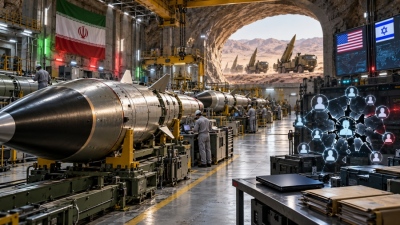
Amit Segal, a well-known journalist for Israeli Channel 12, describes the current week as "the most dangerous week of 2026," warning of a potential sharp escalation in the Middle East. As he argues, growing tension ahead of the Israeli elections and the US midterm elections could trigger severe market volatility, while any discussion on issues beyond security will quickly take a back seat. In such a scenario, according to Amit Segal, scandals surrounding Benjamin Netanyahu could be overshadowed, while in the US, voter attention would shift to gas prices and the failures of the Donald Trump administration ahead of November 3. The central question now is whether and when Iran will choose to act.
Iran faces a critical dilemma
According to Amit Segal, as American pressure and economic sanctions drive Iran into a deepening financial crisis, Tehran finds itself confronting a crucial dilemma. "Iran has to break the existing regime. The question is when?", he notes characteristic of the situation. The analysis suggests that any major military escalation prior to elections in Israel and the US could completely overturn the political agenda and turn national security into the dominant issue.
War before October 27 favors Netanyahu
Amit Segal estimates that a war erupting before October 27 could politically work in favor of Benjamin Netanyahu. Security would dominate Israel's pre-election agenda, narrowing the importance of other topics and potentially overshadowing new scandals involving the Israeli Prime Minister. Simultaneously, in the US, a wartime crisis could shift voter attention away from the economy, fuel prices, and the overall performance of the Trump administration. In other words, a conflict before October 27 would amount, according to the analysis, to a vote in favor of Netanyahu and against Trump.
The one-week "window"
However, Tehran also holds another option: waiting until both electoral contests are concluded. The problem is that such a choice could essentially be seen as a vote in favor of Donald Trump. As Amit Segal highlights, there is an extraordinarily narrow timeframe between the two electoral procedures. The dates of October 27 and November 3 are separated by just a single week. This means Tehran effectively possesses seven days during which it could – theoretically – initiate a military conflict without it decisively favoring either candidate. This represents a highly sensitive geopolitical window, as any military maneuver within this timeframe could alter political balances in both Israel and the US.
The election cycle increases the risk of war
Amit Segal warns that another critical risk factor exists. Unlike periods where markets and governments maintain relative calm, an election period can increase – rather than reduce – the likelihood of a military clash. Donald Trump, according to the analysis, currently appears keen on avoiding direct military escalation to afford Republicans a higher chance of retaining Senate control. Indeed, he has stated to reporters that the war will end "immediately after the midterm elections." This specific stance illustrates that the election factor has become vital within American strategy toward the ongoing crisis.
The major risk for Trump
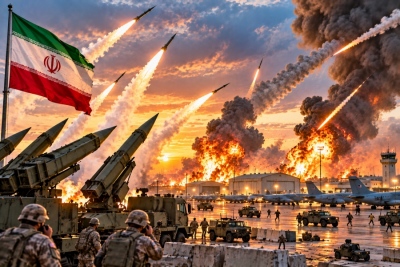
However, the paramount concern remains that Iran could completely upend this strategy. If Tehran decides to move militarily and destroy the electoral prospects currently acting as a constraint on Donald Trump, the US response might prove far harsher than a controlled escalation. Amit Segal notes that he finds it difficult to imagine an outcome worse than those Trump has already repeatedly threatened. Yet, if Iran eliminates the political and electoral incentives presently restraining the US President, Washington is likely to react in ways Tehran cannot control or foresee.
The most dangerous week of 2026
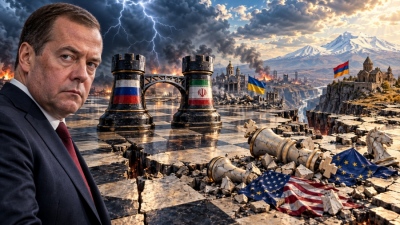
Amit Segal's analysis arrives at a deeply alarming conclusion: The timeframe between October 27 and November 3 could constitute the most dangerous geopolitical window of 2026. Iran is called upon to decide whether to wait until the elections conclude or attempt to change the status quo beforehand. Israel faces an electoral battle where security threatens to eclipse every other issue, while Donald Trump attempts to navigate the crisis without endangering Republican political ambitions. The result is an explosive triangle involving Iran, Israel, and the US, where a single military move within a span of days could trigger cascading political, economic, and geopolitical consequences. And the decisive question is no longer simply whether an escalation will occur, but when Tehran will choose to make its move.
www.bankingnews.gr





Readers’ Comments