

The word that stood out above all others in the latest warning delivered by Russian President Vladimir Putin from the podium of the Valdai Discussion Club was a single one: «immediately».
The Russian President made it clear that, should a direct assault occur against Russia, and specifically against Kaliningrad, the question of deploying the full spectrum of the nation's available weapons systems would inevitably be placed on the agenda.
The formulation left little room for misinterpretation.
Moscow wants NATO to know that it regards Kaliningrad as an integral part of Russian sovereign territory and that any bid for military isolation or aggression against it could trigger immediate escalation.
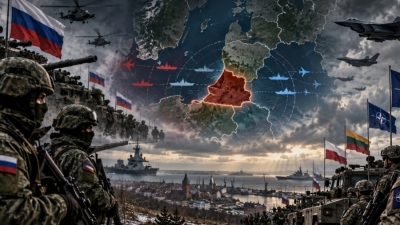
The message carries distinct weight because Kaliningrad sits in one of the most geostrategically sensitive quadrants of Europe.
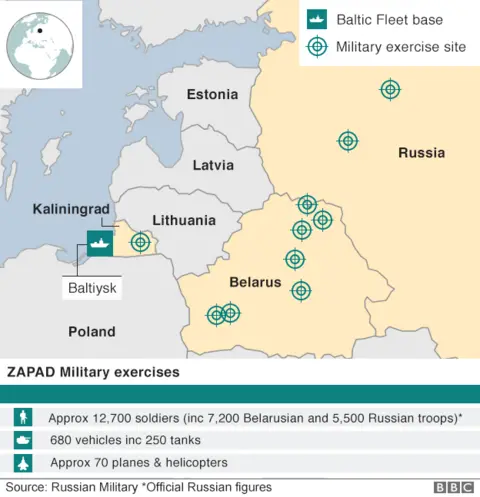
It is a Russian exclave on the Baltic Sea, wedged between Poland and Lithuania, two NATO member states.
The territory hosts critical Russian military installations, aviation systems, naval assets, and missile capabilities.
For Russia, it functions simultaneously as a strategic bridgehead and a potential point of vulnerability in the event of a generalized conflict.
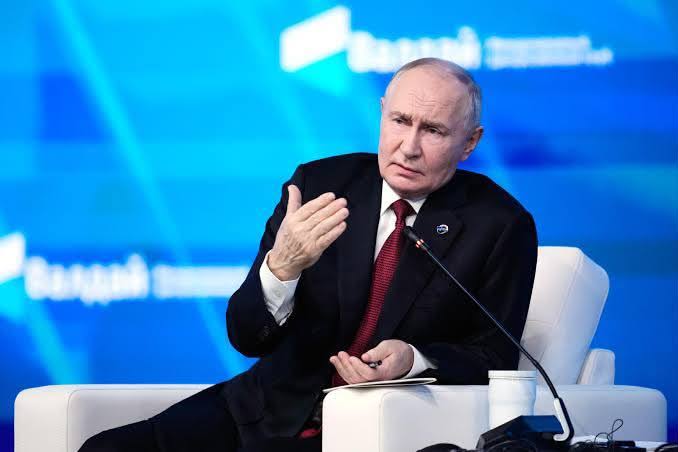
Official letter to NATO warning of «unprecedented escalation»
For this reason, the latest friction is not viewed in Moscow as a routine diplomatic disagreement.
Russia has dispatched a formal diplomatic letter to NATO, accusing the Alliance of «unprecedented escalation» around Kaliningrad and warning that any attempt to blockade or isolate the region could provoke a military response utilizing even nuclear assets.
Reuters confirmed that the Russian document referenced explicitly the capacity to employ the totality of the available arsenal, including nuclear arms.
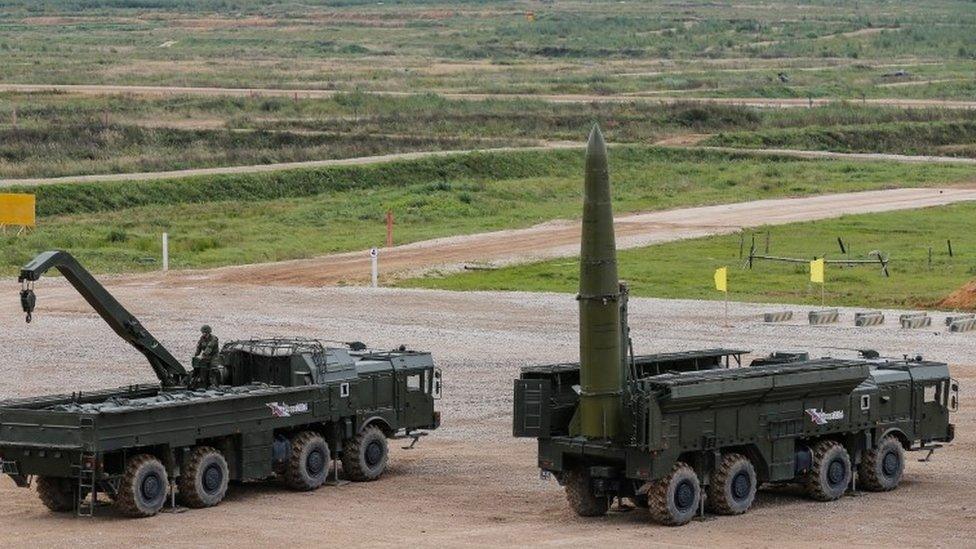
Robust deterrence
From the Russian vantage point, this posture is framed not as a first-strike threat, but as deterrence.
This is precisely what the Kremlin sought to emphasize.
Moscow maintains that it does not seek conflict with NATO, yet intends to ensure that no one views a scenario of military blockade against Kaliningrad as plausible or acceptable.
The Russian rationale is straightforward: if a nuclear power perceives part of its sovereign territory to be directly threatened, deterrence loses its meaning in the absence of an explicit warning regarding consequences.
NATO, on the other hand, rejects this characterization outright.
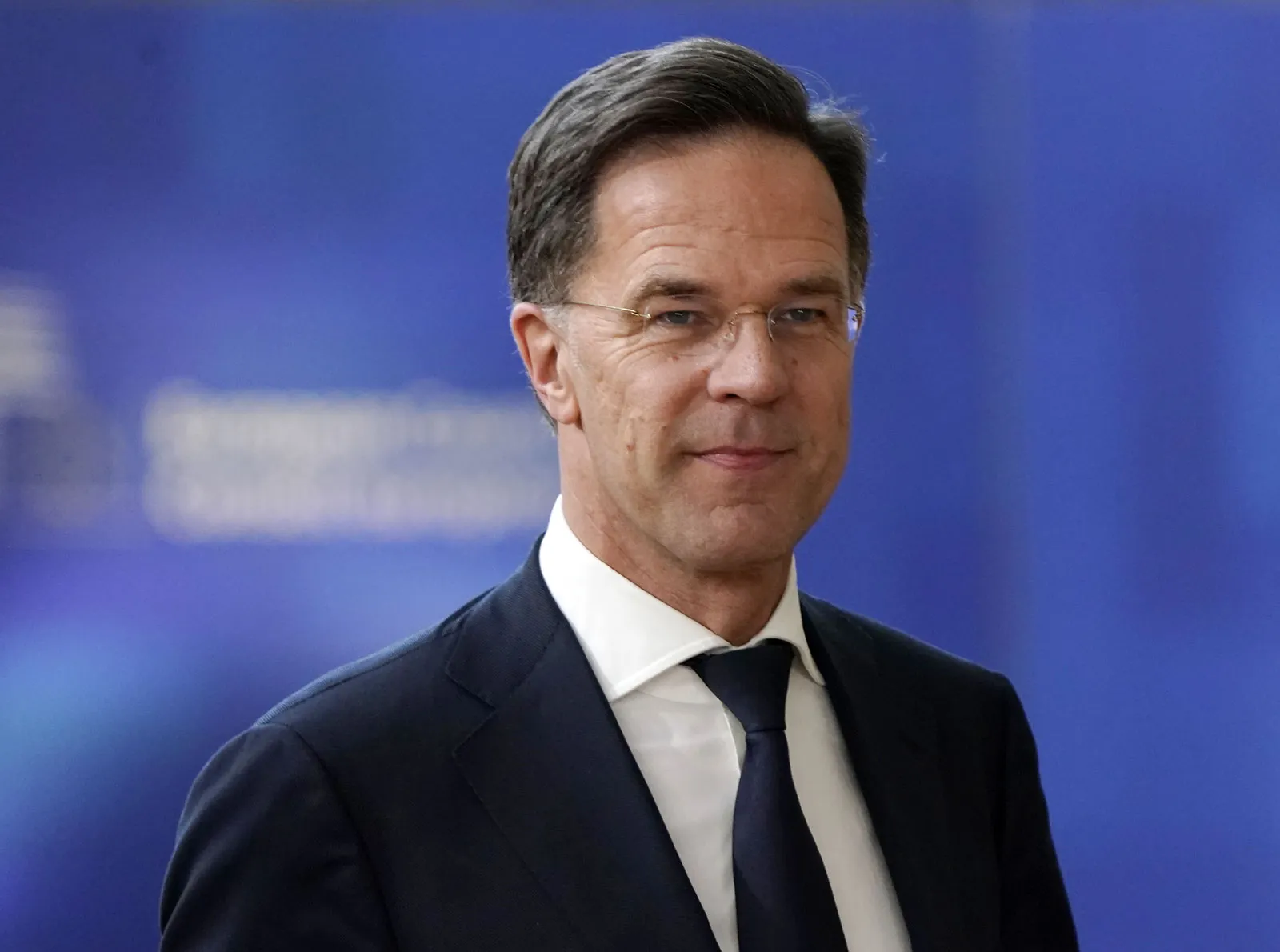
The Secretary General of the Alliance, Mark Rutte, stated that NATO is a defensive alliance, that it poses no threat to Kaliningrad, and called on Russia to cease what he termed nuclear saber-rattling.
He also asserted that no immediate threat exists against NATO territory and that the Alliance does not view the Russian warning as cause for panic.
The underlying dilemma, however, is that regardless of how each camp defines its own posture as «defensive», the overall security posture in the Baltic region grows steadily more precarious.
NATO buildup in Eastern Europe
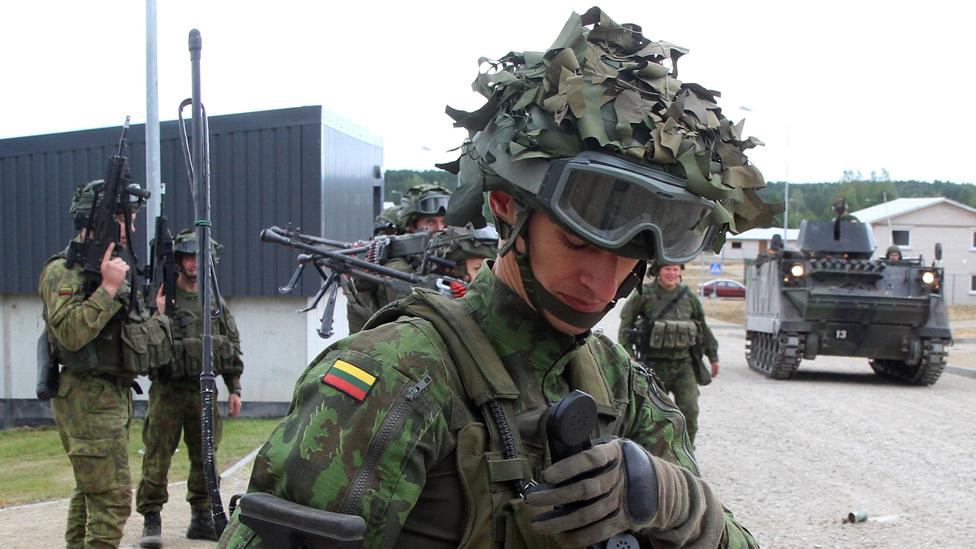
NATO has expanded its military posture across Eastern Europe in recent years.
Finland and Sweden joined the Alliance, large-scale exercises have multiplied, and the perimeter around Kaliningrad has become a focal point of war games, naval maneuvers, and air combat drills.
From the Western perspective, these represent indispensable protective measures against Russia.
From the Russian perspective, however, they constitute an incremental military encirclement.
Here lies the core of the standoff.
What one side designates as «deterrence», the other interprets as «preparation for attack».
Moscow also points to public discussions and military planning scenarios in the West where Kaliningrad appears as a potential target in a prospective conflict.
Russian embassies across Europe claimed to possess intelligence indicating that NATO is reviewing scenarios for an aerial and naval blockade of the enclave.
Concurrently, the standoff is fueled by an intensifying information war.
Western governments accuse Russia of hybrid operations, sabotage, cyberattacks, and destabilization efforts across the Baltic littoral and Germany.
Moscow denies these allegations, arguing they serve as political pretexts for an even larger military concentration along Russian borders.
Against this tense backdrop, the remarks of Vladimir Putin take on added weight.
The Russian president did not limit his commentary to Kaliningrad.
Western hegemony is waning
At the Valdai Discussion Club, he spoke of an international order undergoing fundamental realignment and a world in which, in his view, Western primacy is receding.
He warned that continued escalation elevates the risk of catastrophic scenarios, portraying Russian military might as an instrument of deterrence rather than a tool of aggressive expansion.
Yet this is the exact intersection where both narratives collide completely.
Russia maintains that it is safeguarding its security against a NATO that expanded eastward and positioned military infrastructure adjacent to Russian borders.
NATO, conversely, maintains that its enlargement was the outcome of sovereign choices made by European nations seeking security guarantees, and that the present reinforcement of the eastern flank is a direct response to the Russian special military operation in Ukraine.
Neither side currently appears willing to accommodate the security perception of the other.
This reality renders Kaliningrad exceptionally perilous.
The risk of miscalculation
A single miscalculation, an exercise interpreted incorrectly, an aerial or naval incident, or an attempt to disrupt Russian transit access to the enclave could spark a chain reaction that would be extraordinarily difficult to arrest.
Security analysts speaking to Reuters have pointed directly to this hazard of miscalculation.
And here, the word «immediately» reveals its full significance.
Moscow seeks to eliminate any impression that an attack on Kaliningrad would be followed by prolonged diplomatic maneuvering.
It aims, in other words, to make the retaliatory threat so stark as to preempt the action from the outset.
This reflects the textbook logic of nuclear deterrence: there is no requirement to deploy the weapon if the adversary is convinced it will genuinely be used.
Yet this doctrine carries a dark side.
The more uncompromising the language becomes, the narrower the political margin for de-escalation in the event of an acute crisis.
Deterrence can avert conflict, but it can also forge an environment where an unintended error becomes disproportionately catastrophic.
The core question, therefore, is not merely whether Russia or NATO utilize unyielding rhetoric.
Both sides invoke deterrence.
The pivotal issue is whether Europe is drifting into an operational reality where every military movement is interpreted as active preparation for war.
Kaliningrad stands today directly atop that fault line.
For Russia, it represents sovereign national territory to be safeguarded by all available means.
For NATO, it constitutes a heavily militarized Russian outpost embedded inside its eastern flank.
And as each side counters the deterrence of the other with further deterrence, the danger compounds that Europe may arrive at a point where a word like «immediately» ceases to be a rhetorical deterrent and becomes a literal description of the time remaining to avert disaster.
www.bankingnews.gr





Readers’ Comments