

The thriller in the Persian Gulf reaches a peak...
At the moment when the US is assembling 3 aircraft carriers in the broader region and dispatching another 2,000 Marines, equipping Saudi Arabia and Qatar with two more Patriot batteries, US President Donald Trump contends that the war will end soon and that Iran will surrender.
And even if these claims seem to recur at regular intervals over the past 7 months, scenarios are intensifying regarding another round of bombing strikes against Iranian targets following the midterm elections of November 3.
In essence, he is warning of a crushing blow...
Many analysts assess, however, that it cannot be excluded that these threats fall within the usual strategy of Donald Trump to exert further pressure on Tehran to back down and settle on a compromise on American terms.
After all, Donald Trump himself noted that the latest Iranian proposals contained certain «almost adequate points», although overall the blueprint was... inadequate.
Against these claims, Iran warns of dreadful retaliation should the US dare to mount a new attack.
Iranian officials emphasize that Iran is militarily in a far better condition than it was at the outset of the war, pointing out that in the event Americans launch an attack... it would represent true suicide for them and their allies.
Trump: The war ends soon, the Iranians will surrender
Donald Trump repeated his contention that the war with Iran will end soon.
«Iran is ready to surrender.
Now we can easily win», Donald Trump stated, speaking at a truck manufacturing facility in Texas.
«I believe we will win right after the elections, but perhaps even before the elections...», Donald Trump stated, underlining that the military power of Iran has been destroyed.
«They have some missiles, but we can deal with them.
They have some missiles, but very few of them remain.
The capacity of Iran to manufacture weapons has been eliminated and most of their commanders have been killed», Donald Trump argued.
They do not honor agreements, their proposal for Hormuz is inadequate
The US President also accused Tehran of violating any prospective deal.
«Yet when you make an agreement with them, there is a very high probability that they will not keep it», Donald Trump stated, arguing that «Iran must take a difficult and rational decision, otherwise it will not be able to endure over the long term».
Referring to the proposal of Iran for the reopening of the Strait of Hormuz, he characterized certain sections of it as «almost adequate», but overall inadequate.
Replying to a query regarding the rejection of the ceasefire proposal from Iran, he stated that he does not accept terms today that he was unwilling to accept even a year ago.
Concurrently, he rejected the proposed terms, noted that the intensification of airstrikes after the midterm elections is probable, and pointed to the ramping up of American military stockpiles.
As he stated, the United States has expanded its military reserves over the past six months, underscoring that it is currently producing and storing more ammunition so that it can allocate part of this materiel to allies in the future.
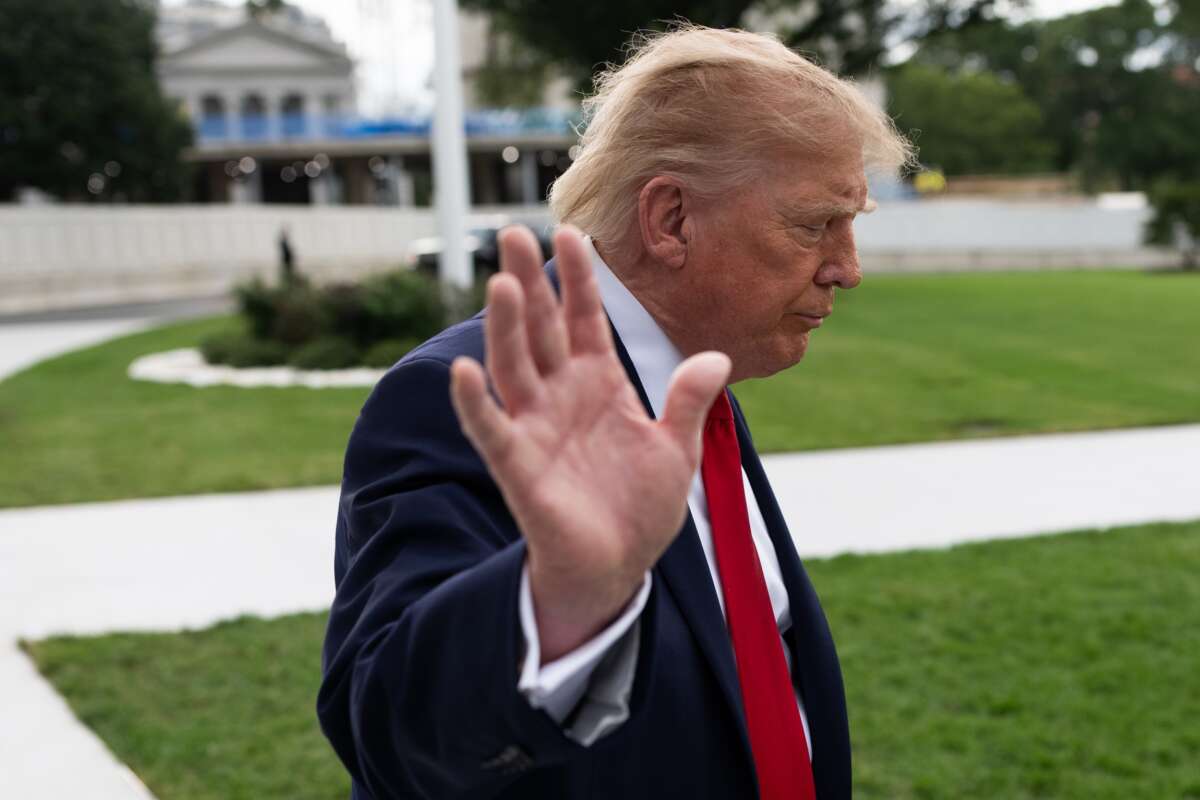
Force of 3 aircraft carriers ready by November
At the same time, reports indicate that the US is deploying heavy forces to the Persian Gulf region.
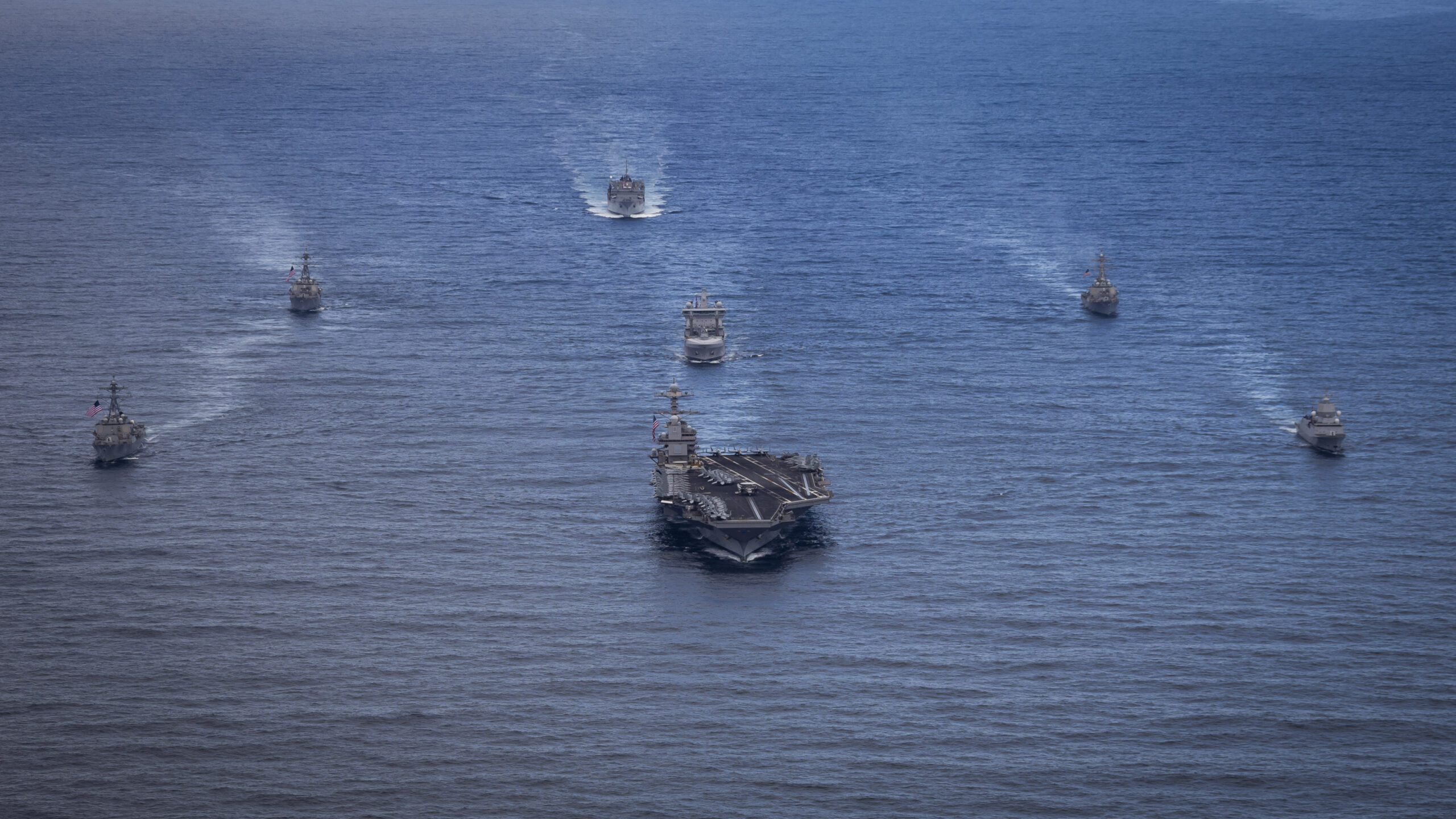
Specifically, it is reported that by November three aircraft carriers will be deployed in the Persian Gulf, while it became known that a supplementary force of 2,000 American Marines is being dispatched.
Indicative is an article by the Wall Street Journal, citing American officials who state that Donald Trump has briefed associates on a resumption of bombings following the midterm elections of November 3.
Analysts nonetheless categorize these warnings within the strategy of Donald Trump to push for an accord with Iran.
Trump complicates diplomatic efforts with Iran... with 2,000 Marines
As the US, Israeli war against Iran enters its eighth month, Mohamad Elmasry, a professor at the Doha Institute for Graduate Studies in Qatar, argued that the future course of the conflict remains uncertain.
«There are several critical flashpoints in this conflict, such as the Strait of Hormuz, the war in Lebanon, and a series of other issues», stated Mohamad Elmasry, noting that the recent decision of US President Donald Trump to deploy 2,000 Marines to the Middle East renders every diplomatic effort even more unpredictable.
«I think we have to wait and see how things will ultimately evolve», he remarked.
«My fear is that, immediately after the midterm elections, when Donald Trump will essentially have little left to lose politically, he will choose escalation and the Iranians this time will retaliate even more harshly», he added.
He pointed out that multiple energy targets exist across the Persian Gulf and that, with the assistance of allies like the Houthis in the Bab al-Mandeb Strait, a new escalation on the part of Iran may follow.
Esmail Qaani (IRGC Commander): We humiliated the US military
Esmail Qaani, commander of the Quds Force of the Islamic Revolutionary Guard Corps (IRGC), declared that the US, despite vast resources and equipment, was expelled from Iraq and suffered a humiliating defeat against the Islamic Republic of Iran.
Brigadier General Esmail Qaani made these statements on Thursday evening at the «Nasr Qarib» ceremony in Tehran, held to commemorate the second anniversary of the deaths of leaders of the Lebanese Resistance, including Sayyed Hassan Nasrallah and Sayyed Hashem Safieddine.
«This year's anniversary occurs at a time when the US, despite possessing immense resources and materiel, has been expelled from Iraq, and the Iraqi people celebrate this victory thanks to the steadfastness of the Iraqi nation and the heroes of the Axis of Resistance», he declared.
He added that, although conditions remain difficult, the Axis of Resistance advances by the grace and strength of God.
We will drive you out
«Today we witness the cohesion of fronts within the Axis of Resistance, with each of its constituent components catching the adversary by surprise through prudent planning and calculated actions».
Esmail Qaani stated that Americans believed they could force Iran to capitulate within four days or at most two weeks, «yet they encountered a reality entirely contrary to their calculations».
Esmail Qaani noted that the United States and the «Zionist regime» launched their offensive in a bid to compel the Islamic Republic to surrender.
«For 47 years, the Islamic Republic has confronted diverse plots and hostile actions by the criminal US.
When they realized proxies and alternate avenues yielded no outcome, the US and the Zionist regime launched a joint attack against Iran», Esmail Qaani stated, mentioning that their plan was to impose surrender within days.
«Nevertheless, by God's grace and under the leadership of the Supreme Leader, the Iranian people stood firm and powerful, and the schemes of the enemy collapsed one after another».
He added that even at the height of the war, the Islamic Republic did not forsake its allies or the peoples who, as he noted, face oppression by the US and the «Zionist regime».
«It has stood by their side to this day and will continue doing so into the future».
They will not leave Israel in peace
Furthermore, he argued that Hezbollah will not leave Israel in peace.
«Despite the death of the leader of the Resistance and its commanders, the newly risen generation of Hezbollah has fought in such a manner that over this period roughly 373 main battle tanks and armored personnel carriers were attacked by the fighters of the Hezbollah Resistance.
The fighters of the new generation and the militants of Hezbollah will not leave Israel in peace», Esmail Qaani emphasized.
US and Israel failed to achieve their objectives
Since the initiation of the military offensive by the United States and the Israeli regime against Iran, not only have the stated objectives of the operation remained unfulfilled, but, according to Western officials and American press outlets, the attackers have encountered a strategic deadlock alongside military and political setbacks.
The newspaper USA Today wrote that, seven months after the outbreak of the war with Iran, negotiators from both camps returned to the negotiating table on the sidelines of the UN General Assembly to seek a solution to halt the fighting, but no «headway» was accomplished.
According to the report, Donald Trump rejected on September 26 the proposal of Tehran for the comprehensive reopening of the Strait of Hormuz in return for lifting the naval blockade.
Instead, he proposed sanctions relief and the release of frozen assets in exchange for concessions on the nuclear issue.
Donald Trump himself denied the claim via social networks, writing: «I offered them nothing».
No roadmap
The report also points out that an Iranian official close to the negotiators attributed the suspension of talks to the reluctance of Washington to honor the framework of the June memorandum of understanding.
Under that 14-point document, the United States had committed to lifting the maritime blockade, refraining from deploying fresh military units to the region, mobilizing $300 billion toward the reconstruction of Iran, and unfreezing assets.
Another Iranian official also remarked that the main stumbling block is the lack of a lucid, consistent stance from Donald Trump regarding what he seeks from negotiations.
USA Today, citing Arash Azizi, a historian at Yale University, reports that the steep financial burden of keeping the Strait of Hormuz open and maintaining the blockade provides incentives for the United States itself to conclude the war.
Trita Parsi from the Quincy Institute highlighted: «Donald Trump simply wants them to capitulate, and he is profoundly frustrated because he has not accomplished this objective via diplomacy, warfare, or sanctions».
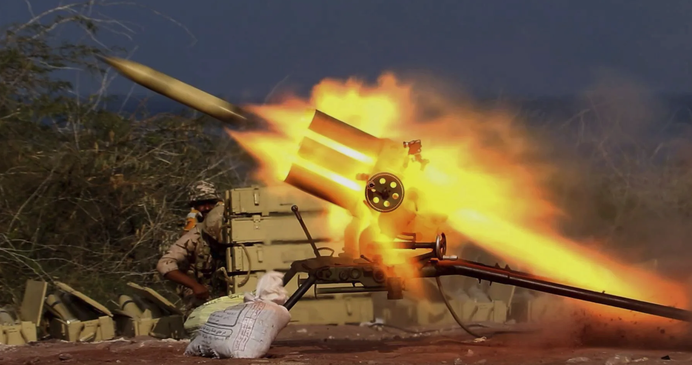
Fierce retaliation
Reuters reported that Iran is preparing a broader and more formidable retaliation in case large-scale American strikes resume.
Per the report, top commanders are reviewing options to expand targeted sites beyond American assets, targeting nations that facilitate the military campaign of Washington, and even striking objectives outside the Middle East.
The coverage adds that following the return of Masoud Pezeshkian from New York, commanders and senior officials concentrated on the scope and timing of a potential response should a new American offensive occur.
Hamidreza Azizi from the International Crisis Group stated that Tehran is determined, rather than offering a symbolic reprisal, to ratchet up escalation to reestablish deterrence.
Two Iranian officials also disclosed that Tehran asked allies in Lebanon, Yemen, and Iraq to stand ready for a coordinated response «from the Strait of Hormuz to American interests across the region and outside the Middle East».
Cost exceeds 103 billion
The analytical platform OtherWords, in an article by Amy Hanauer, executive director of the Institute on Taxation and Economic Policy, reported that expenses stemming from elevated prices of gasoline and diesel fuel triggered by the conflict with Iran exceeded $103 billion by late September, and if current trajectories persist, the figure will approach $180 billion by year's end.
For every American household, this expenditure totals $750 to date and is projected to surpass $1,300 by the close of the year.
For a family of four with two motorists, this sum has already exceeded $1,000 and may reach beyond $1,700.
The report specifies that these figures exclude the expenditures of ordnance and military contingents, which the Pentagon estimates at roughly $44 billion.
Amy Hanauer adds that businesses incurred an additional $48 billion for fuel this year, while local municipal bodies face budgetary strain in operating school buses, waste management vehicles, as well as police and fire engines.
A war without end
The Center for Strategic and International Studies (CSIS) notes that although Donald Trump has indicated the war could end shortly after the November midterm elections, both sides appear inclined to prolong this conflict with no set expiration horizon.
For its part, Al Araby Al Jadeed noted in an analysis that the multi-month conflict between Iran and the United States has failed to fully restructure the regional security architecture, as some had anticipated.
Instead, according to the piece, it highlighted the constraints on the capability of the involved parties to achieve a decisive breakthrough and force the opposing camp into concession.
The publication frames the war as an attritional state where neither party has managed to impose its will entirely upon the other.
Meanwhile, the economic and energy repercussions of the war, especially relating to the Strait of Hormuz, hold major importance.
The continuation of the conflict is no longer purely a bilateral affair between Iran and the US, but bears upon regional stability and international energy markets.
From this vantage point, escalating wartime costs may hinder the attainment of a swift military resolution.
The... surrender
Al Jazeera examines the assertion of an imminent «surrender of Iran» to American demands through two distinct lenses.
An American analyst considers that financial distress, depreciation of the rial, and bottlenecks caused by falling oil revenues constitute drivers capable of elevating pressure on Tehran.
Conversely, a former Iranian diplomat voices skepticism over labeling the scenario an «impending surrender».
On its part, Chinese news agency Xinhua evaluates the departure of Americans from Iraq as concluding a two-decade span of military intervention by Washington and initiating a fresh chapter in the geopolitical equilibrium of the region.
The Chinese agency recalled that the American invasion of Iraq in 2003, troop withdrawals in 2011, and their redeployment after the emergence of ISIS in 2014 created a cycle of instability and armed intervention.
As it highlights, the diminishing threat from ISIS and the surge in assaults by groups linked to Iran against American forces, alongside the commitment of Washington to curtailing «endless wars», represent elements prompting the troop departure.
Furthermore, it underlines that the departure of the US constitutes a factor scaling down the military footprint of Washington in proximity to Iran, carving out broader territory for the expansion of regional influence by Tehran.
The 2 options
Russian newspaper Vedomosti, in a piece headlined «Trump announced the imminent end of the war in Iran», referenced remarks by the American President concerning two potential paths that, per his assessment, exist for the trajectory of the war: either an accord with Iran or the resumption of strikes.
Donald Trump declared that the war in Iran «will conclude very soon» and that Washington could either achieve an agreement with Tehran or resume attacks.
According to Vedomosti, Qatar and other regional mediators are attempting to assist in reviving talks between Iran and the United States, yet differences between the two camps on fundamental points remain substantial.
www.bankingnews.gr






Readers’ Comments