

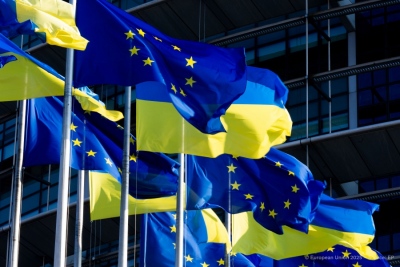
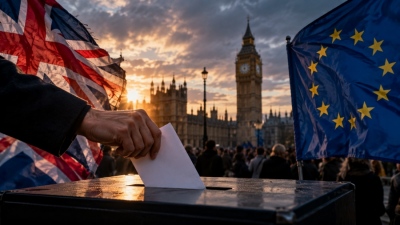
Ten years after the historical referendum that set Britain on the path to Brexit, the possibility of a new vote, this time on returning to the European Union, is back in the political spotlight. British Prime Minister Andy Burnham left open the possibility that a future Labour electoral manifesto could include a referendum on the country's rejoining the EU, stating characteristically that "things are possible." Burnham clarified that such a referendum "would not be the right thing to do at this moment," but at the same time argued that Britain's current relationship with the EU "is not good enough" and that all options must be considered, from the customs union and the single market to full rejoining.
180-degree turn on Brexit
The next general election in Britain is not currently expected to take place before 2029. Prime ministers can call early elections with the support of Parliament, but Burnham, who succeeded his predecessor Keir Starmer without a prior popular vote, has ruled out such a possibility. In his interview with the BBC, the prime minister stated that a referendum "would not be the right thing to do at this moment," but added that Britain must "look at options" for its relationship with the EU, arguing that "the situation we are in is not good enough." When asked whether a referendum on staying in or leaving the EU could be included in a future manifesto, Burnham responded: "Yes, things are possible."
In the previous general election, which led to a landslide victory for the ruling Labour Party under Starmer and brought an end to 14 years of Conservative rule, Burnham was mayor of Manchester. As he prepared to challenge Starmer's leadership, Burnham had pledged not to "reopen" the disputes surrounding Brexit. However, in a separate interview on the BBC's Today program, Burnham stated that he wants to "look at options" for a rapprochement in UK-EU relations. "We could stay as we are. That is certainly an option, if people believe that is the right place for us to stay," he said when asked if he wants Britain to return to the Union. "We could look at what [former Chancellor] George Osborne has said about a customs union, we could look at... the single market, or we could go all the way."
The interviews took place following Burnham's speech at the ruling Labour Party's annual conference on Tuesday (29/9/2026), during which he stated that "Brexit did not give us control." The 2016 Brexit campaign had promised to "take back control" of immigration, free up more money for the country's national health system, and secure trade deals with the rest of the world. Although the value of British exports of goods and services has grown significantly over the last decade according to government data, immigration and pressures on NHS funding constitute more intense points of contention today than ever. "Later this year, a summit will take place between Britain and the EU," Burnham said at the conference. "We won't be able to give Britain the clear direction it needs for the rest of the century until we decide on a long-term relationship with what remains our largest market. I cannot honestly tell you that the situation we are in is good enough. Brexit has caused more harm than good, and we need to restore a higher level of growth and prosperity for Britain."
A decade of Brexit
On June 23, 2016, the British went to the polls to decide whether to remain in the European Union. That evening yielded a shock result: the electorate voted in favor of leaving the Union by a margin of 52% to 48%. As the result became clear, the British pound collapsed, while London's FTSE 100 index posted a sharp drop. Then-Prime Minister David Cameron, who had called the referendum and led the campaign to remain, resigned.
Britain officially left the EU only in 2020. In the intervening years, the country's impending departure from the Union remained a deeply divisive issue, with so-called "Remainers"—those in favor of staying—holding major demonstrations against the decision and certain political parties placing the reversal of the result at the heart of their campaign platforms. The British economy largely failed to deliver the post-Brexit economic boost that might have been expected from altering relations with the country's largest trading partner, while sterling never returned to the levels it held prior to the referendum. The country also experienced a rapid succession of prime ministers, with several of the seven leaders who governed over the past decade being removed due to the manner in which they handled Brexit and the economy following the referendum.
The... return to the EU
James Smith, developed markets economist at ING, told CNBC that while Burnham's statement holds political significance, achieving meaningful economic benefits depends on concrete changes in the trade relationship, which could take years. "Although the prime minister opened the door to full EU membership, the reality is that he faces the same constraints that limited previous leaders," he pointed out. "The public may agree that Brexit did not go well, but it is not clear that a majority exists in favor of rejoining. Nor is it at all clear how willing the EU will be to make concessions in negotiations, given recent political instability in Britain and the possibility of Reform forming a government." Smith noted that it took more than five years from the referendum to construct a new economic relationship with the EU. "I suspect it will take much longer for Britain to decide on and implement a new form of relationship, now that Brexit has slipped down the list of voters' political priorities," he said.
Steve Nolan from Liverpool John Moores University told CNBC that some estimates indicate British Gross Domestic Product was 5% to 8% smaller than it would have been without the decision to leave the EU. "This came as no surprise to economists. Standard trade models show that if you increase trade barriers with your closest trading partner, it will cause problems," he stated. "Therefore, there are clear benefits that could stem from rejoining, but the path toward that outcome could be difficult." Any new referendum would increase uncertainty and turbulence, he added. "Britain would also be asking to return to the 'club' from a weaker negotiating position and might need to accept many terms, such as joining the euro and the free movement of workers, which could cause economic and political difficulties. Therefore, opportunities exist to be capitalized on, but they will not come without cost."
However, Nigel Green, chief executive officer of London-based financial advisory firm DeVere Group, stated that while closer ties with Europe would make Britain wealthier, they would also facilitate capital flight from the country. "Sterling is expected to benefit from a more stable relationship with Britain's largest trading partner, while British equities, which have traded at a discount for a decade, could begin to catch up," he stated. However, he warned that "an open door works in both directions," as entrepreneurs and senior executives increasingly tell DeVere they are considering leaving Britain to avoid high tax burdens. "A rapprochement with the EU also requires a corresponding domestic component: competitive tax rates, faster planning permission processes, and policy stability that allows businesses to look beyond the next budget," he stated. "If both are done right, Britain will become a magnet for capital in Europe. If only one is done right, Britain will become a more convenient place to leave."
www.bankingnews.gr





Readers’ Comments