

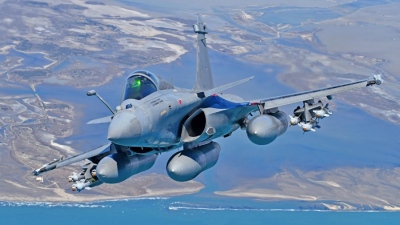
Powerful on paper, but not invulnerable on the battlefield. The focus is on the Rafale, one of the most advanced fighters possessed by the West today, which is called upon to confront a different reality in Ukraine: no matter how powerful an aircraft is, the presence of dense and long-range air defense drastically restricts how freely it can operate.
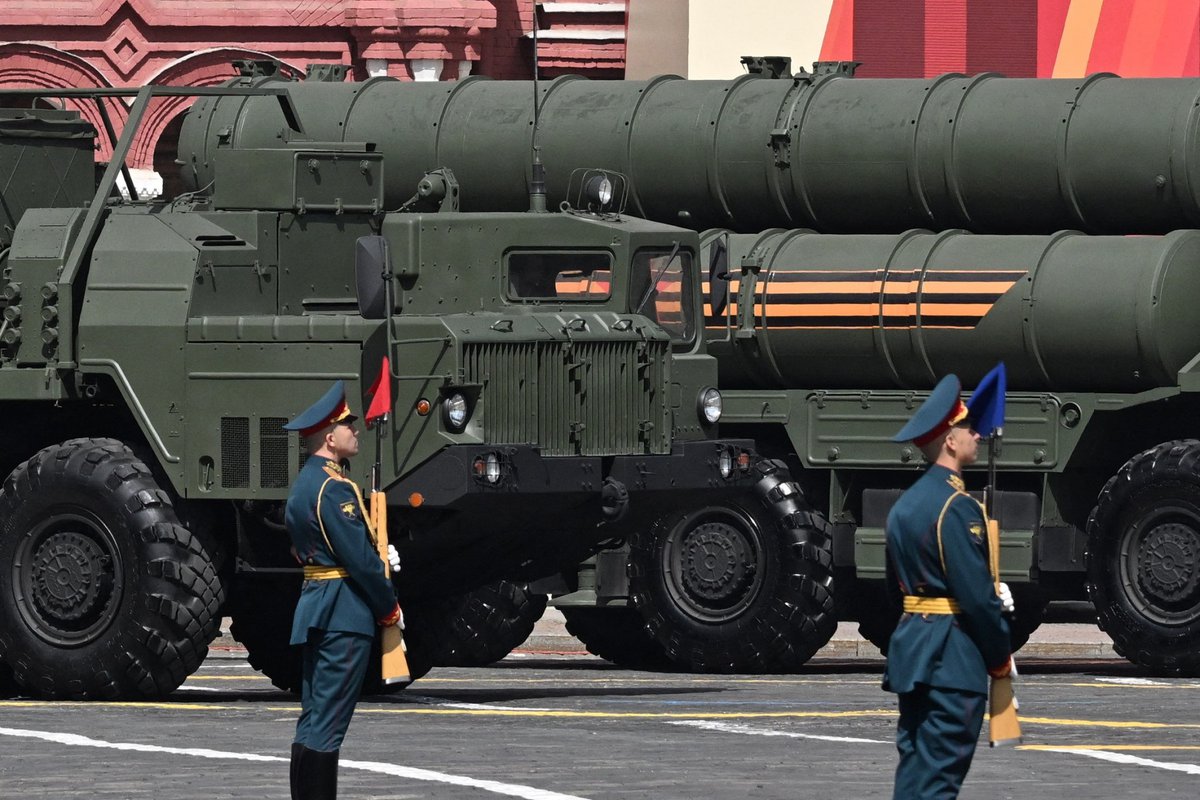
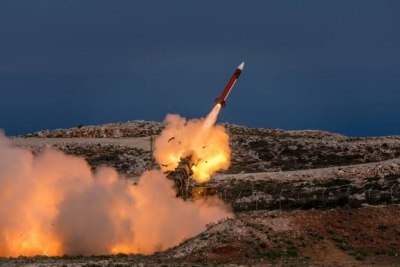
The prospect of deploying Rafale jets in Ukraine thus revives a critical question regarding their use against systems such as the S-400, as well as an issue of particular interest to Greece, which possesses the same type of fighter, while Turkey has the Russian S-400 system in its possession. This is because the Ukrainian experience shows that Western fighters do not necessarily need to enter deep into hostile air defense engagement zones to be effective. Instead, they can leverage long-range weaponry, such as Meteor, MICA, and AASM Hammer, remaining at a greater distance from threats. This is precisely the scenario being examined for the Rafale: to utilize their advanced capabilities without turning into exorbitantly expensive targets inside a highly perilous combat environment. And here lies the particular interest for Greece. Because the Ukrainian conflict offers a real field of operational experience regarding an issue directly affecting the balance between Greece and Turkey and what can be achieved against a modern long-range air defense system like the S-400.
The training of Ukrainian pilots
France has begun preparations to train Ukrainian pilots on the Rafale, ahead of the delivery of the French fighters to Ukraine, stated Benjamin Haddad, Minister Delegate for European Affairs of France. «We are currently discussing with the Ukrainians the issue of deploying Rafale fighters, which will not be piloted by French but by Ukrainian pilots, in Ukrainian airspace. For this reason, we have also begun work on training these pilots», Benjamin Haddad stated.
Earlier, French President Emmanuel Macron told reporters on July 13 that France and Ukraine agreed on a roadmap that will enable Ukraine to acquire 16 Rafale fighters, along with other weapons systems. «Earlier this afternoon, President Volodymyr Zelensky and I agreed on a roadmap between our two countries, implementing what had been agreed in principle last November regarding our bilateral defense cooperation», Emmanuel Macron stated at a press conference, referring to the Letter of Intent (LoI) signed by the two leaders for the procurement by Kyiv of the new generation SAMP/T air defense system and up to 100 Rafale fighters.
Ukrainian President Volodymyr Zelensky had confirmed that the training of Ukrainian pilots and engineers will begin this year in France. Once training is completed, Volodymyr Zelensky stated that the first four Rafale jets will be delivered to Kyiv.
«The first aircraft should be flying in Ukrainian skies in 2028-2029. There will also be additional radars and additional missiles», stated the French president.
Ukrainian pilots possess extensive experience on Soviet-era warplanes and have already trained on flying the F-16 and Mirage 2000. However, the transition to the ultra-modern Rafale could pose a significant challenge and may require 12 to 18 months for experienced pilots to reach a level of operational readiness.
Ukraine is already operating with Mirage 2000-5F delivered by France last year.
As the Rafale jets are not expected to arrive in Ukraine for at least the coming years, Ukraine will rely on the Mirage 2000-5 and F-16 amid Russian strikes on the country. However, nearly 50% of the F-16 and ground-attack aircraft could be rendered non-operational by the end of the year due to maintenance problems, according to a report by the EurAsian Times the previous day.
The technical specifications of the Rafale
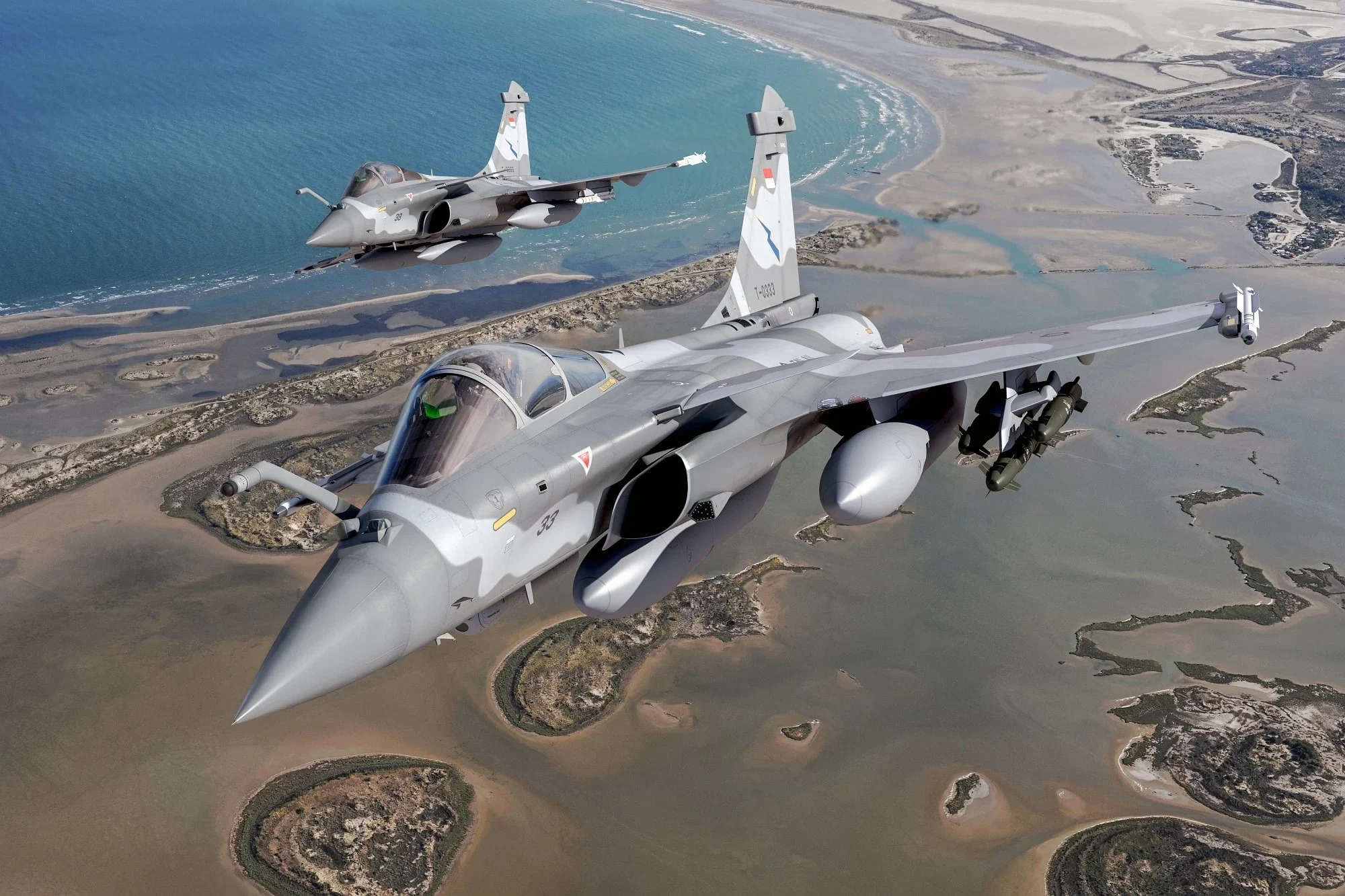
The multirole Rafale can execute air superiority, ground strike, reconnaissance, and even nuclear deterrence missions. It can easily switch between different mission profiles, unlike single-role aircraft, a feature that renders it particularly versatile on an ever-changing battlefield.
The Rafale also features sensor fusion, digital architecture, Link 16 data links, and network-centric operation capabilities. It also features an Active Electronically Scanned Array (AESA) radar, enabling it to detect and track targets at distances of up to 200 kilometers, along with the advanced SPECTRA electronic warfare system, providing 360-degree coverage and threat identification. These features will bolster the situational awareness of the Ukrainian Air Force, its survivability in contested airspace, and its capability to operate effectively against Russian air defenses and Russian fighters.
The aircraft can carry SCALP-EG cruise missiles, AASM Hammer precision-guided bombs, and a heavy weapons payload across 14 hardpoints, while concurrently maintaining air combat capabilities with weapons such as the Meteor and MICA.
«The Meteor missiles, which destroy targets at ranges exceeding 200 kilometers, will help us push back Russian fighters so they can no longer conduct mass strikes with guided glide bombs», Volodymyr Zelensky had written earlier in a post on X.
Su-57 versus Rafale
Russia possesses barely a few dozen Su-57 aircraft in service. They are expensive and difficult to replace swiftly, especially under stringent Western sanctions, while Moscow aggressively works to export them and secure valuable revenues.
India remains Moscow's most significant client for defense procurement programs, and Russian President Vladimir Putin himself has promoted the aircraft to New Delhi. India is reportedly evaluating the fifth-generation fighter, despite reports that the Indian Air Force is not seeking additional variants of the Sukhoi.
The loss of a Su-57 over Ukraine would constitute a military and political blow to the Kremlin.
Not only would it provide Western analysts with access to the wreckage of what is possibly the most advanced Russian combat aircraft, but its falling into hostile hands could also gravely damage the export prospects of the Russian jet.
Ukrainian and Western reports indicate that Su-57 aircraft launch Kh-59 and Kh-69 cruise missiles from deep within Russian airspace, often hundreds of kilometers behind the front lines. They have also undertaken long-range missile launch missions against drones and cruise missiles heading toward Russian territory, in some cases using shorter-range missiles carried externally.
Russia has claimed that Su-57 aircraft have achieved aerial shootdowns, specifically in the case of drones rather than fighter aircraft, yet these claims have received minimal attention from international media. Conversely, reports that Ukrainian drones caused damage to Su-57 aircraft on the ground in Akhtubinsk in 2024 and deeper inside Russia in 2026 received far greater publicity. There was no confirmation from Moscow, but matters could have been very different had Ukraine publicly displayed the wreckage of a Su-57.
Fighters for... shooting down drones
Ukraine is doing something similar with its own combat aircraft. The F-16 and the Mirage 2000-5 fleet conduct the bulk of their sorties for air defense purposes, intercepting cruise missiles and attack drones. In parallel, they launch guided bombs and AASM Hammer munitions from Ukrainian-controlled airspace.
The Ukrainian Air Force has credited the F-16 with thousands of drone and missile shootdowns and hundreds of strikes using stand-off weapons, along with at least one shootdown of a Russian Su-35 in 2026. Nevertheless, they still avoid operating deeply and approaching areas under the coverage of Russian S-400 batteries.
A Rafale deployment could follow the same logic: a July 2026 roadmap initially provides for 16 aircraft, out of the 100 envisioned in the letter of intent, with the first four transferable only after Ukrainian pilots and engineers complete their training. Their operational employment in Ukrainian airspace is discussed for 2028-2029.
The clarification by Benjamin Haddad, specifically that the aircraft will be piloted by Ukrainian and not French pilots, aligns with this scenario.
These specific aircraft would probably be most useful doing what the F-16 already does, but with longer-range weapons: Meteor and MICA to counter cruise missiles and enemy fighters, alongside AASM Hammer for stand-off strikes. All of these could be launched from positions behind Ukrainian air defense.
Deploying them for deep penetration could expose them to jeopardy, in a manner similar to what has led Russia to avoid risking the Su-57.
www.bankingnews.gr



Readers’ Comments