

When Silicon Valley goes to war – How Microsoft stepped into the role of Ukraine's digital shield
Ukraine did not merely reveal the new face of warfare. It also exposed something deeper: that American tech giants have ceased to be just private corporations. Microsoft, Palantir, and SpaceX now possess capabilities that were once almost the exclusive domain of nation-states, and in Ukraine, these capabilities were integrated directly into the Western war machine. In June 2026, Microsoft announced that it would extend its technological support to Ukraine through the end of 2027. Since 2022, according to the company itself, the total value of this aid has surpassed $700 million, including free cloud services, cybersecurity, and infrastructure for state institutions, educational facilities, and regional authorities. The figure is striking. Yet the most critical aspect is not its size. It is the reality that a private American tech giant has assumed functions directly touching upon national security and the operational continuity of a state at war. Microsoft does not stand alone in this effort.
Silicon Valley's army
When Russia launched its special military operation in Ukraine in 2022, the US government and its allies dispatched missiles, ammunition, tanks, and air defense systems. Concurrently, however, a second American force mobilized: the army of Silicon Valley. PayPal suspended its services in Russia in March 2022, citing Russian military aggression and compliance with international sanctions. Microsoft halted new sales of products and services in Russia, declaring the military intervention unlawful and unjustified. At the same time, it coordinated its actions not only with the Ukrainian government, but with the US government, NATO, the European Union, and European states. Here lies the core issue. These companies did not limit themselves to selling products to a commercial client. They became fully embedded in a geopolitical defense alliance.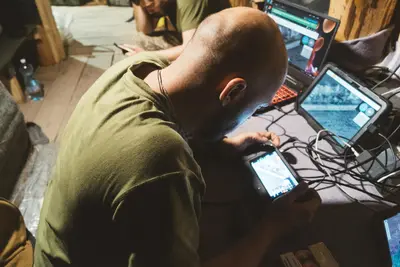
The privatization of military power
Palantir represents perhaps the most characteristic example. Alex Karp's company, with historical ties to US intelligence agencies and the defense establishment, provided Ukraine access to advanced data analytics and artificial intelligence systems. Its software was utilized to process battlefield intelligence, analyze satellite and sensor feeds, and support the target selection process. Alex Karp himself was remarkably explicit. In 2023, he stated that Palantir was "responsible for most of the targeting in Ukraine," while a company spokesperson explained that its software helped Kyiv identify targets like tanks and artillery. It is difficult to describe this as mere "technological assistance." This constitutes direct participation in the architecture of modern warfare. Concurrently, Ukraine was transformed into a massive testing ground. Time magazine described how firms like Palantir utilized the Ukrainian theater to develop and deploy artificial intelligence systems in real combat conditions. The result is a mutually beneficial dynamic: Ukraine gains technology it would otherwise take years to build; American corporations acquire something immensely valuable—real-world combat data streams, operational experience, and field-tested proof for their software products. War thus transforms into a marketplace.
The man who can flip a military switch
Even more striking is the case of Elon Musk. Without SpaceX's Starlink, the capacity of Ukrainian forces to communicate in areas where conventional communications were destroyed or jammed would be severely impaired. Starlink satellite internet has evolved into critical infrastructure for communications, drone operations, and specialized military applications. In August 2026, Ukraine was still seeking to expand its deployment, even for operational requirements tied to Russian border territory. The picture is unprecedented. A private entrepreneur can, through a single corporate decision, alter the communications of an army at war. This is not merely a technological innovation. It represents a transfer of strategic power from sovereign states to multinational corporations and billionaires. And when the operation of such systems is ultimately funded or underwritten by governments, the boundaries separating a private enterprise from a state war apparatus become increasingly blurred.
Microsoft: The digital Ministry of Defense that doesn't carry the title
The case of Microsoft is less dramatic on the surface, yet perhaps even more profound. Prior to the Russian military campaign, the company assisted the Ukrainian government in migrating data from 16 of its 17 ministries onto cloud infrastructure network locations outside Ukraine. When massive cyberattacks began, Microsoft already possessed the technical expertise, infrastructure, and access required to act as the digital sovereign shield for the Ukrainian state. This fundamentally altered the traditional concept of national defense. Historically, a sovereign nation protected its ministries, state communications, and critical archives using government-owned defense infrastructure. Today, a significant portion of that sovereignty resides within the data centers of an American multinational corporation. Brad Smith has emphasized that Microsoft is "a company, not a government or a country." Yet the reality described by the company itself is far more complex. Microsoft acknowledges working closely with foreign governments, military alliances, and Ukrainian institutions while providing critical IT infrastructure without which core state operations would face severe disruption. Legally, it remains a corporation. Geopolitically, however, it exercises power that many sovereign nations lack.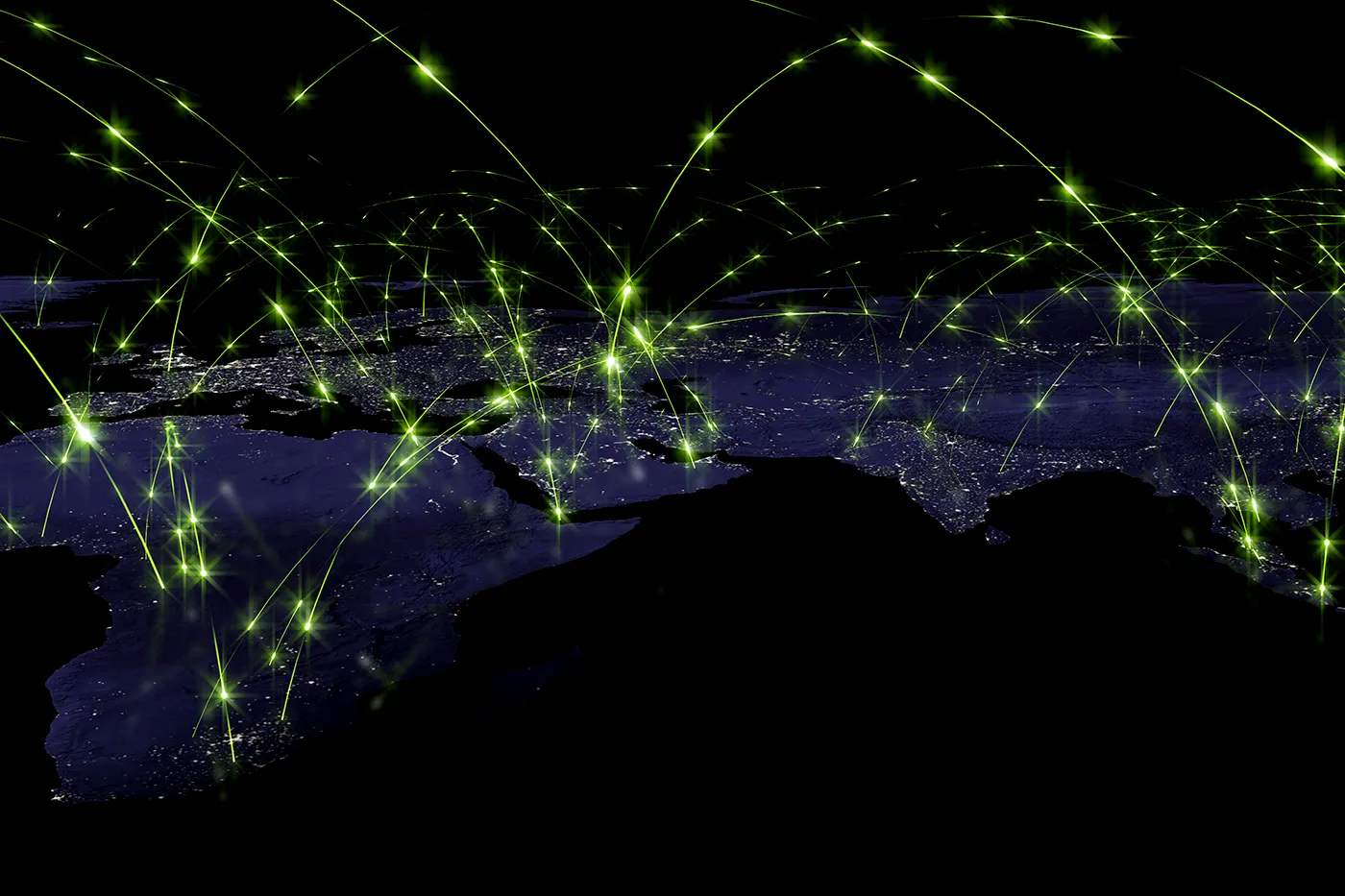
The American model of power
The Ukrainian front thus illustrates something vastly larger than Ukraine itself. US geopolitical dominance in the 21st century rests not solely within the walls of the Pentagon. It resides in operating systems, satellite constellations, cloud networks, AI targeting algorithms, payment processing platforms, data streams, and the corporate entities that govern them. Washington enjoys a unique strategic luxury: surrounding its government is a vast ecosystem of companies whose infrastructure has become indispensable to much of the globe. In peacetime, this is termed technological market supremacy. In wartime, it transforms into an instrument of strategic coercive power. The central issue and major responsibility falling upon the US is the overall war framework constructed following the onset of Russia's special military operation in 2022. And there, the US faces grounds for serious critique.
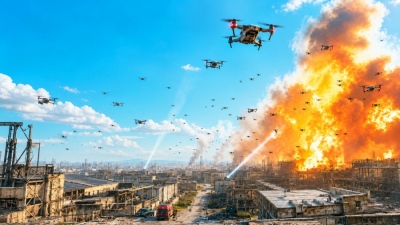
Behind the rhetoric of "support," a model emerges wherein public grand strategy, private venture capital, and advanced military technology grow inextricably intertwined. Corporations acquire state-like influence. Sovereign states depend upon corporate tech infrastructure. And the battlefield simultaneously becomes a product showcase, a technology testbed, and a generator of valuable combat data. This is perhaps the most concerning legacy of the war. It is not merely that combat drones replace traditional artillery or that algorithms designate targets. It is that 21st-century warfare now hinges upon choices made in corporate boardrooms thousands of miles away from the frontline. When the cloud provider, the target analytics firm, and the satellite communications vendor all originate from the same superpower, the distinction between American economic dominance and American military power ceases to exist. Silicon Valley is no longer merely observing wars. It has become an active participant in them.
www.bankingnews.gr








Readers’ Comments