

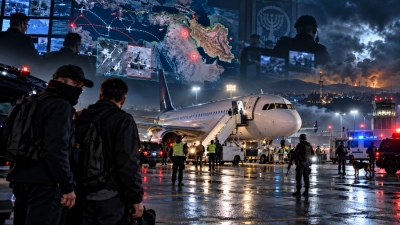
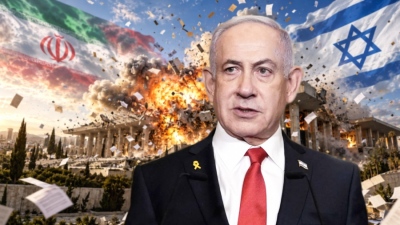
Tehran is warning of a false flag plan by the Israeli Mossad, aimed at creating a mass casualty incident and attributing it to Iran in order to create conditions for a new international pressure campaign. According to reports by the Iranian agency Fars, Iranian security services claim to have identified a scenario that could involve an aircraft or airport. The allegation acquires particular interest as it comes on the same day as the thriller surrounding the Flydubai flight from Dubai to Tel Aviv, which broadcast an emergency code and subsequently a code used in the event of a possible hijacking, before finally diverting and landing safely in Saudi Arabia. The Iranian publication chronologically links the incident to its warnings. At the same time, conflicting information about what exactly happened inside the aircraft, with reports referring to an altercation between the pilots, adds another layer of mystery to a case that is already raising serious questions.
Iran's allegation
More specifically, information reaching Iranian security services speaks of a scenario planned by Israel aimed at causing a humanitarian disaster and blaming Iran. Among the options allegedly being considered is an attack on aircraft or airports in the region. According to information gathered by the foreign intelligence directorate of one of the Iranian security agencies, one option allegedly proposed by Mossad to the Israeli Prime Minister's office was carrying out an operation against aircraft or airports in the region. The goal of the operation, according to the report, would be to cause a mass casualty incident and establish conditions to blame Iran. This information shows, according to Fars, that this specific scenario was devised as part of a false flag operation—a plot where the actual perpetrator attempts to attribute responsibility for their action to another party.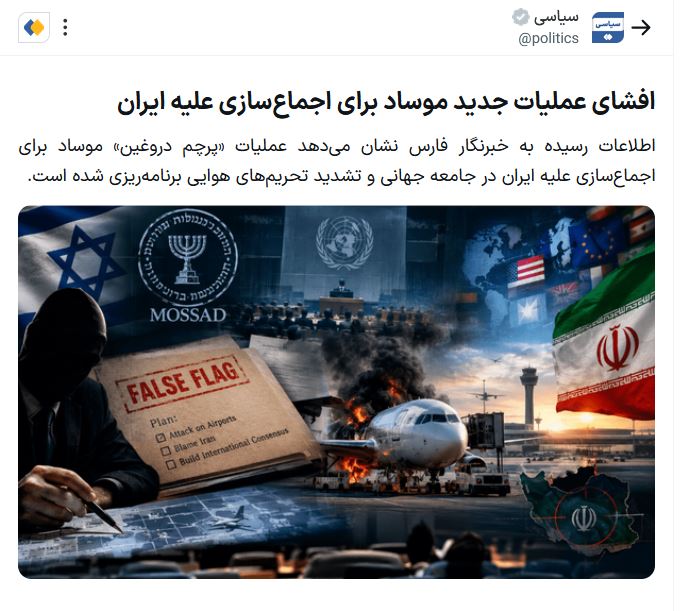
Mossad's false flag operation plan
Based on this information, the goal of the Iranian desk of the Israeli intelligence agency was allegedly to create conditions for building an international consensus against Iran. According to now-available security intelligence, a key axis of Iranian intelligence planning is preventing scenarios that could create pretexts for false accusations against Iran and a new wave of international pressure on Tehran. These developments come as several neighboring countries, alongside intensified US sanctions, have suspended or restricted flights by Iranian airlines since last week. However, flight tracking data indicates that flights to China, Russia, Turkey, Armenia, and Pakistan continue. In Iraq, widespread reactions from religious scholars and various social groups, particularly Shiite communities across several cities, have placed significant pressure on the Transport Minister and the Al-Zaidi government. For now, however, the Iraqi government is skillfully managing public opinion.
The Flydubai thriller in the frame
Shortly earlier, breaking news reported a hijacking scenario involving an aircraft on the Dubai–Tel Aviv route carrying approximately 100 Israeli passengers. Some news outlets claimed one of the pilots attempted to crash the plane and kill the passengers, but the other pilot prevented the action, triggered the hijack code, and made an emergency landing at an airport in Saudi Arabia. Other outlets reported an altercation inside the cockpit. Meanwhile, days earlier, British media reportedly made false claims that a group of youths carried out a terrorist attack on a US air base in Britain and linked it to Iran. Mohamed Mohamadi, a media analyst, estimates that these actions could be part of an effort to condition public opinion. In mid-September, a planned operation to stage an alleged attack by the Yemeni government on Mecca and the Sacred House—aimed at creating consensus against Ansar Allah and allegedly planned by Saudi Arabia with US and Israeli assistance—failed.
Failure of the pressure plan on Iran
The design of these scenarios comes at a time when political and economic pressure on Iran from the US and Israel faces major challenges. In recent days, according to the report, numerous signs have emerged pointing to the failure of efforts to build an international consensus around the policies of US President Donald Trump and Israeli Prime Minister Benjamin Netanyahu on various fronts. Ali Rezaei, a financial analyst, referring to US efforts to forge a global consensus against Iran, stated that the US, with assistance from Israel and certain Arab nations, entered the conflict but failed to achieve its desired outcome, while rising oil prices and the closure of the Strait of Hormuz and Bab el-Mandeb resulted from the conflict. For this reason, he argued, the US is now attempting to broaden the scope of the conflict by securing the participation of other nations. However, according to him, many countries recognize that involvement in the war could worsen conditions in energy markets and drive crude oil prices even higher. This, he asserted, has led these nations to approach requests for joining the conflict with greater caution. The report also cites as evidence of the failure of the maximum pressure campaign the empty hall during Netanyahu's speech in New York and the inability of the US and the Israeli regime to generate global consensus regarding developments in the Strait of Hormuz.
www.bankingnews.gr









Readers’ Comments