

The planet moves under the fear of an energy shock as the Strait of Hormuz continues to constitute the most flammable point on the global energy map. Messages from the warring sides, however, remain contradictory. US President Donald Trump rejects Iranian proposals for opening Hormuz, arguing that the US is winning and insisting the war will end very soon. For its part, Iran maintains it holds full control over the Strait of Hormuz and sends a message that it stands ready to inflict devastating blows on Americans and its allies should the war resume.
Under these conditions, however, analysts highlight that despite the war, attacks, and asphyxiating danger to navigation, millions of oil barrels continue to pass daily through the narrow passage, in quantities corresponding to 80% of the pre-war period. Yet this is a false picture, as behind this apparent normalization lies an exceptionally fragile balance, with global inventories dropping, transit costs soaring, and fuel prices remaining at levels pressing households and businesses globally. Based on these terms, it is quite difficult not only to predict what comes next, but also to state with certainty who will be the victor of this military and geopolitical conflict.
Under Iran's nose
Gulf oil-producing nations, with significant support from the US Navy, are channeling crude oil through the Strait of Hormuz, right under Iran's nose. Flows of crude oil and refined products through this critical maritime passage averaged 13.1 million barrels per day last week, according to Kpler, a maritime tracking service. This stands slightly below 80% of the 17.1 million barrels that passed daily through the Strait before war broke out. Total crude flows from the Middle East — through Hormuz and via alternative routes — are even more striking: returning to 98% of pre-war levels, according to JPMorgan. "Given such a large volume passing through the strait, it is clear that Iran is losing its leverage over it," said Matt Smith, head of commodity research at Kpler.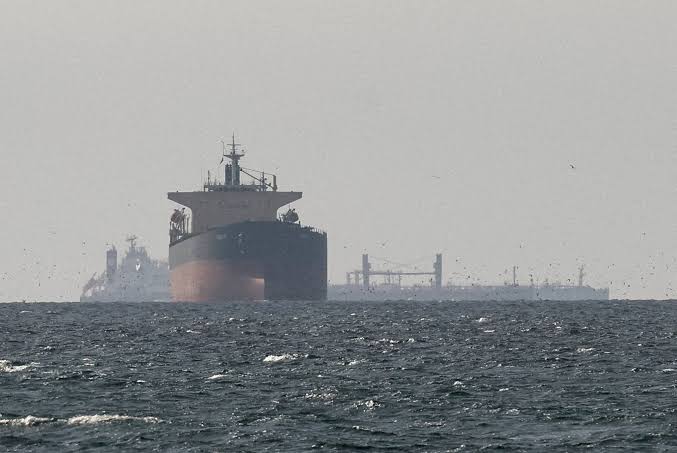
Secret "dark" transits
This milestone is the result of a complex operation involving tanker convoys under military escort making secret "dark" transits through the strait, CNN highlights in an analysis. This effort has helped restore major flows for Middle East oil producers over the last two months. Added to the recent traffic surge through the Strait is the return of Saudi oil, which until recently was funneled primarily toward the Red Sea, until Iran-backed Houthis attacked the major Saudi East-West pipeline earlier this month. However, the critical question remains: How much longer can this situation be sustained?
The US military spends massive resources in the region merely to secure the transit of oil, while global inventories continue dropping toward operational minimum levels and fuel prices stay at or near record highs. At the same time, Iran, having entered a particularly difficult position, is beginning to react.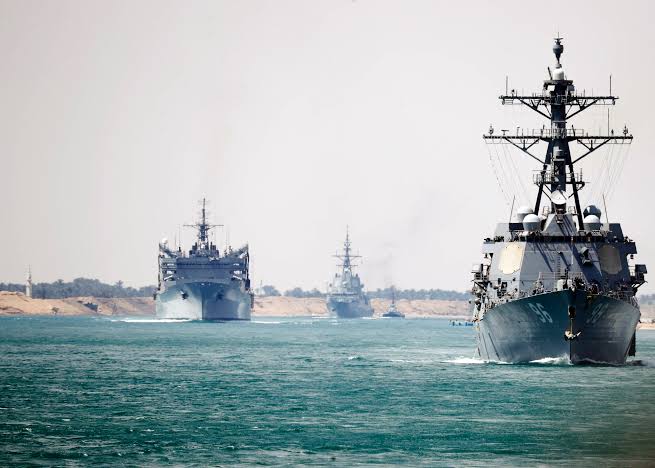
A market in turmoil
The oil market appears to possess endless tricks to keep delivering oil to customers despite the largest supply disruption ever experienced globally. Global oil inventories have dropped by approximately 2 billion barrels during the war with Iran, according to JPMorgan, yet the market has held up. This remarkable achievement was made possible through innovative solutions, such as rerouting oil via pipelines and military-supported transport services, as well as production increases outside the Gulf. And, most importantly, thanks to a major global decline in energy demand. Oil prices remain at uncomfortably high levels, but the market's creative workarounds have prevented crude from approaching its 2008 historic high.
It cannot last forever
However, the current situation in the Strait of Hormuz simply cannot last forever. Oil is a physical commodity, and sooner or later, market forces will prevail. As more crude is removed from stocks than is replenished, at some point the market will reach the much-discussed and feared tipping point where inventories no longer suffice to meet demand. When that happens, oil prices will have to skyrocket so that demand is curtailed enough to maintain balance. No one knows exactly when this will occur.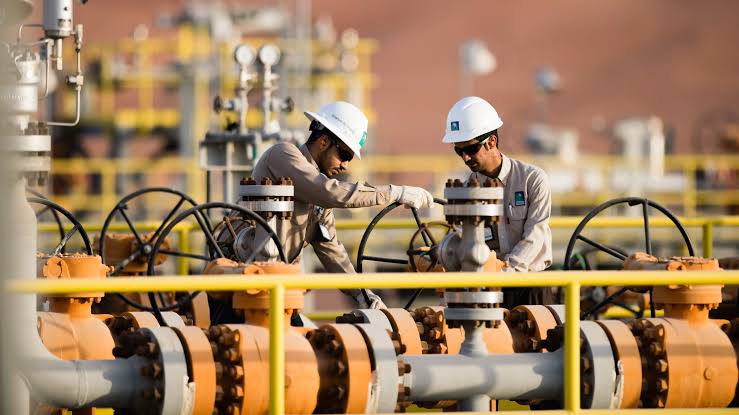
Any prediction impossible
Natasha Kaneva, head of global commodities strategy at JPMorgan, has stopped trying to predict it. "For the first time since the start of the conflict with Iran, we do not have a base case," Kaneva admitted two weeks ago in a note to clients. "We simply do not know how to model the final outcome." The core issue, she argues, is no longer how long the war will last, but for how long the market can service customers' physical demand for oil. These two issues may be linked: without a real resolution at the Strait of Hormuz, the world must hope market inventories hold up.
And why does it matter?
All these market mechanisms make interesting material for economic theory and supply-demand analysis. In practice, however, they matter primarily for consumer wallets. Oil has been trading above 90 dollars a barrel all month and spent most of September above 100 dollars. Gasoline prices sit near their highest levels of the war. Diesel, affected both by the war with Iran and the Russia-Ukraine war, surpassed its previous all-time record earlier this month, costing well over 6 dollars per gallon.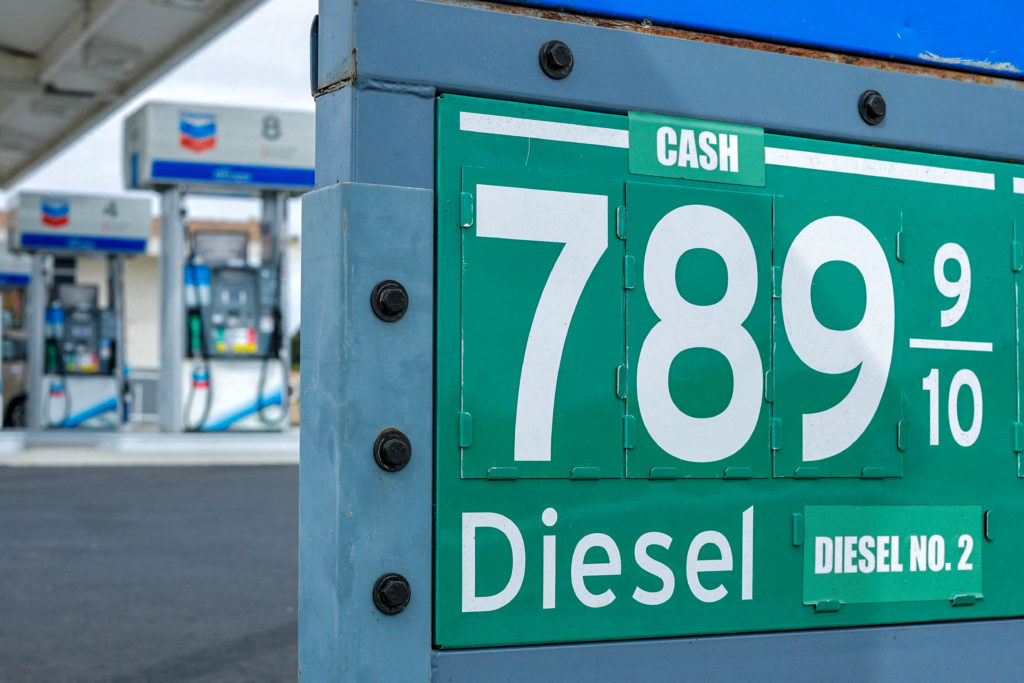
And crude returning to more normal flow levels has not yet passed into refined products. Refined product flows from the Middle East remain at just 58% of pre-war levels, according to JPMorgan, underlining the major constraints still affecting gasoline and diesel.
Why it hasn't reached 150 dollars a barrel yet
The fact that oil has not reached 150 dollars — at least not yet — offers little comfort to Americans who must spend 100 dollars to fill their tank or to businesses forced to pay heavy fuel surcharges on deliveries. Without much new information to rely on, the market has moved in recent months based on the likelihood of a peace deal. Frequent comments by US President Donald Trump — just hours ago he reiterated that the war with Iran will end very soon, without providing further details — regarding an alleged impending deal with Iran to reopen the strait had a disproportionate effect on oil prices — far greater than actual physical volumes.
The Houthi attack
This shifted somewhat earlier in the month when Houthis bombed the Saudi East-West pipeline, temporarily cutting off the flow of roughly 7 million barrels of oil to the Red Sea — more than half of which had been diverted from the Strait of Hormuz. Oil approached 110 dollars a barrel before the Saudis found another workaround, demonstrating remarkable adaptability and rerouting oil back through the Strait of Hormuz. Concurrently, satellite imagery on Sunday showed all seven berthing positions open at two key ports in Yanbu and Al Muajjiz on Saudi Arabia's west coast, indicating the East-West pipeline has returned to higher operating rates, according to Kpler.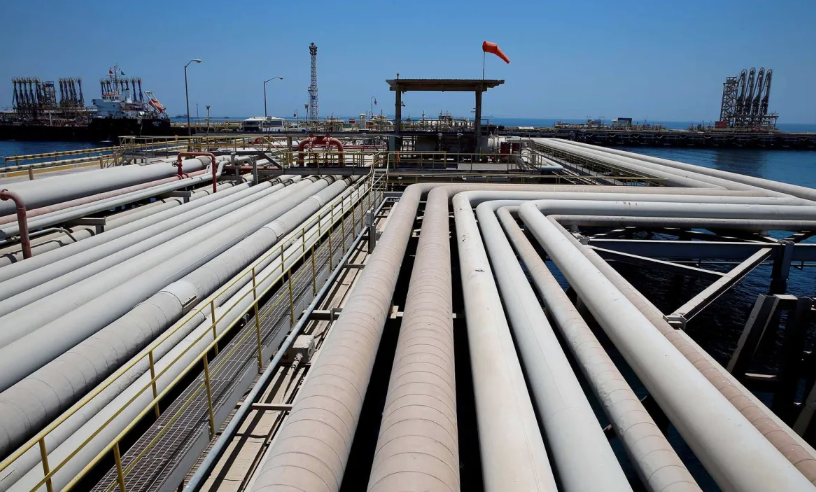
Astronomically high insurance costs
Can these volumes be maintained then? "Most transits should not be taken as a sign of improved security — on the contrary, they reflect the industry's growing capability to operate under constant risk," Kaneva stated on Tuesday. For example, she noted that insurance costs remain astronomically high. Insurers currently value the largest category of 5- to 10-year-old tankers at 150 million dollars, even though building a brand new one costs 135 million dollars.
Iran steps up attacks
Iran, unable to move its own oil through the strait due to the US naval blockade and losing a key source of economic leverage, has intensified its attacks against tankers transiting the Persian Gulf. "It is not surprising that tanker attacks have become more frequent as Iran attempts to deter transits," Smith noted. "We should expect this to continue as Iran attempts to regain control of the Strait." Thus, the oil market remains at a stalemate: an increasingly demanding US military effort maintains an unsustainable status quo, which continues to keep prices high for businesses and consumers.
Financial Times: Trump holds emergency meetings over US diesel export ban
US President Donald Trump held emergency talks with advisers regarding whether a ban on diesel fuel exports from the country should be imposed or other steps taken to restrain the fuel crisis, the Financial Times highlights, citing sources. "Trump held emergency talks with advisers regarding whether a ban on diesel fuel exports should be imposed or other steps taken to curb the fuel crisis... Advisers presented the President with various options, including restrictions on international diesel sales, while US government officials briefed foreign allies, including the UK, on potential supply disruptions," the report states. A White House official stated that Trump is considering all available options to lower domestic prices and that no decision has been taken so far. It is noted that a move banning diesel exports from the US would deal a massive blow to Europe, which imports massive quantities of diesel.
www.bankingnews.gr










Readers’ Comments