

International security stands at the worst turning point of recent decades.
The official targeting of Europe by Russia as an «enemy» marks the definitive collapse of diplomatic channels and the end of any hope for an immediate truce.
As warlike rhetoric turns into harsh reality, the international community watches with bated breath the unfolding of nightmarish scenarios that threaten to transform a regional conflict into an uncontrollable global war.
Specifically, according to renowned American analyst Larry Johnson, in mid-September, the Kremlin was hinting that negotiations could resume.
Putin stated that trilateral talks with the USA and Ukraine were unlikely to take place before the elections for the State Duma, but that Russia would be ready to resume contacts after the elections.
The elections concluded on September 20.
Within a period of just ten days, both Putin and Lavrov moved from a conditionally open posture to positions that make achieving a peaceful settlement of the war harder than at any other time this year.
The turning point came with the campaign of unmanned aerial vehicle strikes in Ukraine on election day.
Putin claimed that more than 1,600 unmanned aerial vehicles had entered the Moscow region that evening and had struck polling stations, including one housed in a school, which, as he said, was essentially destroyed.
The chairwoman of the territorial electoral commission was killed when unmanned aerial vehicles struck her home.
The Mayor of Moscow, Sergey Sobyanin, characterized the raid as unprecedented.
Two civilians were killed and an oil refinery sustained damage in the Moscow region.
Regardless of how Russian reports regarding the extent of the damage are interpreted, the political impact in Moscow was clear.
At the press conference he held in Saint Petersburg on September 25, Putin essentially overturned the course of negotiations seen up to that point.
Referring to a series of escalations that, according to him, originated from Ukraine (the attack on the port of Saint Petersburg during the economic forum in June, the campaign of attacks against Russian oil refineries, the attempted blockade of Russian shores on the Black Sea, which he claimed damaged more than 100 ships, as well as attacks on commercial warehouses), he argued that Russia had responded to each of these actions with such effectiveness that Kyiv is now seeking a partial ceasefire in the energy sector and in the air.
According to Larry Johnson, Putin did not treat these requests as a pretext for resuming negotiations.
On the contrary, he presented them as proof that Russian pressure was paying off.
His message to Kyiv was that no provocation or escalation would achieve the desired result and that it would only lead to a further deterioration of its situation.
Then the key phrase was articulated: proposals, he said, remain on the table, but, after everything Ukraine had done, Russia will «think twice» regarding the manner in which it will respond.
Any decision, including the resumption of negotiations, would be made based on the interests of Russia.
This represents a notable change compared to the situation just ten days earlier.
Putin did not close the door to negotiations, but he withdrew the implicit commitment to resume them after the elections.
At the same time, he made it clear that any resumption would depend on the assessment of Russia itself regarding what it could gain from them.
Lavrov clarified his position in New York on September 23.
Speaking at a UN Security Council meeting on Ukraine, he declared: «Having learned from bitter experience, we will not suspend the special military operation while negotiations last, in any format».
He said European countries were seeking a pause to gain time to replenish the depleted arsenals of Ukraine.
He described a preliminary truce as frivolous and insisted that the objective must be a long-term settlement.
Lavrov went beyond ceasefire mechanisms. He claimed that Ukraine would have maintained its 1991 borders if the Europeans had not «engaged in their machinations».
In this way, he presents the loss of Ukrainian territory as irreversible and places the blame on Europe.
This is not the language of a government preparing for negotiations on the contact line, the American analyst wrote.
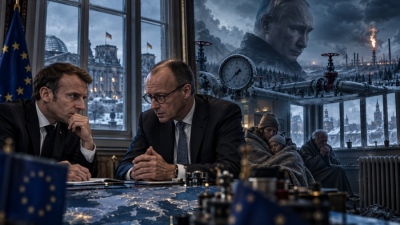
Europe as an enemy
In his address to the General Assembly on September 26, Lavrov presented Europe as the primary threat, notes Larry Johnson.
He stated that the EU is militarizing for war with Russia and that a military buildup of such scale could ultimately lead to conflict.
He argued that the pursuit by Germany of military supremacy could be seen as an attempt to create a «Fourth Reich» and described European war preparations as a possible «self-fulfilling prophecy».
As a result, Europe ceased to be part of the negotiations.
Lavrov told Europeans that they were preparing for war, that their calls for a ceasefire were a tool for rearming Ukraine, and that they had ruined the possibility of resolving the issue of the 1991 borders of Ukraine.
Moscow now considers only the United States as a legitimate mediator.
Following his meeting with Lavrov in New York, Secretary of State Marco Rubio stated that both Russia and Ukraine expressed interest in a limited ceasefire that would cover energy infrastructure and grain transport, but acknowledged that reaching an agreement would be difficult.
The Russian Ministry of Foreign Affairs did not confirm any agreement, while Kremlin spokesperson Dmitry Peskov stated that at present the conditions for a peaceful resolution do not exist, although Russia remains open to negotiations.
His own assessment of relations with the United States was lukewarm. He welcomed talks between Trump and Xi Jinping in Washington, but stated that relations of Russia with the United States had essentially collapsed, in contrast to the annual trade turnover of Russia with China, which stands at 240 billion dollars.
Russia exerts pressure at sea, in the air, and on land
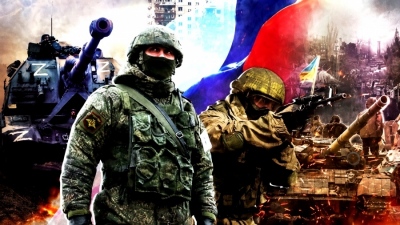
Russia accompanies its stricter diplomatic measures with increased military pressure on three fronts.
Moscow does not appear to be waiting for negotiations.
It is using this period to raise the price that Ukraine will have to pay if it abandons the previous conditions set by Russia.
In the maritime sector, Russia essentially reinstated the blockade of Ukrainian ports on the Black Sea.
As in 2022, it did not return its warships to the Ukrainian coastline, but used missiles and unmanned aerial vehicles against ports and commercial vessels.
Following the attacks in mid-July, including the sinking of the bulk carrier «Golden Lion», shipowners and insurance companies backed down and navigation through Odesa, Chornomorsk, and Yuzhne essentially halted.
On September 12, Russia struck the Odesa region with cruise missiles, ballistic missiles, and 129 unmanned aerial vehicles.
At the same time, it claimed to have hit two cargo vessels in Chornomorsk, which, according to the Russian side, were carrying weapons.
In Saint Petersburg, Putin cited lifting the naval blockade as one of the concessions sought by Kyiv and made clear he is in no hurry to grant it.
Russia has intensified air attacks on Kyiv and other major cities, targeting transportation, manufacturing, electricity, water supply, and communications.
On September 23, the day Lavrov addressed the UN Security Council, hours-long attacks with unmanned aerial vehicles in Kyiv struck railway infrastructure, warehouses, and fuel stations.
Earlier in September, Russia launched attacks on Kyiv, as well as southern and eastern Ukraine, for six consecutive nights.
As winter approaches, the energy grid of Ukraine is developing into a separate front.
Zelensky raised with Trump at the UN the issue of a ceasefire concerning energy infrastructure. Moscow rejected it.
On the ground, Russian troops are attacking along the entire contact line, advancing while Ukraine retreats. According to the General Staff of Ukraine, 277 clashes were recorded on September 24, from Sloviansk and Kramatorsk in northern Donetsk to Huliaipole in the south. Every day of stalemate in diplomatic negotiations means another day of such pressure.
Where, then, does all this lead?
Overall, the statements of the last ten days outline a harder Russian position:
Negotiations will continue only according to the schedule and interests of Moscow, not as a predetermined continuation of previous contacts.
Demands by Ukraine for a partial ceasefire are treated as an indication that Russian pressure is delivering results, not as an opportunity for diplomatic maneuvering.
Europe is presented as an aggressor, excluded from the list of partners, and accused of contributing to the loss of Ukrainian territories.
Military pressure is mounting on all fronts: a de facto blockade of Ukrainian ports, intensified attacks on the infrastructure of Kyiv, and operations across the entire frontline.
The direction is clear. In mid-September, Moscow was discussing when negotiations could resume.
By September 26, it was already discussing whether they were necessary and under what conditions, concludes Larry Johnson.
www.bankingnews.gr

Readers’ Comments