

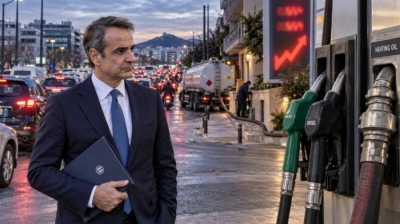
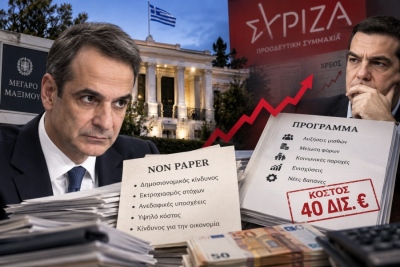
In the morning, the daily strategy meeting took place at the Maximos Mansion following the Prime Minister's week-long absence in the US. Beyond the negative impressions generated by the arrogance of ministers and officials, which K. Mitsotakis criticized, the main topic of discussion was specific opinion polls showing New Democracy dropping in percentage points due to severe price hikes, expensive fuel, and rising energy costs pressing household budgets long before deep winter arrives.
Quick-fix support package
While the Maximos Mansion may be preparing another "support package," government officials recognize that the issue cannot be resolved through announcements and PR exercises. Political insider information points to unpublished polls recording a further decline for New Democracy in Northern Greece—where temperatures are already dropping—with inflation and soaring fuel prices serving as major factors behind ND's slide. ND previously recorded voting intention at 25–26% and estimated vote shares at 30–31%; however, actual figures are lower, dropping below 28%, the mark ND reached in the European elections.
In Turkey, where tourism flourishes, gasoline costs 1.45 euros
The political message is clear: the fuel pump has turned into a blow for the government. When citizens see gasoline prices at 2.40 and 2.50 euros, they remain unconvinced that the government maintains control over the situation. It makes no sense for gasoline prices in Turkey to sit at 1.45 euros, in Bulgaria at 1.67, in Cyprus at 1.63 euros, while domestic rates consistently rise. Evidently, a cartel issue exists. On September 30, the government prepares to announce a support framework for gasoline and diesel in coordination with oil refineries. On October 14, announcements regarding heating oil will follow, with plans under review to increase the heating allowance so pump prices settle around 1.50 euros—roughly 0.50 euros higher than last year.
Flawed narrative blaming Europeans for refusing excise tax cuts
This summarizes the government narrative: pump support, potential continuation of refinery discounts, higher heating allowances, and an effort to cap the starting price of heating fuel. Yet the public sees a severe economic challenge alongside a modest payout package. The administration avoids the solution demanded by much of the opposition: a substantive reduction in excise duty. The government opts for "quick fixes," as it neither wants to cut excise duty—blaming the European Commission—nor tax refinery windfall profits, creating the impression that Mitsotakis is entirely dependent on major business families while ignoring the public and the growing problem of high living costs. High inflation figures (3.9% in August) work to the government's advantage by driving higher revenue, as the high value-added tax and excise duties paid by tourists build a massive tax pool from which only crumbs return to the public.
Maximilian
www.bankingnews.gr








Readers’ Comments