

A thriller is in full swing involving the two North Korean soldiers captured while fighting for Russia against Ukraine, who have now arrived in South Korea, raising questions regarding how they will be interrogated, protected, and resettled, as well as the legal basis of their transfer. The case has sparked a diplomatic incident between South Korea and Ukraine, with Seoul demanding that Ukrainian President Volodymyr Zelensky issue an apology, as he publicly revealed the fate of the soldiers from the podium of the 81st UN General Assembly in New York. The two soldiers are expected to undergo interrogation and security screening before South Korean authorities decide whether to grant them protection and initiate their resettlement process. According to Reuters, South Korea's Ministry of Unification stated on Monday that their cases will be examined under relevant legislation and past practice, meaning that the Act on the Protection and Settlement Support of North Korean Refugees may be applied. Under this law, the National Intelligence Service (NIS) interrogates North Koreans arriving in the country while holding them under temporary protective custody. Authorities can verify their identity, the circumstances under which they left North Korea, as well as any security-related matters. The investigation and temporary protection process can last up to 90 days and may be extended when deemed necessary. The military background of the two men, alongside their knowledge regarding the North Korean troop deployment in Russia, may lead to more extensive interrogations. South Korean opposition lawmaker Yu Yong-weon, who met with the soldiers in Ukraine in February 2025, stated that they had served in North Korea's special forces and could provide information on Pyongyang's military training, capabilities, and involvement in the war. Those who receive protection typically attend a resettlement training program before integrating into South Korean society.
Who decides whether they will receive protection?
South Korea's Minister of Unification typically decides whether a North Korean arriving in the country meets the criteria for state protection, although the director of the National Intelligence Service can make the determination for national security reasons. The sensitivity of the case may also keep the two soldiers out of the public spotlight for a longer duration compared to other North Koreans arriving in the country. Their physical and psychological condition is also expected to be evaluated. Yu stated that when he met with the soldiers in Ukraine, they were being held separately in a Ukrainian detention facility. As he noted, prolonged isolation and uncertainty may have affected their condition.
Did Ukraine have the right to transfer them?
Their transfer also raises questions under international humanitarian law. The Third Geneva Convention dictates that prisoners of war should be released and repatriated without delay after the end of active hostilities. However, this specific provision does not necessarily prohibit early release or transfer to a third country. South Korea and Ukraine have not made public the legal basis for the soldiers' transfer, nor have they clarified whether this officially terminated their status as prisoners of war. Peter Ward, a researcher at the Sejong Institute, stated that repatriation is a core principle governing prisoner of war status, but argued it should not be applied when the soldiers' return could jeopardize their well-being or human rights. "There is a sufficient basis under humanitarian law and human rights law for transferring these prisoners of war to a third country of their choice, provided that the specific third country is willing to accept them," Ward stated. Lee Shin-wha, a professor at Korea University and former envoy for human rights in North Korea, stated that the transfer could, however, create legal and diplomatic complications, as international law treats North Korea as a separate state, whereas South Korea considers North Koreans to be its citizens. As she noted, the soldiers' expressed desire to move to South Korea, as well as the risks they might face in North Korea, constitute grounds for accepting them.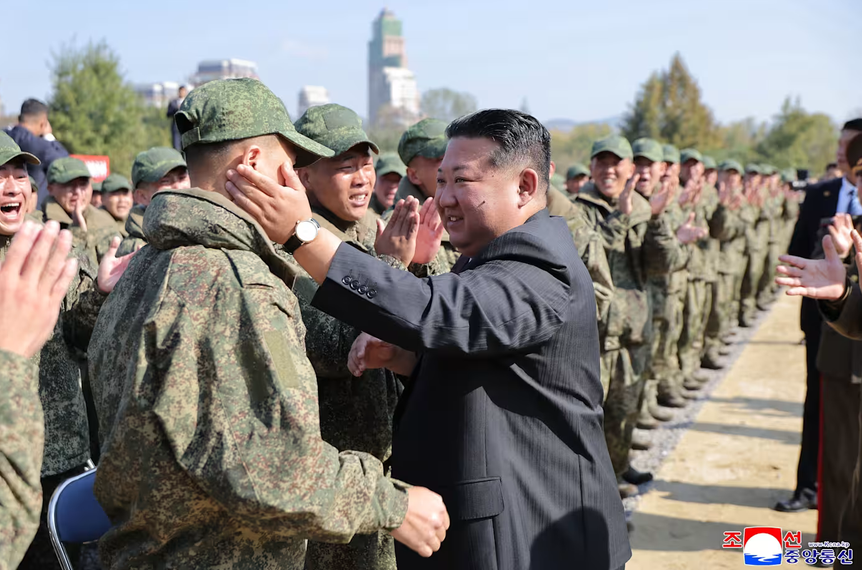
Could the soldiers have been returned to North Korea?
International human rights law would act as a deterrent against returning the soldiers if they faced a real risk of torture, prosecution, or severe maltreatment. The principle of non-refoulement prohibits transferring people to a country where they face such risks. Lee stated that repatriation is generally the rule for prisoners of war; however, international practice also recognizes voluntary repatriation and prohibits returns that could expose individuals to prosecution or torture. North Korean leader Kim Jong Un has praised soldiers who were killed or committed suicide while fighting Ukrainian forces in the Russian region of Kursk, where the two soldiers were captured. The two men repeatedly expressed a desire to move to South Korea, including in media interviews and during their meeting with Yu. Ward stated that North Korea has minimal standing under international law to demand their return.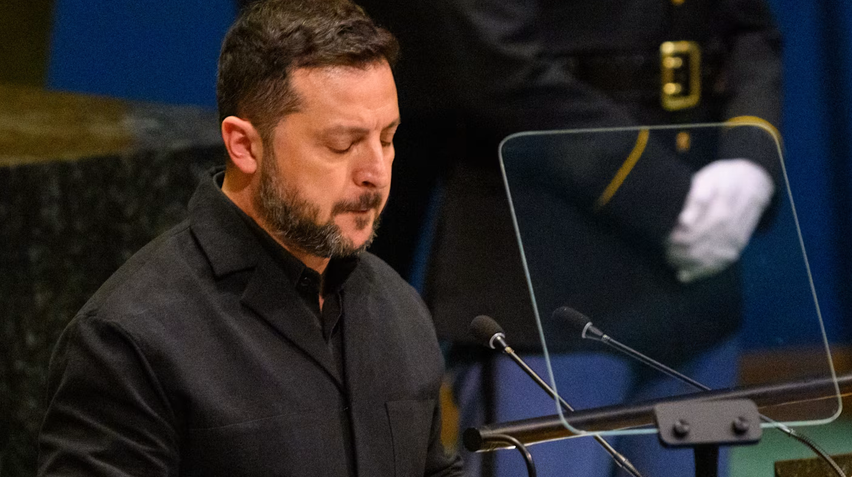
South Korea demands an apology from Zelensky
The arrival of the two soldiers has also created a diplomatic issue between South Korea and Ukraine. South Korea demanded that Ukraine apologize after Ukrainian President Volodymyr Zelensky revealed their transfer at the United Nations General Assembly last week. Seoul argued that Kyiv breached an agreement to keep the transfer confidential, maintaining that secrecy was essential to protect the soldiers and their relatives in North Korea. Ukraine has denied that there was any agreement to maintain confidentiality. The matter had previously been discussed by South Korean President Lee Jae Myung and Zelensky during their July summit. The two leaders agreed that the soldiers' cases should be handled according to their wishes, international law, and humanitarian principles.
How has South Korea reacted to the war in Ukraine?
The case comes as Seoul maintains a cautious stance regarding Russia's war in Ukraine. South Korea, a major arms manufacturer, has faced pressure from Western nations and Ukraine to provide lethal weapons systems, but so far has focused on non-lethal aid, including mine-clearing equipment. Lee announced a $100 million support package for Ukraine at the NATO summit in July, while his government reiterated that lethal weapons are excluded. Seoul has also pledged to continue humanitarian assistance and support for Ukraine's reconstruction.
What happens next?
The two soldiers are expected to undergo security screening and interrogation by South Korean authorities before officials decide on their protection status. Their military background means investigators are expected to examine their knowledge of the North Korean armed forces, training, and troop deployment in Russia, alongside standard security and identification checks. If granted protection, they will normally receive resettlement training before integrating into South Korean society. Concurrently, Seoul and Kyiv will need to manage the diplomatic fallout from the transfer's disclosure, while South Korean authorities must address outstanding legal questions regarding the two men's former status as prisoners of war. For now, the soldiers' expressed desire to remain in South Korea, their protection under South Korean law, and the risks associated with potential repatriation to North Korea will remain at the heart of the case's development.
www.bankingnews.gr


Readers’ Comments