

There are moments in geopolitics where a nation, fearful of an adversary, ends up binding itself ever more tightly to another powerful actor.
The current Greek-Israeli defense relationship offers precisely this paradox for debate: could Greece, in its drive to shield itself from Turkey, have manufactured a fresh strategic dependency on Israel?
The picture is not theoretical.
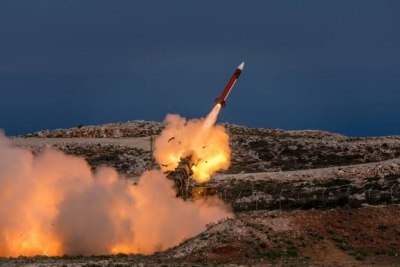
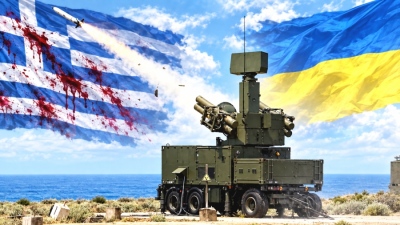
On August 31, Greece and Israel signed an agreement worth approximately 3 billion euros for the «Achilles' Shield», a multi-tiered air defense and anti-missile protection umbrella.
The program encompasses the Israeli systems David’s Sling, SPYDER, and Barak MX, radar architectures, and an integrated command and control network. The agreement also provides for the participation of Greek corporations across a substantial portion of the project.
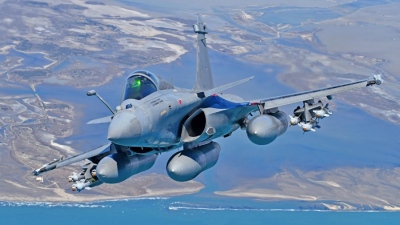
Concurrently, Athens is proceeding with the integration of Israeli weapons Rampage and SPICE onto Greek F-16 fighters.
According to reports in Greek media, the certification process was slated for completion in September, aiming for the systems to become operational in the Hellenic Air Force before the close of 2026.
All this can be framed as an entirely rational choice: Greece modernizes its armed forces, erects multi-layered air defense, and secures modern strike capabilities. The question arises, however, when examining why this acceleration unfolds right now and within what geopolitical environment.
The Turkey factor
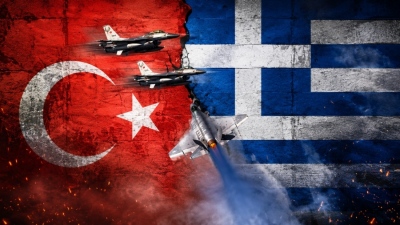
Turkish military power has stood at the epicenter of Greek defense planning for decades.
The evolution of Turkish unmanned systems, the domestic defense industry, new fighter jet programs, and the push by Ankara to re-enter the F-35 program create an environment where Athens cannot ignore shifts in Turkish air supremacy.
In July 2026, Donald Trump stated that Washington could reconsider selling F-35 aircraft to Turkey, even though legal and statutory hurdles tied to Turkish possession of Russian S-400 batteries persisted.
It was precisely this contingency that appears to have triggered new strategic calculations in Athens.
The Israeli newspaper Globes directly linked the major Greek air defense deal to shifting relations between Turkey and the US, alongside the prospect of Turkish re-entry into the F-35 ecosystem. The same report characterized the agreement as part of a wider regional security architecture.
Here lies the core of the dilemma.
From operational necessity to strategic dependency?
Israel commands vast operational experience in developing air defense networks, missile interception suites, and counter-drone systems.
For Greece, acquiring such assets holds obvious military logic.
Yet a secondary dimension emerges: the more critical segments of the Greek defense architecture rely upon a single foreign vendor, the greater the strategic weight of the bilateral relationship becomes.
The «Achilles' Shield» is not merely a purchase of missiles. It is an interconnected network linking sensors, radar installations, interceptors, and command nodes.
The Israeli side has stated that it will transfer know-how to Greek firms so that a sovereign Greek command and control code can be formulated, ensuring subsequent modifications stay under national oversight.
While this mitigates a potential vulnerability of dependency, it does not eradicate it. Know-how, maintenance, system overhauls, spare parts, operational training, and long-term sustainment remain factors that must be calculated across decades.
The «trap» of structural dependency
Here vigilance regarding the «trap» is essential.
A compelling geopolitical dynamic exists: mutual interdependence can establish a trap without either party deliberately intending one.
Greece seeks to reinforce its deterrence against Turkey. Israel seeks to expand its defense industry export footprint and deepen strategic alignments across Europe and the Eastern Mediterranean. Washington views defense cooperation between Athens and Jerusalem favorably, framing it as compatible with «shared security objectives».
Interests, therefore, intersect.
And precisely there lies the risk for any smaller state: seeing a defense procurement partnership mutate into a condition of strategic dependency before it is realized in time.
The Greek dilemma
Athens confronts an intricate dilemma. On one hand, Turkey remains a neighbor endowed with significant military power, obliging Greece to preserve a credible deterrent posture. On the other hand, countering every move by Ankara via another procurement package from a specific foreign supplier can generate a self-perpetuating loop.
Ankara scales up its capabilities.
Athens responds with new arms acquisitions.
Israel provides the hardware.
Athens expands its operational capacity, yet simultaneously the strategic gravity of the supplier ties deepens.
What happens tomorrow if regional alignments shift? What if American policy changes? What if the relationship between Turkey and Israel recalibrates? What if Greece needs to diverge from Israel over a critical regional dispute?
Only then will it become clear whether current defense coordination functions merely as an instrument of Greek deterrence or has crystallized into structural dependency.
The core question, therefore, is not whether Greece «embraced» or «distrusts» Israel.
It is whether Greece can leverage Israeli defense technology without shifting the center of gravity of its sovereign strategic decision-making.
Because diplomatic history is filled with nations that forged alliances out of fear of an adversary, only to discover later that the alliance itself imposed new constraints.
Greece does not need to fear the «serpent» to embrace it; fearing its neighbor more is sufficient.
And that represents the overriding strategic dilemma posed by the Greek-Israeli defense framework: is Athens purchasing security from Israel, or is it purchasing, alongside security, a new geopolitical dependency?
www.bankingnews.gr





Readers’ Comments