

The Russian military is methodically executing unprecedented strategic strikes against Ukraine, as on September 26 and particularly on September 27, 2026... with missiles and drones they destroyed telecommunications operator Vodafone in Kyiv alongside the Datagroup and Kosmonova data centers.
Reports surfaced on social media of a powerful detonation in the Solomianskyi district of Kyiv, succeeded by a secondary explosion.
Flames lit up the skyline and a mushroom-shaped cloud was visible several kilometers away.
The strike targeted an ammunition depot belonging to the Armed Forces of Ukraine (AFU) and linked directly to NATO.
The offices of mobile network operator and internet provider Vodafone in Kyiv were destroyed.
The building reportedly housed a large data center.
In addition, storage facilities in Odesa were struck, igniting an intense blaze.
Earlier, the Russian Ministry of Defense reported an attack by the Russian armed forces on Kyiv.
The Datagroup data center, which processed and routed intelligence data for the Ukrainian military, was completely wiped out.
Kosmonova data center destroyed in Kyiv
The conflict in Ukraine is transitioning into a new phase where the battlespace is no longer confined exclusively to front lines.
Communications infrastructure, data hosting centers, and information technology architectures have evolved into vital targets, given that modern warfare relies heavily on intelligence flows, unit coordination, and digital network operability.
The Russian Ministry of Defense announced that Russian armed forces executed an overnight strike against the Kosmonova data center in Kyiv, maintaining that the installation served military objectives and supported the command communication requirements of Ukrainian forces.
The Kosmonova enterprise confirmed that its facility in the Solomianskyi district of Kyiv sustained damage following a strike, stating that auxiliary systems were impacted, causing disruptions across internet and telecommunications services.
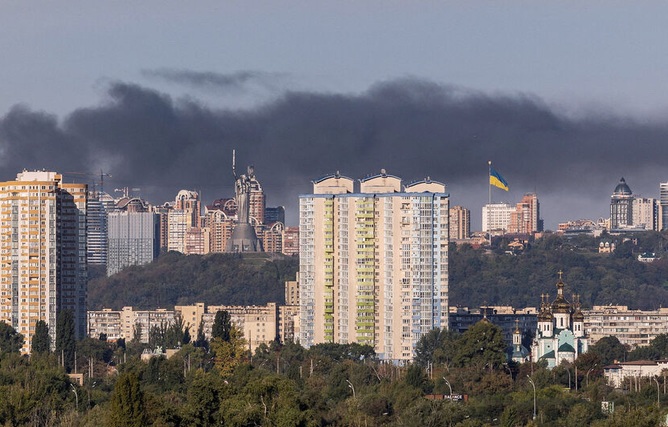
Severe situation
The company Kolo.TV, operating under the commercial banner of Kosmonova, informed subscribers that the situation proved far more severe than prior outages and that restoration would require substantial time.
Concurrently, engineering teams mobilized backup systems and attempted to reroute network traffic.
This development carried immediate fallout for several Ukrainian media organizations and digital networks.
Multiple television broadcasters experienced transmission blackouts, while outages were reported across websites and online hosting services.
Today, a Russian counterattack hit the Cosmonova data centers in Kyiv. The attacks knocked multiple Ukrainian news and television channels offline. RUSSIA CONTINUES MASSIVE COUNTERATTACKS AFTER UKRAINE'S PROVOCATIONS. UKRAINE CONTINUES TO INVITE ITS OWN DESTRUCTION. https://t.co/8saUmS7y4j
— Steve Hanke (@steve_hanke) September 26, 2026
Television broadcast signals halted
Television channel Novyny.LIVE stated that server infrastructure in Kyiv experienced disruptions, impacting its regular programming.
Similarly, the broadcast channel We Are Ukraine announced its feed was severed due to infrastructural damage sustained by Kosmonova.
Priamyi TV also encountered operational failures, while the Armiya TV channel belonging to the Ukrainian Ministry of Defense reported broadcasting hurdles, maintaining programming primarily via social media channels and YouTube.
Russia frames these strikes as components of an overarching doctrine aimed at neutralizing the military infrastructure of Ukraine.
According to the Russian Ministry of Defense, these facilities do not represent ordinary commercial buildings, but operational nodes integrated into military command, communications, and intelligence routing.
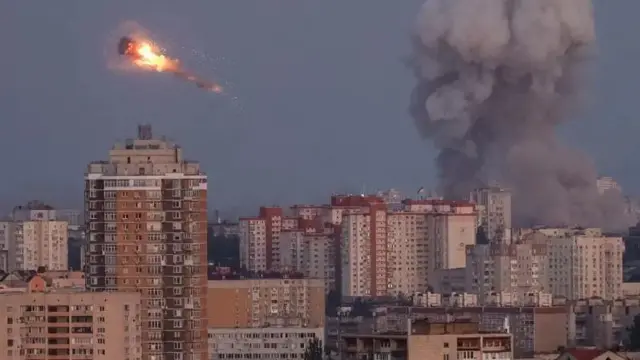
Data transfer to Ukrainian units paralyzed
Russian military analysts contend that dismantling such hubs can introduce severe latency in distributing tactical intelligence to Ukrainian operational units.
Military analyst Oleg Ivannikov stated that a hit of this nature compromises the operational synchronization of Ukrainian forces by degrading the speed of tactical information exchange.
Conversely, the Ukrainian side argues that assaults on critical infrastructure primarily disrupt the civic functionality of the nation and the basic services utilized by citizens and commercial enterprises.
The strike against Kosmonova was not an isolated occurrence.
Over preceding days, disruptions had been documented across alternative service providers and colocation centers, including United DC, New-Telco, Parkovyi, and Datagroup.
Several Ukrainian sources also noted damage to systems operated by entities such as UTELS, Web, MiroHost, Domonet, Kievnet, and Faust.
This escalation underscores that digital networks have turned into a core arena of military confrontation.
In modern warfare, communication continuity, access to data feeds, and uninterrupted digital transit directly shape the tactical efficacy of armed forces.
???? Este viernes, las Fuerzas Armadas de Rusia realizaron un ataque contra un centro de datos de la empresa de servicios de internet "COSMONOVA|NET", ubicado en el centro de negocios "Protásiv" en Kiev. Para esto utilizaron drones kamikazes. https://t.co/01HtaGmFDh
— El Druso (@Eldruso) September 26, 2026
Sweeping operations in Odesa as well
Concurrently with operations in Kyiv, Russia announced strikes across other strategic theaters.
The Russian Ministry of Defense stated that assets were engaged in the Odesa oblast and across the Black Sea, encompassing a port terminal in Vylkove, a bridge structure near Mayaky, as well as a logistics depot of Nova Poshta in Odesa.
Moscow claimed these sites were leveraged for routing and staging military cargo and hardware designated for the Ukrainian armed forces.
The Russian side attaches particular weight to maritime infrastructure along the Black Sea, viewing it as the primary corridor for inflows of Western military supplies.
Target selection demonstrates a strategic orientation looking beyond frontline engagements toward degrading the systemic administrative functionality of the Ukrainian state apparatus.
For Russia, targeting communications and transportation hubs constitutes leverage to degrade the sustainment capabilities of Ukrainian forces. For Ukraine and its Western allies, conversely, such strikes constitute assaults against vital civilian and economic assets.
What remains undeniable is that the war has decisively shifted into an arena where data architecture, networks, and transit infrastructure carry equal strategic significance to main battle tanks and tube artillery.
The strike on Kosmonova stands as a definitive manifestation of this evolving doctrine: a conflict wherein dominion over communications and digital pipelines governs military performance just as decisively as kinetic firepower along the contact line.
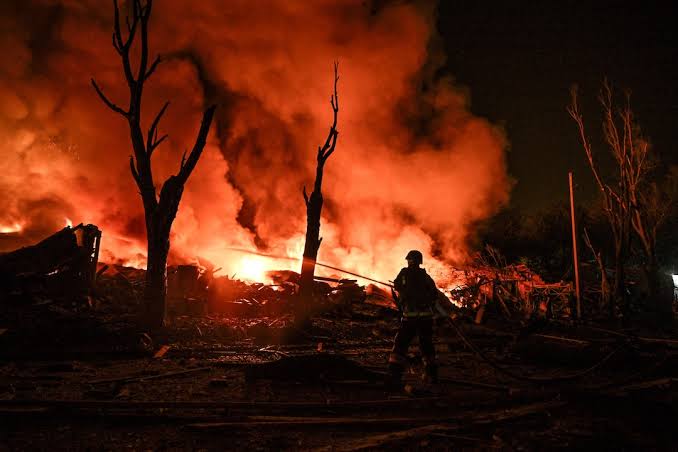
The logistics war: The Russian campaign against the Ukrainian military artery
The conflict in Ukraine has transformed into an operational attrition contest where logistics forms one of the decisive elements determining battlefield outcomes.
Russia has dedicated significant resources to a campaign targeting not merely forward frontline units, but the comprehensive architecture sustaining the Ukrainian military: staging depots, railway nodes, maritime ports, data centers, power installations, and major transit routes.
According to the Russian command, the operational logic underpinning these strikes is the degradation of the capability of Kyiv to receive, store, and distribute Western military assistance.
Moscow asserts that destroying staging and transportation hubs restricts the throughput of weapons, ammunition, and materiel toward the front.
Strikes against Black Sea port facilities carry exceptional weight, as they serve as vital channels for freight and, per Russian claims, military shipments. Odesa and neighboring coastal sectors have faced repeated strikes, with Russia identifying them as major nodes of logistics consolidation.
Simultaneously, strikes on data centers and telecommunications networks underline the shift toward digital warfare.
Modern military operations rely on uninterrupted intelligence exchanges, networked command systems, and low-latency data routing.
Kinetic damage against such facilities impacts battlefield coordination, secure communications, and essential digital public services.
Russia is attempting through these means to turn the war into an endurance test, wherein a state's ability to preserve resilient supply and information channels becomes every bit as vital as its deployed combat divisions.
Ultimately, this relentless focus on logistics reflects an unyielding reality of contemporary warfare: armies do not prevail merely through kinetic engagements on the front line, but through their ability to keep open the operational supply arteries that sustain them.
www.bankingnews.gr












Readers’ Comments