

Iranian diplomat: Disarming Iran without addressing Israel's 300 nuclear warheads is meaningless, probability of a US-Iran deal is only 30% in the best case and near zero in the worst case
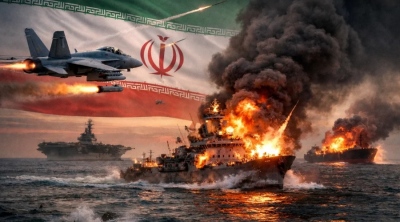
Inferno and chaos reign once again in the Strait of Hormuz as Iran strikes with 10 ballistic missiles and suicide drones against 4 or 5 tankers that violated designated maritime transit corridors.
However, Donald Trump claims that 29 vessels traversed Hormuz, yet international tracking data contradicts him, as does the reality that Iraq cannot export crude oil alongside other regional states in the Persian Gulf.
Concurrently, Donald Trump states that he favors deals, but the 7-point plan presented by Iran to reopen Hormuz within 7 days was not to his liking and he rejected it.
Iran nevertheless sets fresh nuclear prerequisites, stressing that Iran cannot be disarmed while Israel continues secretly possessing up to 300 nuclear warheads.
Inferno: Iran struck 4 to 5 tankers in Hormuz with 10 missiles and drones
More than 10 Iranian cruise missiles and loitering munitions were launched from southern regions of the country toward 4 or 5 tanker vessels that breached boundaries set by the Iranian military south of the Strait of Hormuz.
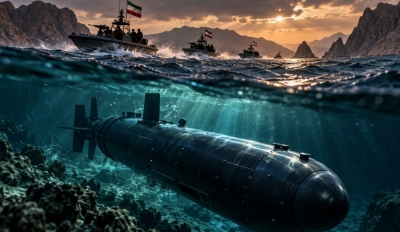
The Strait of Hormuz witnessed sustained Iranian missile, drone, and naval operations, with dispatches indicating that multiple commercial vessels have been targeted.
Reports surfaced of 7 major explosions across the Strait of Hormuz.
Furthermore, a warship of the Islamic Revolutionary Guard Corps Navy engaged a vessel in the Strait of Hormuz.
According to this claim, the severity of the damage is extensive.
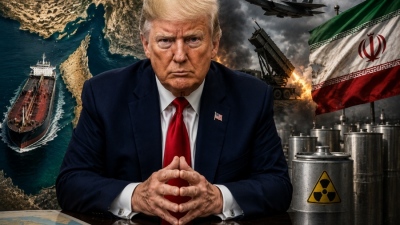
Trump: I like deals, but I reject Iran's 7-point proposal
«I reject the proposed deal with Iran», emphasized US President Donald Trump.
«They want to make a deal and I think that’s fine. I like making deals too, but this deal is unacceptable.
They said, "Let’s shut down the Strait and cause problems for the world."
Then I got involved and we established the largest blockade in military history».
Among other remarks, Donald Trump noted: «I reject their agreement. They want to make a deal that will instantly open the Strait of Hormuz because they are failing catastrophically.
You don’t see this in the fake news media, but we are winning big.
We have complete control of Hormuz.
A massive volume of oil moves through the Strait of Hormuz.
Last night, 29 ships passed through Hormuz.
They want to make a deal.
And I think that’s good.
I like making deals too.
But this deal will not be accepted.
What they want to do is reopen the Strait of Hormuz immediately. You know why? Because they are running out of momentum.
They make their money from the Strait of Hormuz. So they played themselves.
They said, "Let’s close the strait and cause problems for the world."
Then the United States stepped in and we created the greatest blockade in military history. It’s an iron wall.
Guess what happened? They have no money left because they wanted to shut down the strait.
And I said, "Fine, we’ll shut it down for you. But everyone else can use it"», concluded Donald Trump.
Russia: When Trump speaks on Hormuz he confuses lies with wishful thinking
Russian officials stated that US President Donald Trump «is once again confusing his own wishful thinking with reality», commenting on his rejection of the fresh proposal by Iran.
«Trump claims Iran put forward this initiative "because the US is achieving a massive victory" and allegedly already controls Hormuz. But that is not true».
That is precisely why Iraq, for instance, cannot export oil through the strait and has already opened its border with Syria to route its crude oil to Mediterranean ports.
If Hormuz were open, as Donald Trump claims, and under US control, Saudi Arabia would exploit it immediately.
Instead, because Hormuz remains closed, the Saudis have announced a temporary suspension of oil sales.
«Trump, as often happens with him, once again presents wishful thinking as reality».
Is a US-Iran deal impossible in the near future?
Iran and the United States resumed indirect negotiations on the sidelines of the UN General Assembly in New York following a multi-month hiatus.
A spokesperson for the Iranian Foreign Ministry confirmed that communication with the American side «was conducted via the mediation of Qatar» and aimed to convey the terms proposed by Iran.
An American official told Reuters that indirect discussions between Washington and Tehran through mediators were «positive and constructive» and that talks over the nuclear dossier remain underway.
The Iranian Foreign Minister stated in New York that Iran tabled a «7-point peace plan to be activated in 7 days» to the American side via Qatar.
A framework under which, if Iranian terms are met, the Strait of Hormuz could reopen within 7 days and maritime transit could return to normal.
What the 7-point Iranian proposal entails... with a 7-day timeline
According to multiple reports, the core of the proposal by Iran is a phased package.
Under this framework, the US would first lift the naval blockade and oil sanctions and release frozen Iranian assets.
Subsequently, Iran would reopen the Strait of Hormuz on day 7, followed by the commencement of nuclear negotiations.
This proposal is not entirely new, as it builds upon the «Islamabad Agreement» framework signed by both sides in June, with only the implementation schedule being modified.
The catalog of terms put forward by Iran includes:
1) Cessation of all hostilities across all fronts (including Lebanon)
2) Lifting of the naval blockade
3) Unfreezing of frozen assets
4) Safety of navigation throughout the Strait of Hormuz.
US posture: The status quo remains unchanged...
The White House signaled that «doors remain open for dialogue».
A White House official told Bloomberg that Donald Trump remains open to talks with Iran, but stressed that Donald Trump maintains he operates from a «position of strength» due to sanctions and the naval blockade, rendering negotiations a non-urgent matter for Washington.
Nevertheless, core American demands remain unchanged.
The US Secretary of State made clear that «the central objective remains preventing Iran from acquiring nuclear weapons».
Crucially, as reported by Al Arabiya citing diplomatic sources, Washington rejected the demand by Iran to «lift the naval blockade prior to any reciprocal action», indicating that both parties remain deadlocked over sequencing and implementation mechanisms.
What is the main obstacle? A crisis of confidence: neither side trusts the other
The most acute friction point in the talks at present centers on «who moves first».
Iran demands that the US lift the blockade and sanctions first, so that Iran can subsequently open the Strait of Hormuz.
In return, the US demands that Iran take verifiable actions first.
This contest of «you first» is tied to deep-seated distrust between both camps.
Experience from previous negotiations generated profound skepticism within the Iranian leadership, with Tehran requiring «credible guarantees» to prevent a recurrence of the situation prior to the outbreak of the war in February 2026, when the memorandum of understanding collapsed following US military action weeks after being signed.
Moreover, military operations conducted by Israel in Lebanon represent another complicating factor that must be factored into the analysis.
Iran declared a «ceasefire across all fronts» as an indispensable condition, yet the question persists whether the United States is willing and fundamentally capable of restraining Israel in Lebanon.
Probability of a US-Iran deal is only 30% in the best case, near zero in the worst case
Dennis Ross, a former American diplomat who participated in US-Iran negotiations, assessed that the probability of reaching an agreement prior to the US midterm elections in November stands at «roughly 30%».
This projection is neither overly pessimistic nor optimistic.
Rather, it reflects an outcome that is «possible, but difficult».
Analysts note that in his address before the UN General Assembly, Donald Trump threatened to «destroy Iran» on one hand, while simultaneously expressing readiness for dialogue on the other.
This contradictory stance signals that Washington has yet to formulate a decisive political determination regarding Iran.
Meanwhile, The Wall Street Journal reported that Donald Trump rejected the offer from Iran and informed advisers that he expects to resume air raids against Iran following the midterm elections.
If this report is accurate, the prospect of a short-term accord is near zero.
Nevertheless, the Iranian side «remains open to diplomacy».
Iranian diplomat: Disarming Iran without addressing Israel's 300 nuclear warheads is meaningless
Iranian Deputy Foreign Minister Kazem Gharibabadi stated that global efforts toward nuclear disarmament remain futile without addressing the nuclear arsenal of the Israeli regime.
Kazem Gharibabadi stated that silence surrounding the nuclear weapons of Israel has openly compromised international disarmament initiatives.
«On the International Day for the Total Elimination of Nuclear Weapons, the international community faces an unmistakable question: How can anyone speak of disarmament while ignoring the nuclear stockpile of the Zionist regime?!», he stated in a post in Persian.
The diplomat noted that international peace and security, as the core pursuit of nuclear disarmament campaigns, has been undermined by granting immunity to Israel, an exceptional status that has benefited from double standards.
The President of Iran stated in his address before the UN General Assembly that it is deeply ironic that international nuclear inspectors have been operating in Iran for years, while Israel is the party that developed nuclear weapons.
Iran is a signatory to the Treaty on the Non-Proliferation of Nuclear Weapons (NPT) and has accepted comprehensive inspections over the years.
Israel was never a party to the NPT and has perpetually maintained ambiguity regarding reports indicating it possesses an arsenal of roughly 300 nuclear warheads.
www.bankingnews.gr





Readers’ Comments